pastorjohnb

Thoughts and musings on faith and our mighty God!


Leave a comment

Faithful Love

Reading: Psalm 118:1-2 and 19-24

Psalm 118:22 – “The stone rejected by the builders is now the main foundation stone!”
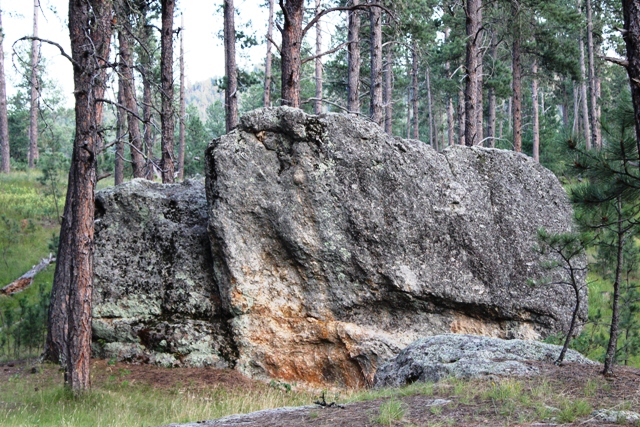
Psalm 118 is a song of praise that celebrates God’s deliverance. Originally used as a song that was sung after the Passover meal, it celebrated Israel’s exodus from slavery in Egypt. These words, however, also carry a broader meaning. This song extolling God’s love and goodness can be applicable at other times.

Verses 1 and 2 would’ve been used call-response style. The leader would declare verse 1: “Give thanks to the Lord, because he is good, because his faithful love lasts forever.” The gathered people would respond: “God’s faithful love lasts forever!” What a great reminder as one begins to offer a response to the Lord.

Skipping to verses 19-24, the scene shifts to the temple entrance. The writer asks for the gate to be opened. The response reminds the people that only the righteous may enter the Lord’s gate. Qualifying and entering the temple, the psalmist thanks God for answering his or her prayers. This prayer is about restoring Israel. In verse 22 we read, “The stone rejected by the builders is now the main foundation stone!” Restoring what was once held in slavery and oppression, Israel is once again God’s people, living in the Promised Land. Israel rejoices in and celebrates this time of salvation.

These verses also connect to Jesus. On this Holy Saturday we can rejoice and celebrate that the one who was rejected and killed by Israel’s religious leaders has become the cornerstone. In and through his death we’ve been freed from our slavery to sin. Tomorrow we celebrate the salvation given to us through his resurrection. Thanks be to the God whose faithful love lasts forever and ever!

Prayer: Lord God, we celebrate and rejoice in your great love for us. Walk with us and draw us into your righteousness. Lift our voices in praise and our lives in faithful witness to your saving grace. Amen.


Leave a comment

Questions

Readings: Exodus 15:22-27, Exodus 16, Exodus 17, Exodus 18

Exodus 16:8 – “Who are we? Your complaints aren’t against us but against the LORD.”

Coming fresh off of the amazing rescue at the sea, today we become familiar with an oft-repeated pattern in the wilderness. The Hebrews are lacking in something so they argue/complain/grumble against Moses. Moses, often in frustration, turns to God and God provides food, water, protection… We often see a version of this played out in our lives, just without Moses as the middle man. We go straight to God with our grumbles, complaints, charges…

At Marah the water is bitter. God makes it sweet. Those hardships or challenges that become blessings? We experience these too, don’t we? Then, in the Sin Desert, hunger sets in. They long for the meat and bread of slavery. Ever look back in the good old days? God provides meat and bread. These come with instructions. These begin to establish the Sabbath. It was not possible in Egypt. As slaves of another they worked 7 days a week. We have a choice. Do we allow ourselves to be controlled by work…? Or do we honor God and ourselves in sabbath rest?

After preserving some manna for future generations, the Israelites travel on to Rephidim. No water. They accuse Moses (read: God) of bringing them out into the desert to die of thirst. Moses hits the rock at Horeb with his staff -> water comes out! Then Amalek comes to fight them. Joshua leads the troops into battle as Moses, Aaron, and Hur go up the mountain. The staff, now held aloft, continues to represent God’s presence. Aaron and Hur help Moses and God gives Israel victory. This leads into Jethro’s visit and suggestion. He sees Moses is too busy. He won’t last like this. Following his wise father-in-law’s advice, Moses appoints judges, sharing the load. God shared the load in battle. Moses shared the load with others. Which kind of sharing is harder for you? What did you learn today about sharing?

Prayer: Lord God, it is a little scary to see how little we’ve changed since Moses’ time. We get caught in nostalgia, we lose faith quickly, we question your love. Today I thank you so much for your enduring patience through the generations and for your great patience with me. Teach me to turn quicker to you and to hold onto your hand longer and more steadily. Amen.


Leave a comment

God with Joseph

Readings: Genesis 37, Genesis 38, Genesis 39, Genesis 40, Genesis 41

Genesis 39:2 – “The LORD was with Joseph, and he became a successful man.”

Chapter 37 gives us some great foreshadowing. Within his family, Joseph is both the most favored and the most deeply hated. He is Jacob’s favorite. He tattles and shares his dreams boastfully, leading his brothers to despise him. The ability to interpret dreams will come in useful in the next parts of Joseph’s life. The brothers’ hatred of Joseph eventually leads them to sell him into slavery and to lie to Jacob about it.

Chapter 38 interrupts Joseph’s story with the story of Tamar. Here we become more familiar with the practice of “levitate marriage” – a method of protecting widows and of insuring possession of ancestral lands. But greed gets in the way. This places Tamar in a very vulnerable position. She takes matters into her own hands and tricks Judah into sleeping with her. Tamar becomes pregnant. One of her twins is Perez, a direct ancestor of King David and, many years later, of Jesus.

Chapters 39-41 return to Joseph’s story. Three times we see this pattern play out: Joseph is wronged, he remains true, God blessed him and brings him success. Sold into slavery he is bought by Potiphar. Joseph excels and is made #2 in the household. Potiphar’s wife lies about him and Joseph ends up in prison. Here he excels and ends up #2 in the prison. He meets Pharaoh’s cup bearer and bread maker. God gives him the interpretation of their dreams. Joseph asks the cup bearer to remember him. Two years pass and Pharaoh has a dream that no officials can interpret.

The cup bearer remembers Joseph and God once again gives Joseph the interpretation. The healthy cows and grain are 7 abundant years followed by 7 years of famine – the sickly cows and grain. Joseph lays out a plan to survive the famine. Pharaoh is so impressed that he makes Joseph #2 in all of Egypt. Joseph is married to Asenath who bears two sons – Manasseh and Ephraim. The 7 year cycles unfold exactly as Joseph said they would. Egypt has bread during the famine and the world comes to Egypt to buy grain.

Today we again see God choosing the unlikely and then transforming and shaping them, leading and guiding them, eventually revealing God’s power. In Joseph’s story we see yet again how God can work all things for God’s purposes. As we allow God to work, trusting in God’s unfolding plan, we too will see God’s power at work.

Prayer: Lord God, soften me as you need to in order to use me as part of your plan. Fill me with a steadfast faith that yields to your will and to your ways. Amen.


Leave a comment

Room to Grow

Reading: Exodus 16:1-5

Verse 3b: “There we sat around pots of meat and ate all the food we wanted.”

Just 3 days after witnessing the amazing miracle at the Red Sea, the grumbling begins. The first instance is because the water is bitter and they’re thirsty. Through yet another miracle, their thirst is quenched. A short while later, in today’s passage, the grumbling returns. This time they are in the Desert of Sin. I wonder if that is an actual physical place or if it is just a metaphor.

The Israelites are hungry. They are without food in the desert. They grumble to Moses: “If only we had died by the Lord’s hand in Egypt!” Are they longing to live once again under heavy oppression? Do they want to return to slavery? No, no, and no! When there is a want gnawing at us, we too can grumble. Yet the Israelites still say to Moses (and to God), “There we sat around pots of meat and ate all the food we wanted.” When we look at that shiny new car next to our 2021 model or when we long for the good old days when the pews were full, we too can grumble in ways that don’t really make a lot of sense.

God doesn’t smite us down. God doesn’t say to the Israelites, ‘Fine, then, just go ahead and die out there in the desert.’ Just the opposite! God says, “I will rain down bread from heaven.” It’s not just a morsel. It’s not just enough to tide them over. God rains down bread. It is God’s loving and generous response to the peoples’ grumbling. There are some instructions too – a “test.” God has been faithful. Now that they have been provided for, will they too be faithful? This too is a question that we frequently wrestle with. The Israelites aren’t the only ones with room to grow.

Prayer: Lord God, in my heart of hearts I know that you are faithful. And loving and generous. Yet in my mind, I can go where the Israelites went. Wants and desires can creep in and I find myself grumbling – or complaining. My inner Eeyore rises up – woe is me! In these moments, whisper into my heart how much you love me. With these whispers, lead me back to a place of faith and trust. Amen.


Leave a comment

Love Forever

Reading: Psalm 118: 1-2 and 19-29

Verse 1: “Give thanks to the Lord, for he is good; his love endures forever”.

Photo credit: Christopher Beloch

Psalm 118 is a song of remembrance, victory, celebration. The historical context is the story of exodus, of God freeing Israel from years of slavery in Egypt. The song would be sung during the three yearly festivals as a way to thank God for his presence with the people. As the people marched into Jerusalem, recalling God’s saving acts, there is much joy and expectation as they enter the gates of the city. Years and years of doing this is what lends such energy to the day we know as Palm Sunday, the day of Jesus’ triumphal entry.

Even though the exodus story is the foundation, the theme of being freed from slavery is the main theme of this Psalm. There is much messianic language in the second part of the Psalm: salvation, stone, rejection, light. We will delve deeper into this aspect later in the week. Today we celebrate what the Lord has done for Israel, for you, and for me.

In the opening verse we read, “Give thanks to the Lord, for he is good; his love endures forever”. You or I may not have walked out of slavery in Egypt, but we have experience after experience with the Lord’s freeing and saving acts. Time and time again we have been freed from the lures and temptations of this world. Over and over we have been made new again, leaving behind the chains and guilt and shame of our sins, being cleansed by his mercy and grace. Again and again God has reconciled and restored our relationships – sometimes with God, sometimes with one another. We too can joyously approach the Lord our God, thanking God for his goodness and for his love that endures forever. May we, like the Israelites, say, “His love endures forever”!

Prayer: Lord God, over and over… again and again… time after time… Yes, you are so good to me. Yes, your love is amazing. With wonder and awe I praise you and offer my humble thanksgiving. Amen!


Leave a comment

A New Covenant

Reading: Jeremiah 31: 31-34

Verse 33: “I will put my law in their minds and write it on their hearts. I will be their God and they will be my people”.

Photo credit: Kelly Sikkema

In Jeremiah 31 we see that God is a covenant God. Our passage opens with God promising a new covenant. In verse 31 we read, “The time is coming…” The Lord then references the last covenant – the one given as God led them out of slavery in Egypt. Here the covenant relationship takes on the husband-wife analogy. God led the Israelites to freedom as a husband would lead his wife, gently taking her by the hand and walking with her. During the time in the wilderness God was a constant companion to the Israelites. God guided and protected and provided for Israel. Despite this intimate and personal relationship, Israel wandered soon thereafter. They worshiped other gods, forgetting all that God had done for them.

Instead of breaking the relationship and moving on from Israel, God declares that he will make a new covenant, a better covenant. Instead of writing the covenant on stone tablets, God declares, “I will put my law in their minds and write it on their hearts. I will be their God and they will be my people”. The covenant will shift from external to internal. God’s ways will be in our mind and on our heart. The new covenant will be mediated through Jesus Christ and the Holy Spirit will internalize God’s ways in heart and mind and soul.

Even with such an extraordinary gift, we too can become like the Israelites at times. We forget our true love and chase after the gods and idols of this world. We allow other things to supplant our primary relationship with God. Yet our covenant God remains, continuing to say ‘I love you’ over and over. Instead of allowing the distance that we create to define the relationship, God pursues us, draws us back into relationship. No matter our response, God still says, ‘I love you’. God remains our God. We are his people. Thanks be to God.

Prayer: Covenant God, you love me far beyond what I can even begin to comprehend. Your love goes on and on and on. My love for you is fragile, tenuous, limited. Yet you love me without reserve, without condition. What a wonderful example you give me to follow. Lead me in your love, O God. Amen.


Leave a comment

The Wilderness

Reading: Psalm 107: 1-3

Verse 1: “Give thanks to the Lord, for he is good; his love endures forever”.

Psalm 107 is a Psalm that reminds us of God’s faithful love. It is a song of thanksgiving to the God that never abandons or leaves his people. The Israelites and individuals within the faith community have experienced this faithful love. The nation has experienced exile, slavery, and times of oppression and conflict with those living around them. Individuals like Joseph, David, Samuel, and Job have had their own wilderness experiences. Each time that the community has found themselves in the wilderness, whatever that may be, God has remained present and connected to his people. At times the connection was to a small remnant, but God was always faithful. Experiencing this over and over has led them to “give thanks to the Lord, for he is good; his love endures forever”.

As we experience life we also find ourselves in the wilderness from time to time. We find ourselves there in many ways. Loss and grief can lead us into the wilderness. Moving, job loss, and other forms of unwanted change can lead us to this place. Sudden bouts of physical or mental illness can take us to the place of isolation and fear. Yes, there are many ways that we can find ourselves in the wilderness. If we choose to remain connected to God, then we experience what the psalmist and the Israelites experienced. God remains present. God sustains us. God’s faithful love endures the trials with us. From these experiences we too can proclaim: “Give thanks to the Lord, for he is good; his love endures forever”. Thanks be to God.

Prayer: Lord, your love is grander than the mountains and deeper than the ocean’s depths. Your faithfulness stretches past the furthest star. I am but a tiny speck in the cosmos, but you love me as if I were the only speck. Thank you, God. Amen.


Leave a comment

Grounded in Love

Reading: Exodus 20: 1-17

Verse 2: “I am the Lord your God, who brought you… out of slavery”.

Today’s passage centers on Moses sharing the commands that God gave him on Mount Sinai. These commands would form the backbone and would be the beginning of the Law – the commands, statutes, and rules that would govern the life of the Israelites. Moses first shares the introduction: “I am the Lord your God, who brought you… out of slavery”. While we have not come out of slavery in the same sense that the Israelites just did, our relationship with Jesus does free us from many things.

The Ten Commandments begin to define the relationship between God and his people as well as the relationships between the people. The first four commands define our relationship with God and the last six define the relationships that we are to live in with one another. All ten are great guides for how to live with God and with each other. Yet they are just a start. The list would grow to 600+ laws and rules by the time Jesus Christ walked the earth. These laws shaped who and what the Israelites were, giving them an identity and a way to live in harmony.

Today we live in a world that also has a code of law that governs how our society rules itself, functions, and it also defines how we are to live with one another. Our civil law, in general, governs our political and societal practices and norms. While some civil laws interact or are influenced by moral or religious concerns, the way we live our day to day lives is still governed largely by our faith. As Christians we seek to live peaceably under the laws of our nation, state, and local community. We engage in the political process too – voting, working to add or amend laws to better society, and, sometimes, by serving. Yet the core of who and what we are still resides in our faith. As we live out our daily lives it is the “rule of life” that we have developed from our faith that truly guides us. For many believers this rule of life is modeled after Jesus’ life. Jesus modeled what living in right relationship with God and with others looked like when lived to the full. For Jesus, a right relationship was always grounded in love. Each of the Ten Commandments was grounded in love.

As you consider your rule of life – the way you act, the way you interact with and treat others, the way your faith is lived out, the way you love God throughout your day… – is it all grounded in love? In the spirit of Lent, consider this question deeply. What in your rule of life needs to change or die to better reflect Christ to the world? What needs to grow to better witness to the faith you profess?

Prayer: Lord, my mind is drawn to search and examine the habits and practices and things in me that define how I live each day. Help me to truly see as you would see, dying to that within that works to separate me from you or others. May the Spirit also work within me to grow those things that help me to better love you and others. Amen.


Leave a comment

Redemption

Reading: Luke 2: 36-40

Verse 38: “She spoke about the child to all who were looking forward to the redemption of Jerusalem”.

Today as we read this short section from Luke 2 we focus in on Anna and her words concerning Jesus. Anna is an old woman, a prophet with a deep devotion to God. She has been a widow for a long time and the focus of her life is praying and fasting in the temple. After thanking God – for the encounter, for seeing the Messiah, for what Jesus means to her people – Anna “spoke about the child to all who were looking forward to the redemption of Jerusalem”. At this point in their history, all Jews are looking forward to Jerusalem’s redemption.

The act of redeeming has always been a part of the Jewish faith. Mary and Joseph have just redeemed Jesus, Boaz was the kinsman redeemer, and the Jews celebrated the Year of Jubilee every 50 years. In each of these acts, one is released or freed – from their debts, from their slavery, from a burden that forced them to sell family land. This idea of being freed from that which binds us is very much a part of Jesus’ ministry and healing. Jesus healed both relationships and physical ailments. Often these were tied together. Physical healing often led to relational healing. By revealing the depth of God’s love, mercy, and grace, Jesus drew many back into relationship with God and with one another. He brought a wholeness to life that invited people to live with joy, peace, and hope. Jesus also healed people physically – lepers, the blind, lame, mute, deaf, the possessed – also inviting people back to God and back into society, family, and community. Jesus brought a completeness and unity to life that was freeing and welcoming, that was unconditional and full.

When I think about this side of redemption that Jesus offered, I am drawn to my community and to my neighborhood. Nearby, there are folks who are bound up in or with addiction and abuse, folks who feel enslaved to financial debt, folks who feel isolated and alone, folks who are grieving because of loss. Jesus offers the same redemption, the same healing, the same freeing today. He offers it through you and through me. May we be a part of building other’s faith, seizing the opportunities that God gives us to share our faith with others, inviting them into the love, hope, peace, and joy of Jesus Christ.

Prayer: Loving God, you seek to redeem, to free all people. You are a God of love and justice and community. Use me this day to draw others in, to add to the family of faith, to bring your healing and freeing love to those who need to know you. Amen.


Leave a comment

Perfect Love

Reading: Exodus 14: 19-22

Verses 21-22: “The waters were divided, and the Israelites went through the sea on dry ground”.

The Passover had been the final miracle before the Israelites packed in haste and fled Egypt. Amidst Egyptian cries of grief and heartbreak the people of God left behind slavery and oppression. Their mighty and powerful God has intervened and freedom lay ahead. After 430 years in Egypt about two million Israelites began a journey to their new home. After just a short time, Pharaoh’s heart is hardened and his army heads out to bring the Israelites back. Camped up against the sea, they are filled with fear as Pharaoh’s army approaches.

As we pick up the story today, God acts quickly to protect his people as the pillars of cloud and fire both move between the Israelites and the Egyptians, creating a barrier neither will cross. Moses stretches out his hand and God drives back the waters of the sea. In verses 21 and 22 we read, “The waters were divided, and the Israelites went through the sea on dry ground”. As the people of God walked through on dry ground, a wall of water stood on either side. Talk about seeing God’s power up close and personal!

This image brings up two things for me. The first is the song “No Longer Slaves” by Bethel Music. In the bridge they sing, “You split the sea so I could walk right through it, my fears were drowned in perfect love”. It is such a beautiful lyric. The second thing I am reminded of are the many ways that God has acted in powerful and mighty ways in my life and in the lives of people I know. God has a habit of doing what he did that day in the desert – of entering our fear and doubt and worry, of walking with us to a place of safety, and of protecting us as we journey. God’s perfect love does indeed surround us and assured us of his presence. As you consider how and when our powerful God has intervened in your life, please take a moment or two to recall when God has led you through. Rejoice and thank God for his perfect love.

Prayer: Lord God, your power is amazing. Thank you for the times when you have provided a way when I could not see one. Thank you for the times when you led me, even though I did not think I could step forward. Thank you for your abiding and perfect love. Amen.