pastorjohnb

Thoughts and musings on faith and our mighty God!


Leave a comment

Not My Will

Readings: Luke 22:39-42 and Matthew 21:18-22

Luke 22:42b – “However, not my will but your will must be done.”

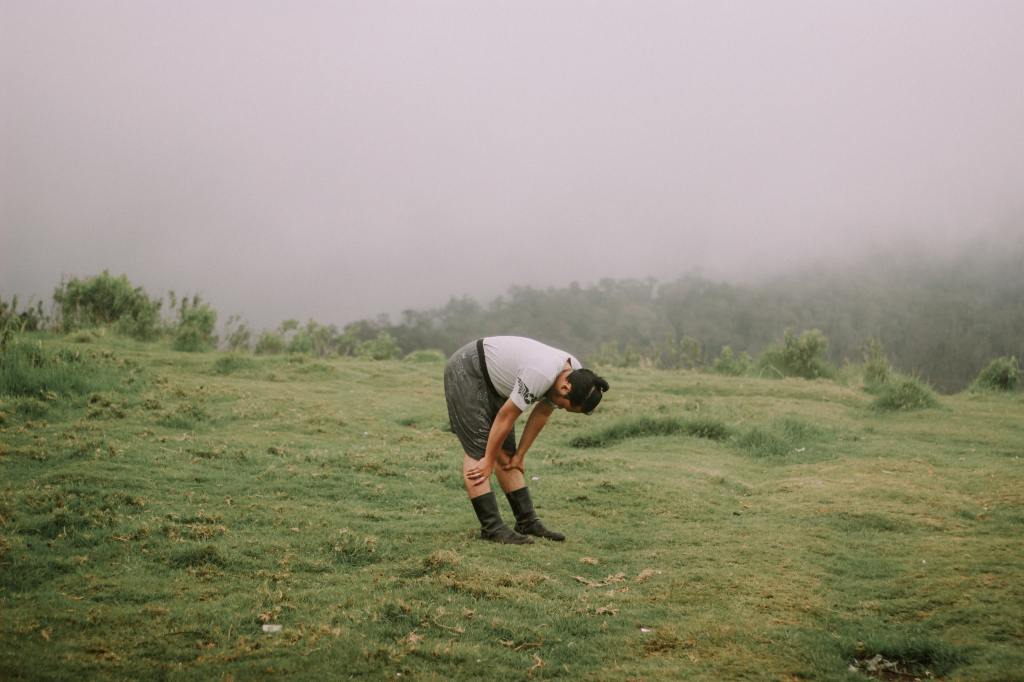
Photo credit: Falaq Lazuardi

As Jesus enters his final days on earth he goes to the Mount of Olives to pray. In the first verse we read “as was his custom.” Jesus Christ was a person of prayer. Even though he was God in the flesh, as a man he was also human. Perhaps his admonition to his disciples to not fall into temptation was also a reminder to himself. Jesus knows what lies ahead. This is the “cup of suffering” that he prays about. It is a cup that the human Jesus would rather not have to drink at this moment. At its core this is a “if there’s another way, God” kind of prayer. We’ve all prayed this kind of prayer – in many forms, in many situations. Then, from a place of humility and faith and surrender, we’ve prayed as Jesus prays, “Not my will but your will must be done.”

Our Matthew passage for today also comes from Jesus’ final week. It’s a few days earlier – on Monday instead of Thursday. Returning to the city, Jesus is hungry. He sees a fig tree but finds nothing but leaves. This tree is symbolic of Israel’s fruitless faith. With a word from Jesus, the tree dries up. The amazed disciples are told, “If you have faith and don’t doubt” then they will do this and more. They will even be able to move a mountain with their words. Extending the idea of the power of faith without doubt, Jesus adds, “If you have faith, you will receive whatever you pray for.”

If we combine the core teaching of these two lessons from Jesus, we find a key practice of our prayer life: pray in faith, aligned with God’s will. We do not always know God’s will. In these cases, we are to pray as Jesus prayed in the garden, with humility and surrender, “Not my will but your will must be done.”

Prayer: Lord God, as we walk through this life, seeking to be faithful and true to you, strengthen our faith and our trust in you. By your Spirit, lead us to grow in our faith, aligning ourselves more and more with your will and way. And using Christ’s example, guide us to humbly bend our will to your will. Amen.


Leave a comment

All the Glory

Reading: John 15:5-8

John 15:8 – “My Father is glorified when you produce much fruit and in this way prove that you are my disciples.”

Today’s passage bridges last week’s question of heaven’s existence and this week’s wrestling with unanswered prayer. The two topics of doubt fund answers in Jesus’ teaching about being the true vine. This image is one also used throughout the Old Testament.

In verse 5 Jesus declares the connected relationship: “I am the vine; you are the branches.” If we remain in Jesus, then we will “produce much fruit.” The main fruit aligns with the great commission: making disciples of all nations. We also produce fruit and bring heaven to earth when we bring Christ’s love, hope, mercy, grace, peace, joy, forgiveness… to those in the world. Of this good life Jesus says, “My Father is glorified when you produce much fruit and in this way prove that you are my disciples.” When we remain in Christ we produce fruit in this world, we bring God much glory.

The converse is also true. When we allow ourselves to become disconnected from Jesus, we will then fail to produce fruit for the kingdom. In that broken relationship we cannot do any good work that glorifies God. And, in the end, we will be “gathered up, thrown into a fire,” where there will be, as Jesus often said elsewhere, weeping and gnashing of teeth.

In verse 7 we begin to lean into the outcomes of our prayers. Here too is a connection. Here Jesus tells us that if we “remain in me and my words remain in you,” then what we ask for will be done. Remaining connected to Christ keeps our heart and therefore our prayers aligned with God’s heart and with God’s will and way. Praying in this way will produce good fruit that glorifies God. May it be so.

Prayer: Lord God, our connection to you is so important, so vital. As we spend time each day in prayer and study, our connection strengthens. Then, as we go out into life and into the world, your words, your Spirit, your will and way go with us, guiding us. May this connection empower us to produce fruit as we strive to build your kingdom of heaven here on earth, bringing you all the glory. Amen.


Leave a comment

Day by Day

Reading: John 7:10-8:59

John 8:19 – “You don’t know me and you don’t know my Father. If you knew me, you would also know my Father.”

Much of today’s reading centers around this key verse. In many ways Jesus asserts that he is “I AM” – knowing Jesus is knowing God and vice versa. Some people recognize this truth. Others struggle to see it or to believe in Jesus. Such is the case to this very day.

Almost all of today’s reading is set in the temple. Jesus’ teaching astonishes the Jewish leaders, the people, and even the temple guards sent to arrest him. But the impact of Jesus’ teaching does not travel to everyone’s heart. Some want to arrest him and others believe Jesus is the Christ, God’s son.

Jesus’ authority is questioned again and again by the leaders and the people. Jesus points to the Law and to Abraham’s example, asserting that they don’t keep true to Moses’ words and that they don’t follow Abraham’s actions. Jesus tells them that the devil is their father because they listen to Satan’s lies. As proof, Jesus says, “You don’t know me and you don’t know my Father. If you knew me, you would also know my Father.” They won’t accept God’s words that Jesus speaks, the words that are the light of life and that will set them free from their sin.

At the start of chapter 8 we find the story of the woman caught in adultery. This story generates many questions for me. Where is the man? What did Jesus write on the ground? Did the woman go and sin no more? This story also offers specific truths. We’re all sinners. None of us has right standing to judge or condemn others. Jesus offers us all grace and mercy. We are all called by Jesus to go and sin no more. Day by day may we grow in our capacity to live out these truths and this call.

Prayer: Lord God, like many in today’s text we struggle and we walk in belief some days, in doubt other days. We allow other voices, sometimes our own, to distract us from our walk with you. Lord, ground us in the truth of your word and in the guidance of your Spirit. Lead us to live daily as a repentant sinner saved by grace and as an unconditionally loved child of the one true God. Amen.


Leave a comment

We’ve Been Given Much

Reading: Luke 11:37-12

Luke 12:33 – “Make for yourselves wallets that don’t wear out — a treasure in heaven that never runs out.”

Photo credit: Tyler Milligan

Today’s reading deals with authentic versus surface commitment to God. And it speaks into the worry and doubt and anxiety that is so common in our world today. These two topics relate to one another.

Our words from chapter 11 address the outward and superficial faith lived out by the Pharisees and legal experts. They tithe their herbs but neglect justice and love. They crave recognition and status. They place huge expectations on others but don’t help them and often get in the way of their faith development. These condemnations create deep resentment towards Jesus. But we must ask: Which would be addressed to the faith lived out by you and me?

Chapter 12 mostly focuses on trusting in God’s love and care instead of getting caught up in worry and fear or in the cares and concerns of the world. Jesus reminds us that God cares for and loves us much more than sparrows, ravens, and lilies. Each of these is provided for. How much more will God provide for us, God’s dearly loved children.

Jesus warns against greed, specifically against hoarding or storing up. These inwardly focused acts draw us away from compassion, empathy, and generosity. We are encouraged to release our “things,” to give to those in need. Doing so, we “make for yourselves wallets that don’t wear out — a treasure in heaven that never runs out.” Nothing can take these eternal things away. Jesus sums up why it is so important to be selfless: “Where your treasure is, there your heart will be too.”

Jesus also addresses our spiritual readiness. As servants of God we all have roles to play. We are to be diligent and faithful in how we use all of our resources – time, talents, gifts, wealth… “Much will be demanded from everyone who has been given much.” Friends, we have been abundantly and generously blessed by our God.

Prayer: Lord God, yes, you love us far beyond our understanding. And, yes, you care for us unlike any other. Yet worry and fear and earthly concerns can creep in. We can question you. In these moments, remind us of your truths and promises. Speak these into our hearts, Holy Spirit of God. Amen.


Leave a comment

Faith, Trust, and Seeds

Reading: Mark 4-5

Mark 4:20 – “The seed scattered on good soil are those who hear the word and embrace it. They bear fruit.”

A farmer goes out to scatter seed. Not sow, not plant – scatter. Some seeds fall on the path and are eaten by birds. Some falls on rocky soil. It sprouts quickly but does in the heat – no roots. Some seeds fall among the thorny soil. They sprout and grow but are soon choked out by the weeds. Other seed falls on good soil. “The seed scattered on good soil are those who hear the word and embrace it. They bear fruit.” For others, faith is short-term, cancelled out by distress, fear and doubt, by the cares of this world. Faith is like a lamp – we let it shine and it reveals what was hidden. Faith comes to those seeking. This is one way we bear fruit. We don’t know how it takes root or how it grows, but the tiniest seed can grow and grow, helping others. This too bears fruit.

Jesus crosses the lake, going to Gerasenes, a Gentile community. There is a storm along the way. Frightened, the disciples awaken Jesus, who calms the storm. He chastises them for their rocky soil faith. Once there, Jesus encounters a demon possessed man named Legion. The thousands of demons are cast into the nearby pigs. The uncontrollable madman is found “fully dressed and completely sane.” The townspeople ask Jesus to leave. Their thorny soil prevents them from accepting Jesus. The man asks to go with Jesus. He is told to go home to tell his people what Jesus did for him. He is good soil ready to produce a crop.

Our reading closes with two healings. Both involve risky faith. Jairus, a synagogue leader, risks by coming publicly, asking Jesus to heal his daughter. The woman with a bleeding disorder sneaks up through the crowd and touches Jesus’ clothes. She is healed. In the midst of a great crowd, Jesus asks “Who…” and she risks coming forward. She confesses and Jesus blesses her faith that healed her. News then comes of the daughter’s passing. Jesus says to Jairus, “Just keep trusting.” In the end, Jairus’ trust and faith is honored too. Jesus heals the daughter. Faith and trust bring healing.

Prayer: Lord God, you have power over all things – wind and waves, fear and doubt, mental and physical illness, even death. That power is available to those who believe in you as Lord and Savior. Lord, grow these seeds of faith that have been planted in each of us. Encourage and empower us to scatter these seeds, bearing fruit for your kingdom. Amen.


Leave a comment

The Cornerstone

Reading: Matthew 21

Matthew 21:21 – “I assure you that if you have faith and don’t doubt… You will even say to this mountain, ‘Be lifted up and thrown into the lake.’ And it will happen.”

Photo credit: Aaron Burden

Today’s reading begins with Matthew’s version of what we know as Palm Sunday. Jesus’ triumphal entry is highlighted by praise and adoration from the crowd and from his disciples. There is a buzz in the city. Jesus rides this wave into the temple, where he overturns tables and chairs, throwing out those who have made “God’s house of prayer” into a “hideout for crooks.” He then heals the blind and lame who come into the temple – likely for the first time since becoming blind or lame. Children run around the temple shouting praises. The religious leaders are deeply offended by all of this.

Returning to the city the next morning, Jesus curses a fruitless fig tree. The disciples are amazed at his power. He says to them, “I assure you that if you have faith and don’t doubt… You will even say to this mountain, ‘Be lifted up and thrown into the lake.’ And it will happen.” Build your faith on me, he says, and be amazed at what God will do. As Jesus enters the temple again we see the opposite of this. The leaders question Jesus’ authority. His response begins with a question: Where did John the Baptist get his authority? There is no right answer for the religious leaders. So Jesus tells two parables to reveal their lack of faith and to condemn their fruitless ministry.

In the first parable the religious leaders know it is the first son who does the father’s will. He was obedient. Jesus then tells these leaders that tax collectors and prostitutes are entering the kingdom ahead of them. They heard and believed John, changing hearts and lives. Even this fruit didn’t convince the religious leaders to change. In the second parable tenants mistreat and even kill some of the servants sent to collect fruit. They then kill the son who is sent. The religious leaders tell Jesus that the owner will “totally destroy” these wicked tenants. Jesus then quotes Psalms, claiming to be the stone that the builders rejected. But he tells the leaders that this stone will become the cornerstone, the foundation of the new, coming kingdom.

Prayer: Lord God, you call us to shout “Hosanna!” with our voices and with our actions – not one day a year but every day. When things get in the way of us doing this, clear our lives like Jesus cleared the temple. Build up in us a faith without doubts, a faith that stands firmly on the cornerstone, on Jesus Christ. Amen.


Leave a comment

Faith, Love, Compassion

Reading: Matthew 14-15

Matthew 15:6-7 – “You do away with God’s Law for the sake of the rules that have been handed down to you. Hypocrites!”

Photo credit: Nathan Lemon

Today’s two chapters cover a wide variety of topics – abuse of power, feeding and healing, doubt and fear, great faith. In some stories, these topics intertwine. Chapter 14 begins with the death of John the Baptist. Abusing his power is nothing new for Herod. Here it costs John his life. At his birthday party, Herod promises “anything” to his daughter-in-law. She asks for John’s head. Jesus learns of this, is grieved, and withdraws to a “deserted place” by himself.

The crowds find Jesus and bring the sick to him. With compassion he heals them. Late in the day, the disciples urge Jesus to send them away to buy food. His response: “You give them something.” The impossible becomes reality as 5,000 men plus women and children eat their fill from 5 fish and 2 loaves. In the end each disciple holds a basket full of leftovers. Later, in chapter 15, Jesus feeds a crowd of 4,000 men plus women and children.

Jesus dismisses the crowd, sends the disciples on across the lake, and goes up the mountain to pray. In the early morning he comes to them, walking on the water during a storm. Here is where Peter walks in the water – until his fears and doubts overcome his faith. Jesus rescues him. Later it is a Canaanite woman, another outsider, who shows great faith, persevering until Jesus heals her daughter.

At the start of chapter 15 there is an encounter between Jesus and the religious leaders. Being “clean” is the core issue. Jesus says, “You do away with God’s Law for the sake of the rules that have been handed down to you. Hypocrites!” His example: man’s rule (giving money to the temple) has overridden God’s Law (honor father and mother.) This too is an abuse of power. Getting to the core issue, Jesus tells the crowd and then the disciples that it is what comes out of the mouth (and therefore out of the heart) that makes one unclean. When one allows evil thoughts, adultery, insults… to form in the heart and then to come out of the mouth, then one becomes unclean. May it not be so.

Prayer: Lord God, like today’s reading, life brings a variety of challenges as we seek to walk faithfully with you. Faith, love, compassion – may these be our guides as we strive to love you and to love neighbor in all the ways we can, in all the times we can. Amen.


Leave a comment

Saul’s Warning Signs

Readings: 1st Samuel 8, 1st Samuel 9, 1st Samuel 10, 1st Samuel 11, 1st Samuel 12, 1st Samuel 13

1st Samuel 8:7 – “Comply with the people’s request… because they haven’t rejected you. No, they’ve rejected me as king over them.”

Photo credit: Falaq Lazuardi

Today we transition with Israel from judges to kings. Samuel is the last judge and Saul is the first king. Problems with leadership continues to derail things. Samuel’s sons are just as evil as Eli’s were. The people see this as the writing on the wall and they ask Samuel to appoint them a king. Although Samuel knows it is a bad idea, here is God’s response: “Comply with the people’s request… because they haven’t rejected you. No, they’ve rejected me as king over them.” Samuel then explains how a king will exploit them and they still want a king – “so that we can be like all the other nations.”

Saul has a “chance” encounter with Samuel. Here we first see Saul’s insecurity – “smallest tribe… smallest family.” Samuel anoints him in private and prophesies three encounters. All come true. Next Samuel calls all of Israel together at Mizpah. Saul is selected by lot. Except he is hiding. Saul is presented as a king but some people question the choice. Saul then leads Israel to victory over the Ammonites. The naysayers are remembered and the people want to kill them. Saul chooses mercy instead. It is a day of victory. The next day all of Israel gathers to make Saul their king.

Samuel then warns the people. Obey the Lord and it will go well with you. Disobey and feel the Lord’s hand against you. He encourages them to fear the Lord and to serve God faithfully. Our passage closes with a story of impatience. Saul has Jonathan attack the Philistines, who respond in force. Fear leads to soldiers deserting and Saul takes matters into his own hands, sacrificing the well-being offering himself. Samuel arrives just then and asks, “What have you done?” Saul’s days are now numbered. God will seek a new king – “a man following the Lord’s own heart.”

Prayer: Lord God, what familiar foes – insecurity, doubt, fear, impatience. Saul is not alone in these battles. It’s in the hearts of Israel, it is in our hearts. Grant us an abiding faith, a resolute heart, a trusting spirit. Lord, teach us your ways, instill in us your heart. Amen.


Leave a comment

Imperfect But Usable

Readings: Joshua 6, Joshua 7, Joshua 8

Joshua 6:38 – “Don’t be angry with me… Please let me make just one more test.”

Today’s chapters focus on Gideon. In Gideon we see faithfulness to God right alongside his battles with doubt, fear, anger, and pride. We experience these things in our walks of faith. Like Gideon, we want to obey God, but often stumble over our own will and ways. More than anything, though, in these chapters we see that God can use Gideon’s flaws to ultimately work out God’s plans for Israel. God can and will do the same for you and for me.

The people have sinned and God allows the Midianites to cruelly oppress Israel. They cry out. God sends a prophet who reminds them, “You have not obeyed me.” Then God’s messenger calls Gideon. He is reluctant. He has excuses. He tries God’s patience. At one point Gideon says to God, “Don’t be angry with me… Please let me make just one more test.” God works through all of his tests. Satisfied for now, Gideon calls for an army. Yet fear persists. God allows him to overhear a dream which restored his courage. God then tests Gideon, whittling his army of 32,000 down to 300. Credit must go to God. Pride rises up in Gideon as he gives the battle cry: “For God and for Gideon.” Following a wild plan of God, similar to Jericho, victory is won. God’s plan is complete. Yet Gideon chooses to pursue the enemy kings.

In Gideon’s pursuit he asks the people of Succoth and Penuel for bread. They deny Gideon and his army any bread. He threatens them. Soon he captures these two enemy kings and executes them – revenge for killing Israelites. He returns to Succoth and Penuel, exacting violent revenge here too. Pride and anger rule in his heart. Yet when asked later to be Israel’s ruler, he states, “The Lord rules over you.” Apparently he is not part of this “you” though as he collects gold earrings and makes a priestly vest. This trap leads straight to idolatry and the continuing downward spiral of Israel. More on that tomorrow.

Prayer: Lord God, help us to learn both from the good and the bad that we see in Gideon. Help us to be faithful and to follow your plans. Help us to see, though, when it becomes about us and our plans. Keep us from the perils of sin. Guide us to walk in your ways. Amen.


Leave a comment

When Will They Learn?

Readings: Numbers 11, Numbers 12, Numbers 13, Numbers 14

Numbers 14:8 – “If the LORD is pleased with us, he’ll bring us into this land and give it to us.”

Photo credit: Anne Nygard

Chapters 11-14 are a great summary of the Israelites time in the wilderness. It has it all: complaint and grumbling, anger and punishment, faith and doubt, trust and fear, intercession and forgiveness, victory and defeat.

Our reading begins with a little grumbling. God’s fire burns against this unnamed complaint, burning the edges of camp – a sign of warning. Some “riffraff” ignore the warning. They allow their craving for meat to lead to grumbling and a longing for those “better days” in Egypt. Moses is frustrated and overwhelmed. God responds by giving him leaders to help bear the weight of leadership. And God brings waves and waves of quail. God will be so abundant that “it will come out of your nostrils and nauseate you.” God’s anger then burns against the riffraff. They are buried there in the desert.

The complaining turns personal as Aaron and Miriam question Moses’ leadership. They are jealous. They claim a connection to God that only Moses has. Miriam is struck with a skin disease. Aaron begs for Moses to intercede. Miriam must bear the shame of their sin for seven days. After her isolation period she is healed and returns to camp.

Chapters 13 and 14 cover the exploration of the Promised Land and the people’s lack of faith and trust. The spies return with huge grapes and stories of huge people and fortified cities. Caleb tries to rally the people. Rumors ensue and soon the people are discouraged. The people once again long for Egypt – or at least to die in the desert instead of by the sword. Joshua then speaks, trying to rally their faith. He says, “If the LORD is pleased with us, he’ll bring us into this land and give it to us.” That is a really big “if.” The people want to stone Joshua and Caleb.

God’s anger burns hot as God decides to start over with just Moses. Moses intercedes again and God’s anger relents. But there will be a consequence: those 20+ will indeed die in the desert. They will wander for 40 years – one year for each day of exploration. Bitter mourning follows this news. And yet a group decides to enter the Promised Land anyway. Moses warns them. They are struck down by the people of Canaan.

Prayer: Lord God, how clear are the results of faith versus fear, of obedience versus disobedience. I start to think, when will they learn?! And then I realize that we’re still learning, that I’m still learning. Thank you, Lord, for your unending love and for your enduring faithfulness. You give mercy and grace that we and I don’t deserve. Yet it flows generously and abundantly. Thank you, God. Amen.