pastorjohnb

Thoughts and musings on faith and our mighty God!


Leave a comment

To Change Hearts and Lives

Reading: Luke 4:14-5

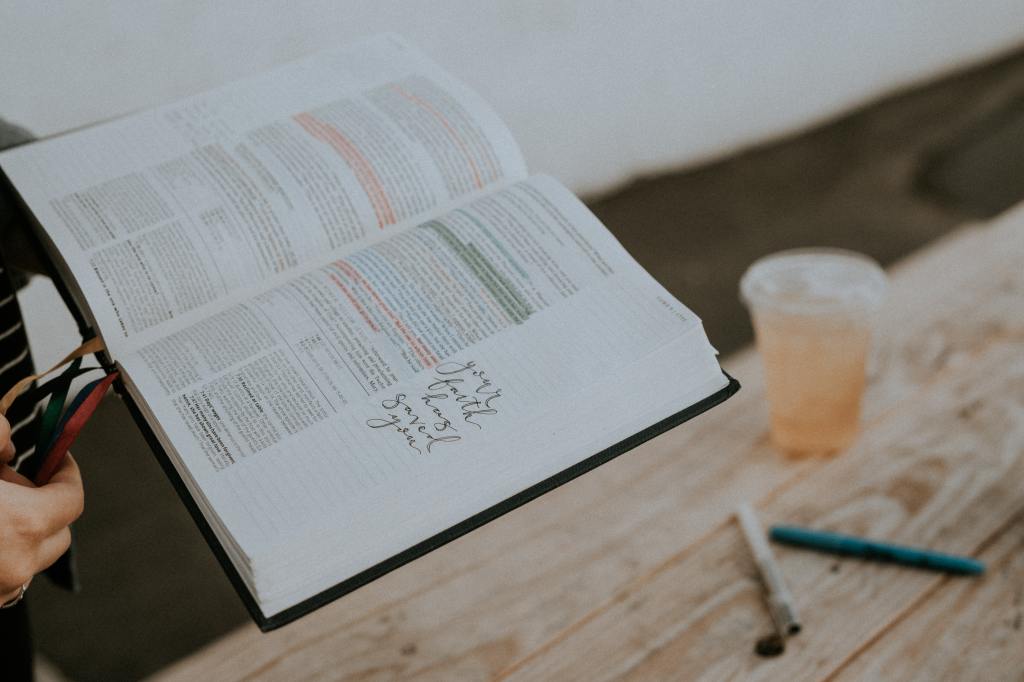
Luke 5:32 – “I didn’t come to call righteous people but sinners to change their hearts and lives.”

Photo credit: Robert Linder

Jesus begins his public ministry teaching in the local synagogues. In his hometown of Nazareth he reads from the scroll of Isaiah. Jesus claims these words as the focus of his ministry. At first the audience is “raving” about Jesus but then someone asks, “This is Joseph’s son, isn’t it?” Jesus quotes a saying about prophets not being welcome in their hometown. He then reminds them of the story of the widow of Zarephath and of Naaman the Syrian. They are filled with anger. They do not want the Gentiles included in God’s plan.

Jesus travels to Capernaum and heals a man with a demon. News spreads. That evening he heals many, touching each. Crowds gather along the seashore. Jesus asks Simon to row out a bit so that he can teach. After he’s done teaching he asks Simon to row out and to drop the nets. A miraculous catch is followed by a sinner’s confession. Jesus tells Simon, “From now on you’ll be fishing for people.” Simon, along with James and John, leaves everything behind to follow Jesus.

After healing a man with a skin disease, again touching someone considered unclean by Jewish religion, Jesus has a public confrontation with the Pharisees and legal experts. In response to the faith shown by the friends lowering their paralyzed friend through the roof, Jesus says, “Friend, your sins are forgiven.” The religious leaders mutter about this. Jesus asks them which is easier: to say your sins are forgiven or to say get up and walk? Proving his authority to forgive sins, Jesus heals the man, who picks up his cot and walks home.

Jesus then calls Levi the tax collector. Levi throws a banquet. The religious leaders question Jesus about eating with tax collectors and other known sinners. His reply: “I didn’t come to call righteous people but sinners to change their hearts and lives.” Thanks be to God – Jesus came for you and for me!

Prayer: Lord God, your touch healed many and your words changed hearts and lives. Continue to speak into our hearts and lives each day. You also healed the wounds and separation caused by sin. Continue to heal us in this way, making us whole. Amen.


Leave a comment

May Blessings Flow

Reading: Ezekiel 53-48

Ezekiel 47:9 – “Wherever the river flows, every living thing that moves will thrive.”

Photo credit: Kazuend

The majority of today’s reading focuses on God’s presence re-entering the new temple and on the ordering of all aspects of worship and temple life. God’s glory fills the temple, leading Ezekiel to fall in worship. God then instructs him to listen carefully and to write down these new instructions. The central focus is on holy versus unholy or clean versus unclean. Building and purifying the altar, proper worship on the Sabbath and during the two festivals (used to be three), honoring the east gate, setting aside sacred spaces, regular offerings – all were aimed at maintaining the holy. To keep and hold these spiritual practices in the highest ways would work against a return to the “detestable practices” of old, to the unholy.

In chapter 47 there is a river that flows from the temple, out the east gate – the gate that God’s holiness entered through. The trickle grows to a vast river that brings life and abundance to the people of God. As God’s presence is brought out into the world, blessings flow with it. This remains true today.

Ezekiel closes by defining Israel’s borders and by allotting land to the tribes. These boundaries connect back to what God originally laid out for Moses back in Numbers 35. Land is allotted, beginning in the north, to Dan, Asher, Naphtali, Manasseh, Ephraim, Reuben, and Judah. Next comes the Holy portion, with the temple at its center. The city and Prince are allotted land here in this central section. Moving to the south, land is allotted to Benjamin, Simeon, Issachar, Zebulun, and Gad. Benjamin and Judah remain central, just flipped from their pre-exile locations. Similarly, the tribes furthest out are the children of the maidservants. Each tribe received an equal portion of the land. This time the Levites are included. The twelve city gates are named after the original sons of Jacob. Joseph’s sons are combined to make space for Levi. God’s new kingdom envisioned here will one day be established here on earth. We await the day!

Prayer: Lord God, what a vision for what will be at the end of this present age. You will be the center, the focus, the life source. Yes, we do await the day. Yet, as we wait, Lord God, use us to draw this world closer to this vision. Use us as the life-giving river that flows out into the world, bringing blessings and abundance into people’s lives. Amen.


Leave a comment

True and Perfect

Readings: Psalms 17-20

‭Psalm 18:30 – “God! His way is perfect; the LORD’s word is tried and true. He is a shield for all who take refuge in him.”

Photo credit: Rainier Ridao

There is a familiarity of themes and of some verses/phrases in today’s readings. Psalm 17 and 18 touch on the theme of obedience/blessing and disobedience/consequences. In Psalm 17, for David, a right heart and a sinless mouth means that God should “tilt your ears towards me now.” He seeks refuge in God from those who speak arrogantly, who want to “put me in the dirt.”

Psalm 18 begins with some wonderful descriptors of God: strength, solid rock, fortress, rescuer, refuge, shield, salvation, place of safety. These are words that we too can claim. David cries out for help and God responds in power and might – thunder and lightning, hail and coals. God’s power is both majestic and frightening. Verses 20-24 remind me of Job. God rewards because David is righteous. God restores because David’s hands are clean. Verse 30 is a great summary verse: “God! His way is perfect; the LORD’s word is tried and true. He is a shield for all who take refuge in him.”

Psalm 19 continues the praise of God that ends Psalm 18. The heavens declare God’s glory. The law is perfect, faithful, right, pure, correct, and true. It brings wisdom and gladness and light. One is given “great reward” by keeping the law. In verses 12 and 13 David seeks forgiveness for accidental wrongs. Psalm 19 closes with familiar words: “Let the words of my mouth and the meditation of my heart…”

In our last Psalm for today the focus shifts to the other. The prayer is for God to answer “you” when in trouble and for God to fulfill the desires of “your” heart. This is a prayer that we can pray over others. Who might you pray verses 1-5 over today?

Prayer: Lord God, your way is true and perfect. Your will guides us to light, love, hope, peace. We are faulty and imperfect. On our own, O God, we’d be helplessly lost. Surely those cords of death would entangle us. But we are not alone. You are right there beside us. You are our strength and our shield, our rock and our defender, our God. Thank you. Amen.


Leave a comment

All Listed

Readings: 1st Chronicles 1, 1st Chronicles 2, 1st Chronicles 3, 1st Chronicles 4, 1st Chronicles 5, 1st Chronicles 6, 1st Chronicles 7, 1st Chronicles 8

1st Chronicles 9:1a – “So all Israel was listed in the official records of Israel’s kings.”

Today we read lots of genealogy. There are many familiar names. Some are well-known Bible characters and other names are familiar because we just read Kings. Chapter 1 takes us from Adam up to the time of Israel. There are familiar names besides Adam’s – Enoch, Noah, Esau, Israel (Jacob). Chapter 2 begins with a listing of Israel’s 12 sons.

The rest of chapter 2 through chapter 9 details the 12 tribes/sons of Israel. The chronicler begins with Judah and works in a circle geographically, ending up with Benjamin and in Israel’s political and religious center: Jerusalem. Judah’s family comes first. In chapter 3 we find a focus on David’s family. In verses 10-16 we find familiar names, ones we just read about in 2nd Kings. In chapter 4 we read about Simeon’s family. Here we begin to get a bit of history too. Chapter 5 holds the Transjordan tribes of Reuben, Gad, and half of Manasseh. Here too we get a bit of their history.

Chapter 6 covers Levi’s family, their priestly duties, and the refuge cities. In chapter 7 we read of the descendants of Issachar, Benjamin, Naphtali, and the rest of Manasseh. Here we find troop counts. Naphtali gets but one verse. Chapter 8 comes back around to Benjamin’s tribe. The last half or so focuses on families living in or around Jerusalem. This section ends with 9:1a – “So all Israel was listed in the official records of Israel’s kings.”

Prayer: Lord God, thank you for the reset today. What a grand and detailed summary! While we know only a handful of names compared to the cumulative list, those familiar names remind us of your grand plan. This sets the stage as we continue on in your word. Once again, thank you Lord. Amen.


Leave a comment

A Temple and a Palace

Readings: 1st Kings 5, 1st Kings 6, 1st Kings 7, 1st Kings 8

1st Kings 8:58 – “May God draw our hearts to him to walk in all his ways and observe his commands, his laws, and his judgments.”

In today’s chapters the temple and Solomon’s palace are constructed. The King of Tyre, Hiram, reiterates the promise he made to David. Solomon and Hiram make an agreement. Solomon will receive wood and Hiram will receive wheat and oil. A huge work force is called up. The temple is 90′ by 30′ and is 45′ tall. It is beautiful and ornate and much is covered in gold. After 7 years, the temple is built. Hiram comes and makes items for the outer area: pillars, a huge tank, stands, washbasins… – all of bronze. For the inside items are made of gold: altar, table, lampstands…

Solomon is also building his palace. It will be 150′ by 75′ and is 45′ tall. It is much larger than the temple but is also much less ornate… It takes 13 years to finish the palace. As this is ongoing, the temple is dedicated. The ark of the covenant is brought into the Holy of Holies. God’s glory fills the temple. Solomon offers a long and beautiful prayer. He begins by acknowledging that there is no god like the one God. He acknowledges the covenant and God’s loyalty. He calls for the temple to be the center of worship and the focus of their faith. Whether famine or plague or sin or enemy invasion or exile, he calls on the people to look to the temple, to repent, to pray to God, and to turn their hearts fully to God. Solomon asks God to listen to their prayers and to do what is right. He closes and then offers an invitation: “May God draw our hearts to him to walk in all his ways and observe his commands, his laws, and his judgments.”

Extravagant sacrifices are made to dedicate the temple and courtyard. This is followed by a great celebration that lasts 14 days. The people are dismissed. They bless the king and head to their tents happy and pleased. It is a good day.

Prayer: Lord God, thank you for the picture painted today – a king and a people focused on doing something for your glory. Thank you for the example of a people with hearts turned fully towards you. Lead us to walk in these ways. Amen.


Leave a comment

Living Together with Christ

Reading: 1st Thessalonians 5:6-11

Verse 10: “Jesus died for us so that, whether we are awake or asleep, we may live together with him.”

Photo credit: Sophie Walker

Thessalonica was a city under Roman control. The political leaders and many of the religious leaders were trying to curry favor with the Romans. This upstart church refused to play this game. The tension created by this eventually sept into the church, creating division there too. They began looking at one another, questioning the other’s faith. The polarization of the world was beginning to creep into the church. The “us” and “them” mentality was negatively affecting the church and its witness, both from the outside and from the inside.

Paul begins to address this by encouraging the church to not be like those who are asleep – those without faith in Jesus Christ. Instead, he encourages them to “be alert and self-controlled.” Notice when the world is creeping in, keep the focus on Jesus. Make the choice to control your tongues and your bodies. To help these efforts, Paul invites them to put on “faith… love… and the hope of salvation.” Putting on and living out faith, hope, and love will allow them to be light in the dark world and peace in a world of division. These actions, of course, must begin within and then spread outside the church. We must first practice and model what we believe before we can preach or share these things with the world.

Paul closes with a reminder and then with an encouragement. First, in verse 10, he writes, “Jesus died for us so that, whether we are awake or asleep, we may live together with him.” Christ died for all – for those inside the church and for those still outside the church. The mission remains to make disciples of Jesus Christ. Second, Paul invites the church to “encourage one another and to build each other up.” Support and love one another, lift each other up. Being hope, love, and faith in the world is not often easy. We need one another. May it be so.

Prayer: Lord God, draw us together. Make us one in you and one with each other. Let love and hope and faith guide all that we do and say, especially within the family of God. After we’ve learned to do this well, send us out to share these blessings with the world. Amen.


Leave a comment

What Is Required?

Reading: 1st Thessalonians 4:13-18

Verse 17b: “And so we will be with the Lord forever.”

Today’s words from Paul connect really well with the themes and ideas around All-Saints’ Day. In Revelation 7 the vision of heaven and all its glory brought hope to the believers suffering in John’s time. These words offer hope to all believers. The Thessalonians aren’t quite there yet. The vision detailed in Revelation probably hasn’t reached them. They are concerned with the souls of those who have died (“fallen asleep”) before Jesus returned. The common belief was that Jesus was coming back any day, soon. They fear that these souls might miss out or forever be trapped in limbo.

Paul begins to address their fears and concerns by assuring them that because Jesus died and rose again that one day all who believe in him will one day rise with him. Paul further assures them using Jesus’ own teachings. He reminds them that Jesus taught that when he returns “the dead in Christ will rise first.” Those who have fallen asleep will indeed join Jesus in glory. Paul then turns to those who are alive, reminding them that Jesus taught that those who are still alive “will be caught up together with them.” All who call on Jesus as Lord and Savior “will be with the Lord forever.” What words of hope and encouragement Paul shared with the Thessalonians and with us!

The underlying question that bubbles up here for me is this: What is required of me so that I am one day a part of this heavenly gathering? I first turn to Micah 6:8. These words are my daily prayer of commitment to God. Each day I strive to act justly, to love mercy and kindness, and to walk humbly with the Lord. These words and actions focus and frame my day. What words and practices guide you to living in a way that brings honor and glory to God?

Prayer: Lord, justice, mercy, kindness, and humility – they are a good start but I know that this is not all that is required of me. By the power of your Holy Spirit fill me with your love and compassion, with your grace and forgiveness. Show me the way to daily serve you and neighbor. Amen.


Leave a comment

Love Lived Out

Reading: 1st Thessalonians 2:1-8

Verse 8: “Because we loved you so much, we were delighted to share with you not only the gospel of God but our lives as well.”

Paul’s ministry in Thessalonica is the focus of today’s passage. Paul, Silas, and Timothy preached the good news of Jesus Christ “with the help of our God.” In spite of opposition they spoke boldly. While the fruit of their faithfulness was converts to Christ, Paul clearly states that their ministry was offered to please God alone. And in order to best minister there, in order not to be a “burden,” Paul’s habit was to find work in each community, allowing him to care for them in the best way possible.

While we may feel like we live in a much different time than Paul and company lived, the principles and practices shared in today’s passage are very relevant to our faith and to our witness. Paul’s primary focus was to share Jesus. All he did and said and thought was aimed at this focus. Do we use all that we are and all that we have to share the good news? They spoke boldly, not fearing whatever opposition that may come. Do we speak boldly of our faith or do we worry more about what others might think or say about us? Do we allow the “cost” to sway how we go about witnessing to our faith?

And, perhaps most importantly today, are we “gentle” and caring with all of those that we encounter and engage? In a world that often sees Christianity in a negative light, do our words and actions always help people to experience the love and grace of Jesus Christ? Do those we witness to feel that we are doing our “job” or do they feel what people felt when they met Paul or Jesus – our desire to be in relationship, to share our lives as well?

Prayer: Lord God, may we truly be your love lived out today. When others look at us, when they talk with us, when they spend time with us, may they feel like they have been in your presence. Guide us, Lord, to be gentle and kind with all we meet. And empower us to be bold in our sharing of the good news. In all of these things may others come to know your love and our love. Amen.


Leave a comment

His Hope for Us Too

Reading: Matthew 16:21-23

Verse 23: “You do not have in mind the concerns of God, but merely human concerns.”

Right after Peter’s amazing declaration of Jesus as the Messiah, I wonder if the disciples high-fived one another and got all excited – like rabid fans before the big game. Among the 12 were 2 zealots and probably 10 others who longed to see Rome sent home with her tail between her legs. The disciples, like 99.9% of the Jewish population, dreamed of being a great and powerful nation once again. We recall that Jesus ended that last messianic conversation with the stern warning not to tell anyone that Jesus is the Messiah. Tempering the emotions and expectations of the masses is never easy. A crowd can go from zero to 100 in a moment. (See the Palm Sunday passages.)

Jesus begins to temper the disciples’ messianic expectations by God explaining what his last few days will actually look like. He tells them that he will “suffer many things” and that he will be killed. Then he says, but on the third day he will be “raised to life.” All of this must’ve felt crushing and simply impossible to the disciples – especially the last part about rising to life after being killed. Jesus, dead is dead. There is no going back.

Peter can’t make any sense of it. He probably didn’t want to either. That’s why he reacts as he does, saying, “Never, Lord!” Peter thought he was being brave and courageous. He thought he knew better than Jesus. Jesus does not think so. He sharply redirects Peter’s thinking, inviting him away from “merely human concerns” and into “the concerns of God.” Peter, the rock, will get there.

That is Jesus’ hope for us too. We can easily lose our kingdom of God focus and regress into the ways of the kingdom of the world. Self can easily slip ahead of Jesus as the one who ruled the roost. In these moments when we begin to teeter – and we will – may we remember that Jesus is the king of love not hate, of humility not greatness, of peace not competition and comparison. May this be our king, our Lord, our Savior.

Prayer: Lord God, the things and ways of this world can so easily become a stumbling block. Soon enough we’ve fallen and are all bruised and broken. By the power of your Holy Spirit, intervene and intercede in our lives. Lead and guide us to walk in the way that leads to abundant life. Amen.


Leave a comment

Sing a Song

Reading: Psalm 105:1-6 and 16-22

Verse 2: “Sing to God, sing praise to God; tell of all God’s wonderful acts.”

Photo credit: Shane Rounce

Psalm 105 encourages us to sing. The psalmist encourages us to sing as our vehicle for remembering God’s wonderful acts, for finding strength, and for seeking God’s face. On days when life is good, a song will lift our spirits. On days when life is hard or challenging, a song will shift our focus back to the Lord, also lifting our spirits.

The middle section of today’s Psalm reading deals with Joseph’s life – from the time he was sold into slavery to the point when he was made second in command in all of Egypt. The psalmist acknowledges the hard days, the days of slavery. They are part of the story. But then “the word of the Lord proved true.” Joseph’s dreams were fulfilled. The rest of the Psalm details the exodus from Egypt. It again includes both the challenges and the times when God provides and is true to the promises and covenants.

Later in God’s story, when life was again hard or challenging, the Israelites could sing Psalm 105 to find hope, strength, and encouragement. While we may not know the tune, we can read these words and be reminded of God’s steadfast love and care. Or we can sing other songs that remind us of God’s love, care, rescue, provision, redemption… Even when life gets hard, we can sing a song, refocusing our spirit on God, being lifted up and encouraged.

Prayer: Lord God, thank you for music and for song. In times of challenge the right song speaks to my heart, bringing hope to my soul. In my times of need, Lord, bring me your song. Amen.