pastorjohnb

Thoughts and musings on faith and our mighty God!


Leave a comment

Willing Participants

Reading: Isaiah 65:17-19

Isaiah 65:18b – “I’m creating Jerusalem as a joy and her people as a source of gladness.”

As we turn to Isaiah 65 today and tomorrow we turn to a new period in Israel’s history. It is now post-exile. The people of God have returned to Jerusalem, and like in much of Israel, there is hard work to be done. Almost everything must be rebuilt, replanted, or remade. Before much progress is made, the people have turned away again, allowing greed and the worship of idols to take over their doing and being. Isaiah speaks into this reality. But instead of harsh words or condemnation, he speaks words of hope that give an invitation into God’s preferred future.

God is planning to create something new – “a new heaven and a new earth.” God invites the people of God into this new creation, into a time of hope. The things of the past – the sins and bad memories – they will be no more. God declares, “I’m creating Jerusalem as a joy and her people as a source of gladness.” In this new creation God will find joy and gladness too as the Israelites once again become the people of God. In contrast to much of Israel’s recent past, there will be no weeping or crying in this new heaven and earth.

While God is eager to create anew, Israel still must choose to be a willing participant. As God continues to desire to transform this world and our lives into something new, we too must be willing participants. If this is our desire, then we must first be aware of how and when and where God is at work. Once aware we must then choose to willingly enter into that work, whether in the world or within ourselves. May we be willing participants in God’s transformation projects.

Prayer: Lord God, you are ever at work seeking to make our world and your people more loving, more gracious, more just. Open our eyes and hearts to this work, encouraging us by your Spirit to be your voice and your hands and feet in the creation of a new heaven and earth in this time and place. Amen.


Leave a comment

Glory, Mystery

Reading: Haggai 2:6-9

Haggai 2:7b – “I will fill this house with glory.”

Photo credit: Paul Pastourmatzis

As we continue in Haggai 2 today, the focus shifts. The encouragement of the people in their work on the temple shifts to focus on what God will do. The words in verses 6-9 speak of the present and of the future. They speak of the here and of the there. These words are promises from God. And they can be every day truths.

We begin with “in just a little while.” These words could mean later today or tomorrow or 2,000 years from now. We know that God’s time is not our time. We also know that God’s timing is perfect. In God’s time, God will make the “heavens… earth… land… sea quake.” Connecting back to words and images from the Genesis 1 narrative, we’re reminded that God controls all of creation. In the next verse we are included: “all the nations.” This shaking will lead to action, in both the created world and in us.

God declares that ‘soon’ “the wealth of the nations will come” to God’s house. In the near future, the empire of Persia will financially support the rebuilding and glorification of the temple. But is has been said that the greatest resource of any nation is its people. Here we edge into eternity or maybe a great revival, when all people will kneel and all tongues will confess that Jesus Christ is Lord. Keeping on this track, silver and gold can be material possessions but this could refer to much more. Gentile and Jew? Lost and saved?

The second temple will be a glorious structure. There will be “prosperity” at times. In these times, yes, God will “fill this house with glory.” There will also be times of corruption and greed. Jesus will overturn some tables one day. And what if prosperity isn’t financial at all?

Prayer: Lord God, we know that your love is unconditional, that your mercy is endless, that your grace is ever overflowing. We know that you created and are over all things, us included. But there is so much that we don’t know. There is much mystery. And that is good. Today we ask, O God, that you would help us to step into that mystery, to imagine your possibilities, to trust you into the unknown. We know that you are in all these things. And you are in us. Thank you, God. Amen.


Leave a comment

Resolve

Reading: Jeremiah 29:1 and 4-7

Jeremiah 29:5-6 – “Build houses and settle down; cultivate gardens and eat what they produce. Get married and have children…”

In the opening verse we learn that Jeremiah sends a letter to those who have been brought into exile – to the elders, priests, prophets, and people taken to Babylon from Jerusalem. The typical thought process would be figuring out how to get back home ASAP. For us, when we’ve sinned and find ourselves in exile, this is normally our thought process. It will not be so for Jeremiah and for Israel.

This is part of God’s proclamation to Israel: “Build houses and settle down; cultivate gardens and eat what they produce. Get married and have children…” In other words, settle in and become a part of where God has sent you. Treat whatever city of exile as your new homeland. Contribute to the community’s welfare and pray for it. Israel will spend almost two generations in exile (70 years.) During this time God will produce a small but faithful remnant to return to Jerusalem and to the Promised Land.

Jeremiah is calling Israel to the fifth movement of Ignatuis’ Examen: resolve. In more modern language, God is asking Israel to “bloom where you are planted.” Being there for the long haul, God invites Israel to make the most of their new reality. A better future is out there for God’s people. But there is work to be done. Like Israel, at times we must resolve that tomorrow can and will be different. Working through request, relish, review, and repent we arrive at a place of heart prepared to look and move forward with hope. As we resolve to live more like Christ, God’s transforming Spirit leads us forward, deepening our relationship with God and with one another. May it be so each day as we learn to practice this powerful spiritual discipline.

Prayer: Lord God, lead and guide us to walk the walk, not just to talk the talk. Lead and guide us to work the steps, not just to give them a tip of the hat. Only when we put in the effort, only then will you work in and then through us, transforming our hearts and the communities in which we live and in which we worship. Strengthen and encourage us, O God. Amen.


Leave a comment

Stewarding Well

Reading: Luke 16:1-9

Luke 16:2 – “Give me a report of your administration because you can no longer serve as my manager.”

Today’s parable follows another parable about wasting what we’re given. In chapter 15 a young man wasted his place in the family and then wasted his inheritance. He does eventually recognize his selfish and sinful behavior, coming home to receive grace and forgiveness. In today’s parable a rich man finds out that his household manager “was wasting his estate.” He was not stewarding well what he had been entrusted with. I wonder, how often does God look at us and see that we are wasting the good gifts and blessings that we have been given by our heavenly Father?

Knowing his time as mangager was limited, the man acts quickly – “cleverly.” One by one he calls in those who owe his master oil or wheat or whatever. The manager treats wealth as if it had no intrinsic value, benefiting others in the present moment so that he will be benefited in the future. The master recognizes how well the manager has stewarded his gift, just as others who belong to this world do in the present.

Jesus then encourages his followers to use their wealth (and gifts) in the same way – to do good for others in the present world. He tells them that doing good in this world, using well what they’ve been given, will one day reap a future welcome into “eternal homes.” For us, maybe wealth is a blessing that we can steward well here and now. Or maybe we have a gift for teaching or caring for others or a talent in music or administration… These gifts are things that we can steward well to benefit others in this present age. If we choose to waste (or to hoard) what we’ve been given by God, then we too will one day hear, “Give me a report of your administration because you can no longer serve as my manager.”

Prayer: Lord God, give us pause today and lead us to look within, to reflect on how we are using the gifts and blessings that you have given to each of us. Guide us to steward well these talents or wealth to benefit others now, building your kingdom here on earth. Amen.


Leave a comment

A Good Shepherd

Reading: Ezekiel 34:11-12 and 20-31

Ezekiel 34:27 – “They will be safe on their fertile land, and they will know that I am the Lord when I break the bars of their yoke.”

Photo credit: Ronnie Khan

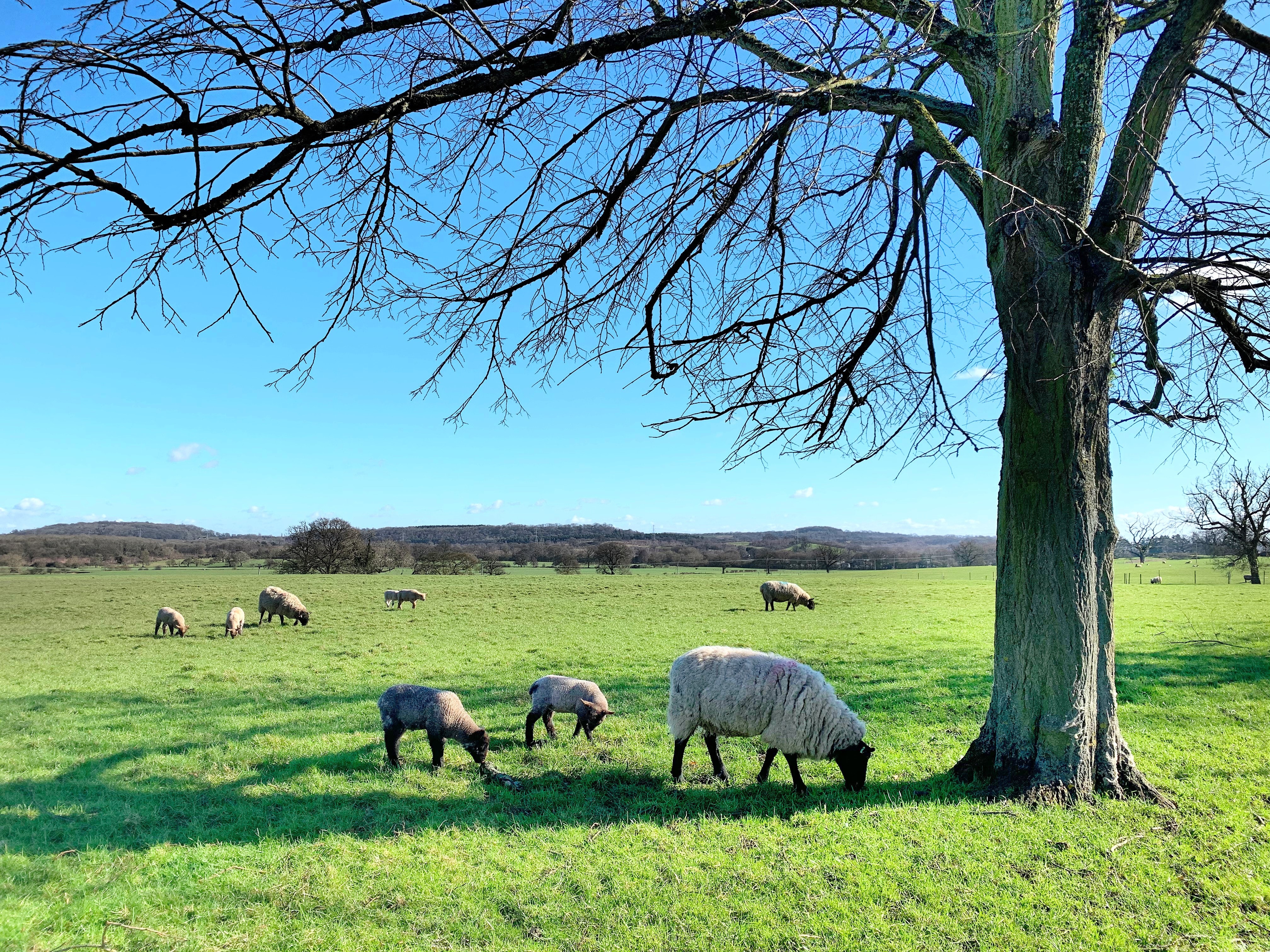
Chapter 34 begins with the denouncement of Israel’s current leaders. What was the case before exile has continued in exile. God through Ezekiel pronounces doom on these poor leaders for living in luxury while ignoring the weak, the sick, the injured, the strays, the lost. There are many injustices so the flock scattered and then became prey. God promises to hold these bad shepherds accountable.

Beginning in verse 11, God offers the remedy. Here God proclaims: “I myself will search for my flock and seek them out… I will rescue them…” God will gather the scattered and care for the weak, the sick, the injured… As we continue in our reading we see that God will judge between the “fat and lean” sheep – between those living in luxury and those who struggle to survive.

God promises restoration, a new era. A David-like ruler will be appointed and a new covenant of peace will be established. Rains of blessing will pour down. Oppression and injustice will be no more. In verse 27 we read, “They will be safe on their fertile land, and they will know that I am the Lord when I break the bars of their yoke.” Without the yoke of oppression and injustice, there will be peace. There will be no famine; there will be no disgrace.

While the bad shepherds ignored these words of judgment, these words would offer great hope to the weak, the sick, the injured… to those living on the margins and edges. These words feel very relevant today. As injustices scatter people, as oppression sits heavy on others, as callous acts increase hunger, the people of God long for a good shepherd – not just for ourselves but also for the least of these among us. God’s children long for the rains of blessing and for a time of peace and grace. O God, may it be so.

Prayer: Lord God, you’ve always, always, always had a heart for the weak, the sick, the injured… You’ve always, always, always called for the faithful to join you in your care for the least of these. Lord, bridge the huge gulf between our reality and your preferred future. Use us to be a part of that bridge, each in our own ways caring for the weak, the sick, the injured… for the scattered and the oppressed. Amen.


Leave a comment

Treasured and Strong in the Lord

Reading: Daniel 10:8-19

Daniel 10:12 – “From the day you first set your mind to understand things and to humble yourself before your God, your words were heard.”

In today’s passage Daniel is encouraged by an angel sent from heaven. Daniel needs some encouragement because he has just been told of the future destruction of Jerusalem. The temple and city were destroyed about 70 years ago, when Israel’s exile began. Since then he has been praying for rebuilding. Daniel was told that, yes, it will be rebuilt. His prayer will be answered. But it will be destroyed again. This is the news that drove Daniel to mourn, fast, and pray for 21 days. As he is encouraged, Daniel needs strength for the next vision about to come to him.

As Daniel’s encounter with the man from heaven begins, he falls to the ground. Both the encounter and the fast have sapped his strength. Daniel is helped us and then hears these words: “From the day you first set your mind to understand things and to humble yourself before your God, your words were heard.” The angel has come in response to Daniel’s prayers. But it was not an easy journey. This angel fought with “the leader of the Persian kingdom” for 21 days – the length of the fast. Unable to defeat this power of evil, the angel Michael came and took over this cosmic battle, freeing the unnamed angel to go on to Daniel. This cosmic battle between good and evil remains an ever present reality.

After admitting that he was troubled by the previous vision, Daniel is again strengthened, both physically and spiritually. The angel tells Daniel, “Don’t be afraid. You are greatly treasured. All will be well with you. Be strong!” With these words and renewed strength, Daniel is ready to hear the next vision about the future.

In times when we are weak or troubled or struggling, may we recall these words that are true for all who are faithful to God: You are treated by God. All will be well. God is with you.

Prayer: Lord God, there will be times when the future looks cloudy or when the days at hand are really hard. In these moments or seasons, touch us, give us strength and courage. Assure us of your presence, leading and guiding us according to your good plans for us. Amen.


Leave a comment

What God Has Done

Reading: Psalm 22:19-31

Psalm 22:22 – “I will declare your name to my brothers and sisters; I will praise you in the very center of the congregation.”

Photo credit: Robert Linder

Returning to Psalm 22 today we pick up on the desperate tone that dominated yesterday’s verses. David invites God, his strength, to come quickly and to help and deliver him. He pleas for rescue from the dogs, lion, and wild oxen that surrounded and threatened him. At the end of verse 21, though, there is a shift: “you have answered me!”

In verses 22-31 David offers a hymn of praise. In verse 22 David writes, “I will declare your name to my brothers and sisters; I will praise you in the very center of the congregation.” God’s rescue and restoration are worthy of his praise and worship. In the New Testament, in Hebrews 2:12, the author claims these words for Jesus. Jesus’ life and ministry declared who and what God was and is. His “work” was done in Israel, then center of God’s people.

David also sees a widening of the circle in verse 29. Here he declares that both the rich and powerful and the lowly and downtrodden will worship and kneel together before God. The inclusion of all peoples is a theme begun by Jesus and expands as the church moves out into the world. As the Psalm concludes, David looks to the future. He foresees a time when future generations will learn of the Lord. From Jesus’ life and example people will declare God’s righteousness, “telling them what God has done.” This is the sharing of the good news. As it was for the disciples and apostles, may it be for you and for me as we share our faith.

Prayer: Lord God, thank you for the rescue from those things that surround and assail us too. Thank you for your answers to our pleas. Lead us to declare what you have done. Guide us to speak of the rescues and transformations that you have worked in our lives again and again. Each day use us to witness to your love and grace. Amen.


Leave a comment

Present and Future Reality

Readings: John 5:25-29 and Luke 19:7-10

Luke 19:10 – “The Human One came to seek and save the lost.”

Photo credit: Nathan Dumlao

God sent Jesus to save, not to condemn, to give eternal life, not to bring eternal punishment. Today’s readings speak to this and to the reality that salvation is both a present and future reality.

In John 5 Jesus declares that “the time is coming – and is here!” Those who are dead in their faith can hear Jesus’ words and have their faith come to life. This is the present reality. Jesus also speaks into the heaven-hell reality. “All who are in their graves” – the physically dead – they too will hear Jesus’ voice one day. When that day comes, some will be resurrected to life (heaven) and some will be resurrected to judgment (hell.) In the end, we all have a destination. How we live in the present will determine our outcome.

Turning to Luke 19 we enter the story of Zacchaeus. Jesus has just invited himself to Zacchaeus’ house. This causes everyone to grumble. A large crowd had gathered to see Jesus. What could or would he do for them? To choose Zacchaeus, tax collector and known sinner – unbelievable! In response to the crowd or to Jesus’ invitation (or both?) Zacchaeus declares his faith. He speaks in the present. Jesus tells the crowd that salvation has come to Zacchaeus. Jesus adds, “The Human One came to seek and save the lost.” Jesus came to change hearts and lives in the present. Jesus came to save and to bring eternal life to the lost. Thanks be to God.

Prayer: Lord God, your intent for all people isn’t just to enter heaven one day. It is also for us to experience heaven on earth here in the present – “on earth as it is in heaven” is what we pray each Sunday. Help us to walk daily in faith, being heaven to others so that they too can begin to experience your intent for their lives in the here and now. Amen.


Leave a comment

Was, Is, Will Be

Reading: Luke 20-21

Luke 21:36 – “Stay alert at all times, praying that you are strong enough to escape everything that is about to happen and to stand before the Human One.”

We begin today with the religious leaders questioning Jesus’ authority. He responds with a question for them, asking about John the Baptist’s authority. Trapped, they refuse to answer. Jesus then tells them a parable that reveals his authority. The tenants are greedy. They abuse those sent to collect fruit owed to the owner. Finally they kill the son whom the owner dearly loves. In response the owner destroys the tenants. Jesus then quotes from the Psalms, referencing the stone rejected. It becomes the cornerstone. The religious leaders recognize that the parable is about them. They want to arrest Jesus but fear the people.

In an attempt to orchestrate a charge, the religious leaders take turns trying to trap Jesus with questions about paying taxes and marriage in the resurrection. Pay taxes? Yes, but more importantly give to God what belongs to God. Marriage? Yes, here and now, but not in the age to come. We will all be God’s children in the resurrection. There, God is as here: the God of the living. In response to their falsehood, Jesus condemns the religious leaders for their longing for recognition and honor and for the unfair burdens placed upon the people. He tells them that they’ll be “judged most harshly.” The widow’s gift is then lifted up as both a great example of trust in God and of how the religious leaders’ greed leads people into vulnerability as they struggle to meet the religious leaders’ expectations.

Verses 5-28 of chapter 21 deal with three events. Two sections reference the actual destruction of the temple and city. One part references the time of persecution that will soon occur. And one part references Jesus’ return. Two of three will unfold just as Jesus says. We await his return. Our reading closes by addressing how we are to wait. We are to be aware of the signs and we are to “Stay alert at all times, praying that you are strong enough to escape everything that is about to happen and to stand before the Human One.” May it be so for you and for me.

Prayer: Lord God, today we’re reminded that there’s always been a plan. Since the beginning you were spoken of and destined to come in human form. You came and revealed love lived out. You called us to follow your example. You spoke of a future that we eagerly await. You call us to be love lived out as we wait. Empower, encourage, and strengthen us to daily follow your example. Amen.


Leave a comment

Gracious and Generous

Reading: Luke 15-16

Luke 15:19 – “I no longer deserve to be called your son. Take me on as one of your hired hands.”

We begin with three parables about “lost” things. The parables of the lost sheep and the lost coin follow the same pattern: a thing is lost, a careful search is made, the thing is found, and a celebration follows. A similar celebration happens in heaven when a sinner changes heart and life.

The third parable centers on a lost son. The truly lost one is not the one in the early parts of the parable. The younger son is initially lost but realizes it and “comes to his senses.” He decided on these words: “I no longer deserve to be called your son. Take me on as one of your hired hands.” People can feel this way with God. We can feel this way. Yet in the father’s persona we see a God who runs to us with unconditional love. It doesn’t matter what we’ve done (or left undone) – God loves us and will offer grace always. We’re always welcomed back into the family of God. Sometimes we are called upon to help others understand this too.

The older son is truly lost. He sees himself as a servant and not as a son. His is a joyless yet dutiful existence. That is why anger rises so quickly. Even though the father reminds him of his inherited place in the family, he cannot move past his anger. The story leaves us hanging. What will the oldest son do? Will he too “come to his senses” or will he remain furious?

Chapter 16 holds two parables that deal with wealth. In the first story a manager cleverly uses money to benefit others in the present and to insure his own future. We are called to do the same. Wealth is just a tool to employ in the building of the kingdom. The second story reinforces this point. The rich man did the opposite, hoarding his wealth, ignoring the man in need right under his nose. His future does not end well. He did not listen to the Law and the prophets. We have these as well as the “one who rises from the dead.” May we hear Jesus’ call to be both gracious and generous, doing all we can to redeem the lost.

Prayer: Lord God, when we’re “lost” ourselves, help us to “come to our senses” again and again. And help us to walk alongside those who feel undeserving of your grace and forgiveness, enabling them to see their place in the family. And, Lord, when we struggle, thinking another undeserving of your or our grace, remind us of your great love that redeemed a sinner like us. May we gratefully receive and generously give of your love, grace, and forgiveness. Amen.