pastorjohnb

Thoughts and musings on faith and our mighty God!


Leave a comment

Finding Hope and Strength

Reading: Psalm 137

Psalm 137:5 – “Jerusalem! If I forget you, let my strong hand wither!”

Photo credit: Wylly Suhendra

Psalm 137 wrestles with holding onto faith during a time of deep grief. This is a struggle we’ve all faced or will face at some point in life. The emotions of the Psalm are real and honest, especially in verses 7-9. If grief we feel these emotions too, but usually choose not to give them voice. The psalmist and fellow Israelites find themselves in Babylonian exile, grieving alongside a river. They have put away their musical instruments, thinking, who could sing at a time like this? In grief we too can set aside certain practices or activities that we used to do with the departed loved one. It feels too painful for these things in the midst of grief. The departed loved one for Israel is God, personified in Jerusalem. While God is still present, it doesn’t feel like it for Israel. When their “tormentors” mockingly call for a song, the Israelites wonder, “How could we sing a joyful song at a time like this?!”

Yet there is something in the psalmist that knows they must maintain a connection with God. In verse 5 we read, “Jerusalem! If I forget you, let my strong hand wither!” Verse 6 offers a similar pledge. For the psalmist, hard as it might be, music is a way to remember and to honor and to be connected to God. Music brings the Israelites into the presence of God and it brings them into community. In times of grief, we often just want to be alone. It feels like that would just be easier. Frankly, it is. But healing comes most often in community, in being with others, in being reminded of God’s presence with us. Here one finds the beginnings of those seeds of hope and the strength to ponder next steps. In their grief, with the gifts of hope and strength, the Israelites began to step forward in faith. May it be so for you and for me in our times of grief.

Prayer: Lord God, sometimes life is hard and it rains down grief, feelings of disorientation, moments of withdrawal. When this happens to those we know, send us into their lives, being your light and love, your hope and strength. And when we find ourselves in this hard place, guide us into community – with you and with our brothers and sisters in Christ. Amen.

Leave a comment

Our Faithful God

Reading: Lamentations 1:1-6

Lamentations 1:5b – “Certainly the Lord caused her grief because of her many wrongs.”

Lamentations is a vivid and emotional account of the destruction of Jerusalem and her temple at the hands of the Babylonians. Jeremiah is likely the primary author. The prophet worked long and hard trying to call the leaders and the people back into right relationship with God. But they chose to ignore his words of warning, instead choosing to trust in idols and foreign nations. Lamentations primarily deals with the consequences of these sinful choices but also offers hope in God’s love and faithfulness.

Lamentations personifies Jerusalem as a woman, present in the great destruction, sitting in the ruins. In the first verse we read, “She sits alone, the city that was once full of people.” When I first read this line, my brain read “promise” instead of “people.” Then I thought, yes, once Judah relied on and trusted in God’s promises. Their choice to trust in their own power and efforts has led them to become “slaves” sent away into exile. Maybe my brain read it this way because sadly at times this is our choice too. We choose self over God and/or neighbor, becoming a “slave” to our sin, exiling ourselves from God’s presence.

The author believes that Judah’s tears and mourning and grief are the direct result of her sinful behaviors. In verse 5 we read, “Certainly the Lord caused her grief because of her many wrongs.” While we do not subscribe to the ancient Jew’s understanding of faith as “do good, be blessed… do evil, be cursed,” we do experience tears, mourning, and grief at times as the practical outcomes of our sinful and selfish choices. While we do exile ourselves at times, God always remains present. Our faithful God listens to our painful laments while allowing us to be refined and to grow in faith because of our hard lessons. In this we find hope – as the author of Lamentations does as we turn to chapter 3 tomorrow.

Prayer: Lord God, while we are far from perfect, your perfect love never wavers, never fails. While we wander and separate ourselves from you, your steadfast presence is always right there, ready to redirect, to teach, to forgive, to welcome us back into right relationship. Thank you God!! Amen.


Leave a comment

Lean In, Trust

Reading: Psalm 79:1-5

Psalm 79:5 – “How long will you rage, Lord? Forever? How long will your anger burn like fire?”

Today the psalmist asks a question we all ask: How long? In almost every difficult situation that we face and endure, we come to this question. Whether referring to the waves of grief that don’t relent or to the job search that won’t resolve itself or to the bullying that your child faces day after day or to the violence and destruction that the psalmist faces, in times of trial or pain or suffering or grief, we ask God: How long?

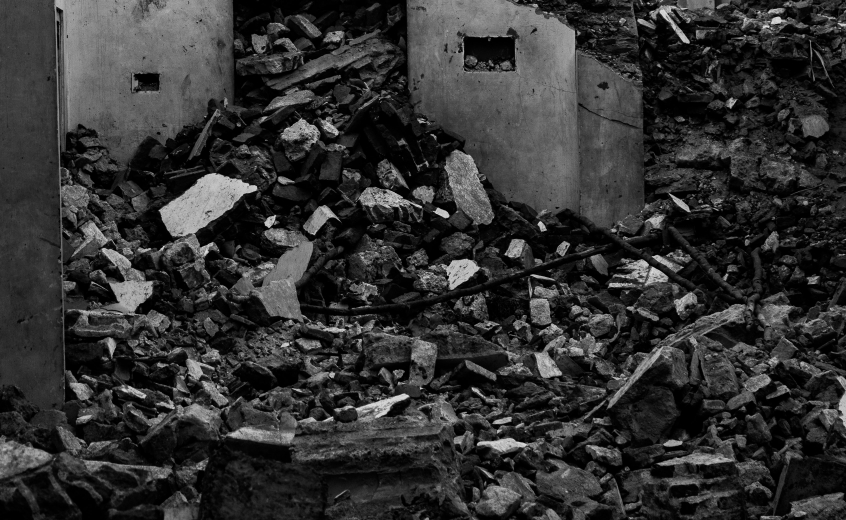
While we do not ever receive a specific time and date from God that tells us when relief or resolution will occur, we can have a hand in how we walk in and through these dark valleys. We can choose to shout “How long?” with a clenched fist raised against God. Or we can choose to whisper “How long?” with hands open to receive from God. The psalmist models the second option. For us, we must begin where the psalmist began, naming the situation. In this case, the writer names what it looks and feels like in the aftermath of the Babylonians destroying Jerusalem and the temple. The physical scene is horrific. To look at it and to name it begins to move one past the “Is this real?” stage. While painful, acceptance is an important step in our healing process.

The psalmist is also open and vulnerable with his emotions. From his perspective, all has been done to God’s city, to God’s temple, to God’s people. This goes against previous religious understandings and creates disorientation, forcing a new understanding of God and the world. Adding to the trauma is the ridicule coming from pagan neighbors. At times of grief or suffering or pain perhaps you or someone you know has heard, “If you just did (or didn’t)…” These words sting – as if you would have chosen this terrible outcome.

Laying it all on the table before the Lord and others we love and trust is an act of surrender, a practice in humility. Even as the psalmist asks “How long?” there is a leaning into God’s presence, a trust in God to act and move even in this place of death, loss, suffering… In our times of deep need, may we too be open and vulnerable and honest with God and with those close to us. May our hands be open to receive.

Prayer: Lord God, these initial steps can be so hard. We’d rather close our eyes and withdraw. When this is our first step, Lord, help us to feel your hand reaching out, to sense your Spirit surrounding us. Walk with us in love and grace. Amen.


Leave a comment

Tears of Grief

Reading: Jeremiah 8:18-9:2

Jeremiah 8:21 – “Because my people are crushed, I am crushed; darkness and despair overwhelm me.”

Photo credit: Rainier Ridao

In today’s passage from Jeremiah it is difficult to determine if God is speaking or if it is Jeremiah speaking. Our verses today seem to be a mix of the two, with both God and prophet expressing their grief over Judah’s fate. For many years, God’s people have been unfaithful to their God. Their choice to abandon God has led to God’s choice to abandon them to their sin. At times we too can choose to separate ourselves from God. We too grieve God’s heart this deeply.

God seems to be the speaker in verses 19-21. The people are asking a question and implying another that are common in times of loss and pain and grief. Directly they are asking where the Lord is: “Isn’t the Lord in Zion?” This is a question often asked in grief. The second question is implied: Why, why is this happening to us? This is a question that we can ask when lost in our sin as well. When our sin that consumed us leads to a place of pain and suffering, we can forget that our choices brought us to this place. In the disorientation of grief, we do ask “Why?”

For God’s people , the answer is given: idol worship has led to this place. As the prophet that worked to turn Judah back to God, Jeremiah grieves too. In verse 21 we read, “Because my people are crushed, I am crushed; darkness and despair overwhelm me.” The tentacles of grief surround the prophet. He laments alongside the people who are far from God. This is a place we will also find ourselves. Walking alongside others in grief, feeling and taking on some of their pain and sorrow. Our tears join their tears as we offer love and comfort in the midst of their hurt and despair. Doing so, we bring God’s presence into the darkness and despair.

Prayer: Lord God, times of grief and suffering are sure to come – to ourselves, to those we love, to our neighbors. In these times, may we sense your presence and may we lean into your love and strength, whether for ourselves or as we walk with others. Be with us in our tears, O God. Amen.


Leave a comment

Changing Dynamics

Reading: Philemon 1-21

Philemon 6 – “I pray that your partnership in the faith might become effective by an understanding of all that is good among us in Christ.”

Photo credit: Sophie Walker

Today’s reading – a short letter containing 21 verses – appeals to a slave owner on behalf of the slave. Paul writes to Philemon, a fellow Christian who is known for his love and faithfulness. Paul addresses his letter not only to Philemon but also to the church that meets in his house. This home church was likely started by Paul and is likely led now by Philemon. Paul writes to both because he is counting on grace to shape both Philemon’s decision and the community that will be affected by his decision.

Paul is sending Onesimus, the runaway slave, back to Philemon, probably with this letter in hand. Paul has been in prison and Onesimus has been like a son to him. He sends Onesimus back not as a slave but as if he was sending “his own heart,” as one who has become “a dearly loved brother to me.” Paul writes this prayer to Philemon: “I pray that your partnership in the faith might become effective by an understanding of all that is good among us in Christ.” Paul hopes that Philemon, a fellow leader in the church and a brother in Christ, will accept Onesimus back not as a slave but as “a brother to you, personally and spiritually in the Lord.” Paul is asking Philemon to change the dynamics of the relationship in a radical way.

How might the Spirit ask you or I to do a similar thing? While the slavery of this distant past doesn’t exist, today many people are enslaved in other ways. Who do we hold imprisoned in stereotypes or in broken relationships? Who do we know that is held captive by addiction or debt or grief or because of continuing unwise or unhealthy choices? What radical steps or changes of heart could we undertake in ourselves to love and free these folks, seeing them as sisters and brothers in Christ?

Prayer: Lord God, just as Paul experienced the life-changing love and grace of Christ, so too have we experienced his love and grace. Move in our hearts today, Lord Jesus, to open us up to changing the broken dynamics, to seeing all as a future brother or sister in Christ. In practicing radical love and grace we will be transformed as we seek to transform our world into the kingdom of God, here on earth. Amen.


Leave a comment

Afflictions

Reading: Psalm 6:3-9

Psalm 6:3 – “How long will this last? Come back to me, Lord! Deliver me!”

Photo credit: Falaq Lazuardi

David cries out to God in Psalm 6 much as we cry out to God over the courses of our lives. In this Psalm, David is “completely terrified.” Perhaps you have felt this way. Or maybe you have felt utterly hopeless or totally defeated or absolutely alone or beyond grief. Maybe it is a chronic illness that has settled in, disrupting your life. In each case and many more we’ve all uttered words similar to David’s: “How long will this last? Come back to me, Lord! Deliver me!”

David must feel close to death. He lifts the idea that no one praises God from Sheol, a place between death and eternity. As the Psalm continues, David expresses his sorrow and pain. He feels worn out. Each night his bed is soaked with tears. His vision has become unclear – perhaps physically but more likely emotionally. The feeling of not being able to see or think straight has effected all of us during difficult times in life.

The affliction of David appears to be caused by others. David tells the “evil doers” to get away. There is a reason besides simply wanting relief or healing. David declares that God has heard his cries, that God has listened, that God accepts his prayer. The light and love of God has permeated David’s darkness. Of this, David is sure. He feels it in his heart. In our times of suffering and trial, may it be so for us as well.

Prayer: Lord God, sorrow, pain, suffering, grief – they are all part of this life. All will come upon us at times. Lead us to you in these moments and seasons – you are our rock and our hope. Guide us to trust in you alone – you are our strength and our redeemer. Amen.


Leave a comment

Shining the Light

Reading: Luke 22:39-53

Luke 22:53b – “But this is your time, when darkness rules.”

On the Mount of Olives, in the Garden of Gethsemane, Jesus goes to God in prayer. This was a place Jesus went to regularly. He invites the disciples to pray too, so that they “won’t give in to temptation.” Moving away from them, Jesus prays earnestly, so much so that he sweats profusely and needs angelic strengthening. His prayer reveals both his humanity and his understanding of his purpose. In this hardest moment, Jesus ponders if the “cup of suffering” can be taken away. Then, in obedience, he prays, “not my will but your will must be done.” He returns to the disciples and finds them sleeping, “overcome with grief.”

At times we will struggle or waver. The thing God is asking of us is hard, maybe feels risky, possibly includes a cost. So we teeter. At times we do step forward. Other times we choose the easier way. In our own way we too “sleep,” giving in to the temptation of non-obedience. As we grow in our faith, as we mature, we come to better understand our purpose in the kingdom of God. While we’ll still fail, the frequency lessens.

The story continues as the mob arrives to arrest Jesus. A disciple starts to defend Jesus. He quickly halts the violence, healing the injury, reminding the disciples of who he is and who he is not. Jesus questions the mob – the swords and the clubs. He reminds them of his daily presence in the temple. The implied question is, “Why didn’t you arrest me there?” Jesus answers this unspoken question: “But this is your time, when darkness rules.” In an isolated place, under cover of darkness, Jesus is arrested.

Prayer: Lord God, thank you for this look into Jesus’ humanity, into his struggle. In our battles with obedience, remind us of this moment. May we draw upon strength moving forward, upon grace in failure. Encourage us to be people of the light, shining your love and power into the darkness of this world. Amen.


Leave a comment

Even in the Valley

Reading: Psalm 13:1-2 and 5-6

Psalm 13:6 – “Yes, I will sing to the Lord because he has been good to me.”

Psalm 13 begins with a plea for God to remember and rescue. David is beset by an enemy. This could be physical – like when Saul was pursuing him or when Absalom rebelled. It could be emotional – like when he prayed to God to spare his son born of Bathsheba. David cries out to God: “How long?” In his dire situation he feels alone, like God is nowhere to be found.

At times we feel what David feels. The causes can be physical suffering, emotional battles, relational struggles, spiritual conflict. Addiction, illness, loss, grief… can also place us in the valley. Each of these circumstances and/or emotions can feel isolating. We, like David, can cry out “How long?” to God. In these days or even seasons, it can be hard to hold fast to our faith and to trust in God.

David’s thoughts turn in verse 5. He recalls times when he has trusted in God’s faithful love. We too can recall when God was real and present to us in our time of need. David then declares his faith, stating that his heart “will rejoice in your salvation.” We too can declare God’s promises and claim them as our own. In verse 6 David writes, “Yes, I will sing to the Lord because he has been good to me.” Yes, even in the valley we too can raise a song of praise to the Lord our God. May it be so.

Prayer: Lord God, when we feel all alone, when we cannot sense your nearness, whisper your promises into our ears. Jog our memories and nudge us to recall how you’ve been faithful again and again and again. From this place of faith and trust, put a song in our heart. Thank you, eternal one, for always walking with us. Amen.


Leave a comment

Your Will Must Be Done

Luke 22:39-46 and 67-71

Luke 22:42: – “Father, if it’s your will, take this cup of suffering away from me. However, not my will but your will must be done.”

Before looking at Luke’s account of Jesus before Caiaphas and the council, we begin in the garden, where Jesus prayed. In verses 39-46 Jesus and the disciples are in a familiar place. They are in the Garden of Gethsemane on the Mount of Olives. In our text we see that it was Jesus’ custom to pray there regularly. As he prepared to pray he encourages the disciples, saying, “Pray that you won’t give in to temptation.” Going further into the garden, Jesus kneels and prays.

Jesus prays, “Father, if it’s your will, take this cup of suffering away from me. However, not my will but your will must be done.” He is wrestling with what lies ahead. The divine part of Jesus understands that this is God’s plan. So deep is his human anguish, though, that an angel comes and strengthens him. Jesus then prays so hard that he sweats and this appears to be like “drops of blood falling to the ground.” That is some earnest prayer. This contrasts sharply with the disciples’ approach. Faced with anguish and uncertainty and fear, they opt for sleep, being “overcome with grief.” Jesus again encourages them to pray.

Now we turn to Jesus’ encounter with Caiaphas and the council. This is a group chat here, not a one-on-one conversation. In response to queries about being the Christ, Jesus quotes here from Psalm 110, not Joel 7. Yet the general idea is the same. Jesus gives a non-answer to the question: “You say that I am.” They really don’t, just as they didn’t in Matthew’s gospel. Jesus is allowing God’s will to be done here. The story will continue as the council brings this “blasphemous” Jesus to Pilate. The charges change as they enter the political arena. The train rolls on.

Prayer: Lord God, give us the strength of Jesus in our moments of trial and temptation. Open our eyes and hearts to your bigger plans, to your purposes. When we are human, tempted to sleep or otherwise deal with the hard emotions or realities, strengthen us by your Spirit, keeping us from giving into temptation. Empower our faithful obedience to your will and way. Amen.


Leave a comment

Not My Will

Reading: Luke 22:39-46

Luke 22:42 – “Not my will but your will must be done.”

We are on the verge of the season of Lent. The 40 days leading up to Easter begin this week with services on Ash Wednesday. The service focuses on our need to be reconciled to God. The ashes remind us of our mortality. They are imposed in the shape of a cross as a reminder of our commitment to Christ. The season of Lent is one of prayer and repentance, preparing ourselves for Easter.

Intentional preparation is part of our faith. We read, study, and meditate on scripture to prepare ourselves for our day to day living. We pray to prepare ourselves for a meeting, an event, a hard conversation. In our passage today Jesus did as he often did. He went to the garden to spend intentional time in prayer. He sought to prepare himself for what lay just ahead: arrest, trial, rejection, suffering…

Jesus invites the disciples to pray too. He knows that they will soon face testing. As Jesus prays he admits his own human struggle, asking God to “take this cup of suffering away.” The divine Jesus knows full well what’s about to befall the human Jesus. Recognizing the necessity of what is about to unfold, Jesus adds, “Not my will but your will must be done.” Strengthened, Jesus prays even more earnestly.

The disciples have fallen asleep, “overcome by grief.” The crowd is on the way to arrest Jesus. The disciples have not prepared themselves. One disciple will act impulsively. Then all of the disciples will flee the scene. Jesus will move forward, empowered by prayer. As we ready ourselves to enter this season of Lent, may we too be empowered by prayer, frequently praying, “Not my will…”

Prayer: Lord God, lead and guide us to be intentional as we enter this season of Lent. May it be a time of earnest prayer, committed study, honest introspection, and whole-hearted repentance. Day by day, may our walk with you prepare us to celebrate Easter resurrection. Amen.