pastorjohnb

Thoughts and musings on faith and our mighty God!


Leave a comment

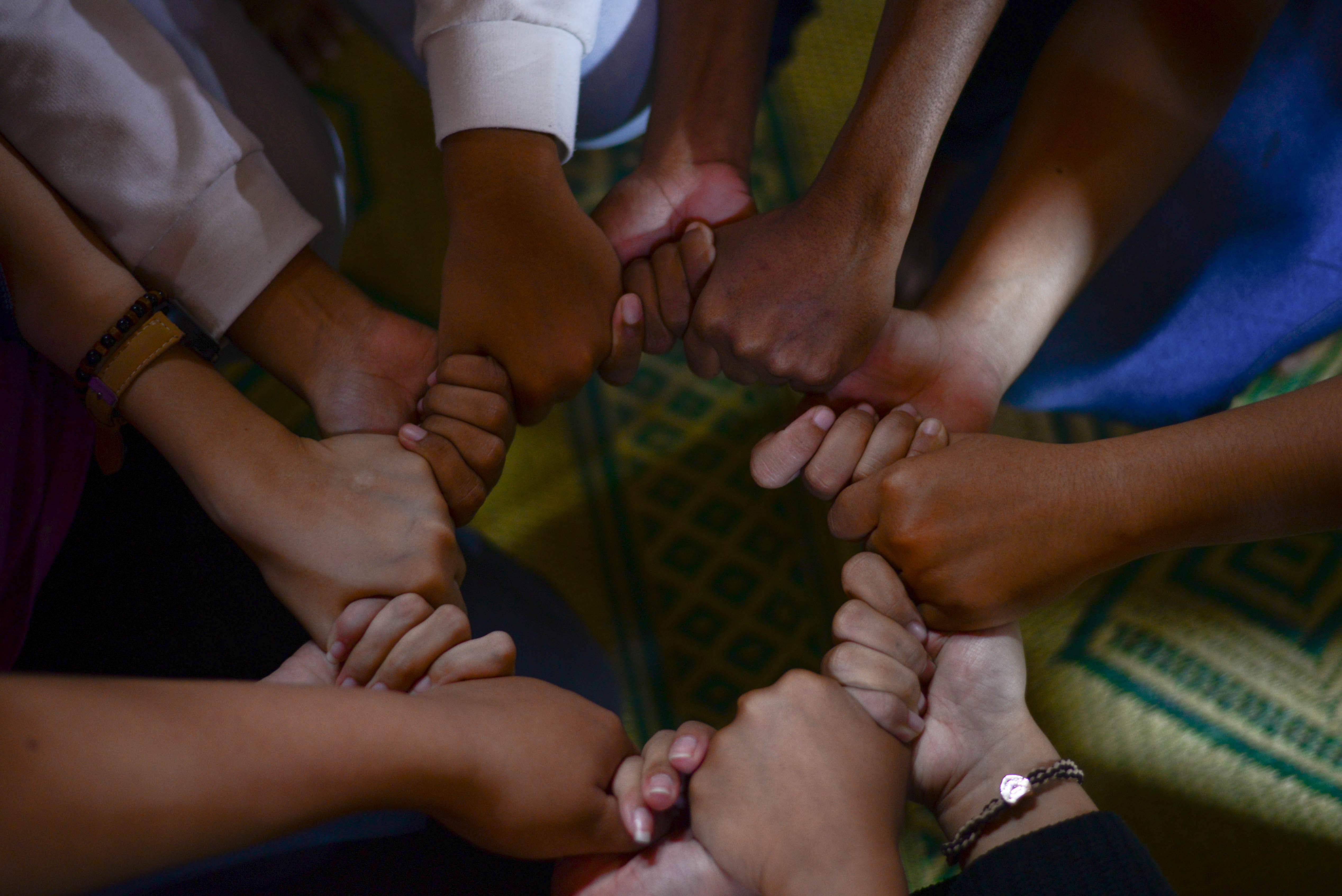
Unity Yields Justice and Peace

Reading: Psalm 122

Psalm 122:9 – “For the sake of the Lord our God’s house, I will pray for your good.”

Photo credit: Wylly Suhendra

The Psalm of David that we read today rejoices in worshipping God in Jerusalem. The city is both the seat of power for the kings of Israel and it is understood to be the seat of grace for the King of Kings. This song would be sung by many people each time they journeyed to Jerusalem to visit the temple, to offer sacrifices, to celebrate their holy days.

Themes of unity and justice and peace are woven into this Psalm. Unity is found in the people of God coming together to worship the Lord. This is both in actual worship in the temple and it is in the way that they lived their daily lives. God is the thing that unites. The unity found in and through God gives the people of God strength and power. This power is so different from the world’s power. The strength and power that comes from unity with God and with one another leads to justice and peace in the land and in the peoples’ lives.

David writes these words in verse 9: “For the sake of the Lord our God’s house, I will pray for your good.” He prays this prayer with unity and justice and peace as his goal. When the people of God are faithful to the will and way of God centered on Jesus’ example and teachings, then unity with God and with one another will yield justice and peace in our homes, in our communities, and in our world. May it be so for us all.

Prayer: Lord God, be the king of our hearts. Sitting on the throne of our hearts, guide us to a unity that brings justice and peace to our hearts and to our lives. Centered on the love of Christ as our guide, make us people who stand for and work for justice for all and for peace in all places. O God, may it be so. Amen.


Leave a comment

Jesus Calls

Reading: Luke 19:1-10

Luke 19:10 – “The Human One came to seek and save the lost.”

Today we read the story of Zaccheaus, the height-challenged tax collector. In addition to being looked down upon physically, he was also looked down upon socially and religiously. Zaccheaus worked for the occupying force, collecting taxes to fund their empire. As the story goes, one day Jesus is passing through Jericho. Zaccheaus wants to see this Jesus, just to watch him pass by. He climbs a tree to do so.

When Jesus gets to the place in the road by the tree, he stops and engages the one whom everyone else avoids. Then, to the great dismay of the crowd, Jesus invites himself into the home of Zaccheaus. I wonder, where could I go, where could you go, that would upset our good, upright friends and family?

Zaccheaus is moved, both physically and spiritually. He climbs down out of that tree, leaving the safe place, up high and at a distance. He is also moved in his heart. All it took was Jesus stopping and engaging him, inviting him to begin a relationship. Zaccheaus commits to becoming a generous giver and a righter of wrongs. He will use some of his wealth to do good, to love his neighbors in need. Zaccheaus will also use some of his wealth to correct wrongs, repaying those he held power over and cheated as a tax collector.

Jesus continues to call people out of their safe, far off places. He continues to change hearts, once people draw near. You and I are living examples of this. We are living proof of verse 10: “The Human One came to seek and save the lost.”

Prayer: Lord God, we are grateful for our rescue. Thank you for calling us near, for changing our hearts, for empowering us to be people of generosity and reconciliation. Use us today to model these things when called upon. Guide us to live out our faith in ways that lead others to hear your call. Amen.


Leave a comment

Love Lived Out

Reading: Deuteronomy 6:4-9

Deuteronomy 6:5 – “Love the Lord your God with all your heart, all your being, and all your strength.”

Today and this week is all about staying in love with God. This is John Wesley’s third simple rule. This last “rule of life” empowers one’s efforts to keep the first two rules: “do no harm” and “do good.” These two encapsulate the command to love neighbor as oneself. Our love of neighbor is rooted in our love of God.

In verse 4 we are reminded that there is only one God. Our God is not one of many gods. This too is how God looks at you and at me and at everyone. Each of our relationships with God is supremely important to God. I’m reminded of a line from the book The Shack. Each time Mac asks God about this person or that person, God says, “I’m especially fond of that one.” Every time.

We read one of the two great commands in verse 5: “Love the Lord your God with all your heart, all your being, and all your strength.” Love was a word used in ancient covenants. In this Near Eastern context this kind of love implied total obedience and faithfulness to the covenant. But because our God is a relational God, this concept of love extends far beyond our expected external and ethical behaviors. Within the faith context, there is an added depth of internal devotion. Hence the charge to love God with all that we are: heart, being, and strength.

Verses 6-9 reveal how this internal, comprehensive love of God is meant to impact all of communal life. We are to remind ourselves and our children to love God and neighbor, “talking” about it all the time. We are to “write” this command to love on the hand and forehead, on the doorframes of our houses, and in the gates of our cities. We are to talk and write about the love of God in our homes, in our neighborhoods, and in our communities. We talk and write by being love lived out in all aspects of life. May it be so.

Prayer: Lord God, this call to love is comprehensive. May it begin in our heart and soul, growing our love of you through worship, study, meditation, and prayer. Then may it grow from this place, moving out into all of our relationships, allowing each person we encounter to experience your great love for them. Amen.


Leave a comment

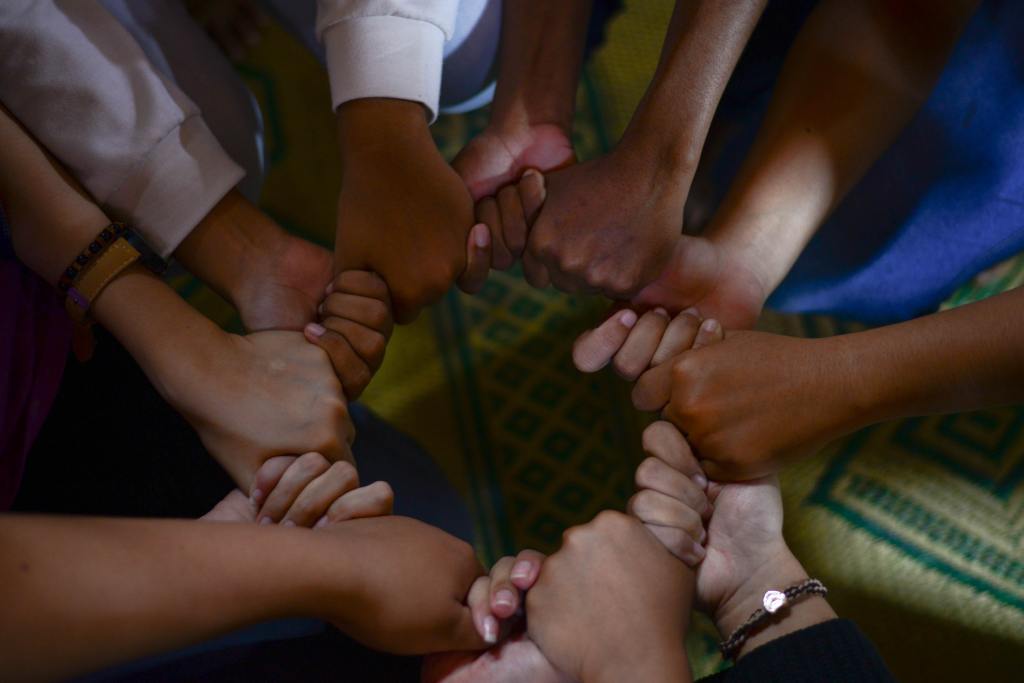
All Are One

Readings: 1st Timothy 2:11-12, 1st Corinthians 14:32-35, Ephesians 5:22-25, Galatians 3:26-28

Galatians 3:27 – “All of you who were baptized into Christ have clothed yourself in Christ.”

Photo credit: Wylly Suhendra

As we wrestle with the challenging parts of the Bible this week, today we turn to Paul’s words about the place or role of women in the community of faith. As we do so, it is important to remember that these words were written in a specific context and culture, in a time different from our own. This filter can help us greatly in our understanding and application of these words.

In 1st Timothy 2:11-12 Paul begins by stating that women should “learn quietly with complete submission.” This is followed by a prohibition against a wife teaching or controlling her husband. These words are rooted in two beliefs of Paul’s day: women’s minds are weaker than men’s and it was Eve who caused the original sin to occur. Clearly the men should lead and be the decision-makers. Within this context and time.

1st Corinthians 14 echoes these themes. Women are to be quiet in church and to ask their questions at home. Most of the Ephesians 5 passage sounds similar: wives submit to your husbands in everything. These parts of these passages have been and are still quoted in patriarchal settings. Dig deeper though. In Corinthians this is Paul’s practical response to a specific issue in an individual church: the women are curious, they are asking questions as they seek to grow in their faith. The questions, however, are disrupting worship. In Ephesians Paul is talking about submitting to Christ. These verses today apply this to marriage too. The overall theme: submit to one another as you submit to Christ. Don’t miss or skip verse 25: Husbands love your wives as Christ loved the church, giving yourself up for her.

In Galatians 3:26-28, Paul declares total equality between male and female in God’s church. All baptized into Christ are clothed in Christ. All means all. That’s clear as Paul goes on to remove all lines and barriers, including the statement that there is “no male and female” in Christ. All are one in Christ. May this be so in all ways – in our homes, in our churches, in our society and culture.

Prayer: Lord God, as we read, ponder, think and wrestle through these passages, help us to do so within the overarching core tenets of our faith: love, grace, peace, hope, humility, service. Guide us then to understand how culture and norms influence writing, as does context. Center us always on the calls to love you and others above self. Amen.


Leave a comment

Come to Honor Jesus

Matthew 2:1-2 – “Magi came from the east to Jerusalem. They asked, ‘Where is the newborn king of the Jews?… we’ve come to honor him.'”

We begin our New Testament reading with the genealogy of Jesus. This establishes Jesus’ political, national, and covenantal relationship with and for Israel. In verses 2-11 we recognize most of the names, a product of our time reading and studying the Old Testament. Verses 12-15 are post-exile. We have very few writings from this time period, therefore the names are mostly unfamiliar to us. Within this list we find four female names – a rarity in Jewish genealogies. Ever rarer is the fact that these women are not Jews. These facts speak to Jesus’ mission to a much broader audience than simply “God’s chosen people.”

Turning to verse 18 we find Jesus’ birth story. During Mary and Joseph’s engagement, she becomes pregnant by the Holy Spirit. Through a dream Joseph receives reassurance and a name for the child, plus the declaration, “He will save his people from their sins.” This birth fulfills the words of Isaiah 7. After the birth, some Magi arrive in Jerusalem, the capital city and logical place for their search. We read, “Magi came from the east to Jerusalem. They asked, ‘Where is the newborn king of the Jews?… we’ve come to honor him.'” This troubles Herod and “everyone in Jerusalem.” Herod gathers information – time and place. The magi continue following the star, arriving with joy at Mary and Joseph’s home. They enter and honor Jesus, presenting him with three gifts. This is why we have three wise men in our Christmas programs. In reality it could’ve been two, but was much more likely 6… or 11… or…

Warned in a dream, the magi do not report back to Herod. Warned in a dream, Joseph flees to Egypt with Mary and Jesus – “during the night.” In a fury Herod sends soldiers to the Bethlehem area, killing every child under two. There is weeping and grieving. The mothers refuse to be comforted “because they were no more.” And in another dream Joseph is told to return home. Yet fearing Herod’s sin, he settles the family in Nazareth, a small town tucked away in Galilee, far from Jerusalem. This fulfills the fifth Old Testament prophecy – so far.

Prayer: Lord God, it is good to transition into the New Testament. We know this collection of stories a bit better. Even so, Lord, continue to open our eyes and hearts to the details, to the “new” that you want to reveal. Move us deeper into the story, closer to our call to bear your image to the world. Amen.


Leave a comment

Jewels in a Crown

Reading: Zechariah 5-9

Zechariah 8:8 – “I’ll bring them back… They will be my people, and I will be their God — in truth and in righteousness.”

Today’s middle section of the book of Zechariah begins with the last three night visions. In the sixth vision a flying scroll announces a curse on all who steal and then lie about it. The curse will totally destroy their homes. The seventh vision identified wickedness as a tiny woman in a basket. She is sent home to Babylon. In the last vision Zechariah sees horses with chariots. They are sent out to patrol the earth. The ones going north (to Babylon) provide rest for God and God’s people. This allows Zechariah to gather gold and silver to make two crowns. With one he anoints Joshua as the high priest. The second will be for “Branch” – one who will build the temple, who will sit and rule. All of this will happen if they truly obey God.

In chapter 7 a delegation comes from Bethel asking about fasting. God basically asks, “Did you fast for me?” They have just been going through the motions, saying the words from before the exile. Hinting at the meaninglessness of this and using words reminiscent of Isaiah 58, Zechariah declares that God really wants to see just and faithful decisions, to see kindness and compassion as their norms. But instead, in the past, they chose to oppress the poor and vulnerable, to “steel” their hearts against God. So God scattered them.

Then in chapter 8 God declares compassion and passion for Zion. God has returned to Jerusalem. The old and the young will fill the city. God proclaims, “I’ll bring them back… They will be my people, and I will be their God — in truth and in righteousness.” Israel will become a blessing to the world. Nations will come, seeking God’s favor. After a sobering pronouncement against the nations around Israel, Zechariah prophesies a day when their king will come, “humble and riding on an ass.” He will speak peace and will rule “to the ends of the earth.” The Lord will deliver his people and they will “be the jewels in a crown dotting this land.” That will be the day!

Prayer: Lord God, as we read of our common struggles today and of our common tendency towards disobedience, we are also reminded of your grace and mercy in our moments of failure and of your ultimate plan to bring a full healing and restoration to your people and to your world. In the meantime, O God, use us as those “jewels,” reflecting and shining your light and love into the world. Amen.


Leave a comment

Our Truth Too

Reading: Hosea 11-14

Hosea 14:7 – “They will again live beneath my shadow, they will flourish like a garden; they will blossom like the vine.”

Hosea closes with hope. There are still moments where God recognizes and is angered by Israel’s sin, but words of hope dominate our reading today. This is the truth of our lives too. We are sinful by nature. God is merciful, loving, and forgiving by nature. We walk with hope because God’s love is greater than our sin.

Chapter 11 begins with parent-child imagery. God recalls raising Israel, as a loving parent. But Israel turned away, as most children do at some point. So they will return to Assyria and Egypt. Tough love will reign. Yet love will abide. God will gather the children home one day.

Charges come in chapter 12. Israel multiplies lies and violence, makes treaties with Assyria and Egypt. God recalls Jacob, the younger brother. God recalls wrestling with Jacob at Bethel, where Jacob came to truly know God. God calls Israel back to that relationship. But Ephraim is too proud. They thought themselves sinless. This is a bitter offense to God. We too do this to God when we become proud, when we think ourselves righteous.

Their pride and self-sufficiency was also compounded by their idolatry. Israel turned to these metal images. They are reminded that God alone can save. This will be reinforced when God falls upon them like a lion. God will come in the east wind, making Samaria desolate. Even the babies and pregnant women will fall before the Assyrians.

Hope rises again in chapter 14. God implores Israel to return and even gives them the words to speak: “Forgive all wickedness and receive the good.” God responds with promises to heal and love, to plant and raise up, to protect and provide: “They will again live beneath my shadow, they will flourish like a garden; they will blossom like the vine.” What a beautiful picture of grace and restoration, of wholeness and life. This picture can be ours too. This truth is our truth. Sinful as we are, sin will never define us. God always offers this gift of grace and restoration, of wholeness and life. With repentant hearts and a faithful Spirit, may we step into the truth of God’s love.

Prayer: Lord God, lead and guide us to walk daily and to trust eternally into your promises of love and grace, of forgiveness and restoration. You are our God, the only one who can save. Thank you, Lord. Amen.


Leave a comment

God Will Teach Them

Reading: Jeremiah 13-16

Jeremiah 13:11 – “Just as a linen undergarment clings to the body, so I created the people of Israel and Judah to cling to me.”

Photo credit: Kenny Eliason

Our reading today begins with an illustration. Jeremiah buys, wears, and then buries an undergarment in the Euphrates River (in Babylon.) He digs it up and it is ruined, just like the people of God will be. God laments, “Just as a linen undergarment clings to the body, so I created the people of Israel and Judah to cling to me.” Because of their sin and disobedience, God will not have pity or compassion or mercy. They will be “dragged off to exile” and God will “scatter you like straw.”

Drought comes. It initially gets their attention. The people acknowledge their sin but then accuse God of being absent. God responds by telling Jeremiah not to pray for them. And God won’t accept their fast or their offerings. God will send war, famine, and disease. Brief attention is given to the false prophets. Yes, God says, they too will die – and their families. Chapter 14 closes with another attempt by the people. Yes, we’ve sinned. Yes, we’re sinning. But don’t reject us, don’t break your covenant. There is no repentance, no intent to turn from their sins.

God is so upset that God declares that even if Moses and Samuel came and interceded for the people, God still wouldn’t listen. God’s hand is set against Judah. The widows will “outnumber the sand.” In 15:10 Jeremiah laments his treatment. God asks, “Haven’t I taken care of you?” Jeremiah declares his love for God’s word. God offers to take him back – if he is faithful. God then promises to rescue and protect Jeremiah.

In chapter 16 God tells Jeremiah not to marry or to have children. That’s how bad it will be. The people are accused of being worse than their ancestors. Even so, in verses 14 and 15 we find hope. One day God will bring them home. But first they will be paid back double for their sins. God will teach them. “They will understand that I am the Lord,” declares God. Yes they will.

Prayer: Lord God, sin and disobedience break your heart. They create separation between who we are being and who we are meant to be. Teach us too, O Lord, how to walk faithfully and obediently. Guard us from sin. Plant your word in our hearts, enabling us to shine your love out into the world. Amen.


Leave a comment

Righteousness, Honesty

Reading: Proverbs 24

‭Proverbs 24:3 – “By wisdom a house is built; by understanding it is established.”

Today the sages speak of not engaging the wicked, of not envying those who do evil. Their hearts are “focused on violence” and their lips “speak trouble.” The sages tell us not to get mad or to seek revenge against such as these. The wisdom writers note that the lazy person’s field is full of thorns and weeds. This just leads to poverty. By contrast, the wise will get their “outside work” done so that they can build a home. Here one finds hope and a future.

To build a good future, to add to our hope, we are encouraged to eat wisdom like people eat honey. Honey was a somewhat rare delicacy. Treat wisdom this way, says the sage. To eat wisdom is to secure a future with hope. Along these lines we’re reminded to fear the Lord (and the king.) Therefore, don’t associate with the rebellious. And rescue those headed for death.

We again hear the call today to honesty and to righteousness. Yes, the righteous will fall. But they’ll get up again and again. “Seven” is symbolic for ‘many times.’ The wicked, however, will fall into trouble. We’re warned against rejoicing over this. To do so would displease God. We’re also reminded today that our words should always be honest, showing no partiality, offering no false witness. Speaking in these ways could be hard. Yet just as the Holy Spirit at times speaks hard but true words into our hearts so too must we do this for others. Done in love, it is a gift.

Prayer: Lord God, lead us today to walk the path of righteousness and to speak the words of truth. Guard us from being wicked or evil or lazy. Lead us to joyfully engage the work that you have for us. Amen.


Leave a comment

Bring Us Home

Readings: Psalms 105-107

‭Psalm 105:4-5 – “Pursue the LORD and his strength; seek his face always! Remember the wondrous works he has done.”

Psalms 105 and 106 close our Book 4 by recounting Israel’s history. The story begins with the covenant and it runs through to the oppression experienced in the Promised Land. Psalm 105 begins with the covenant made with Abraham and carried over to Isaac, Jacob, and Israel. God protected their small number, eventually sending Joseph then the whole family to Egypt, where they became numerous. After oppression there, God sent Moses and Aaron and the ten plagues. God led them out, guiding by cloud, providing food and water. Finally God gave them the Promised Land, a place where they could “keep his law and observe his instructions.”

Psalm 106 gives an accounting of the people’s struggles with obedience. It recounts the rebellions at the sea, at stops in the desert, and at the foot of Sinai, where they made the golden calf. The psalmist highlights Moses’ saving intercession. Then the psalmist speaks of more rebellion and testing, of idol worship and child sacrifice. Oppression came from an angry God. Soon so too did compassion. The Psalm closes with a plea: “Lord our God, save us! Gather us back together.” Bring us home from this place of exile.

Psalm 107 begins Book 5 with some examples of how God does just that. Gathered from the four directions, the psalmist tells of four groups or types of redeemed people. These cases are generic, allowing us many ways to see how God redeems and can redeem. God redeems those who wander, those who are in gloom and darkness, those who sin, and those who face storms. We all find ourselves in each situation at times. In those times may we remember the God who turns deserts into streams, the God who raises up the needy. May we call on this God, trusting in God’s redeeming and restoring salvation.

Prayer: Lord God, you alone can rescue and you alone can save. You desire to lead and guide us, to teach us your ways. Soften our stubborn hearts and curb our selfish desires, God, so that we can learn and obey. Correct us when we sin, comfort us when we suffer, save us from all that life can bring. Water our dryness, satisfy our hunger. Walk daily with us, O Lord. Amen.