pastorjohnb

Thoughts and musings on faith and our mighty God!


Leave a comment

Stories

Reading: Psalm 78: 1-4 & 12-16

Verse 4: “We will tell the next generation the praiseworthy deeds of the Lord”.

On those days or in those seasons in life when it is cloudy and gloomy and stormy we desperately need a ray of sunshine. In those times when we feel stuck or trapped in the dark, we need the door to be cracked open, for a sliver of light to slice into our darkness. At times in my life there has been a weight upon me or a darkness and gloom hanging over me. It feels oppressive and defeating. On my own I was unable to move past that place. Looking back, though, I can recall specific conversations, lovely notes or letters, small acts of love – all done by family, friends, brothers and sisters in Christ – that lifted me up. Each person was living out the love of Jesus Christ, bringing light into my darkness.

Psalm 78, much like other similar Psalms, was a way for the people of Israel to tell one another and their children of times when God’s love lifted them up or was light in their darkness. Just as me recalling those times when God’s love rescued me, by singing or teaching the Psalm, the Israelites were reminded of God’s love for them. To be reminded, to remember that you are loved, is especially important in those times of trial and hardship. Instead of withdrawing and turning within, which is our natural tendency, by remembering we are turned outward and upward – to others and to the Lord. It is then that we become receptive to the love and hope offered by others and by God. Living in exile, Psalm 78 would be salve to their situation. The Israelites needed to remember that God loved them and to believe that God would provide a way through the darkness. By keeping that hope alive, the Israelites got to the day that allowed them to begin returning home.

My stories of when I was lifted up are like Psalm 78. I can recall them for myself and I can tell them to others walking in gloom and darkness. I can remind them of God’s love and care for them. Your stories work the same way. Who in your life needs a little encouragement or an act of kindness? They are all around us. May we be the love today.

Prayer: Most loving God, this day lead me to those who need to be reminded of your love. Bring to mind the story to tell or the Bible passage to share. Use me to open another’s eyes and hearts to your love. Amen.



Leave a comment

Vital and Connected

Reading: Psalm 114

Verse 7: “Tremble, O earth, at the presence of the Lord, at the presence of the God of Jacob”.

Psalm 114, like most of the Bible, tells a story. Today’s Psalm is but one part of the story of Israel. Other parts of the Bible tell other stories as well. For example, the Gospels tell the story of Jesus Christ. For Christians, this is also part of God’s story. From Genesis through Revelation the Bible tells story after story that illustrates God’s love for humanity and for all of creation.

Part of Psalm 114 connects to creation. The psalmist sees creation as part of the story. In verses five and six the psalmist poses the question of why the sea, river, mountains, and hills moved as they did. There is a connection to the created world here in Psalm 114 that we mostly miss with our modern eyes and ears. Yes, you or I might sense God’s power in a good thunderstorm or recognize God’s beauty in a stunning sunrise or sunset. But we do not see or understand these things as rooted in God, as responding to God, as seeking to please God. We see them as things controlled by or manipulated by God, not as things in relationship with their creator. Their “life” is in and through God’s hands. Imagine our world if we saw the created world more as the psalmist and people of Israel saw the world.

From this perspective, and from God’s perspective, the sea, river, mountains, hills, rocks… are as much a part of the story as the people who walked through the waters or those who drank from the rock. This morning I also wonder who different our world would be if we truly saw all of humanity this same way. What if we truly heard one another’s stories as part of our own story, as a part of who we are? The creator of all the universe sees all people and all of creation al vitally connected together. Imagine if we saw and heard others from varied cultures, places, races, neighborhoods… as being vital and critically connected part of who and what we are. Perhaps then we would more fully live out the command that is so prevalent in the story of God: love your neighbor as yourself. May it be so.

Prayer: God of all, help me to better understand and see and feel all of my connections with what you have created, with what is good. Guide me to live well alongside both my neighbors and the created world around me. In doing so, may I better live out your love. Amen.


Leave a comment

On Our Side

Reading: Psalm 124

Verse 8: “Our help is in the name of the Lord, the maker of heaven and earth”.

Have you ever felt like the psalmist feels? Have you ever felt like life was about to topple you over and sweep you away? As we live on this earth and pass through our years, we will have moments where we can relate to our reading for today. There will be days when we feel attacked, when we feel “anger flare against us”, when we feel the raging waters about to engulf us. On these days and in these seasons we too have turned to the Lord for strength, comfort, courage, direction, protection… We too can relate to the opening verse: “If the Lord had not been on our side…”. We would have crumpled, given in, been overwhelmed.

The Israelites would have sung this Psalm while going up to the temple or while traveling to Jerusalem for one of the yearly festivals that worshipped God. It reminded them of how God had spared them, breaking the enemy’s snare. What events in your life could be used to sing a song of God’s deliverance? Looking back over your life, when has God been your rescuer, your helper, your shield? In verse eight we read, “Our help is in the name of the Lord, the maker of heaven and earth”. God is indeed our help. Take a moment, collect those times in your mind, and lift a song or prayer of worship and praise to God, thanking the Lord for his presence in times of trial.

Prayer: Living and eternal God, you have been so good to me. When I have felt the fire, you were my shield. When I have wept tears of pain, you were my comforter. When I faced my giants, you have been my strength. When I have wandered in the desert, you were the clear voice calling me back. Thank you, maker of heaven and earth. Amen.


Leave a comment

Act of Worship: Living Sacrifice

Reading: Romans 12: 1-2

Verse 1: “I urge you… to offer your bodies as living sacrifices, holy and pleasing to God”.

In the book of Romans there is a doxology at the end of chapter eleven. It is Paul’s way of announcing an intentional shift in focus. Starting in chapter twelve Paul addresses how to live a life of faith. In chapter twelve, he begins with how to worship God. He is writing to the church in Rome. It is a mix of Jewish and Gentile believers, many of whom are Romans. In our opening verse, Paul urges them to “offer your bodies as living sacrifices”. The idea of sacrifice would be familiar to all. Jews and pagans alike practiced sacrifices as part of their worship. The idea of giving oneself in sacrifice, however, would be a foreign concept to all.

When Paul uses the term “living sacrifice” he is not referring to what all in the Roman church would initially think of – that cow or ram or dove that is alive when brought to the altar. Yes, it gives its life as the sacrifice. Paul is thinking along these lines, but with one significant change. The physical life of the believer is not taken. As such, a believer can give oneself over and over again in sacrificial worship and service to God. Being a “living sacrifice” does involve dying to self, yes, but it is also about finding new life through this act of worship.

As we continue into verse two, Paul encourages them to step away from the patterns of the world and to allow themselves to be “transformed by the renewing of your minds”. The process of giving of self sacrificially, when repeated over and over, does have a transforming affect. It changes us to be more and more like Jesus Christ. As we walk this road, we become increasingly a part of knowing and living out God’s will and ways. We live his “good, pleasing, and perfect will” out better and better day by day. As we seek to grow closer and closer to our Lord and Savior, may this be our spiritual act of worship.

Prayer: Living God, open my will to your will. Focus my eyes on what you see. Attune my heart to what makes yours sing. This day and every day, guide me to give all of myself so that I can fully experience your transforming power. May it be so. Amen!


Leave a comment

Answers of the Heart

Reading: Matthew 16: 13-16

Verse 15: “But what about you? Who do you say I am”?

Jesus takes the disciples to Caesarea Philippi, about 25 miles north of the Sea of Galilee. Here the headwaters of the Jordan River are formed. The waters flow south, bringing life to Israel. So much history is wrapped up in these waters. This place was established most recently by Philip, a Roman tetrarch or ruler. His father had built a statue of Caesar here to stand by the statue of Pan that the Greeks had built. Pan was one of the gods of the earth. Caesar was believed to be a god. It is here that Jesus asks the disciples, “Who do people say the Son of Man is”? In the midst of these other religious symbols, he raises this question. Even the Pharisees and Sadducees acknowledge that Jesus is from God, so the answers the disciples give are not surprising: John the Baptist, Elijah, Jeremiah, some other prophet. Their answer is an A-list of the who’s who of Jewish prophets. It would be very flattering to anyone else.

Then Jesus turns the question to his inner circle, to those who know him best. The disciples have had a close, personal, intimate relationship with Jesus. They have seen and been a part of all kinds of miracles. They have heard great teachings and parables – and received an explanation on many occasions. He says to them, “But what about you? Who do you say I am”? If anyone could give a good answer to this question, it would be these twelve men. It is Peter who responds,“You are the Christ, the Son of the living God”. Peter speaks the truth, identifying Jesus as God incarnate, as the Messiah, as the Savior. Jesus is far more than John the Baptist, Elijah, Jeremiah, or any other prophet or king.

Turning the question even more personal, the real question here is how would I answer Jesus’ question. To connect to last week’s Matthew 15 passage, these are the answers I would give with my lips. But what are the answers that lie at the core of my being, in my heart? There do I reveal Jesus as Lord, Savior, Messiah, Son of the living God? How about you? Who is Jesus in your heart?

Prayer: Living God, may my heart be as true as the easy words that roll off my lips. It is easy to say “I love you” – do my actions, thoughts, prayers… reveal true love? Each day work in me to make this more and more true. Thank you. Amen.


2 Comments

Faithfulness

Reading: Exodus 2: 1-10

Verse 3: “When she could hide him no longer, she got a papyrus basket… and put it among the reeds”.

With Pharaoh’s edict to throw all newborn Hebrew male babies into the Nike still fresh in our minds, Moses is born. He is not yet Moses though. He is born to a Levite family – the clan that will one day become the priests to all of Israel. His mother keeps him secretly for as long as she dares. Finally, at three months, she must give him up. In verse three we read, “When she could hide him no longer, she got a papyrus basket… and put it among the reeds”. It reads so matter of fact. I cannot imagine the tears that flowed and the sorrow that gripped her heart as she did each step. What she felt must have come close to what Mary felt as she watched Jesus in his final hours.

Just as he was on the path to Calvary, God is faithful on the path to the river’s edge. Moses’ sister watches the basket from afar as his mother places the basket in the river and walks away – how could she stay? God’s hand guides the small basket to the very place that Pharaoh’s daughter comes to bathe. Her ears hear crying and her eyes are guided to the basket. Her heart is filled with compassion. Bravely Miriam steps forward and offers to get a Hebrew woman to nurse the baby “for you”. Somehow she knows this is but a temporary thing. Pharaoh’s daughter gives the baby to his mother, offering to pay her for caring for the child. Imagine the mother’s gratitude to God! Imagine how her faith grew that day. What sorrow had turned to joy!

How faithful is our God! When the baby is weaned he is returned to Pharaoh’s daughter. It is then that he is named Moses because she “drew him out of the water”. This letting go was much different for Moses’ mother. She was not giving him up to death but to life. Her son was stepping from slavery and a hard life into safety, security, and freedom. What had transpired was so much more than she could have ever envisioned that day she placed her son in the river. God is an amazing God.

On our days when life takes a twist or when it delivers up a hard pill to swallow, may we recall the faithfulness of both mother and God. In trust and faith may we too allow God to guide, walking forward in his love.

Prayer: God of all graces, thank you for the reminder today of your faithful love. Through the power of the Holy Spirit remind me of your love at all times, especially in the trials. Amen.


Leave a comment

Wrestling with God

Reading: Genesis 32: 22-31

Verse 24: “So Jacob was left all alone, and a man wrestled with him till daybreak”.

As today’s passage begins Jacob is almost back home. He fled twenty years ago after stealing the birthright from his twin brother Esau. In the twenty years away Jacob lived in his ancestral homeland. Now he returns to Canaan with two wives and eleven sons plus many servants and large herds of livestock. Jacob is a successful man. Yet he fears the reunion with Esau. Earlier in chapter 32 he learns that Esau is coming to meet him with 400 men. Ever the schemer, Jacob devises a plan. He will give Esau a large gift of three herds, each with the message, “your servant Jacob is coming”. Jacob is seeking to “pacify” his brother Esau before actually seeing him face to face.

On the eve of the meeting Jacob sends all he has on across the stream and he remains alone on the far side. Part of Jacob is still trying to wheel and deal his way through life. But just part of him. A part also knows God. Earlier in chapter 32 Jacob also turns to God in prayer. He thanks God for blessings so far and he asks God to save him from Esau. Jacob invites God into his situation. Sometimes that is the best step we can take too. Whether our situation is something we created or if it is part of life, we too are best served by inviting God into our situation. Often the invitation is accompanied by a self-realization that our hand played a role in getting us to the point we are at. This was the case for Jacob. Like it usually is with us, this was a crossroads, a turning point, for Jacob. God accepts the invitation.

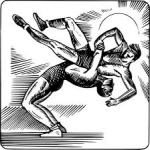
God shows up and wrestles with Jacob all night long. The length and physicality of the battle are symbolic of the change working itself out in Jacob. They wrestle all night long. At daybreak the man representing God asks Jacob to let him go. But Jacob will not simply let go. He asks first for a blessing. Jacob has come to the point of surrender to God. His life and faith will be different going forward. Each time that we wrestle with God, may it be the same for each of us.

Prayer: God of power and might, you are amazing – omnipotent and omnipresent. And yet I, at times, dare to walk against your will, against your ways. Grab hold of me too and wrestle with my heart and soul. Lead me to a quick surrender and a swift return to following you closely. May it always be so. Amen.


Leave a comment

New as Well as Old

Reading: Matthew 13:52

Verse 52: “Therefore every teacher… who has been instructed about the kingdom of heaven… brings out new treasures as well as old”.

At what I would consider my “home” church, back when I was still a middle school teacher, I was part of the team that began a contemporary worship service. That was over twenty years ago. At the time it caused a lot of angst and even some division in the church. When the service outgrew the “Upper Room” and needed to shift to the sanctuary, then we really upset the apple cart. Change is hard, especially when it involves something new and relatively unknown to many people in the group or organization. But a quick survey of almost every church offering contemporary worship will reveal that that service is their best attended service. Change can be good and positive and even life giving.

When I moved into full-time ministry just over right years ago, one of my secret inner fears was one day being appointed to a small, rural church with just an organ or piano that only sang hymns on Sunday mornings. Since helping start the contemporary worship service that was the only service I had attended. When we were out of town on a weekend, we would find a church to visit with a contemporary service. But after just a couple of months in pastoral ministry I came to realize that I loved the hymns and liturgy of traditional worship. Holding onto the past, to the tried and true, very often has its place. It is often the key component of a group or organization’s core identity. It is essential to who “we” are.

In today’s verse Jesus is talking about this same idea – the old and the new. Talk about someone with first-hand insight on holding onto the past yet also doing something new. If we keep nothing but the old in our faith and in our churches, then we become old. We all know what eventually happens to the old. But we cannot just change it all overnight either. Then folks look around and wonder where they are. Balance is the key.

The same is true for our lives and for our journey of faith. Growth is most often a slow and steady process that involves melding the good new with the good old. In our faith and in our churches may we be open to the new even as we hold onto the roots and traditions that make us the children of God. May it be so.

Prayer: Lord God, help me to know, to discern, how and when and where to go in a new direction and why and where to keep the tried and true. Both are central to a healthy and growing faith and to a strong and vibrant church. Lead and guide me, I great Jehovah. Amen.


Leave a comment

More Than Conquerors

Reading: Romans 8: 28-39

Verse 37: “In all these things we are more than conquerors through him who loved us”.

In the second part of our Romans 8 reading Paul emphasizes our ongoing journey of faith. He begins by stating that God works all things for good concerning those who love God. For the believer, something hard like the loss of a loved one can have good come out of it. For example, as God walks through the loss with you, your faith grows. Or God can work in you to make you more empathetic and caring. This can lead to you helping another through a time of loss in their lives.

Both of the examples are part of our being “conformed to the likeness of his Son”. Almost all of our journey of faith is about the process of becoming more and more like Jesus. Prayer and worship and study and fasting and serving and giving work alongside our life experiences to draw us closer to the example set by Jesus. Ultimately our journey ends when we stand in the glory that Paul speaks of in verse 30. Along the journey God walks with us and “graciously gives us all things”. Though we may endure hardship or trial, because God is with us and because God loves us, God will provide the strength and the will, the fellowship and support – whatever we need. This is what Paul speaks of in the last five verses.

Paul asks, “Who shall separate us from the love of Christ”? In the rest of verse 35 and then in verses 38 and 39 Paul compiles a long list of who and what could possibly separate us. In the midst of this list Paul pauses to note, “In all these things we are more than conquerors through him who loved us”. Through and with Jesus we are not only conquerors of persecution, famine, death, powers… but we grow stronger in our faith as God in Jesus leads us through these things. This is at least part if what Paul meant about God working “for the good”. Thanks be to God that nothing can separate us from the love of God that we find in Jesus Christ. This day and every day may we be more than conquerors.

Prayer: God, thank you for a depth of love that never lets me go, that always works to make me more like Jesus. In the good and in the bad you always have a plan for my good. May I ever trust more and more in you. Amen.


Leave a comment

Holy Spirit Prayer

Reading: Romans 8: 26-27

Verse 27: “The Spirit intercedes for the saints in accordance with God’s will”.

Our prayer lives can run the gamut from rote mealtime prayers to times of deep prayer where we are barely using words. Our simple mealtime prayers are an acknowledgement of God’s gifts and a request for God’s blessings. Our daily prayers are usually petitions and requests, sometimes with a little thanksgiving and confession sprinkled in. In times of more pressing need our prayers can take on an urgency or a desperation that usually reflect our human emotions rather than God’s will and ways. Our hearts and lips will also offer breath or thought prayers. For example, in my prayer life the sound of sirens trigger a simple prayer for the EMTs… and for those being responded to…

All forms of prayer are good because they connect us to God. Prayer, at its roots, is simply communication with God. At its most basic it is simple and plain communication – like saying hello to the person you pass on the sidewalk. As we work our way into deeper prayer the communication becomes more and more personal, more honest, more transparent. The deepest prayer involves laying oneself bare before God and giving oneself up in total surrender. There is a feeling of vulnerability and a sense of discomfort to this level of prayer. Today, though, Paul reveals a truth about prayer.

In verse 26 we read that the Spirit intercedes for us – often in “groans that words cannot express”. The Spirit searches our hearts and then “intercedes for the saints in accordance with God’s will”. The indwelling presence of the living God searches our hearts and then prays for us in accordance with God’s will. These are honest and sincere prayers. They are open and full of transparency. Knowing that the Spirit is praying with and for us in this manner should free us up to bring anything and everything to God. The Spirit already is.

Our prayer life will operate on many levels. On occasion, though, may we delve a bit deeper in prayer, to that place of sighs and groans, allowing the Holy Spirit to lead and guide us into a deep intimacy with God. There we will find out deepest connection to the Lord our God.

Prayer: God, I recognize the call to deep and intimate prayer begins with a step away from the busyness and noise of the world. And then I must take willing and intentional steps into your presence. Give me the courage and strength to step there, into your light and love. Draw me in today, O Lord. Amen.