Verse 1: “How good and pleasant it is when brothers [and sisters] live together in unity”.
Psalm 133 speaks to and of the community of faith. David identifies unity as something that is “good and pleasant”. It is God’s desire that all his children live in unity and peace. In the Psalm David is writing to the nation of Israel but his words also speak to the whole community of faith and to the local church. Unity draws others in, enabling the body of Christ and the individual believer to grow and flourish.
David uses the yearly anointing of the high priest as his illustration of the blessings of unity. Once a year the specially formulated oil of blessing would be poured over the head of the high priest, symbolizing God’s blessings flowing down over the representative of God’s connection to the people. This act also expressed unity – unity between God and his people. The visual of the oil running down Aaron’s face and through his beard and down onto his robes is a reminder of the abundance of God’s blessings on the faithful.
The Psalm closes with “there the Lord bestows his blessing, even life forevermore”.“There” are the places of unity and harmony. In and through the community of faith is where we find “life forevermore”. So this day and every day may we each do our part to build up the unity of the body of Christ, experiencing God’s blessings and favor as we do so.
Prayer: Lord, it is so good and pleasant when we gather in worship and fellowship to praise your name and to serve one another. Build up our love for one another, raise up a humble servant’s heart in each of us. In all we do and say, together may we bring you the glory and honor. Amen.
Verse 3: “Give ear and come to me; hear me, that your soul may live”.
In Holy Week today is a day of waiting. Jesus has been crucified and laid in the grave. This day feels like a day of grief, like a day of defeat. For the followers of Jesus, today must have felt like what most days felt like for the exiles in Babylon. These words of Isaiah are good words for Holy Saturday. I hope the disciples and followers of Jesus recalled or read these words on that difficult day long ago.
Through Isaiah, God calls “all who are thirsty” and then invites those without to come and eat. This is the table of fellowship – a place where all are welcome, a place where we share what we have to offer as a means of caring for the other. Isaiah issues God’s invitation to “eat what is good, and your soul will delight in the richest of fare”. It is an invitation to blessed community, to a place of belonging. For those in exile, for those struggling through this day in the gospel stories, this is a welcome invitation.
Once connected to this community, the invitation is the extended: “Give ear and come to me; hear me, that your soul may live”. God’s words bring life, reviving the soul and the spirit. Reminding us of the everlasting covenant established by Jesus Christ, we again hear the promise that God will draw all people to him, to the Christ. In verse six Isaiah reminds us of our role. Here he writes, “Seek the Lord while he may be found; call on him while he is near”. This day, this sacred day, may we seek the Lord. May we seek his voice, for we too have this promise: “My word that goes out from my mouth, it will not return to me empty, but will accomplish what I desire”.
God desires connection, relationship, fellowship with you and with me. God desires community – it is there that we find strength, joy, love, support, encouragement. It is there that we find life. All seems lost to the grave on this day of grief. Yet a new thing is coming. Tomorrow the Son rises.
Prayer: Lord God, in your great love you always seek to draw us in, to deepen our relationship with you. On this grey day, thank you for the reminder that all things work according to your purposes. Amen.
Verse 1: “I will put my Spirit on him and he will bring justice to the nations”.
Isaiah writes and speaks to the defeated, hopeless nation of Israel. They have been in exile for almost a generation. Many are beginning to wonder if this is their new reality. The people need to be reminded that God’s love still burns bright and that God’s promises remain true. We too can get to this point after being too long in the valley of trial or grief or suffering. As we begin Holy Week, I think of the disciples as they spent that first Sabbath without Jesus. He has just been crucified, swallowed up by the grave.
Beginning in verse one of Isaiah 42, God speaks of a coming servant, of one in whom God will delight. God foretells, “I will put my Spirit on him and he will bring justice to the nations”. This servant will not break a “bruised reed”, he will not snuff out a “smouldering wick”. No, the servant will bring healing and love just as God will bring back the exiles, bruised and smouldering as they are, back to Israel, back to life. The servant will bring life. He will “open eyes that are blind, set free captives, … release those who sit in darkness”. Jesus will be the new covenant and the light to the Gentiles. All will fall within God’s circle of love as revealed by Jesus Christ. In and through Jesus a “new thing is declared”: you are loved! These words will be poured out to one and all through God’s radical, unconditional love.
As I consider these words and the example set by Christ, the one who loved Jew and Gentile, slave and free, saint and sinner, rich and poor…, I ask myself who I struggle to love. As I search my heart, preparing it to allow Jesus to wash my feet and to share the bread and cup with me on Maundy Thursday, I find ones who I struggle to love. How would Jesus love such as these? Jesus would love without limit, without condition, without requirements. Who comes to mind for you?
May God put his Spirit on me and on you. May we shine the light of Jesus’ love on one and on all.
Prayer: Lord God, this is a tough thing to consider today. Who do I fail to love as you love them? What limits my ability to love as Jesus loved? Lord, I want to be an instrument of justice, a bearer of your love. Convict me by the power of the Holy Spirit when I fall short, when my love fails. Empower me by the same Spirit to love more like you love. Amen.
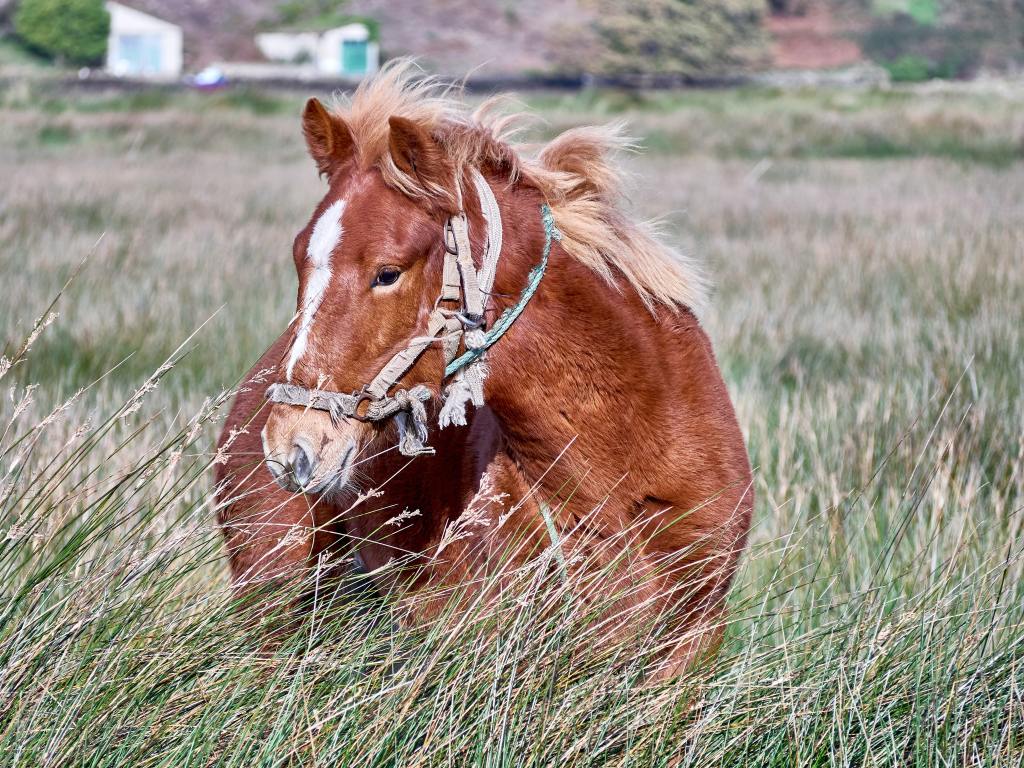
Verse 7: “When they brought the colt to Jesus and threw their cloaks over it, he sat on it”.
Photo credit: Juan Gomez
Our passage for today opens with an act of discipleship. In the literal sense Jesus instructs two disciples to go and do something for him. The two are instructed to go and get a colt for Jesus. They are told to enter the village ahead, there they will find a colt. They are to untie it and, if anyone asks, to tell the people that Jesus needs it. And, yes, don’t worry – we’ll return it when we’re done with it. They are not borrowing a cup of flour from the neighbor. Culture must have been much different back then.
Up to this point in Jesus’ ministry his popularity has risen and fallen. Many were initially attracted to the miracles but the more he spoke of the cost of discipleship, the more the crowd thinned. Yet his name was known. In whose name could we go today to commandeer a car or even a bike? Who among us would be so daring to even attempt such a thing? We would be so full of doubt and questioning. But what of these two disciples?
The disciples do as Jesus says. They find the colt just as he said they would. They answer the question that Jesus said might be asked just as Jesus told them to. And they return to Jesus with the colt that “no one has ever ridden”. What impression or effect did this act of faith have on these two disciples? How did this shape their faith moving forward? Verse seven tells us, “When they brought the colt to Jesus and threw their cloaks over it, he sat on it”. Seeing Jesus there, assuming a place and position new for him, how did they see their role?
At times the Holy Spirit calls us to action. It whispers or nudges us to an action or to speak words. We too often ask, “Say what?” or “Do what?” How would our faith and our lives be different if we simply did as these two disciples did? Where would our faith take us if we truly lived with Jesus Christ as the Lord of our life?
Prayer: Lord God, your call is persistent, your love is unchanging. In those moments when I begin to question, when I try to hesitate long enough for the opportunity to pass, spur me to action. When I fail to respond immediately, well up in me a quick compassion and an unquenchable love for those you place before me. Thank you, Lord. Amen.
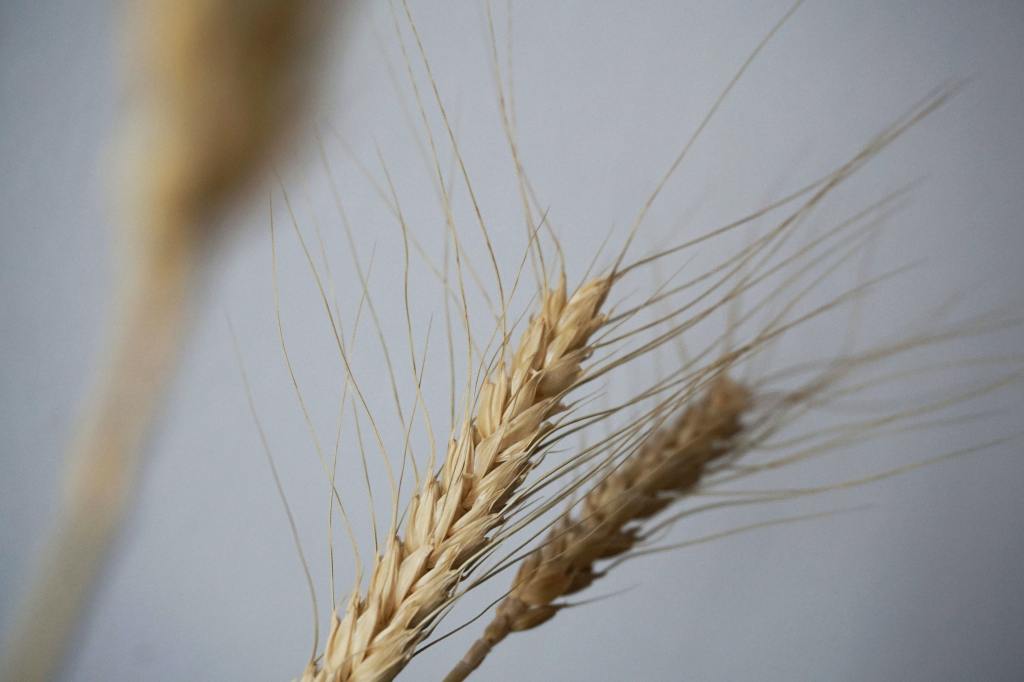
Verse 24: “Unless a kernel of wheat falls to the ground and dies, it remains only a single grain”.
Photo credit: Noemi Pongracz
Our passage begins with some Greeks wanting to see Jesus. They are probably in town for the Passover and are curious about this man. Perhaps they were in the crowd that waved palm branches and shouted “Hosanna”! Maybe they’ve just heard a few stories – snipets of his teachings or whispers of miracles. These Greeks know enough to want to know more.
Jesus begins by announcing that his time has come. Soon he will be glorified. Jesus wants them to know that not only he will soon die but that all who follow will also pay a price as well. In verse 24 Jesus says, “Unless a kernel of wheat falls to the ground and dies, it remains only a single grain”. Jesus is paralleling his physical death with the emotional, cultural, spiritual… deaths that all followers of Christ are called to. During the season of Lent the question that Jesus might ask of us today is this: What kernels of wheat do we need to allow to fall to the ground? Is it being greedy with my money? Is it being selfish with my time? Is it judging those who are different than me? What is your kernel of wheat that you need to let go of so that you and those you meet can experience true life?
As a society we have come to see humility and death as the enemies – physically, emotionally, and even spiritually. We do all we can to stave off death. This is the right and godly thing to do with a child or young parent or many others. Yet for each of us there comes a time when our physical death is a welcome friend. As a society we look down on humility. Instead we are taught to be strong, to be independent, to work for success in life. We’re taught that once we accumulate these things, all will be good. Until we do. Then we learn that meaning and purpose and love and contentment and peace and joy and hope cannot be earned or bought. Living as a person of the world, these eternal gifts are elusive.
We must be willing to die to pride, fear, arrogance, anxiety, selfishness, doubt, greed, lust, envy, racism, jealousy, judging, anger, prejudice, worry, elitism, injustice… as we seek to follow Jesus. As Jesus says in verse 25, we must “hate his [or her] life in this world”. Only then will we be willing and able to die to self and to begin to walk as a disciple of Jesus Christ, following him daily and one day into eternal life. May you and I be willing to do the hard work of this call to die to self. May the Lord bless our journeys.
Prayer: Loving God, your Spirit leads and guides me daily, holding up to me those kernels that still need to die. I’ve plucked off leaves now and then. Help me to get to the roots. For those things that still separate me from you and from others, grant me the strength to die to these barriers and sins. Thank you God. Amen.
Verse 2: “I am the Lord your God, who brought you… out of slavery”.
Today’s passage centers on Moses sharing the commands that God gave him on Mount Sinai. These commands would form the backbone and would be the beginning of the Law – the commands, statutes, and rules that would govern the life of the Israelites. Moses first shares the introduction: “I am the Lord your God, who brought you… out of slavery”. While we have not come out of slavery in the same sense that the Israelites just did, our relationship with Jesus does free us from many things.
The Ten Commandments begin to define the relationship between God and his people as well as the relationships between the people. The first four commands define our relationship with God and the last six define the relationships that we are to live in with one another. All ten are great guides for how to live with God and with each other. Yet they are just a start. The list would grow to 600+ laws and rules by the time Jesus Christ walked the earth. These laws shaped who and what the Israelites were, giving them an identity and a way to live in harmony.
Today we live in a world that also has a code of law that governs how our society rules itself, functions, and it also defines how we are to live with one another. Our civil law, in general, governs our political and societal practices and norms. While some civil laws interact or are influenced by moral or religious concerns, the way we live our day to day lives is still governed largely by our faith. As Christians we seek to live peaceably under the laws of our nation, state, and local community. We engage in the political process too – voting, working to add or amend laws to better society, and, sometimes, by serving. Yet the core of who and what we are still resides in our faith. As we live out our daily lives it is the “rule of life” that we have developed from our faith that truly guides us. For many believers this rule of life is modeled after Jesus’ life. Jesus modeled what living in right relationship with God and with others looked like when lived to the full. For Jesus, a right relationship was always grounded in love. Each of the Ten Commandments was grounded in love.
As you consider your rule of life – the way you act, the way you interact with and treat others, the way your faith is lived out, the way you love God throughout your day… – is it all grounded in love? In the spirit of Lent, consider this question deeply. What in your rule of life needs to change or die to better reflect Christ to the world? What needs to grow to better witness to the faith you profess?
Prayer: Lord, my mind is drawn to search and examine the habits and practices and things in me that define how I live each day. Help me to truly see as you would see, dying to that within that works to separate me from you or others. May the Spirit also work within me to grow those things that help me to better love you and others. Amen.
Verse 25: “He was delivered over to death for our sins and was raised to life for our justification”.
Photo credit: Mael Gramain
What does God expect or require of you? What did Jesus expect of his disciples and of those that would follow him? If we were to make a list to answer these questions, would the list be a collection of things to do or would it detail how to live our lives? Paul is answering these questions for the church in Rome in today’s passage.
The church in Rome was falling into the trap that Paul has been caught in for most of his life. Faith was a form of legalism – of checking boxes and staying within the lines defined by the Law. Faith was not a way of life. To help them understand this Paul goes back to Abraham, the father of Israel, the patriarch of all patriarchs in the Jewish faith. In our passage today Paul points out that God credited Abraham as righteous because of his faith in God. Abraham’s faith was demonstrated in his trust and obedience to God’s direction. The Law was not even in existence yet. Entering into this right relationship with God through faith alone made Abraham and his descendants heirs of God’s promises. For Paul, all who believe in Jesus fall into that line of descendants. Belief is what gets one in that line, not following any set of rules or lists that we can make up.
Paul defines belief in Jesus as the only action necessary to be “credited” as righteous – being right with God. He wants to be clear that righteousness does not come from following the Law or any other set of rules, but from faith in Jesus Christ. In verse 25 Paul reminds those in the church in Rome and all who follow Jesus why belief in him is essential: “He was delivered over to death for our sins and was raised to life for our justification”. In dying for our sins, Jesus removed the weight of the Law – that sacrifice for this sin, this sacrifice for that sin… – and he paid the price through his blood. A final sin sacrifice was offered by one for all. Through Jesus’ sacrifice we are made righteous before God. In being raised from the dead, Jesus defeated death, opening the way for us to receive eternal life. Both are gifts, given to us without price, without any requirement except believing that Jesus did this for each of us. These is no law or rules that we can follow to receive or earn these gifts. They come through faith alone. Thanks be to God.
Prayer: God, I am so grateful for these gifts of love – born to the cross and into the grave for me. You stood in my place and took the punishment for me. And you did not stop there. You walked out of the grave, breaking those chains too. Thank you for the gifts of love that make it possible to experience joyful and abundant life now and to enter eternal life one day through Jesus Christ, my Lord. Amen.
Verse 21: “This water symbolizes baptism that now saves you also… the pledge of a good conscience toward God”.
Today’s reading connects Jesus’ saving act on the cross to our baptism and to Noah’s experience in the great flood. Peter begins by reminding us that Christ died for us all – “the righteous for the unrighteous” – so that we could be in right relationship with God. Peter reminds us that not only did Jesus pay the atonement or price for our sins, but through the resurrection Jesus also opened the way to eternal life for all who believe in him as Lord and Savior.
In the middle of our passage Peter speaks of Noah and family, those who were “saved through the water”. Baptism is often associated with the washing away of our sins. Jewish rituals of purification involved water in the cleansing process. In Noah’s experience, the water was also the saving agent. The sinful world perished in the flood but through the waters God saved Noah, his family, and all the living creatures. Peter reminds us that “this water symbolizes baptism that now saves you also”. Through baptism we are brought into the family of God, into the community of faith. We are marked or claimed by God. Baptism becomes or leads to “the pledge of a good conscience toward God” – whether made by parents and sponsors or by the person being baptized. The pledge is to live a life worthy of Christ, the one who died for us. This life is revealed through our participation in the community of faith and through the ways we share our faith with the world by our witness, our prayers, our worship, our actions, our service…
The “good conscience” that Peter speaks of is the indwelling presence of the Holy Spirit. This is a promised gift from Jesus that is connected to baptism. In the early church and in some denominations today, the believer’s baptism is the standard practice. The Holy Spirit comes into that person’s life after they confess Jesus as Lord and as they are baptized into the faith. For those traditions that practice infant baptism, the child is marked with the seal of the Holy Spirit. Usually during confirmation (or a similar process) the young adult professes their own faith in Jesus Christ. This confession marks the point of entry for the indwelling presence of the Holy Spirit.
On this first Friday of Lent may we each remember our baptism and may we rejoice in our place in the family of God.
Prayer: Lord, thank you for claiming me as an infant and then waiting patiently for me to decide to follow Jesus. The gift of the Holy Spirit empowers and enables me to follow day by day. Thank you for this gift. Amen.
Verse 9: “I now establish my covenant with you and with your descendants after you”.
Photo credit: Iker Urteaga
Noah is the central character in our passage but he is far from alone. Noah and family have been on the ark with every other living animal, bird, reptile, insect… for almost a whole year. Imagine being confined to a fairly small space for that long! In reality, though, the current pandemic has felt like that for many. For Noah and crew, the waters finally receed and God calls them out of the ark with the imperative to “be fruitful and increase in number”. The earth must be populated again. New life must return. As they exit the ark, God says, “I now establish my covenant with you and with your descendants after you”. Never again will the whole earth be destroyed by water. A rainbow will remind God and humanity of the covenant.
If the pandemic has not felt like being locked in an ark for you, we all have had other trials and experiences where we wondered if we’d make it through, where we questioned if we’d survive the storm, where we’ve longed to finally catch our breath… As I’m sure Noah and family did from time to time, we have asked why God would allow this terrible thing to happen. This is a questioning born from grief or pain. After these emotions have passed we realize again that death and disease and illness and natural disasters are all part of life. None of these things are God punishing us or the world. At times maybe you, like me, briefly wondered this about COVID. It can sometimes feel that way. At the time of this writing, 2.43 million have died worldwide, with almost half a million of those deaths in the US. This disease has reminded us that we are powerless in many ways and that we can’t totally control everything. In the midst of the loss and grief we have also been reminded again and again of the hope, joy, strength, peace, assurance… that we find in our faith and in our covenant God.
Just as it did for Noah and family, the world as we once knew it has changed forever. We are in a place we never imagined we’d be. Just as the people of Noah’s day said ‘the rain will stop soon’, so too do we think this cannot last forever. We approach a year living in a pandemic. All of us have lost someone or have been impacted by this powerful disease. Yet Noah’s truths remain for us: God is more powerful than any earthly thing and that God is our covenant God. We too need to remember that God is more powerful than anything, even death. God promises to be our God in this life and in the life to come. Thanks be to God.
Prayer: Lord, you are all-powerful and everlasting. You are in total control and you are limitless. Yet you know my name and even the limited number of hairs on my head. You love me. You call me child. Thank you for wanting to be in a personal relationship with even me. Amen.
Verse 5: “Peter said to Jesus, ‘Rabbi, it is good for us to be here. Let us put up three shelters'”.
Photo credit: Gian D.
After Peter has a few moments to collect himself and to become aware of the significance of Moses and Elijah talking with Jesus he says, “Rabbi, it is good for us to be here. Let us put up three shelters”. Realizing how special this time is, Peter’s first reaction is to try and preserve the moment. He wants to make it last so he proposes building a place for Jesus, Moses, and Elijah to stay. And then, “suddenly”, a voice from heaven speaks and Moses and Elijah are gone. It is just Peter, James, and John that descend the mountain with Jesus.
Peter, James, and John must have felt much like we feel when our “mountaintop” experience ends and we return to our ordinary lives. There are times or even short seasons when we find ourselves in the very presence of God. Often I am like Peter, not wanting it to end, doing what I can think of to prolong it. But that special time in worship, that mission trip, that sacred moment in the hospital room… – their time comes to a close. The blessing will be given, the bus will bring us home, the circumstance in the room will be resolved – and we return to our regular life. Yet we do not return the same. Peter, James, and John will never see Jesus or their faith in him the same again. They have been changed by their experience.
Coming down the mountain, we too know God better, our faith has grown. Will we allow that to influence or affect how we live in the ordinary? God is present everywhere, not just on the mountaintop (or in the valley). God is ever present in all places and in all circumstances. In the regular of life it takes a little more effort to see God all the time. But if we get accustomed to looking for God, if that becomes our habit, then we will be amazed at how God is present in all of life. May that blessing be yours today and every day.
Prayer: Living God, be present to me today – in the big and in the small. Reveal yourself in worship in mighty and powerful ways; be the still, small voice in all the other moments too, continuing to reveal yourself in all of my moments. Amen.