pastorjohnb

Thoughts and musings on faith and our mighty God!


Leave a comment

A Good Shepherd

Reading: Ezekiel 34:11-12 and 20-31

Ezekiel 34:27 – “They will be safe on their fertile land, and they will know that I am the Lord when I break the bars of their yoke.”
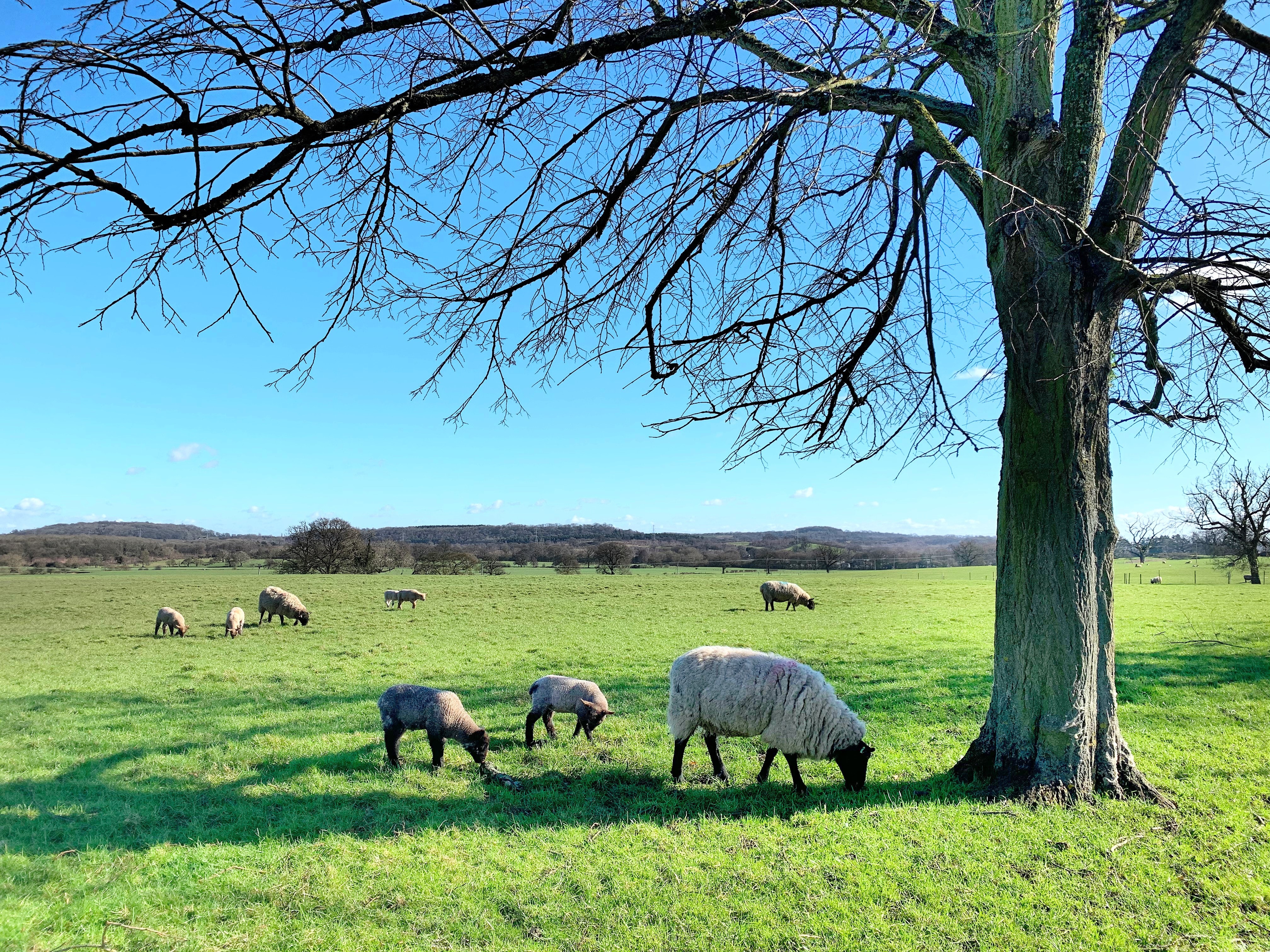
Photo credit: Ronnie Khan

Chapter 34 begins with the denouncement of Israel’s current leaders. What was the case before exile has continued in exile. God through Ezekiel pronounces doom on these poor leaders for living in luxury while ignoring the weak, the sick, the injured, the strays, the lost. There are many injustices so the flock scattered and then became prey. God promises to hold these bad shepherds accountable.

Beginning in verse 11, God offers the remedy. Here God proclaims: “I myself will search for my flock and seek them out… I will rescue them…” God will gather the scattered and care for the weak, the sick, the injured… As we continue in our reading we see that God will judge between the “fat and lean” sheep – between those living in luxury and those who struggle to survive.

God promises restoration, a new era. A David-like ruler will be appointed and a new covenant of peace will be established. Rains of blessing will pour down. Oppression and injustice will be no more. In verse 27 we read, “They will be safe on their fertile land, and they will know that I am the Lord when I break the bars of their yoke.” Without the yoke of oppression and injustice, there will be peace. There will be no famine; there will be no disgrace.

While the bad shepherds ignored these words of judgment, these words would offer great hope to the weak, the sick, the injured… to those living on the margins and edges. These words feel very relevant today. As injustices scatter people, as oppression sits heavy on others, as callous acts increase hunger, the people of God long for a good shepherd – not just for ourselves but also for the least of these among us. God’s children long for the rains of blessing and for a time of peace and grace. O God, may it be so.

Prayer: Lord God, you’ve always, always, always had a heart for the weak, the sick, the injured… You’ve always, always, always called for the faithful to join you in your care for the least of these. Lord, bridge the huge gulf between our reality and your preferred future. Use us to be a part of that bridge, each in our own ways caring for the weak, the sick, the injured… for the scattered and the oppressed. Amen.



Leave a comment

What We Need

Reading: Matthew 7:7-11

Matthew 7:7 – “Ask, and you will receive. Search, and you will find. Knock, and the door will be opened to you.”

Today’s teaching on prayer comes in the middle of “The Sermon on the Mount,” a collection of Jesus’ core teachings found in Matthew 5-7. It is the largest block of Jesus’ teachings in the gospels. John Wesley, the founder of Methodism, called these words “the sum of all true religion.” Gandhi, a non-Christian, read the sermon every morning.

Jesus begins this section on prayer with these words: “Ask, and you will receive. Search, and you will find. Knock, and the door will be opened to you.” These words fall within the context of the larger sermon. Plucked out of this context, they can make God feel like a genie in a bottle – except with unlimited wishes. All of the sermon points towards how to love God and neighbor as God intends us to. The idea of asking, searching, and knocking fall within and are aligned with God’s intent for our lives.

This becomes clear as we read on. Addressing daily provision as his example, Jesus muses upon what a father would give a child who asks for bread or for a fish. These are basic staples of their diet. Recall the feeding of the 4,000 or the 5,000. What did the boy have in his lunch sack? Continuing, Jesus points out that no good earthly father would instead give their child a stone or a snake. Extending this idea, Jesus adds, “how much more will your heavenly Father give good things to those who ask him.” Yes, our good God will provide for our daily needs when we ask, search, and knock.

Prayer: Lord God, thank you being a good, good father. Thank you for watching over us and for providing what we need. And thank you for not spoiling us or granting our every whim. We know how that turns out. We, in turn, are called to love you and to love others through the same good and generous practices that you model. Lead us to care well for the needs of others as we are able. Amen.


Leave a comment

Gracious and Generous

Reading: Luke 15-16

Luke 15:19 – “I no longer deserve to be called your son. Take me on as one of your hired hands.”

We begin with three parables about “lost” things. The parables of the lost sheep and the lost coin follow the same pattern: a thing is lost, a careful search is made, the thing is found, and a celebration follows. A similar celebration happens in heaven when a sinner changes heart and life.

The third parable centers on a lost son. The truly lost one is not the one in the early parts of the parable. The younger son is initially lost but realizes it and “comes to his senses.” He decided on these words: “I no longer deserve to be called your son. Take me on as one of your hired hands.” People can feel this way with God. We can feel this way. Yet in the father’s persona we see a God who runs to us with unconditional love. It doesn’t matter what we’ve done (or left undone) – God loves us and will offer grace always. We’re always welcomed back into the family of God. Sometimes we are called upon to help others understand this too.

The older son is truly lost. He sees himself as a servant and not as a son. His is a joyless yet dutiful existence. That is why anger rises so quickly. Even though the father reminds him of his inherited place in the family, he cannot move past his anger. The story leaves us hanging. What will the oldest son do? Will he too “come to his senses” or will he remain furious?

Chapter 16 holds two parables that deal with wealth. In the first story a manager cleverly uses money to benefit others in the present and to insure his own future. We are called to do the same. Wealth is just a tool to employ in the building of the kingdom. The second story reinforces this point. The rich man did the opposite, hoarding his wealth, ignoring the man in need right under his nose. His future does not end well. He did not listen to the Law and the prophets. We have these as well as the “one who rises from the dead.” May we hear Jesus’ call to be both gracious and generous, doing all we can to redeem the lost.

Prayer: Lord God, when we’re “lost” ourselves, help us to “come to our senses” again and again. And help us to walk alongside those who feel undeserving of your grace and forgiveness, enabling them to see their place in the family. And, Lord, when we struggle, thinking another undeserving of your or our grace, remind us of your great love that redeemed a sinner like us. May we gratefully receive and generously give of your love, grace, and forgiveness. Amen.


Leave a comment

Jesus’ Power

Reading: Matthew 7-8

Matthew 7:14 – “The gate that leads to life is narrow and the road difficult, so few people find it.”

Jesus first addresses our tendency to be judgemental as we begin chapter 7. He asks why we’re concerned with a splinter in our neighbor’s eye when we have a log in our own eye. It is so true. We’ve all been here – again and again and again… His advice? Take care of the log first. Then maybe, just maybe, you can help your neighbor with that splinter.

From this great challenge, Jesus next brings encouragement. Ask, search, and knock and you will receive, find, and have the door opened. God wants to give good things. In the same way, treat others as you wish to be treated. Simple words to hear and comprehend, challenging to live out daily. That’s why Jesus next says, “The gate that leads to life is narrow and the road difficult, so few people find it.” By contrast, the gate to destruction is broad and the road is wide. Many walk this path.

Jesus then teaches about false prophets and false faith. Both are evident by their bad fruit or by their lack of fruit. “Fruit” is the good done in the world. This kind of fruitful faith comes from our foundation. Are we building faith on the bedrock of Jesus Christ or on the shifting sands of the world? On the rock, our faith will not only produce good fruit, it will also withstand the storms of life.

Chapter 8 begins with many healings. Central is the healing of the centurion’s servant. He knows that he is unworthy of having Jesus in his home. He also knows authority when he sees it. He knows Jesus has it. Jesus can say a word and healing will come. Jesus declares he hasn’t seen faith like this in all of Israel. A few are drawn to follow Jesus after the healings, but they have too many worldly concerns to really be a disciple.

The chapter closes with two different reactions to Jesus’ power. After calming the storm (and admonishing the disciples for their weak faith), people are amazed at Jesus’ power. After freeing two men of their demon possession, the townspeople are afraid of his power. They plead with him to leave. Today people have the same reactions when they brush up against Jesus’ power.

Prayer: Lord God, you invite us to love well – ourselves and others. You invite us to bring your healing touch – to ourselves and to others. You offer peace in the storms and relief from worry, doubt, fear – for ourselves and for others. May we know your power today, O God – for ourselves and for others. Amen.


Leave a comment

“All is well…”

Reading: Jeremiah 5:1-8:16

Jeremiah 6:19 – “I’m bringing disaster upon my people, the fruit of their own devices, because they have ignored my words… rejected my teaching.”

Chapter 5 begins with a search for one just person. None can be found. Judah has forsaken God, they are “utterly faithless.” Incorrectly they think God won’t really punish their sins. But God proclaims that a distant army is coming. They will devour everything. Because God’s people have abandoned God, they will soon “serve strangers in a land not your own.” Exile is coming.

In chapter 6 God notes that all are eager for profits and notes that the prophets and priests “trade in dishonesty.” They tell themselves “All is well” but nothing is well. God invites them to turn to the ancient paths as they stand at this crossroads, to choose to walk “the good way.” Judah rejects the invitation. Therefore God says, “I’m bringing disaster upon my people, the fruit of their own devices, because they have ignored my words… rejected my teaching.” Judah is invited to put on funeral clothes, to wail and weep. Disaster is coming.

The scene shifts to the temple for chapter 7. Judah falsely believes that the temple will stand forever – it is God’s house. God longs to dwell with the people in the temple. But to be present with them, they need to radically change their ways. Only then will God dwell with them in the temple. A warning is given: don’t change your ways and God will make the temple like the tabernacle at Shiloh. It was totally destroyed by Israel’s enemy. This leads God to a lament. God recalls bringing the people out of Egypt, leading them in the wilderness, teaching them God’s ways, hoping for obedience. They too were stubborn and hard-hearted.

In chapter 8 God wonders why the people “persistently turn away.” God laments that “everyone turns to their own course.” This selfish, stubborn, rebellious, hard-hearted people are drawing closer to disaster. And they continue to tell themselves, “All is well.”

Lord God, just as you lament Judah’s ongoing patterns of selfishness, greed, lust, dishonesty, and oppression, so too do you lament these things in our day. We have changed very little. Yet a small remnant remains. Strengthen and encourage us, guide us to faithfully walk in your ancient ways. Empower us to be speakers of truth and to be bearers of love and hope, of grace and mercy. Amen.


Leave a comment

A Holy Covenant

Reading: Song of Songs 1-4

‭Song of Songs 4:12 – “An enclosed garden is my sister, my bride; an enclosed pool, a sealed spring.”

Today and tomorrow we read Song of Songs. On one level it is a song that celebrates the love of two people. On another level, it is an expression of the ideal love between God and humanity/Israel/the church – depending on your time reference. As we are in the Christian world, we will focus on the relationship between God (the man) and the church (the woman), both corporate and individual.

Chapter 1 expresses longing. The woman longs for the man’s kisses. The man brings her in and wants to exult and rejoice over her. God longs for our love. God longs to exult and rejoice over our faithfulness. The woman longs to be with him. He says to “follow the tracks of the herds.” We long for community and relationship with God. God says to follow the instructions, read my Word. They rejoice in one another’s beauty. We were created in the image of God. This is at the core of all of our relationships.

In chapter 2 the woman sees her live as an apple tree among the wild trees. We are invited to live holy lives, to be set apart from the world. She needs sustaining, weary from expressing her love. We too need God in many ways. God provides for us in numerous ways. He draws near and looks in on his love. He waits. God too longs to see us, to fear our voice. She declares that they belong to one another. Ideally we say this to God. God says, “I am the Lord your God… You are mine.”

Chapter 3 is a searching and a finding, a process that we repeat often with God. Once there, we find it beautiful too. Chapter 4 celebrates the beauty of the woman. The church is beautiful too when love and grace flow down and out into the world, reflecting God’s love and grace given to us. The man calls his love an “enclosed garden.” This implies a closed relationship, a holy covenant love. May it be so for you and for me in our relationship with God.

Prayer: Lord God, how lovely and beautiful you are! You are steadfast and true, coming to us again and again with a love that never fails, with a grace that never runs out. Lead and guide us to love you and one another in these same ways. Amen.


Leave a comment

Place of Rest, Strength, and Refuge

Readings: Psalms 60-63

‭Psalm 63:3 – “My lips praise you because your faithful love is better than life itself!”

Today’s Psalms provide a great and familiar pattern. Psalms 60 and 61 are prayers for God’s help. Psalm 62 confesses that God alone is the source of the strength that we need. Psalm 63 is a song of confidence in God. We often experience this movement in our lives. We cry out in the storm, God’s strength gives us a way through, we praise God.

Psalm 60 is a communal plea for help. Israel feels rejected – even though God once claimed Gilead, Manasseh… David asks God for a “flag” to rally around – a champion who will lead Israel to defeat the enemy. He closes with a plea for help against Moab, Edom, and Philistia because “human help is worthless.” How true. Yet how often do we try to win the battle on our own?

We enter a more personal plea in Psalm 61. The lament begins “When my heart is weak”… then God can be the rock, refuge, and tower of strength. The author longs to be in God’s “tent” (tabernacle.) The Psalm closes with a prayer for the king to live long and to be “enthroned forever before God.” Thoughts of dynasty echo here.

A shift comes in Psalm 62. God is the psalmist’s place of rest. God is his or her rock, salvation, stronghold. Then there is a reflection on life beginning in verse 9. Life is but a breath. So don’t trust in violence or in wealth. Trust in God’s faithful love and strength because God “will repay everyone according to their deeds.”

Most of Psalm 63 focuses on God’s power… David searches for, thirsts for God. David recalls encountering God in the sanctuary. With rejoicing he declares, “My lips praise you because your faithful love is better than life itself!” He finds joy when he meditates on God’s word. Then there’s a hard right at the end – destroy my enemies! Alas David.

Prayer: Lord God, be with us all of our days. When we or our community is suffering, be our strength and our place of rest and refuge. Guide us to place our trust fully in you alone. Only you can bring us through. Draw us into your presence and guard our hearts from evil thoughts. Justice is yours alone to hand out. Walk with us, O God, our rock and our stronghold. Amen.


Leave a comment

The Good Shepherd

Reading: Ezekiel 34:11-16

Verse 12: “I will rescue them from all the places where they were scattered.”

Photo credit: Patrick Schneider

We begin this week with Ezekiel. The prophet lived about 600 years before Jesus was born. His ministry began as a temple priest in Jerusalem. But with the invasion and subsequent exile imposed by the Babylonians, Ezekiel experienced and lived through the disaster that he foretold earlier in his ministry. Yet even while living in exile in a foreign land, far away from the temple, Ezekiel speaks a word of hope today.

Speaking to the scattered flock of Israel, through Ezekiel God says, “I myself will search for my sheep and look after them.” God doesn’t wait for Israel (or us) to come to God. The all-present and ever-loving God will go out to the scattered. God will care for them even in their exile and in their separation. God will provide as a shepherd provided for the sheep. These words of hope remind the scattered flock that God is with them even in the foreign places. Our God continues to be with us in all aspects of life – in the good and in the bad and in all places in between.

Reading on, the promise becomes even greater. God gives this greater promise: “I will rescue them from all the places where they were scattered.” Not only will God be with them in their exile, but God will regather the community of faith. God will bring them home to Israel where God will tend to them in “good pastures.” Within this promise there is a word that may be some need to hear today. God will “bind up the injured and strengthen the weak.” Maybe you or someone you know is hurting or is worn down. Maybe grief or isolation has set in heavy upon the spirit. If so, remember that the good shepherd seeks you and desires to love and care for you. Step into this good news. Share it with someone in need of this good news.

Prayer: Lord God, wherever we are today, draw us closer to you. Whether in sorrow or in joy, whether in want or in plenty, may we grow closer to you today. And if we have the capacity, Lord, use us to remind others of your love and care for them. Amen.


Leave a comment

In All Things

Reading: Romans 8:26-30

Verse 28: “And we know that in all things God works for the good of those who love God.”

Romans 8 is one of my favorite chapters in the Bible. Today and tomorrow we focus on the last portion. We open today’s verses with a great reminder that we have an advocate. Paul reminds us that the Holy Spirit helps us when we are weak by praying for us. These are not just random prayers. No, the Spirit searches our hearts and prays for exactly what we need. These prayers are awesome in two main ways. First, the Spirit prays for us according to God’s will. Second, this Spirit is the very Spirit of Christ – the one who walked among us, the one who knows our trials and struggles and temptations personally. We have a great team on our side!

In verse 28 we read, “And we know that in all things God works for the good of those who love God.” We first note that Paul says, “in all things.” God does not cause all things. Yes, God designed the world and it operates according to God’s design. Death and disease and sin and poor choices are part of this world, and are part of “life.” God does not scheme and orchestrate, causing bad or difficult things to happen so that God can swoop in. Yes, our loving God will work through and in all that life can throw at us if we invite God in and if we seek God’s presence.

God designed us in “the likeness of God’s Son.” We are to be like Christ, the one who fully trusted in God. So in all things may we too turn to God, walking and living as Jesus Christ walked and lived, one day also rising to glory.

Prayer: Lord God, thank you for the gift of the Holy Spirit and for the intercessions and guidance. Help me to listen better and to follow closer, seeking to be a part of living out your good will for me. Amen.


Leave a comment

Are You Willing?

Psalm 139:23-24: “Search me, God, and know my heart; test me and know my anxious thoughts. See if there is any offensive way in me, and lead me in the way everlasting.”

Photo credit: Kyle Johnson

In Psalm 139 David comes to the Lord and first recognizes that God is everywhere and that God knows all about David’s life. He recognizes that there is absolutely nowhere to hide from God. We’ll dive deeper into these thoughts on Sunday morning as we turn again to Psalm 139. But for today, we start at the end of the Psalm. Maybe these thoughts are what led David to write the Psalm. Sometimes we do begin at the end and work our way back towards the beginning.

In our two verses for today David invites God to take a deep dive into his heart. It is a brave invitation to make. Here are the main actions: “Search me, God, and know my heart… See if there is any offensive way in me.” To be honest, there are some thoughts that I’d rather like to keep hidden from God. And once in a while I even pretend that God doesn’t know about this or that thought. Maybe you go there too. And once in a great while something unexpected pops up – out of the blue. But these thoughts don’t come from nowhere. The subconscious has a way of working itself to the surface.

In these two simple verses David is inviting God into all of this. Not just into our anxious thoughts and offensive ways but into all of it. God is being invited into the selfishness, the pride, the anger, the self-esteem, the jealousy, the addictions and compulsions… Inviting a deep dive by God is an admission that one wants a deeper relationship with God. Is that your desire? Will you pray these verses to God?

Prayer: Lord God, give me the courage to go to this depth of transparency and honesty with you. Open wide those things that I think I have hidden in the innermost closets. Walk with me through this hard journey and strip away all that is not of you. Thank you. Amen.