pastorjohnb

Thoughts and musings on faith and our mighty God!


Leave a comment

Imitate Christ, Find Joy

Reading: Philippians 2:1-4

Philippians 2:4 – “Instead of each person watching out for their own good, watch out for what is better for others.”
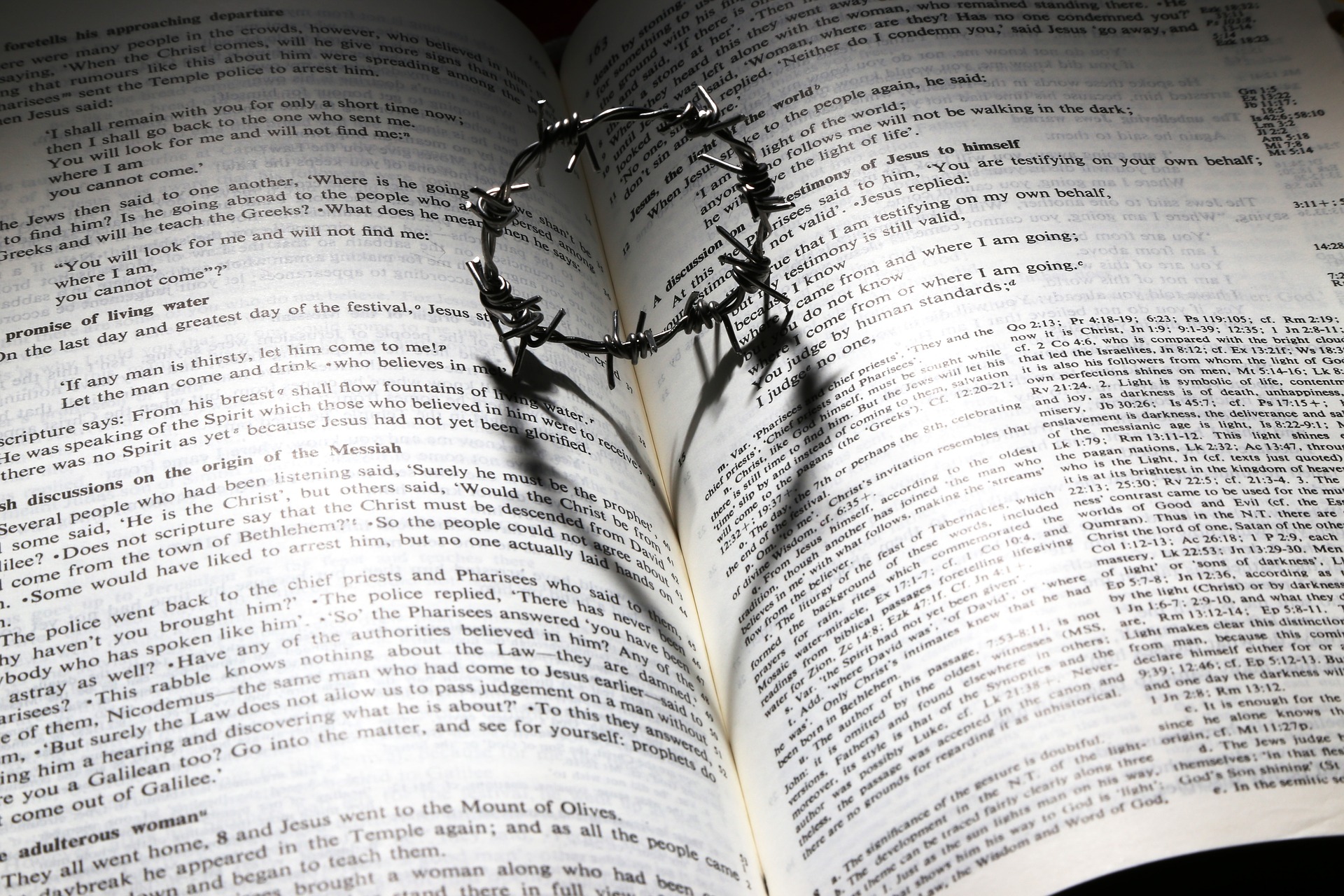
Selfishness and sinfulness have been a part of the human condition since very early in creation. These two traits are opposed to the will and way of God. Within each of us there is a daily battle between the inherent love of self and the call to live God and neighbor.

In Philippians 2 Paul encourages those in the churches in and around Philippi to imitate Christ. Jesus set for the church and for us the example of what it looks like to daily love God and neighbor more than self. Paul invites his readers – then and now – to find encouragement in Jesus’ example, to find comfort in his love for us, to draw on the power and presence of the Holy Spirit, and to have sympathy (compassion) for others. Paul tells the Philippians that this kind of living will “complete my joy.” Living this way is pleasing to God today.

To live like Christ one must work against our nature to do things for self. Instead, Paul encourages us, writing, “With humility think of others as better than yourselves.” Stripped of arrogance and pride, life is not all about us and our wants and our pleasures. Keeping in line with this practice, Paul then writes, “Instead of each person watching out for their own good, watch out for what is better for others.” Focus on the ways that we can care for and love on others. Focus on the ways that we can provide for and protect our neighbors. Doing these things, we imitate Christ. Doing these things, we find great joy in living for Christ.

Prayer: Lord God, guide us to look outward rather than inward. Break the tendencies to think first of self and to strive for the world’s “success.” Draw us to the heart of Christ, to humble service and sacrificial love. From this place of heart, use us to care for the weak and vulnerable, to feed the hungry and the lonely, to stand for and with the oppressed and the marginalized. As we seek to imitate Christ, fill us with joy. Amen.


Leave a comment

More Then Enough

Reading: 2nd Kings 2:38-44

2nd Kings 4:43c – “This is what the Lord says, ‘Eat and there will be leftovers.'”

Today we read about God again being faithful, about God again keeping a promise. These two feeding miracles demonstrate God at work in partnership with a faithful believer. As we consider our big prayers and our God opportunities this week, may we trust in this same God who loves and cares for us.

A severe famine has struck the land. In our story Elisha returns to Gilgal, one of three centers where prophets gathered. As the leading prophet in Israel, he also oversaw the centers at Bethel and Jericho. Elisha gives instructions to make stew. Another prophet gathers what he can find, which includes some inedible gourds. In response and in alignment with God’s nudge to feed these prophets, Elisha calls for flour to be added, miraculously making the stew edible.

At this point a man arrives with some bread and grain, likely a first fruits or thank offering. Instead of keeping this for himself, Elisha is moved to use this gift to feed his fellow prophets. The giver questions how this meager offering could feed 100 men. Elisha shares the “how” with him, saying, “This is what the Lord says, ‘Eat and there will be leftovers.'” God has moved Elisha to share his bread. God will see that there is more than enough. Healthy stew is augmented by bread, sent from God.

Over the next few days may we be sensitive to the ways that God nudges us. It might be to share food or it might be to share some other resource. Instead of being selfish or keeping it “for a rainy day” or worrying about our own needs, may we trust the nudge from our God of more than enough.

Prayer: Lord God, open our hearts to be responsive to and generous with that person that you place in our lives. Break our tendencies to hold onto and to store up and up and up. Bend our heart towards your heart of abundant generosity. Use us to be your love and care. Amen.


Leave a comment

Rule and Cleanse

Reading: Psalm 18:7-8 and 12-13a

Psalm 19:13a – “Save your servant from willful sins.”

Psalm 19 celebrates who and what God is. The psalmist speaks of God’s order and power. The writer acknowledges, by contrast, our disorder and powerlessness. In verses 7-8 we focus in on the Law. God’s “rules” for living out our faith are “perfect… faithful… right… pure.” God’s Law reflects God’s character. If we follow God’s will for how we are to live and be in the world, then we are “revived… gladdened… made wise… given light.” This is all in alignment with this understanding amongst God’s people: live according to the Law, experience goodness and blessing. People of faith today hold to this basic understanding. And, for the most part, this extends to our relationship with civil law too. There are times, though, when our faith will call us to hold God’s Law above common law.

In verses 12-13 the psalmist acknowledges and addresses those times when we do break God’s Law. Because of our human nature, we will sin, hurting or harming ourselves and/or other(s). At times these are “accidental.” Some of the time we become aware of these sins. Someone will let us know or the Holy Spirit will bring conviction into our hearts. And sometimes we don’t know; we won’t ever know. In these cases the psalmist asks God to “clear” him of sins. General confession is good for us to practice periodically too.

Our reading today closes with this petition: “Save your servant from willful sins.” At times we will know what we’re about to do or say or think, we’ll know it is sinful, and we will proceed forward anyway. We’ll cross the line. We’ll cause harm. We’ll damage a relationship. The psalmist asks God to not allow these sins to “rule me.” May this be our prayer as well.

Prayer: Lord God, we admit that it is not always easy to be faithful. Our human nature comes out at times, eclipsing the divine within. But even then your Holy Spirit whispers and nudges, calling us to faithfulness, calling us to walk once again with you. Welcome our confession, O God, cleanse us through your grace. Bring healing and wholeness to our lives and to our relationships. Rule in our hearts. Amen.


Leave a comment

The Will to Choose

Readings: John 3:16-16 and 34-36, and John 14:1-7

John 3:17 – “God didn’t send his son into the world to judge the world, but that the world might be saved through him.”

Photo credit: Kelly Sikkema

John 3:16 is about as well-known as any verse in the Bible. God sent his one and only son into this world, taking on flesh, becoming one of us, so that he could die on our behalf, removing our sins, opening the way for us to enter eternal life. This is a beautiful picture of sacrificial love.

The next verse reminds us of God’s unconditional love: “God didn’t send his son into the world to judge the world, but that the world might be saved through him.” God’s first choice is not to be a God of judgment but a God of love, mercy, grace, and salvation. This is what God desires for all humanity, not judgment. God also created humanity with free will or the will to choose. So we can choose to not choose Jesus as our Savior. We can choose to live for self. We can choose to be judged. We can choose to ignore the words of life that Jesus speaks, to ignore the prompting and guidance of the Holy Spirit. In doing so, we invite “the angry judgment of God” upon ourselves.

Jumping forward to John 14, it is a heavy moment. Sandwiched around the command to love one another “as I have loved you” is the news of Judas’ betrayal and of Peter’s denial of knowing Christ. Jesus tells the disciples to not be troubled but to trust in God and in him. He then promises that he will come back for them so that they can be with him in heaven. In response to Thomas’ confusion, Jesus says, “I am the way, the truth, and the life.” Jesus’ life and example are the way to know God and God’s truths. They are the way to live the life that God intended for us to live, the life here and now that leads one day to life eternal. May it be so for you and for me.

Prayer: Lord God, you sent your son to save and redeem us. You desire this for each and every one of us. It must break your heart to see the one you wove together in the womb, the one you created for relationship with you, choose the ways of the world. Lord, break our heart for what breaks yours. Amen.


Leave a comment

Hearts on Fire

Reading: Luke 24

Luke 24:33 – “Weren’t our hearts on fire when he spoke to us along the road and when he explained the scriptures for us?”

In all four Gospels it is the women who go to the tomb on the third day. In Luke’s Gospel the “men” in “gleaming bright clothes” ask the women why they’re looking for the living (Christ) among the dead (tomb.) The angels remind the women of Jesus’ own words about all these things. On the road to Emmaus and during his appearance to the disciples Jesus does this too. As the women share their story, their words are “nonsense” to the disciples. Sometimes a story is just too wild or too crazy or too unbelievable for us to wrap our heads around it right then and there.

The risen Jesus, unbeknownst to the two disciples, comes and walks with them. Jesus unpacks all the scriptures written about him as they walk along. Urged to stay with them, likely eager to continue this conversation, Jesus is revealed as he breaks the bread. Cleopas and friend return right then to Jerusalem to share their story with the rest of the disciples.

Mid-story Jesus appears. The gathering of disciples is “terrified and afraid,” thinking Jesus a ghost. He shows them his hands and feet – the scars from the nails – and he eats a piece of fish. Grounding them in these realities, Jesus then opens their minds to understand all that had been written about him in the Law, the prophets, and the Psalms. Jesus then commissions them to preach about the forgiveness of sins that leads to “changed hearts and lives” – the message preached since John the Baptist first appeared on the scene.

Before ascending into heaven, Jesus repeats God’s promise to send “heavenly power” – the Holy Spirit. The Spirit has the power to do for us as it did for the first disciples. This is summed up in the Emmaus disciples’ words: “Weren’t our hearts on fire when he spoke to us along the road and when he explained the scriptures for us?” May it be so.

Prayer: Lord God, just as the risen Christ did for those first disciples, please continue to open our hearts to your words. Fill us with understanding and with a fire to share what we know and believe – that you still are the power to change hearts and lives. We are each example number one in the story that we have to tell. Amen.


Leave a comment

Much Lament

Reading: Ezekiel 27-32

Ezekiel 28:18 – “Therefore, I will bring fire from your midst. When it has consumed you, I will turn you into dust on the earth.”

Photo credit: Greg Rakozy

Most of chapters 27 and 28 are a lament for Tyre. Tyre had it all: beauty, trade, allies, wealth, abundance. Until God took it all away. Their prince was arrogant, saying, “I am God, I rule the seas!” God conceded that his wisdom and discernment were great, making him rich and powerful. But the claim, the pride – too much. Because the prince exalted himself, God declared, “Therefore, I will bring fire from your midst. When it has consumed you, I will turn you into dust on the earth.” At the end of chapter 28 we find a prophecy against Sidon. There will be a plague followed by the sword. Into this land, God will gather Israel. There they will build houses, will plant vineyards, and will live in safety.

Chapters 29-32 bring judgment against Egypt. God will set hooks in the great crocodile, flinging it onto open ground. Egypt is condemned as a “flimsy crutch” that splintered or broke in times of need. Because Pharaoh also claimed divinity – he created and owned the Nile, God will make Egypt an utter ruin – the most ruined place anywhere. God will one day regather Egypt, but it will remain lowly. Nebuchadnezzar will conquer Egypt and carry off its wealth – “wages for his army.”

In chapter 31 God compares Egypt to Assyria – the tallest of trees. There was no equal to Assyria in Eden, God’s garden. And yet Assyria fell, going down to the underworld. Assyria’s allies went along too. Elam and Edom and Sidon are there too – laid among the uncircumcised, those slain by the sword. Many arrogant and evil nations will come to a bitter end. Much Lament will be shared.

Prayer: Lord God, open our ears today to these warnings against being arrogant and greedy and selfish. When we get to thinking we’re king of the roost, remind us that we’re not. Humble us, bring us down to where we should be. Guide us to walk in your will and way. Amen.


Leave a comment

Love and Compassion… Forever

Reading: Jeremiah 30-33

Jeremiah 31:33b – “I will put my Instructions within them and engrave them on their hearts. I will be their God, and they will be my people.”

Today we read chapters 30-33, known as “The Book of Comfort.” This “scroll” offers words of hope and restoration. It opens with a declaration that the time is coming when God will bring back the captives. This section has the “what you’re about to go through will be really, really hard, but…” feel to it. There will be “screams of panic and terror… a time of unspeakable pain,” but God will deliver them; God will break the yoke on their necks. God will restore and rebuild. There will be laughter and joy. The Davidic line and the Levitical priesthood will both be reestablished. “You will be my people, and I will be your God.”

The defeat and time in exile will be part of the process. This refining and reshaping process will lead to a new covenant. God declares, “I will put my Instructions within them and engrave them on their hearts.” The sin that has been deeply engraved on their hearts will be written over. God states, “They will all know me, from the least of them to the greatest.”

Chapter 32 shares with us a critical moment for Jeremiah, offering him some tangible proof for these promises of God. Jeremiah is in confinement for prophesying the downfall of Jerusalem… He receives word that a cousin is coming to sell him some land. It all happens as God said it would. Jeremiah buys the land. In a practical sense this makes no sense. Judah is about to be conquered. Jerusalem and its temple will be destroyed. Most will die or go into exile. But this is an act of trust and faith. Jeremiah buys the land. God then declares that houses, fields, and vineyards will one day be bought and sold again in this land. Jeremiah responds with a beautiful prayer that recounts God’s power and might, that recalls the sins of Israel and Judah, and that reviews God’s promises of restoration and covenant renewal. Yes, hard times are ahead. Really hard times. But God is faithful. God’s love and compassion endure forever. Thanks be to God.

Prayer: Lord God, we are reminded once again today of our frailty and failures, set against the hope and promise of your enduring and unending love and grace. What a sharp contrast. How different we are from you in so many ways. And yet, yet you hold on, yet you love us anyway. So great is your love for us, O God. Strengthen and encourage us today to be your people. Today. Amen.


Leave a comment

Rule with Justice and Righteousness

Reading: Isaiah 13-16

‭Isaiah 14:1 – “The LORD will have compassion on Jacob, will again choose Israel, and will give them rest in their own land.”

Our readings for today and tomorrow contain mostly oracles against the nations surrounding or occupying Judah/Israel. We do find hope sprinkled in these verses too. For example, tucked in the middle of the oracle against Babylon and her king, we find: “The LORD will have compassion on Jacob, will again choose Israel, and will give them rest in their own land.”

Chapters 13-14 detail the fall of Babylon. Isaiah makes it clear that God is “mustering an army for battle.” God will raise up the Medes to make Babylon like “Sodom and Gomorrah.” A restored Israel will then taunt the broken king of Babylon. The underworld will wait restlessly for this king. His final rest will be on “a bed of maggots” under a “blanket of worms.” His arrogance and pride will be laid low. God will also cut off all of his offspring too.

Before an oracle against Philistia, we read, “I will break Assyria in my land… and remove its yoke from my people.” The Philistines are not so blessed. They rebelled against Assyria, yes, but a new viper will come from the north.

Chapters 15-16 hold an oracle against Moab. They will be devastated and humiliated. In verse 2 we read, “Every head is shaved, every beard cut off.” The waters will be full of blood. In three years Moab’s remnant will be “few and feeble.” Amidst this sadness and loss we also find hope, mercy, compassion. Isaiah’s heart “cries out for Moab.” God invites Judah to “consider carefully, act justly.” Judah is told to hide the outcasts and fugitives. Isaiah also speaks of the time when the oppressor is gone, of a time when one will rule with justice and righteousness from the throne of David. This too is our ultimate hope. Thanks be to God.

Prayer: Lord God, you continue to oppose leaders and nations that bring evil and oppression upon this world. You oppose us when we do the same. Instead, Lord, use us to create the kingdom of justice and righteousness that Isaiah spoke of today. Then you will be with us, walking amongst us in Spirit and power. Amen.


Leave a comment

God at Work

Readings: Judges 13, Judges 14, Judges 15, Judges 16

Judges 15:14 – “The LORD’s spirit rushed over him, the ropes on his arms became like burned-up linen.”

Today we read about Samson. He is the last major judge. Evil has befallen Israel and God has given them over to the Philistines – for 40 years. The messenger of the Lord comes to a Danite woman and tells her that she will have a son. Because he will be a nazarite, she must keep the vows while pregnant. Samson is born and as he grows up, the Lord blesses him.

Samson falls in love with a Philistine woman – much to his parents displeasure. He demands that they get her for his wife. They do not realize that God is at work. Samson kills a lion bare-handed and on a later trip discovers honey in the carcass. This becomes the basis for his wedding riddle. Samson’s wife nags the answer out of him and she tells her people. He reacts violently, killing 30 men to get the 30 sets of clothing to pay off his wedding riddle. He exits quickly and the woman is married to another. Later this news leads an angry Samson to use foxes and torches to burn the Philistines’ grain. Samson is turned over to the Philistines but God is with him once more. Freed, he uses a jaw bone to kill 1,000 Philistines. God then brings water from a rock to revive and reenergize a tired Samson.

Samson then meets, falls in love with, and marries Delilah. The Philistines offer her 1,100 pieces of silver for the secret to his strength. After three failed attempts and a lot of nagging, he tells her. He awakens and thinks he’ll just escape this too. But he is captured. They gouge his eyes out and put him to slave labor. During a celebration to their god Dagon, Samson is brought in to perform. He asks God for one last time of strength. Samson collapses the temple, killing the Philistine rulers, freeing God’s people.

Samson breaks all of his vows. He allows lust, anger, and revenge to lead him to some horrific decisions and actions. And yet God remains at work. Samson will not be rescued or redeemed, but through him God’s people will be.

Prayer: Lord God, you are ever at work. In the hardest of situations you still can bring about your desired outcome. Help us to heed today’s warnings about the outcome of lust, anger, and revenge. Amen.


Leave a comment

Open Hearts, Open Doors

Reading: Matthew 9:9-13

Verse 11: “Why does your teacher eat with tax collectors and sinners?”

In today’s text we first see Matthew being called by Jesus. Hearing a simple “Follow me” he gets up and leaves that life. We do not know what led Matthew to respond as he did. All we know is that he did follow. News must’ve spread. By evening Jesus and his disciples are at Matthew’s house for dinner. Many “tax collectors and sinners” are gathered there too. The crowd that was gathered drew this question from the Pharisees: “Why does your teacher eat with tax collectors and sinners?” They took offense over who Jesus breaks bread with.

Jesus does not take offense at either the question or the crowd that sits at the table with him. It is quite the opposite. Using a medical analogy, he first tells the Pharisees that these folks are exactly why he came to earth. Again and again, throughout the gospels, Jesus repeats this message about coming for sinners, not for the righteous.

As Christians we can get stuck where the Pharisees are. As a pastor and as a church we can become happy with the status quo. I’ll prepare a nice little sermon and we’ll gather on Sunday morning, happy to see our friends once again. We repeat it Sunday after Sunday. What would happen if we extended the offer of Jesus more regularly? What if we cast the net a bit wider, being more generous with our invitations to follow Jesus?

Wouldn’t it be awesome if our neighbors started asking the question more and more: Why does your teacher/pastor/church eat (or worship or fellowship) with the sinners? That leads to the question: Is anyone welcome at your church (in your home)? And that leads to the thought: Maybe I’m welcome there too. May it be so.

Prayer: Lord God, remove first the fears of rejection and if being judged by the company we keep. Replace these fears with an open and generous heart, with a kind and compassionate soul. Open our hearts and the doors of our churches. Amen.