pastorjohnb

Thoughts and musings on faith and our mighty God!


Leave a comment

Choices

Reading: Isaiah 1:15-20

Isaiah 1:19… 20… – “If you agree and obey… But if you refuse and rebel…”

Isaiah was a prophet called by God to speak God’s word to Judah, the southern kingdom. Isaiah called Judah, particularly its leaders, to a radical trust and faith in God and away from their sinful behaviors. Judah is characterized at the start of Isaiah 1 as children who have turned away from God. The nation outside of Jerusalem is ravaged and the cities burn as Assyria wages war against Israel and Judah. But still Judah refuses to turn towards God. Yes, they are going through the motions of worship but their hearts are far from God. In fact, God calls all of their offerings “worthless.”

Because their worship is full of hypocrisy, God’s eyes refuse to see their extended hands. God’s ears are closed to their lengthy prayers. All because Judah’s hands are “stained with blood.” God even implores them, “Wash! Be clean!” Yet it is not the blood of warfare that stains their hands. The blood comes from within Judah. God instructs them, “Put an end to evil; learn to do good.” What good? To champion justice and to care for the oppressed, the orphan, the widow.

As if in a courtroom setting, God says to Judah, “Come now and let’s settle this.” With promises of their scarlet sins being made white as snow, God tells Judah, “If you agree and obey you will eat the best food of the land. But if you refuse and rebel, you will be devoured by the sword.” Choose God or idols. Choose good or evil. Choose life or death. The same choices lie ever before you and before me.

Prayer: Lord God, since the beginning of creation these have been our choices. Until Jesus comes in final victory these will be our choices. Just as Isaiah spoke words of warning and words of life, may your Word and your Spirit guide us to faithful obedience. Lead us to walk your path in faith and trust, O Lord. Amen.



Leave a comment

Freed to Live

Reading: Romans 8:12-17

Romans 8:14 – “All who are led by God’s Spirit are God’s sons and daughters.”

Romans 8 begins with Paul reminding us that we are set free by the Spirit. As Paul develops his argument, he tells us that we have been set free from the law of sin and death. Living by and under the law of Christ’s Spirit, we receive life and righteousness. As we lean into today’s reading Paul reminds us that because we are living under Jesus Christ, we have an obligation. It is not an obligation to selfish or sinful living. That life leads to death.

Our obligation is to live by the Spirit, putting “to death the actions of the body.” Doing so we become part of verse 14: All who are led by God’s Spirit are God’s sons and daughters.” The Spirit of Christ adopts us as children of God. Therefore we don’t have to live in fear under the old spirit of slavery, under the ways of the world. We can remember the fears we felt back when we were children of the world: Am I good enough? Do I have enough? Amen I popular? Am I powerful?…

Living under Christ, our identity is rooted in our place in the family of God. Paul reminds us that because “we are children, we are also heirs.” Although we may suffer at times with Christ, we will also one day be glorified with him. This is the outcome of our faith: the salvation of our souls. Trusting in this we are freed to live as Jesus lived in this world, loving God and loving neighbor every day. Thanks be to God!

Prayer: Lord God, what a blessing it is to live as your child, led and guided by your Spirit within us. Attune all that we are to your will and way, reflecting who and what you are to the world. Use our words and actions to glorify you. Amen.


1 Comment

Know This for Certain

Reading: Daniel 3:13-18

Daniel 3:18 – “Know this for certain, your Majesty: we will never serve your gods or worship the gold statue you’ve set up.”

Photo credit: Ricardo Gomez Angel

Shadrach, Meshach, and Abednego have long stood out because of their faith. Since arriving in Babylon as exiles (along with Daniel), their strong faith in God has set them apart from the native population. It began, you might recall, when they refused to defile themselves with the king’s royal food. From that point forward, these four have risen up the ranks of civil service, causing envy, jealousy, and dislike.

Leading into today’s reading, King Nebuchadnezzar builds a 90 foot tall golf statue of himself. He gives the order that at the sound of the horn, pipe, zither, lyre… all must bow down and worship the statue (and therefore the king.) Some fellow administrators are quick to point out that Shadrach, Meshach, and Abednego ignore the order. They refuse to bow down and worship. In verse 13 we see that this enrages King Nebuchadnezzar. Brought before the king, the three are given a chance to bow and worship. The other option is to be thrown into the fiery furnace.

For most of us, the fear of death would rise up. For some, we’d consider losing all that we’ve worked hard for. And some might even bow and pray to the true God while pretending to pray to the statue. King Nebuchadnezzar asks Shadrach, Meshach, and Abednego, “Then what god will rescue you from my power?” Their response? Well, maybe God will rescue, maybe not, but, “Know this for certain, your Majesty: we will never serve your gods or worship the gold statue you’ve set up.” Maybe God’s glory will be revealed through rescuing Shadrach, Meshach, and Abednego, maybe it will be revealed through their steadfast and complete faith in God. May this be the faith that we have in the Lord our God.

Prayer: Lord God, what a faithful and courageous path Shadrach, Meshach, and Abednego chose to walk. What a witness to faith. Lord, fill us with a faith that will choose to stand for you. From the big tests to the decisions that no one even sees, may you alone be the one we serve, the one we worship. Amen.


Leave a comment

He Will Be There

Reading: Matthew 14:22-33

Matthew 14:25 – “Very early in the morning he came to his disciples, walking on the lake.”

Our passage begins with “Right then…” This sudden shift follows and is connected to what has just happened. Chapter 14 begins with the death of John the Baptist. Jesus hears the story from John’s disciples. Jesus tries to find solitude but the crowd follows. He heals the sick. As evening nears, filled with compassion, Jesus feeds 5,000 men plus women and children from two fish and five loaves. It is right then that Jesus sends the disciples across the lake. He dismisses the crowd and finally finds some alone time with God, time to grieve for John. This pattern is typical for Jesus and is our call too: care for others before self, but still take time to care for self. One simply cannot pour into others from a place of exhaustion and emptiness.

In verse 25 we read, “Very early in the morning he came to his disciples, walking on the lake.” Seeing him, the disciples are terrified. Yes, the Old Testament speaks of God making “a way in the sea” (Isaiah 43:16,) but this has never been done by a human. Of course they think Jesus is a ghost. Quickly he reassures them, offering encouragement, identifying himself. Peter asks for proof: “If it is you, order me to come to you on the water.” Jesus says, “Come,” and Peter begins to walk on the water. When have you observed someone doing something amazing, been encouraged to join them, and started doing what they’re doing? Although likely not walking on water, when willing we can do what we thought beyond ourselves when encouraged to believe that we can.

Unfortunately Peter gets distracted and sinks back to the base line. Fear overtakes his faith. So too is it with us. Our human weaknesses impact our faith. Just as Jesus was there for Peter, he will be there for us too, reaching out a hand, helping us back to our place of comfort, calming our storms. Thanks be to God.

Prayer: Lord God, when and where will you call us out of the boat today? How will you move us beyond where we think we can go? Lord, when you do, make us ready and willing. Trusting in you, guide us to step forward. Amen.


Leave a comment

He Is Alive!

Reading: John 20:1-18

John 20:18 – “Mary Magdalene left and announced to the disciples, ‘I’ve seen the Lord!'”

The first Easter long ago began quietly, with Mary Magdalene making her way to the tomb in the time just before dawn. It was light enough out to see that the stone was moved. She goes and tells Peter and John. They come and look. They see the grave cloths lying there. Peter and John leave, not understanding what has happened.

Mary remains, undeterred from her focus. Taking a second look inside, she see two angels. She inquires of them – sort of. She tells them that the body is missing. Mary turns and faces a person. She doesn’t recognize him as Jesus – yet. He asks her why she is crying and who she is looking for. Again, the same response: “If you’ve carried him away…”

“Mary.” Jesus speaks her name. She recognizes the voice and maybe the feeling in speaking her name. At times Jesus speaks our names too. It’s often when we’re distraught or overwhelmed or… It might not be audible but he does call, beckoning us back to the place of peace…

Jesus gives Mary instructions: go and tell the others. In verse 18 we read, “Mary Magdalene left and announced to the disciples, ‘I’ve seen the Lord!'” The first evangelist shares the good news of Jesus Christ for the very first time. He is alive! Yes, Jesus is alive!! Hallelujah!!

Prayer: Lord God, what great news! Life and hope, joy and peace – all bundled up together. The cross and the grave have been defeated..sin and death no longer hold sway or have power over us. As Jesus calls our name, O God, tune our hearts and ears to that call. Thank you. Amen.


Leave a comment

He Came to Save

Reading: John 3:13-17

John 3:17 – “God didn’t send his son into the world to judge the world, but that the world might be saved through him.”

As we turn to the gospel of John for the week ahead, today we read one of this gospel’s most well known verses: “God so loved the world…” This verse is seen on signs at ball games, on T-shirts, on artwork in homes and houses offices. It is an important reminder of the depth of God’s love for us and of the gift that Jesus’ sacrifice was for you and for me.

In verse 13 we’re reminded of the incarnation, itself a sacrifice. Paul reminds us that Jesus emptied himself, giving up his divinity to come to earth in the flesh. Coming from heaven also allowed Jesus insight into what he would die for: so that we could one day join him there.

Connecting to the healing and life that the Israelites received in the wilderness when Moses lifted the golden serpent (Numbers 21,) Jesus declares that he must be lifted up for us to receive eternal life. Is he referring to being lifted up onto the cross, being lifted up out of the grave, being lifted up into heaven, or all three?

Jesus’ death and resurrection defeated the powers of sin and death. We are forgiven and raised to new life through these actions of Jesus on our behalf. In verse 17 we read, “God didn’t send his son into the world to judge the world, but that the world might be saved through him.” Jesus did not come to judge or to condemn. He came to save – to save us from ourselves, from the lies of the world, and, yes, from the powers of sin and death. Thanks be to God.

Prayer: Lord God, thank you for your great love for us. It was revealed first in your taking on flesh. It culminated in sacrificing that flesh as the atonement for our sin. All so that you could save us. What a deep love you have for us, your sons and daughters. Thank you, Lord. Amen.


Leave a comment

Fear, Shame, Guilt…

Readings: Matthew 26:69-75 and 27:3-10, 15-26

Matthew 27:24 – “So he took water and washed his hands in front of the crowd.”

Photo credit: Falaq Lazuardi

Today’s readings contain denial, betrayal, and giving in to social pressure. These actions are driven by fear, shame, guilt, regret, greed, power. These are actions and emotions that we too wrestle with as we try to walk faithfully with our Lord and Savior, Jesus Christ.

Peter had followed the mob who had arrested Jesus – at a distance. He feared being caught up in what was happening. In the high priest’s courtyard, Peter is accused three times of being with Jesus. Each time Peter’s denial of Jesus grows stronger as the fear rises. His fear turns to shame as the rooster crows. When was the last time that you denied Jesus, either in word or deed? What “crowed” to lead you to tears?

Judas agreed to betray Jesus for thirty pieces of silver. Seeing that Jesus is condemned to die, Judas feels “deep regret” for betraying “an innocent man.” The religious leaders refuse to change course. Guilt and regret lead Judas to take his own life. When have you felt deep regret because you betrayed Jesus? How did you resolve your inner turmoil?

Pilate has the power of life and death in his hands. He tries to free Jesus. His wife tells him to “leave that righteous man alone.” Tension builds and Pilate gives in to the mounting social pressure. To try to relieve his guilt and regret, he “took water and washed his hands in front of the crowd.” Pilate allows the power to slip through his fingers like the water slips through. We’ve all given in to the crowd, turning away from Jesus. What do you do to relieve your guilt and regret?

Prayer: Lord God, it is hard to admit, but at times we’ve played the roles of Peter, Judas, and Pilate. When we’ve failed you, we’ve felt what they feel. It is our human nature rising up to protect self, position, status… In our next moments of testing, Lord, raise up the voice of your Holy Spirit. May it be louder and stronger than our fear, shame, guilt… And when we fail, remind us of your unconditional love and endless grace. Amen.


Leave a comment

An Invitation to All

Readings: Mark 14:22-24 and Luke 22:19-21

Mark 14:24 – “This is my blood of the covenant, which is poured out for many.”

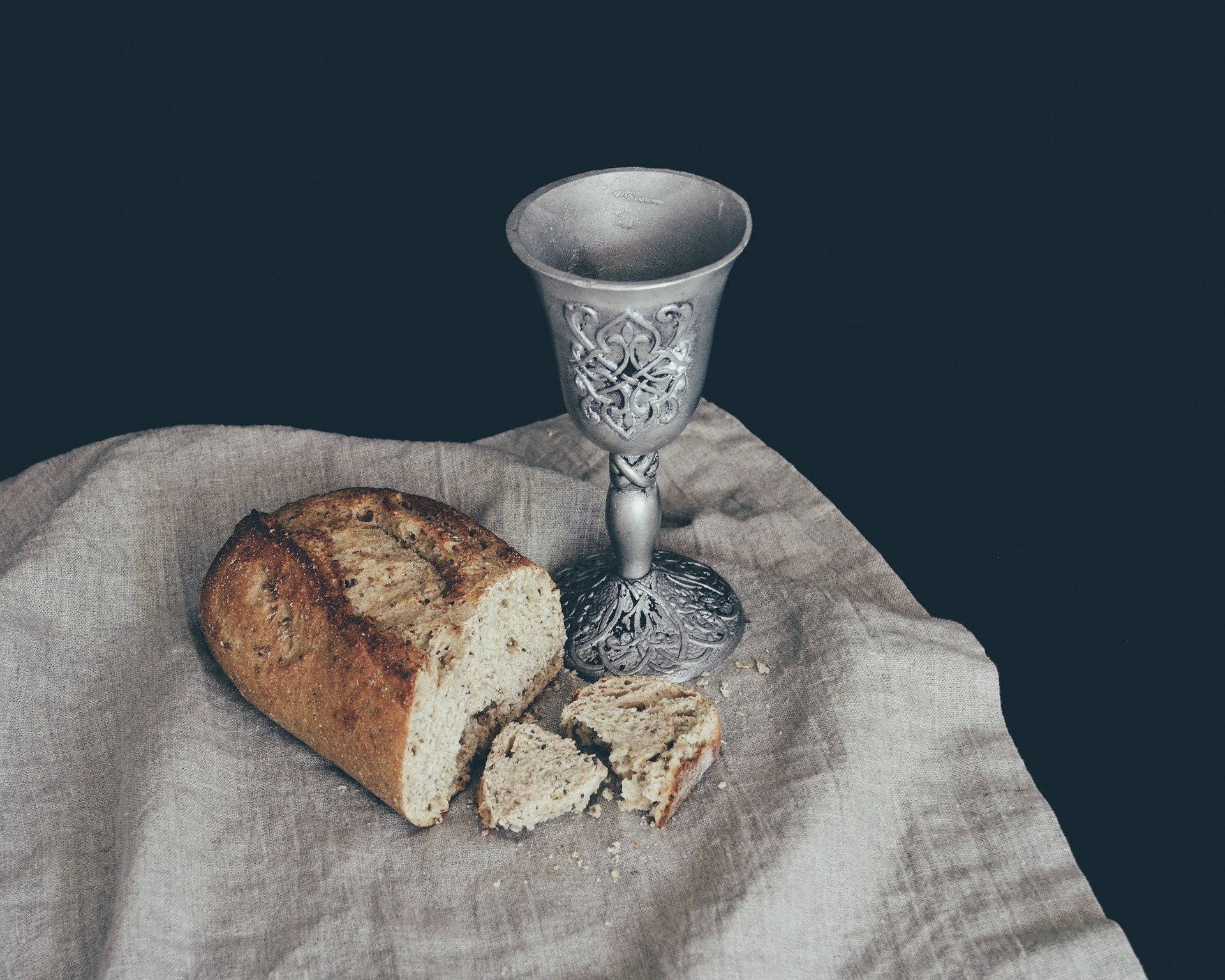
In both passages that we read today, we see Jesus instituting the sacrament of communion. This event is set within the context of the Passover meal. This meal was an annual event in which the Jews would remember and celebrate how God saved them as the angel of death passed over their houses. This final plague led to Pharaoh releasing Israel from bondage and slavery.

Mark and Luke both present Jesus offering the bread as symbolic of his body, broken for them and for us. Jesus’ body will be broken on the cross. In using the common element amongst the rich and the poor and all in between, Jesus takes the everyday and connects bread to himself and to us all.

Both gospels present the cup – representative of Jesus’ blood – as poured out for many, establishing the “new covenant.” Mark recalls these words of Jesus: “This is my blood of the covenant, which is poured out for many.” The new covenant is wrapped in mercy and grace, in forgiveness of sins. This common element of wine – again Jesus connecting the ordinary to his extraordinary gift.

In Mark’s gospel they sing a few songs and head to the Mount of Olives. But in Luke’s gospel, Jesus says, “But look! My betrayer is with me; his hand is on this table.” Jesus celebrates the first communion knowing that Judas will betray him. This is an invitation to us all – sinners each of us – to come to the table of grace. There we too will find welcome and forgiveness. Thanks be to God.

Prayer: Lord God, we humbly thank you for the gift of grace. Your Son did for us what we could not and cannot do for ourselves. It is only because of and through Jesus’ sacrifice that we are forgiven and made new, freed from the bonds of sin and death. Thank you, thank you, thank you. Amen.


Leave a comment

The Battle with Self

Reading: Galatians 5:13-21

Galatians 5:17 – “A person’s selfish desires are set against the Spirit, and the Spirit is set against one’s selfish desires.”

In Galatians 5:13 Paul reminds the believers that they have been “called to freedom.” Having committed themselves to Jesus Christ, they have died to their old self and have been made new in Christ. They were freed from their old ways and from the power of sin and death. Through grace they are forgiven and made right with God – again and again. Paul warns the believers against returning to their selfish ways. Grace was and is not given so that one can indulge and indulge. Instead Paul calls them away from selfishness and into service through love. This call will fulfill the command to love neighbor as self.

Paul then draws a sharp contrast between living in the way of the Lord and living in the ways of the world. These two ways stand in opposition to one another. He puts it this way in verse 17: “A person’s selfish desires are set against the Spirit, and the Spirit is set against one’s selfish desires.” We know from our own life experiences that this is a constant battle. Our inherent selfishness is always calling us to love self. The Spirit is always calling us to love God and other. The Spirit calls us away from doing “whatever you want to do.”

Paul gives us quite the list of things we do when motivated by selfish motives. This list of 16 behaviors reveal many issues in our world today. We see many of these selfish actions on display each day. And, if we’re being honest, there are several on Paul’s list that we struggle with daily. This is why surrender of self is so important. Guided by the Spirit, we will be called to  selflessness instead of selfishness. Living the way of Jesus, we will build the kingdom of God both in this time and place and in our hearts. Doing both, we await our eternal inheritance. May it be so for you and for me.

Prayer: Lord God, we ask for your Spirit presence in the battle between self and the call to love you and neighbor. On our own we struggle so. The impure thoughts, the unkind words, the selfish actions – they rise up so quickly. Counter this, O God, with the power of the Spirit. Moment by moment, call us to your will and ways. Amen.


Leave a comment

With Us Always

Reading: Psalm 91:9-16

Psalm 91:10 – “No evil will happen to you; no disease will come near to your tent.”

Psalm 91 is a liturgy of divine protection. The psalmist is expressing his or her belief in God as protector. They express an absolute trust in God. In verse 9 God is declared to be a place of refuge, the place of residence. The Psalm closes with God’s promise to fill them with “old age” and to “show you my salvation.” Throughout the Psalm we see the Jewish belief that living a godly life will result in being blessed by God. There will be rescue, protection, answered prayer, saving.

In verse 10 we read, “No evil will happen to you; no disease will come near to your tent.” This is backed up in verse 11, where we read that God will order the angels to protect us “wherever you go.” In verse 12 we read that we won’t even “bruise a foot” because the angels will carry us. With God’s protection we’ll be able to “march on top of lions and vipers.” These words express trust and faith in God. These words were written in a time when all things were seen as under God’s control.

As the biblical narrative unfolds, we see a shift in understanding. God created and designed the world and set it into motion. God does not, however, micromanage the world. Evil, free will, selfishness, greed… – these are part of the human condition. Nobody teaches a young child, for example, to want that toy just for themselves. They must be taught to share. Illness and death are also part of the human condition. Our bodies are amazing, complex creations of God. We are not, however, bulletproof, fireproof, illness-proof… These realities of life bring oppression, injustice, pain, grief, suffering. God desires to be with us in these hard moments. Calling upon God in faith and trust, our God of relationship will walk with us always.

Prayer: Lord God, thank you for always being with us when we call out. Lead and guide us to have a deep trust in your love and care for us. Impart upon us also an understanding of the realities of the human condition. In moments of goodness and joy, in moments when evil or illness or when poor decisions impact our lives, draw us to you, be present in our trials, walk with us in all of life. Amen.