pastorjohnb

Thoughts and musings on faith and our mighty God!


Leave a comment

High Priest, Mediator, Perfect Sacrifice

Reading: Hebrews 7-9

Hebrews 9:24 – “Christ didn’t enter the holy place… made by human hands, but into heaven itself, so that he now appears in God’s presence for us.”

The focus of Hebrews 7-9 is to establish Jesus as high priest forever, as the mediator of the new covenant, as the perfect sacrifice for the sins of the world. The writer begins his or her case by looking back to Melchizedek, the priest of God who blessed Abraham. He was not a Levite but remains “a priest for all time.” Yes, earthly priests will collect a tithe and will offer sacrifices again and again. But they die and don’t continue serving. The Levitical priesthood, part of the old covenant, offered sacrifices that “can’t perfect the conscience.” The guilt and the shame and the power of sin, they remain.

Jesus came as the “guarantee of a better covenant.” High priest forever, Jesus is “holy, innocent, incorrupt, separate from sinners, raised high above the heavens.” He offered himself, “once for all,” providing his own blood as the blood necessary for forgiveness. This initiated the second or new covenant. Quoting from Jeremiah 31, the author of Hebrews declares that God revoked the old covenant (written under the Law) and prepared for a new covenant (written on our hearts) and sealed by the blood of Jesus. Unlike the old covenant, Jesus’ blood will “wash our consciences clean,” freeing us to serve the living God. Jesus himself was “the sacrifice without any flaw.”

The mediator of the new covenant, Jesus Christ, offers all who are called the promise of “eternal inheritance.” Leading the way, “Christ didn’t enter the holy place… made by human hands, but into heaven itself, so that he now appears in God’s presence for us.” In heaven, Jesus mediates for us, standing for us in God’s presence. We await Christ’s second coming, when he will save and redeem us and our broken world. In this advent season, we say, come, Lord Jesus, come.

Prayer: Lord God, we are so grateful for the gifts you gave us through the sacrifice of your Son, Jesus Christ. Through his blood we are forgiven and cleansed, sins washed away, made holy in your sight. Christ did what the old covenant never could do. He made a new way, one that opened eternity to all who call on Jesus as Lord and Savior. Thank you for these gifts. Amen.


Leave a comment

From One Degree to the Next

Reading: 2nd Corinthians 1-3

2nd Corinthians 2:16 – “We smell like a contagious dead person to those who are dying, but we smell like the fountain of life to those who are being saved.”

Today we begin Paul’s second letter to the Corinthian church. It was written about 18 months after his first letter, written on the heels of a humiliating personal experience in Corinth. Of his 13 letters, this is Paul’s most personal letter. He wants to reestablish his place of authority as an apostle and he wants to restore his relationship with the church.

Chapter 1 begins with a declaration that God is the God who comforts us. God does this so that we can comfort others. We share in Christ’s suffering too. Paul speaks of the troubles “far beyond our strength” that God rescued them from in Asia. Because of this rescue, Paul and his companions have set their hope on God.

Paul then speaks of their conduct. It has been with “godly sincerity and pure motives.” They desire for the Corinthians to more fully understand their own faith. Paul wants to visit again, but has delayed the visit. He did not want to visit when still so upset. In fact, he wrote in tears with an “anxious and troubled heart.” Even so, he asks the church in Corinth to forgive and comfort the one who humiliated Paul. He states that he is testing them with this request – “to see if you are obedient.”

Next Paul talks of his ministry. He notes that it is like “the fragrance of the knowledge of Christ.” It goes before then and “We smell like a contagious dead person to those who are dying, but we smell like the fountain of life to those who are being saved.” This is a powerful thought and image. It begs the question: What does our life and ministry smell like to others?

Chapter 3 connects the church to Paul. They are the letters of Christ, the fruit of his ministry. Christ is written on their hearts by the Holy Spirit. They represent the new covenant, established by Jesus, sustained by the Spirit. Daily they are being transformed into the image of Jesus Christ, “from one degree of glory to the next.” What a thought! May it be so.

Prayer: Lord God, at times we receive comfort and at times we give comfort. At times we suffer and this equips us to comfort others in their suffering. We daily seek to write Christ more and more upon our hearts, deepening our faith and hope. As we do so, God, transform us more and more into the image of your son, Jesus Christ. Amen.


Leave a comment

One Last Act of Love

Reading: Luke 23

Luke 23:34: “Father, forgive them, for they don’t know what they’re doing.”

The trial, the false accusations, the giving in, the death and resurrection – it all feels so fast. It feels like Luke moves quickly through these events, his “carefully ordered account” presenting little more than the facts. Yet, as we read carefully, certain lines and actions stand out.

Both Pilate and Herod find no basis for legal action against Jesus. Pilate offers to whip Jesus, trying to placate the religious leaders and their crowd. The mob mentality that drives shouts of “Crucify!” finally forces Pilate to give in to their will. On the way to “The Skull,” Jesus pauses and addresses the grieving women, telling them not to cry for him but to cry for the days of suffering soon to come.

As he is being crucified between two criminals, Jesus prays, “Father, forgive them, for they don’t know what they’re doing.” Those there – the religious leaders and the soldiers – they mock Jesus. One criminal defends this innocent man. Jesus tells him, “I assure you that today you’ll be with me in paradise.” As Jesus dies, a centurion praises God, recognizing Jesus as “a righteous man.” The crowd goes home beating their chests. Luke notes, “Everyone who knew him… stood at a distance observing these things.”

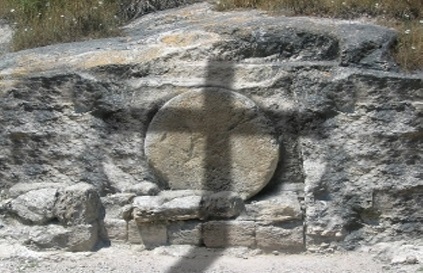
Joseph of Arimathea acts, asking Pilate for Jesus’ body. He was a member of the Jewish council – one that “hadn’t agreed with the plan” that has just been accomplished. The women watch him hastily wrap and lay Jesus’ body in a new tomb. The women go home and prepare spices and oils to properly care for his body. They wait as the Sabbath passes. They wait to offer one last act of love.

Prayer: Lord God, through it all, Jesus does not change. Love, grace, forgiveness, commitment – they continue to flow out from Jesus. His steadfastness to you and to us does not waver a bit. Signs of his love for you and for us are sprinkled throughout this text. Thank you for the example Jesus set, right to the end. This too was one last act of love. Amen.


Leave a comment

Outward and Upward

Reading: Luke 17-18

Luke 18:14b – “All who lift themselves up will be brought low, and those who make themselves low will be lifted up.”

Our text today begins with words of accountability. We are to help one another in our walk of faith, warning others when they sin. We are also to forgive others when they sincerely repent. Recognizing the challenge in living out these words, the disciples say to Jesus, “Increase our faith!”

As Jesus travels along the border between Samaria and Galilee he encounters ten lepers. They seek and receive healing. Only one comes to give thanks. Jesus sends the Samaritan on his way, healed by faith. At the end of our reading a persistent blind man is healed because of his faith. In between a widow’s persistence is rewarded, much as our prayers for justice will be answered by God. She received justice from an unjust judge. Imagine how our prayers for justice will be answered by our just God.

The Pharisees ask Jesus when God’s kingdom is coming. He first tells them that it is already among them. He then speaks of the time when he’ll come again – because they’re missing the present. It will be like it was in the days of Noah and of Lot. People will be eating, drinking, living life… Then Jesus will return like a flash of lightning, swift and sure as the flood came or as the fire and sulfur rained down. In that moment, “one will be taken and the other left.” We must remain faithful and ready for this day.

Two stories illustrate what being faithful and ready looks like. It begins with having a selfless and humble attitude. Like the tax collector we must pray again and again, “God, have mercy on me, a sinner.” And unlike the ruler, we must keep our faith as the top priority, forsaking wealth, power, status… We are reminded, “All who lift themselves up will be brought low, and those who make themselves low will be lifted up.” May it be so for you and for me.

Prayer: Lord God, help us to ever keep our focus and commitment outward and upward. We need your help because we are naturally selfish. Yet we know that all things are possible with you. Keep us persistent in our faith, generous with our blessings, and humble in our walk. Amen.


Leave a comment

Worthy of the Kingdom

Reading: Matthew 9-10

Matthew 10:22 – “Everyone will hate you on account of my name. But whoever stands firm until the end will be saved.”

Photo credit: Shane Rounce

Chapter 9 is mostly about the healings that Jesus brought to people. There is the calling of Matthew too and the questioning of why Jesus ate with “tax collectors and sinners.” Chapter 10 shifts first to the calling and sending of the 12. The chapter ends with the realities of the cost of discipleship. This was and still is a reality for the followers of Jesus.

Chapter 9 begins with the healing of a paralyzed man. Jesus begins by forgiving his sins. This is just a means to draw in the “legal experts,” to prove that Jesus has the power to forgive sins and to heal sicknesses. Jesus then calls Matthew, saying, “Follow me.” Later, at dinner, the Pharisees question Jesus’ choice of table mates. He declares, “I didn’t come to call righteous people, but sinners.” As the chapter continues, Jesus heals five more people and Matthew closes with a summary of Jesus’ early ministry. Jesus taught and healed, announcing the good news of the kingdom. The chapter closes with a lament: the harvest is huge but the workers are few. Jesus encourages his disciples to “plead” with God for workers.

Chapter 10 begins with God’s response. The 12 are called and given authority to cast out demons and to heal diseases. They are then sent out to “the lost sheep… of Israel.” The disciples are to go without anything, relying on worthy people to take them in. They will bless these homes. If no one is found worthy in a place, the disciples will move on.

Starting in verse 16, Jesus begins to detail the cost of discipleship. The 12 go out as “sheep among wolves.” They will be arrested and beaten. But the Spirit will be with them and in their words. Jesus says, “Everyone will hate you on account of my name. But whoever stands firm until the end will be saved.” Families will come apart and turn on one another because Jesus did not “come to bring peace but sword.” The disciples are encouraged to “pick up their cross” as they follow Jesus. Doing so, they will be counted as worthy in the kingdom of God. May it be so for you and for me.

Prayer: Lord God, send us out as workers, fully cognizant of the cost of discipleship and fully aware of your Spirit’s presence with us. Lord, use us to bring healing and wholeness to others, encouraging them with the good news of your kingdom through us and our ministries. Strengthen and empower us as we too seek to follow in the footsteps of Jesus. Amen.


Leave a comment

One Problem

Readings: Job 1, Job 2, Job 3, Job 4, Job 5

Job 1:21 – “The LORD has given; the LORD has taken; bless the LORD’s name.”

Photo credit: Marek Pospisil

We begin Job today. Whereas in Esther there was a threat of suffering that prompted action, in Job the suffering comes – in one huge jolt. Both Esther and Job “argue” against the universally held belief of the time: obey God and be blessed, disobey God and be punished.

As Job begins the narrator makes a very important statement for us to hold to as we read this book: Job is honest and full of integrity; he fears God and avoids evil. Job is so righteous, in fact, he makes sacrifices just in case his children have sinned. Because Job is righteous, in ancient thoughts, he should not suffer. But suffer he does! At the hands of the Adversary, Job loses all his livestock, his servants, and all 10 children. This would lead a lesser man to curse God. Not Job. He says, “The LORD has given; the LORD has taken; bless the LORD’s name.” Job too operates, at least for now, under the blessing and punishment paradigm.

To further test Job’s faith the Adversary receives permission to afflict Job’s health. Severe sores cover his whole body. Job’s wife – who has also experienced this rush of loss and who knows herself to be innocent of sin – encourages Job to just curse God and die. Why fight it? But Job responds much the same way: how can one accept good from God but not bad from God as well? Again the paradigm.

Job’s three friends arrive. Eliphaz, Bildad, and Zophar sit with Job for seven days. They too look at Job in his present state and assume that he is a great sinner. Why else would this happen to him? Job speaks first, rueing the day he was born. In the religious thinking of the day, there was no concept yet of an afterlife. The greatest gift of God was life itself. Job wishes that he had never received this gift. This is an indication of Job’s struggle to understand what is happening to him.

Eliphaz responds. He sees Job as a sinner who needs to repent. This drives all that he says. If one “plows sin” then one “sows trouble.” He encourages Job to put his case to God. He reminds Job that God wants to forgive and will bind up and heal. One problem: Job is sinless. What case can he possibly bring before God?

Prayer: Lord God, what wrestling we begin today! Suffering and loss continue to be a part of our lives and our world. Questions continue to abound! As we walk with Job, his friends, with you, help us to gain understanding and insight into who you really are: not the cause but the one who walks with us. Amen.


Leave a comment

How God Does It

Reading: Joshua 24:16-25

Verse 24: “We will serve the Lord our God and obey God.”

After declaring that he and his house will serve the Lord, Joshua turns the focus to the people. In today’s passage the people respond to Joshua’s declaration with a recounting of God’s power and presence among them. This recounting ends with “We too will serve the Lord because he is our God.” Joshua challenges this statement. Maybe you’ve done this too with that friend who is less than stellar about walking the walk. They’re maybe quick to volunteer but seldom show. They’re great at committing to things but not so good on following through.

Joshua bluntly tells the people that they are not able to serve God. He tells them that God is jealous and holy. He tells them that God will not again and again forgive their rebellion and sin. The people say, “No! We will serve the Lord!” His challenge to their original commitment raises the bar. He is saying they can’t just talk the talk. That’s easy. Joshua then calls them as witnesses against themselves. He is doubling down, asking them if they’re really, really, really sure. Joshua then once more commands them to “throw away” their idols. In turn the people commit to God once again, saying, “We will serve the Lord our God and obey God.”

As I read this passage and note how Joshua questions their commitment again and again, I wonder how God does it. When I’ve struggled with a difficult sin, I come to God again and again with words of confession and repentance. Each time, yes, I’m a little more committed to actually changing. Each time God’s Spirit convicts me a little quicker, a little more deeply. Each time the Spirit increases my resolve, helping me to better walk the walk. How does God do it? Through unconditional love and unending grace. What an awesome God we serve.

Prayer: Lord God, as I consider the wilderness wanderings of the Israelites and as I think about my own wanderings, I am amazed at your continued presence. In my human understanding it is hard to fathom, hard to comprehend. So great is your love for us, so deep is your mercy, so wide is your forgiveness. I am humbled. I bow before you and say thank you, thank you, thank you. Amen.


Leave a comment

As We Receive Mercy…

Reading: Matthew 18:21-27

Verse 23: “The kingdom of heaven is like a king who wanted to settle accounts with his servants.”

After Jesus’ teaching about how to solve conflicts in the church, Peter wants to define the expectations. On second thought, no, Peter wants to limit the expectations, much like the expert in the law did when he asked Jesus to define his ‘neighbor’ (Luke 10). Yes, Peter is generous in offering to forgive 7 times. He is going way past the current cultural norm of 3. As it was with the parable of the Good Samaritan, in this week’s gospel passage Jesus blows the doors off of somehow trying to limit God’s love, grace, and mercy.

In verse 22 Jesus tells Peter, “I tell you, not 7 times, but 77 times.” Jesus is not, however, playing Peter’s game. He isn’t really setting 77 as the magic number. His point here is simple: quit counting. Counting wrongs is an exercise in patience, not forgiveness. When we keep a count of wrongs against us, we are just asking, ‘How long do I have to put up with this person?!”

Jesus then launches into a parable, beginning with, “The kingdom of heaven is like a king who wanted to settle accounts with his servants.” In the parable the king represents God and we are the servants. The debt is our sin. The first servant owes a HUGE debt. He begs for forgiveness. The king is moved; he forgives the debt. The servant is set free. Now, what if this is really the king’s (God’s) goal in calling in the servants (us)? The king (God) doesn’t want to punish or extract payment. No, the king (God) wants to grant mercy to the servant (us). God desires that as we receive mercy, not 7 or 77 or 7,777 times, that we then, in turn, extend it to others. May it be so for you and for me.

Prayer: Lord God, help me, O font of mercy, to model your heart for mercy, reconciliation, and forgiveness. Above all, you want a relationship with us. You’ll go to almost any length to achieve that. Lead me to do the same, both with you and with all those in my life. Amen.


Leave a comment

None Like You

Reading: Psalm 86:8-10

Verse 8: “Among the gods there is none like you, Lord; no deeds can compare with yours.”

Photo credit: Shane Rounce

David declares that there is no god like our God. In David’s day, pagan cultures and tribes were all around. There were literally many different gods. While some cultures and tribes continue to be polytheistic, most of the modern world has found other gods to worship. We’ve replaced Baal and Asherah and Zeus with power, popularity, possessions, beauty, wealth… There is no shortage of gods that humankind worships.

As a believer I agree with David: “there is none like you.” Our God is full of love and compassion and forgiveness. Our God is merciful and gracious. Our God loves all people – saints and sinners, outsiders and insiders, believers and agnostics. Our God came to serve the least, the lost, the marginalized. Our God came to care for the orphans, widows, prisoners, tax collectors, prostitutes… Our God gave up his only Son so that we could be forgiven and restored and so we could live with God in eternity. David is right: “no deeds compare” to God’s.

David also writes about our response to our God. We are to “come and worship” and we are called to “bring glory to your name.” Our call is to worship God with our lives, bringing glory to God alone as we seek to be the words and actions of Jesus Christ in the world. May it be so for you and for me each day. To God be the glory!

Prayer: Lord God, there is none like you. All other gods fall short. They may satisfy momentarily but their luster fades, their appeal dies. Only you bring enduring hope, lasting contentment, pure joy. You alone fill and complete us. In all I say and do and think may I bring you the glory. Amen.


Leave a comment

Ever the Teacher

Reading: Luke 24:44-53

Verse 51: “While he was blessing them, he left them and was taken up into heaven.”

We step outside of the regular lectionary readings today as we turn to Luke 24. Today is known as “Ascension Day” – the day when the risen Christ returns to heaven to sit at the right hand of God. Ever the teacher, Jesus summarizes the overarching story of the Hebrew Bible one last time.

Jesus begins by unpacking all that was written about the Messiah in “the Law of Moses, the Prophets, and the Psalms.” Jesus works his way through all of the Hebrew scriptures, revealing that he was the fulfillment of all of these prophetic writings. Jesus then summarizes with his suffering and resurrection – the means to give salvation to the world. He reiterates their task moving forward: to preach “repentance and forgiveness of sins” to the whole world. This continues to be the way to eternal life: we repent and God forgives. Humility and grace, worked out again and again by those involved in covenant relationship: us and God. What a gift.

Jesus returns to heaven in a most humble way: “While he was blessing them, he left them and was taken up into heaven.” While still offering himself in service to others, giving the disciples a blessing, Jesus simply rises up. The disciples must’ve sensed or known that this was it. But they are not sad. They are filled with great joy. Minds opened to all that had been written, filled with these truths, they worship God. Fully understanding who and what Jesus Christ was and is, they are ready for the last step. Their training and preparation complete, they are ready to receive the Holy Spirit. This final step will launch them into the mission that Jesus has given them. In 10 days it will come. Filled with the Spirit these disciples will change the world. Thanks be to God.

Prayer: Lord God, we stand in this long line of disciples who have come to know and then accept Jesus Christ as Lord and Savior. Doing so we’ve been filled with the Holy Spirit. Lead and guide us to be disciples who continue to change the world. Amen.