pastorjohnb

Thoughts and musings on faith and our mighty God!


Leave a comment

Modeling Christ

Reading: Acts 10:34-38

Acts 10:34-35 – “God doesn’t show partiality… whoever worships him and does what is right is acceptable to him.”

Today’s scripture from Acts 10 serves as a bridge between the first two of John Wesley’s three simple rules. Peter first acknowledges that “God doesn’t show partiality.” He has come to understand that God accepts the Gentile Christians as they are. Peter now sees that their attempts to make these believers Jews first (then Christians) was wrong and was doing harm to these brothers and sisters in Christ. We too can do harm when we seek to elevate what we think is right over what God is doing at the time. We too can put up barriers to people coming to Christ. We do this when we say or imply that they must look or act or dress or… like us to attend church or to be baptized or…

Peter then recognizes that the Gentile Christians are worshipping God and are living out the example of Jesus. Getting past himself, he has come to understand that they are totally acceptable to God. Indeed, “He is Lord of all!” Reflecting back on his three years with Jesus, Peter can see how Jesus himself engaged one and all. Jesus did not show partiality. Instead he demonstrated welcome, acceptance, and love to all people.

Our passage closes with this observation about Jesus: “He traveled around doing good and healing everyone.” Jesus sought to do good to all. He didn’t first check to see if they really believed in him or belonged to a church. Sometimes faith or belief even came after the good act or after the healing. May we always be generous with our acts of kindness and love. Modeling Christ to others, we draw them towards Jesus and his love.

Prayer: Lord God, open our hearts wide too. Lead and guide us to see all people as Jests saw them. Each person was worthy of his time, his attention, his efforts, his love. Help us to engage our world this way too. Amen.


Leave a comment

For All People

Reading: 1st Timothy 2:1-4

1st Timothy 2:1 – “First of all, then, I ask that requests, prayers, petitions, and thanksgiving be made for all people.”

As we begin 1st Timothy 2, Paul encourages Timothy (and us) to offer prayers for everyone – “for all people.” Paul assumes that Timothy will pray for the regulars: family, friends, people he knows who need specific prayers. This is likely familiar territory. Maybe you, like me, have a standard list of people and situations that you pray for every day plus a few that are in your prayer list for a time or a season.

Paul next singles out praying for “kings and everyone who is in authority.” Why would Paul do this? Well, look no further than our current reality. In Timothy’s day it was the Roman authorities and the Jewish religious leaders who were persecuting the church. What prayers might Timothy lift for those in authority? What prayers might help lift that are in alignment with God’s will and heart? May our godly thoughts on these questions guide our prayers for our leaders.

In verses 3 and 4 Paul gives Timothy (and us) the “why.” Paul reminds us that it is “right” and that it “pleases” God when we offer prayers for all people, especially for those that are hard for us to pray for. It is our charge. First and foremost, it should be so because God desires for “all people to be saved” and to come to “a knowledge of the truth” – to understand and know God’s will and heart for themselves. Second, to pray hard prayers, that changes and empowers our hearts too. As our prayers become better aligned with God’s desires, our world will better reflect God’s kingdom here on earth. May our prayers work towards this goal and hope.

Prayer: Lord God, open our hearts wide, enabling us to pray as you call us to pray. And, Lord, open wide the hearts of our leaders, filling them with what fills your heart: mercy, grace, compassion, love. Guide all of our leaders to be leaders for and of all people, working for the good of all people. Amen.


Leave a comment

New Heart, New Spirit

Reading: Ezekiel 33-37

Ezekiel 36:27: “I will give you my spirit so that you may walk according to my regulations and carefully follow my case laws.”

Ezekiel is reminded that he is Israel’s lookout. As such, he is to speak when God speaks to him. That is his responsibility. If he fails to speak, then the people’s blood will be on him. But if he speaks and the people ignore him, their blood is on them. The people question God’s judgment next. They are wasting away because of their sin. God encourages them to turn away from their evil ways. Then they will live. God is simply judging each of them “according to your ways.”

Word from back home comes: “The city has fallen.” Twelve years into Ezekiel’s exile, Jerusalem falls. This leads the people in exile to seek Ezekiel and to hear his words. They listen, yes, but they still refuse to heed his words. God then turns the focus to the “shepherds” – to the leaders. They do not tend to the flock. They care nothing for the weak, sick, lost… They prey on them instead. God will rescue and care for the flock. Eventually a Davidic king will be their new shepherd. In chapter 37 God declares that they will once again be one nation with a new covenant.

Ezekiel then prophesies against Israel’s parasitic neighbors. They plunder and take possession of the land, nursing “an ancient grudge.” God promises to restore Israel’s land itself. The land will be renewed and restored. So too will be the people. In chapter 37 Ezekiel is carries to a valley full of very dry bones. They represent Israel’s faith. God will bring them back to life, one step at a time. God will bring them home and cleanse them. God will give them a new heart and then a new and right spirit. Restored to the land, Israel’s faith will be alive.

Prayer: Lord God, when the lookout comes, be it in your Word, your Spirit, or through another means, give us ears to hear and hearts to follow. Give us good and righteous shepherds to guide us, caring well for our souls. And don’t let us get too dry – keep that breath in our lungs so that we can bring you the glory. Amen.


Leave a comment

The Path of God and Salvation

Readings: Psalms 50-53

‭Psalm 50:3 – “Our God is coming; he won’t keep quiet. A devouring fire is before him.”

Today’s first two Psalms focus on divine judgment and forgiveness. The second two focus on wickedness and unbelief. Asaph begins with God’s voice and presence. He warns: “Our God is coming; he won’t keep quiet. A devouring fire is before him.” The fire devours evil and it devours the sin in our lives. In Israel’s life one sin is going through the motions. God desires that their sacrifices come from the heart, not from the routine. The Psalm closes by addressing the behavior of the wicked. They hate both discipline and God’s word. They are given a choice: choose the correct path of God’s salvation or “I’ll rip you to pieces.” This is their choice. We too face this choice: life or death?

David chooses the path of salvation in Psalm 51. He has walked about as far from God as one can: lust, adultery, murder. In the opening verses he begs for God to wash him of his sin. He admits his guilt and asks God to purify him, to allow him to “hear joy and celebration again.” David asks God to “create a clean heart… a faithful spirit” within him. From this place of brokenness and contrition David will once again praise the Lord. It is a good and honest and right place to go. It is part of choosing the path of salvation.

Psalms 52 and 53 paint evil for what it is: bragging, deceptive, destructive, corrupt, selfish. It comes from both the words of the tongue and from the deeds of the hands. Evil words and deeds result in shame and in being uprooted by God. This sounds bad. Really bad. Yet at times we do make the choice to sin. When we do, may we remember David’s acts of confession and repentance and may we offer his words of prayer: “wash me… whiter than snow.” Then God’s love and mercy will purify us once again. May it be so.

Prayer: Lord God, the right path is clear. The poor choices are obvious. Yet we stray and sin and fall. Lord, remember your great love, that which is far greater than our sin. Restore us as we confess and repent. Consume the sin in our hearts, leaving us with clean hearts and hands. Amen.


Leave a comment

What Promise, What Hope

Readings: Psalms 46-49

‭Psalm 47:2 – “Because the LORD Most High is awesome, he is the great king of the whole world.”

Photo credit: Ricardo Gomez Angel

Our first three Psalms are about trusting God and celebrating God’s power and might. Psalm 49 comes as a warning about trusting in something other than God. While this Psalm is about the danger of trusting in wealth, we could substitute self, status, power, beauty, fame, possessions… There are more than a few false gods that we can worship instead of the one true God.

Psalm 46 celebrates God as our refuge and strength – always. Storms will come. Some are powerful. Life will rain on our parade. Yet God is always there. God won’t crumble. God is our place of safety. This theme is picked up in Psalm 49, except this one is about physical safety. God is in the very walls of Jerusalem. The city is a place of safety and security. Within the walls one also finds God’s righteousness and justice. These too dwell in the city of God.

Psalm 47 celebrates God as “the great king of the whole world.” God subdues the nations and chooses Israel’s inheritance. God will subdue the forces of this world too. God will reign over all those voices that clamor and vie for our attention and allegiance. It is a choice we all must make: to listen or not.

Psalm 49 addresses this choice. The author begins, “Listen closely… rich and poor alike.” He or she offers this wisdom: “Wealth? It can’t save a single person!” By the way, the psalmist says, the wise die too. But those who “do right in their heart” – the psalmist(s) declare, “God will save my life from the power of the grave.” What hope, what promise. May we set our hearts on doing right.

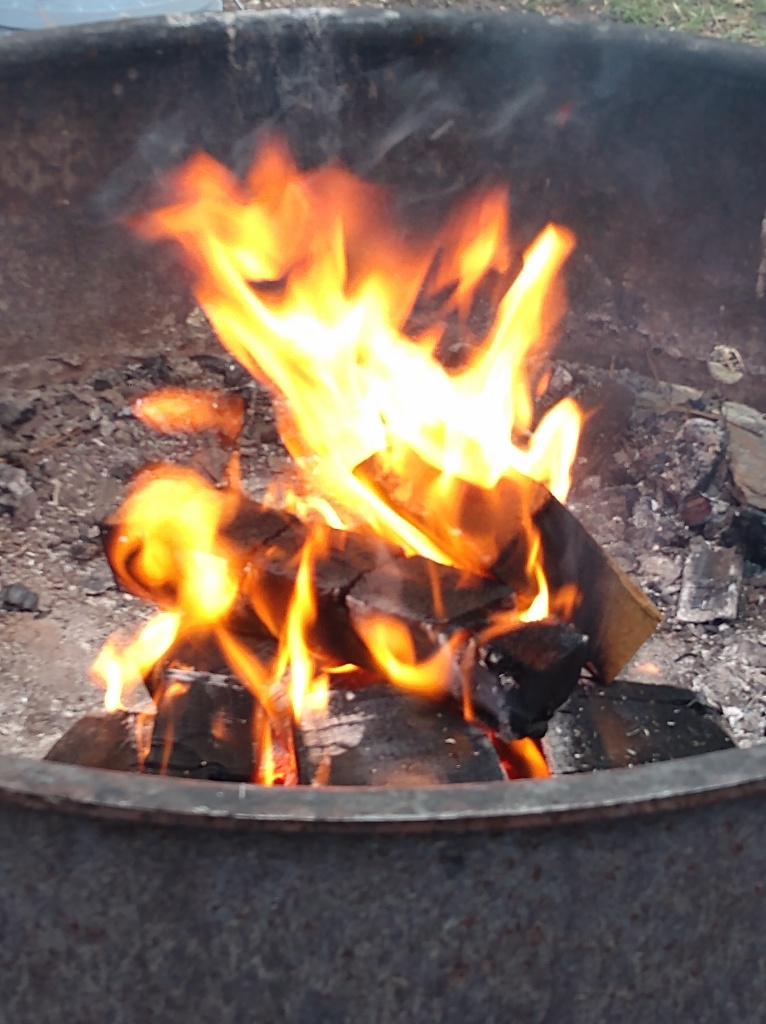
Prayer: Lord God, there are many choices about what or whom to follow, on what to be consumed by. O Lord our God, be our consuming fire. Like a moth to a flame, draw us into your presence. Refine us in your fire. Draw us into the power of your love. It has the power to save. Guide us deep into that love. Amen.


Leave a comment

Mirror, Mirror

Readings: 2nd Kings 14, 2nd Kings 15, 2nd Kings 16, 2nd Kings 17

2nd Kings 14:3-4 – “He did what was right in the LORD’s eyes, but… the shrines weren’t removed.”

Chapters 14-16 cover the kings of Israel and Judah. In just over 100 years there are 11 kings in total. Some reign a long time – 52 years – and some are barely on the throne – 6 months and 1 month for two kings. Within these readings we see a general pattern. For the first three kings of Judah, each one has this description: He did what was right in the LORD’s eyes, but… the shrines weren’t removed.” For all of the seven kings of Israel, they did evil in God’s eyes. Some are worse than others but together they lead Israel into exile.

In Judah, to the south, Amaziah defeats Edom and reestablishes that border. Azariah reigns next and for the longest, but his is isolated due to a skin disease. His son Jotham runs things. He rules next and rebuilds a temple gate. Ahaz rules next and he begins the slide. He does evil in God’s eyes. Worshipping a foreign god, he burns his sons and daughters alive. Aram attacks and Ahaz cries out to Assyria. They rescue Judah, but at a cost. Ahaz worships like the Assyrians, further removing God from Judah.

In Israel of Samaria, there is much evil and frequent assassinations. Zechariah is the last of Jehu’s line. Menahem attacks Tiphsah and guts all the pregnant women. Assyria comes and he buys peace with tribute. During Reka’s reign Assyria captures some outlying towns and takes the people into exile. Hoshea reaches out to Egypt for help, which brings a full scale Assyrian assault. All of Israel falls and is hauled off into exile.

In chapter 17 there is a summary of Israel and Judah’s failure to be faithful. The chapter ends with the new settlers of Israel being punished by God. The Assyrian king sends a priest back to teach the new inhabitants to worship “the local god.” They learn to worship God. And they continue to worship their false gods too. They mirror what Israel had become.

Prayer: Lord God, how this downward decline must’ve broken your heart. I’d apologize for my ancient ancestors, but I recognize that I too sin, that I too create hurt in your heart. Yet I also recognize that you’re still here. You haven’t given up on humanity. Thank you for your love, for your grace, for your plan. Help me to love you more fully. Amen.


Leave a comment

A Temple and a Palace

Readings: 1st Kings 5, 1st Kings 6, 1st Kings 7, 1st Kings 8

1st Kings 8:58 – “May God draw our hearts to him to walk in all his ways and observe his commands, his laws, and his judgments.”

In today’s chapters the temple and Solomon’s palace are constructed. The King of Tyre, Hiram, reiterates the promise he made to David. Solomon and Hiram make an agreement. Solomon will receive wood and Hiram will receive wheat and oil. A huge work force is called up. The temple is 90′ by 30′ and is 45′ tall. It is beautiful and ornate and much is covered in gold. After 7 years, the temple is built. Hiram comes and makes items for the outer area: pillars, a huge tank, stands, washbasins… – all of bronze. For the inside items are made of gold: altar, table, lampstands…

Solomon is also building his palace. It will be 150′ by 75′ and is 45′ tall. It is much larger than the temple but is also much less ornate… It takes 13 years to finish the palace. As this is ongoing, the temple is dedicated. The ark of the covenant is brought into the Holy of Holies. God’s glory fills the temple. Solomon offers a long and beautiful prayer. He begins by acknowledging that there is no god like the one God. He acknowledges the covenant and God’s loyalty. He calls for the temple to be the center of worship and the focus of their faith. Whether famine or plague or sin or enemy invasion or exile, he calls on the people to look to the temple, to repent, to pray to God, and to turn their hearts fully to God. Solomon asks God to listen to their prayers and to do what is right. He closes and then offers an invitation: “May God draw our hearts to him to walk in all his ways and observe his commands, his laws, and his judgments.”

Extravagant sacrifices are made to dedicate the temple and courtyard. This is followed by a great celebration that lasts 14 days. The people are dismissed. They bless the king and head to their tents happy and pleased. It is a good day.

Prayer: Lord God, thank you for the picture painted today – a king and a people focused on doing something for your glory. Thank you for the example of a people with hearts turned fully towards you. Lead us to walk in these ways. Amen.


Leave a comment

Lines Drawn

Readings: 2nd Samuel 1, 2nd Samuel 2, 2nd Samuel 3, 2nd Samuel 4

2nd Samuel 3:1 – “The war… was long and drawn out. David kept getting stronger, while Saul’s house kept getting weaker.”

The story of 1st Samuel continues into 2nd Samuel. News of Saul’s and Jonathan’s deaths reach David. The bearer of the news is dishonest in his account. He thinks it will bring him a reward. Instead, he pays for it with his life. David and all of Judah mourn the losses of Saul and Jonathan through a song that honors them. God leads David to move to Hebron. There the tribe of Judah gathers and anoints David king.

Ishbosheth, with Abner’s help, rules the rest of Israel from Mahanaim. Abner then leads Israel’s troops out to battle David’s troops, led by Joab. They meet at the pool of Gibeon and agree to send out 12 men each. They simultaneously kill each other. It is a sign of what is to come. The armies battle. Asahel, Joab’s brother, pursues Abner. Trying to end the pursuit, Abner accidentally kills Asahel. Finally, Abner asks Joab how long will brothers kill brothers. This ends the battle for now. It is just the beginning. In 3:1 we read, “The war… was long and drawn out. David kept getting stronger, while Saul’s house kept getting weaker.”

We then learn that six sons are born to David at Hebron – by six different wives. Meanwhile, Ishbosheth angers Abner and he decides to now side with David. After meeting with David, Joab murders Abner, getting revenge for Asahel’s death. David condemns this evil act. David and Judah then mourn Abner’s death. Next we learn of Rechab and Baanah assassinating Ishbosheth, bringing his head to David, looking for some personal reward. David, however, condemns this evil act too. These two men pay for the righteous Ishbosheth’s blood with their lives. David clearly draws the line against revenge and assassination. These evil things will have no place in his kingdom – for now.

Prayer: Lord God, we see in David a man that leads mostly well as he consolidates power. He seeks your guidance. He honors the dead. He calls out and punishes evil, even when it benefits him. And he has six sons by six wives and adds Michal back into the mix too. Lord, guide us to know right from wrong, good from evil. And help us to resist those temptations that we struggle with along the way. Amen.


Leave a comment

The One Who Does Right

Readings: 1st Samuel 25, 1st Samuel 26, 1st Samuel 27, 1st Samuel 28

1st Samuel 25:28 – “The LORD will definitely make an enduring dynasty for my master because my master fights the LORD’s battles.”

Chapter 25 brings us the story of Abigail – another female heroine who does what is right in the eyes of the Lord. She is married to Nabal, who harshly and arrogantly refuses to help David and his soldiers. This angers David and leads his to say, “Strap on your swords!” Abigail hears of all this and quickly prepares a gift, heading out to intercept David. She moves his heart away from bloodshed and vengeance with her wise words. She also tells him, “The LORD will definitely make an enduring dynasty for my master because my master fights the LORD’s battles.” He accepts her wisdom and her gifts and sends her home in peace. When Nabal hears the story, his heart fails and he soon dies. Abigail then becomes David’s wife.

Saul then comes again in pursuit of David. God causes a deep sleep to come over Saul’s camp. David and Abishai sneak into camp and steal Saul’s spear and water jug. In the morning, David confronts Abner about what has happened. Saul realizes that David has spared his life a second time: mercy.2.0. Saul blesses David and he returns back home. David settles in the land of the Philistines.

Then the Philistines again come out for war. Saul gathers the troops. He tries to consult God, but God is silent. Through a medium at Endor, Samuel is called up from the grave. Samuel reiterates what he had said before – the kingdom will be torn away. He adds something Saul likely knew – it will be given “to your friend David.” And he adds ominous news – tomorrow Saul and his sons will die at the hands of the Philistines. Saul is “utterly terrified.” We are drawing close to a transition in leadership. The one who does right in the eyes of the Lord is being guided and blessed by God. May it be so with you and with me.

Prayer: Lord God, in the midst of the foolishness, poor decisions, and overly emotional responses you continue to steadfastly guide, using this person here and that person there to accomplish your plans. Continue to lead and guide us, your servants, through the chaos and uncertainty of this world. Amen.


Leave a comment

Complete and Correct

Readings: Deuteronomy 21, Deuteronomy 22, Deuteronomy 23, Deuteronomy 24, Deuteronomy 25

Deuteronomy 24:13b – “They will bless you, and you will be considered righteous before the LORD your God.”

While today’s readings might feel like a fire hose of disjointed and maybe unrelated laws and case studies, one can make sense of these passages by looking at them within the framework of unpacking the Ten Commandments. Today’s passages deal with commandments 6-9, laws that deal with how we are to live in right relationship with one another. This focus laid over all of these laws gives us structure to understand and even apply many to our lives and culture today.

Chapter 21 and most of 22 unpack the law “do not kill.” Chapter 21 begins with a process to remove blood guilt for unsolved murders. We then shift to foreign wives, oldest sons, and parents. These laws work against “killing” reputations and the rights of the firstborn. Chapter 22 deals mostly with caring for property and reputations. Helping others and defending a woman’s virginity are ways to love instead of harm.

22:23 through 23:18 deal with adultery – against one another and also against God. The topics range from literal adultery to who and what can (and can’t) be in God’s presence. There is even a protection in here about slaves who escape from cruel masters. Abuse, in this sense, is a form of adultery. The focus then shifts to “do not steal.” This section greatly expands this commandment way beyond simply taking something off the shelf at the store. Interest and oaths and pawning and kidnapping are included here as ways that we can steal from one another.

Beginning in 24:8 we turn to #9: “do not testify falsely.” Loans and worker pay and harvesting are regulated to protect the poor and the vulnerable. In this section we find a verse that in spirit arches over all that we read today: “They will bless you, and you will be considered righteous before the LORD your God.” This section closes with rules for honest business dealings. Weights and measures must be “complete and correct.” This is a wonderful way to look at how we should love our neighbors too. May it be so.

Prayer: Lord God, today we work through unpacking such simple commands – do not kill, steal… and see that these simple commands affect so much of life. To love neighbor is a vast and wide ranging charge. Guide us each day to place the other before self. Lead us to live as humble servants of your great love. Amen.