pastorjohnb

Thoughts and musings on faith and our mighty God!


Leave a comment

Good, Holy, and Just

Reading: Revelation 22:1-5

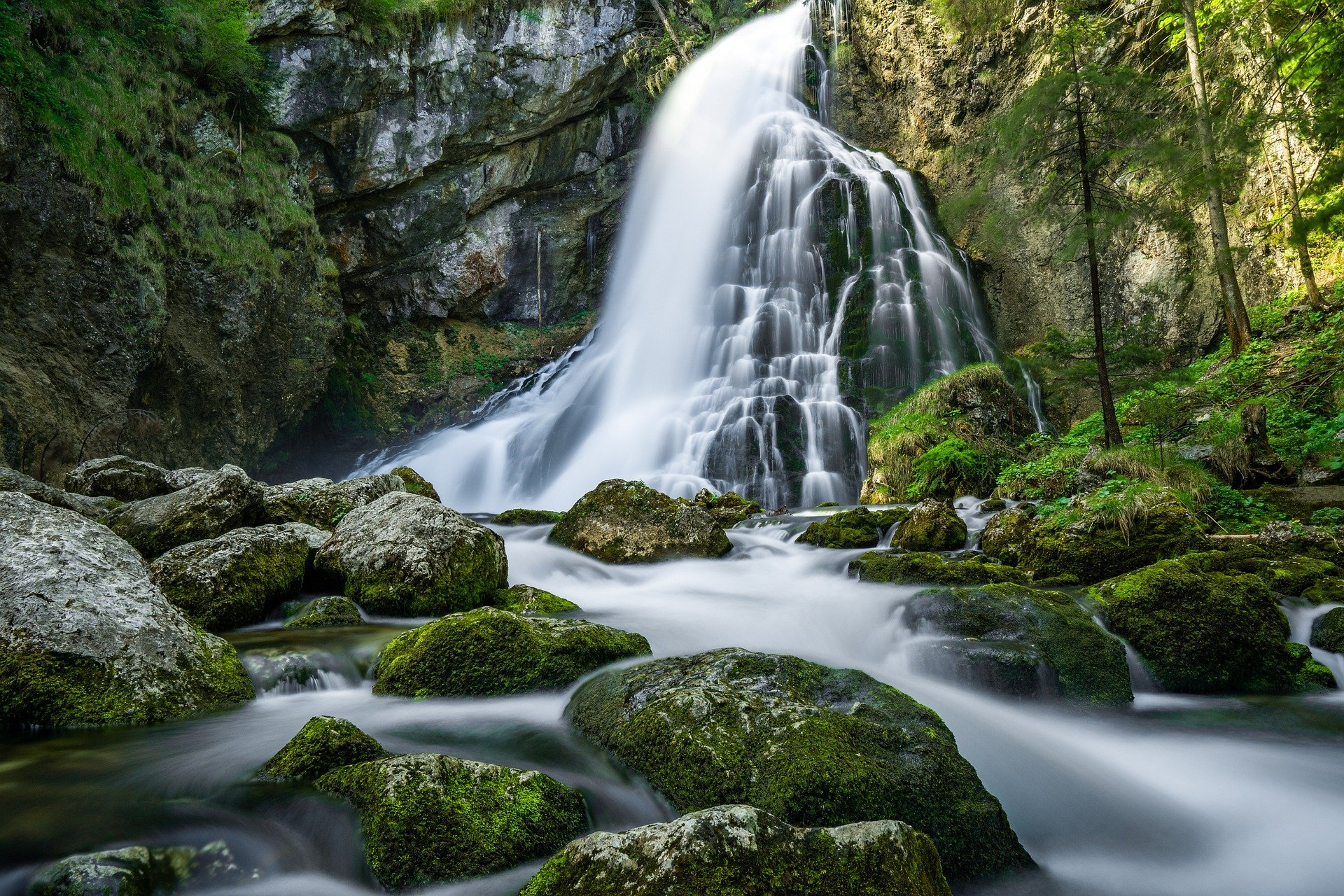
Revelation 22:2 – “On each side of the river is the tree of life.”

Photo credit: Marek Piwnicki

As John’s vision continues the angel shows him “the river of life-giving water.” This river flows out from the throne of God and the Lamb, its life-giving power drawn directly from the Lord our God. The river flows down the middle of the main street and “On each side of the river is the tree of life.” The water and the tree – accessible to all people, just as God and Jesus are accessible to all people.

The tree of life, once in the Garden of Eden, now in the holy city, the new Jerusalem. The tree now provides food for all people as well as healing for all of the nations. The provision is in abundance and the healing is complete. There will be no hunger, want, or need. There will be no sin, no disease, no evil. All of this and more is implied as John writes, “There will no longer be any curse.” All pain, sorrow, envy, pride… gone!

In the new heaven and earth all will worship the Lord our God. All people will “see his face” and will be identified as belonging to the family of God. This too will be a return to the days in Eden when humanity walked and talked with God. God’s face will shine upon all people and together “they will rule forever and always.” The stewardship of creation, begun in Genesis, will be made complete and perfect in the new creation. All will be good and holy and just. Thanks be to God!

Prayer: Lord God, it is beautiful to see how your intent for the world will come to fruition. All that has been in decay and in states of separation will be made new again and will be united fully with you. Worshipping you alone, all people will be filled with your light and love. As we await this glorious day, O God, remind us to pray and work here and now, daily seeking to build this beautiful kingdom here on earth. Amen.

Leave a comment

“New” Again

Reading: Ezekiel 47:6-12

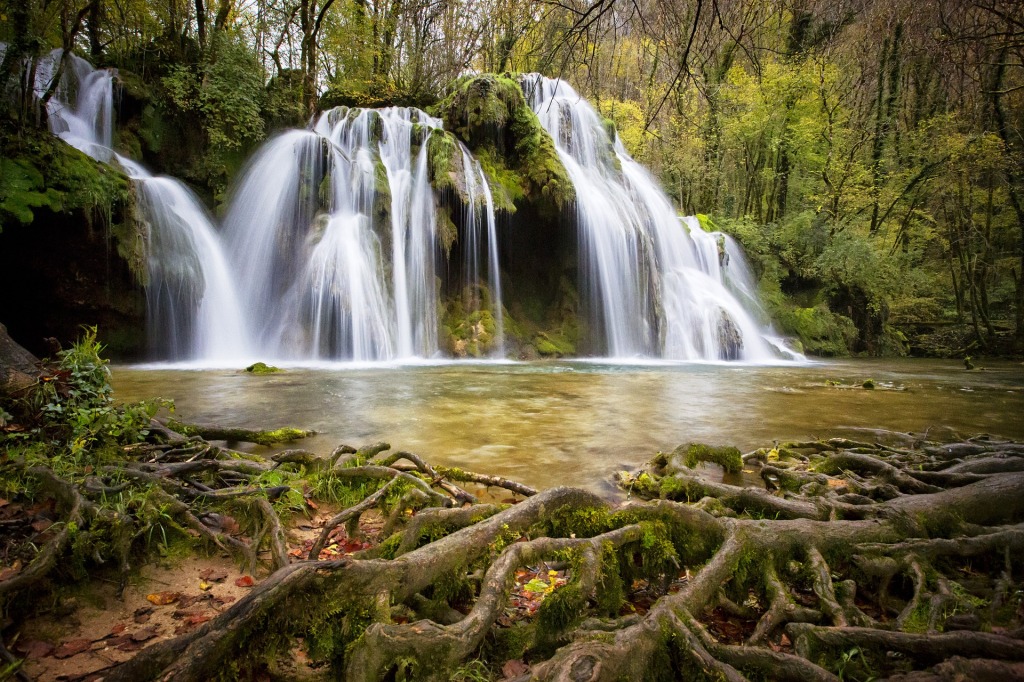
Ezekiel 47:9 – “Wherever the river flows, every living thing will thrive.”

As we turn to Ezekiel 47 we are near the end of his vision of the new heaven and earth that began back in chapter 40. At the beginning of chapter 47 Ezekiel returns to the temple, to the east gate. So far in his vision only the glory of God has passed through this gate. Now water flows out of this gate. As the water flows it grows wider and deeper, finally reaching a point where it is impassable.

In verse 6 Ezekiel is led to the edge of the river and is asked what he sees. On both banks Ezekiel sees many trees. He is then told, “Wherever the river flows, every living thing will thrive.” These waters will bring life abundant. What was dead will come to life. All that is touched by the living water will thrive. Provision will come from this living water – fish in great numbers, fruit without end. And the leaves of these trees will bring healing to all people. The words Ezekiel uses, the scene he sets – right from the Genesis account of creation.

This abundant life, this provision, this healing – it is all because the water “comes from the sanctuary.” This stream of life begins physically at the throne of God, yes. Its power, though, comes from the one who sits on the throne. The same God who spoke all of creation into being is the same God who will one day give abundant life as all things are made “new” again. The world will then once again be as God created it to be. Thanks be to God.

Prayer: Lord God, all glory, praise, and honor to you! The love and care shown at the beginning of creation is as strong as ever. We know that at just the right time Christ will return and defeat all evil, all pain, disease, and death, all sorrow, and all division. We will then walk in your light and love in your abundant new creation. We long for this day! Amen.


Leave a comment

At the Center

Reading: Genesis 2:4b-25

Genesis 2:7 – “The Lord formed the human from the topsoil of the fertile land and blew life’s breath into his nostrils.”

Today we read the second creation story. In this narrative, humanity is the centerpiece of the story. After forming the earth and sky, God formed the human from the topsoil of the fertile land and blew life’s breath into his nostrils.” There is an intimacy to this act. It is not God speaking humanity into being, but God, much like a potter, shaping and forming the human body. God’s very “hands” were at work. Once the physical form is complete, God breathes life into the form. The very “breath” of God gives life to humanity.

God’s next act is to plant a garden, to create a place for this man to live. God provided trees with fruit and a river to irrigate this garden that man was to farm and care for. So that man was not alone, God next forms animals and birds. The man (not the creator) names these creatures. But there is not a “perfect helper” found for the man. So God provides this too. From the rib of the man God fashions a woman. These two beings form a team, a couple.

In this creation story all is done for humanity’s benefit, for their good, to meet their needs. Here we see God’s love for us, for all created in God’s image. God’s expectations of humanity? To love God in return and to care for this creation. As the story continues tomorrow, we see what a challenge this can be.

Prayer: Lord God, thank you for today’s insight into the “why” of creation. You did all this to provide an ideal place for us to live. I feel a deep gratitude for your love and care for humanity that is at the center of your creation process. I am humbled to be your greatest love, along with my brothers and sisters in faith. Lord, help us to love you and your creation in the same way. Amen.


Leave a comment

May Blessings Flow

Reading: Ezekiel 53-48

Ezekiel 47:9 – “Wherever the river flows, every living thing that moves will thrive.”

Photo credit: Kazuend

The majority of today’s reading focuses on God’s presence re-entering the new temple and on the ordering of all aspects of worship and temple life. God’s glory fills the temple, leading Ezekiel to fall in worship. God then instructs him to listen carefully and to write down these new instructions. The central focus is on holy versus unholy or clean versus unclean. Building and purifying the altar, proper worship on the Sabbath and during the two festivals (used to be three), honoring the east gate, setting aside sacred spaces, regular offerings – all were aimed at maintaining the holy. To keep and hold these spiritual practices in the highest ways would work against a return to the “detestable practices” of old, to the unholy.

In chapter 47 there is a river that flows from the temple, out the east gate – the gate that God’s holiness entered through. The trickle grows to a vast river that brings life and abundance to the people of God. As God’s presence is brought out into the world, blessings flow with it. This remains true today.

Ezekiel closes by defining Israel’s borders and by allotting land to the tribes. These boundaries connect back to what God originally laid out for Moses back in Numbers 35. Land is allotted, beginning in the north, to Dan, Asher, Naphtali, Manasseh, Ephraim, Reuben, and Judah. Next comes the Holy portion, with the temple at its center. The city and Prince are allotted land here in this central section. Moving to the south, land is allotted to Benjamin, Simeon, Issachar, Zebulun, and Gad. Benjamin and Judah remain central, just flipped from their pre-exile locations. Similarly, the tribes furthest out are the children of the maidservants. Each tribe received an equal portion of the land. This time the Levites are included. The twelve city gates are named after the original sons of Jacob. Joseph’s sons are combined to make space for Levi. God’s new kingdom envisioned here will one day be established here on earth. We await the day!

Prayer: Lord God, what a vision for what will be at the end of this present age. You will be the center, the focus, the life source. Yes, we do await the day. Yet, as we wait, Lord God, use us to draw this world closer to this vision. Use us as the life-giving river that flows out into the world, bringing blessings and abundance into people’s lives. Amen.


Leave a comment

For Me. For Us. For You.

Readings: Psalms 113-118

‭Psalm 118:6 – “The LORD is for me — I won’t be afraid. What can anyone do to me?”

Today’s six Psalms are known as the “Egyptian Hallelujah.” These words of praise were recited each year at the Passover meal. Psalms 113 and 114 were recited before the meal. These Psalms celebrate God’s actions on behalf of the poor and needy and on behalf of Israel during the exodus. Psalm 113 exalts the God who lifts up the poor, who raises the needy, who brings the barren woman the joy of motherhood. These words echo “Hannah’s Song” from 1st Samuel 2 where God acted on behalf of the faithful. Psalm 114 remembers the parting of the sea and river, the bringing of water from the rocks – more signs of God’s faithful love.

After eating the Passover meal, Psalms 115 through 118 would be recited. Although lost in translation, Psalms 115 and 118 were originally written and spoken as call-and-response liturgy. Psalm 115 lifts up God’s power and might, contrasting God with worthless idols who “have mouths, but they can’t speak.” God is Israel’s “strength and shield.” 115 closes with blessings to all. Psalm 116 is a celebration of an individual’s rescue, reminding Israel that God is a personal God too. Because of God’s deliverance the individual will “lift up the cup of salvation… will keep the promises” made to God. Psalm 117 lifts up God’s strong love.

The Hallelujah closes with Psalm 118. The setting is an individual coming to the temple to give thanks to God. This Psalm calls Israel, the priests, and all who honor the Lord to declare, “God’s faithful love lasts forever!” Because of their experience with this in the exodus, the psalmist writes, “The LORD is for me — I won’t be afraid. What can anyone do to me?” God was faithful. God is faithful. God will be faithful. What is to fear?

Verses 22 and 27 are often connected to Jesus – the stone rejected, the light that shined, the offering led to the new altar, the cross. These are echoes found in the ever expanding story of God’s love, reflections on the final Passover lamb.

Prayer: Lord God, today’s words celebrate your presence with your people. Just as you rescued and delivered, just as you provided and made a way, do so for us in our lives too, O God. We seek to walk in your strong and faithful love, a love that lasts forever. Thank you, Lord, for your love. Amen.


Leave a comment

Shout for Joy

Reading: Psalm 98

Verse 1: “Sing to the Lord a new song, for he has done marvelous things”.

Photo credit: Dan de Almeida

Psalm 98 is a song of praise and worship that includes all of creation. The focus of the praise and worship centers on the gift of salvation – God’s most wonderful, marvelous thing. The Psalm points to the salvation worked by God’s “right hand” – Jesus Christ. Salvation was made known and realized through the life and sacrifice of Jesus. As love and righteousness lived out, the Lord Jesus Christ began the redemption and salvation of all of creation.

Because God’s salvation will culminate in the restoration of all things, creation itself joins in the praise and worship. Beginning in verse seven the sea and everything in it resounds with praise. The rivers “clap”, making a joyful noise as they flow towards the sea. The mountains raise a song of praise too. The earth knows what the salvation of the Lord means for all of the created world: new life!

New life is offered to us as well. The salvation of the Lord restores and renews us day by day as well as opening the way to eternal life in God’s new kingdom. While creation awaits that coming day, we experience salvation daily. The sea, rivers, mountains, and all of creation long for the day when the Lord “will judge the world in righteousness”. As followers of Jesus Christ we do not wait – his mercies are new every morning and his compassion never fails (Lamentations 3: 22-23). For this gift of salvation, for this amazing love, what is our response? May we follow the lead of the psalmist! May we “shout for Joy to the Lord”. May all of creation hear our song of praise today!

Prayer: Lord God, just as the rains have fallen, bringing new life to the creation, so too do your mercies rain down on my life, bringing wholeness. Just as the sun springs forth new life in the created world, so too does your Son bring new life in my heart. May all I say and do today reflect my joy and thanksgiving for your love. Amen.


Leave a comment

Like a Mighty River

Reading: Ezekiel 34: 20-24

Verse 22: “I will save my flock, and they will no longer be plundered. I will judge between one sheep and another”.

In today’s reading Ezekiel turns his focus to those who are leading, to those who are in charge. The Babylonians were powerful. They exerted their might and took many Israelites into captivity. In exile, the Israelites lived in a society that favored the privileged and wealthy, that allowed greed to exploit the weak, that turned a blind eye to injustice. Those who were wealthy, greedy, unjust are the “fat sheep” that Ezekiel refers to. As one considers our nation today, Ezekiel could very well be writing in 2020.

The ways of greed and inequity and oppression are not the ways that God intends for us to live. God therefore pledges to judge between the fat and lean sheep. God sees how the wealthy and powerful “shove with flank and shoulder”, forcing their agendas, manipulating the weaker, the less powerful. God will intervene, God will put an end to the sins being committed against his children. In verse 22 we read, “I will save my flock, and they will no longer be plundered. I will judge between one sheep and another”.

Plunder is an interesting choice of words. It maybe feels like an old term, an outdated term. Yet it is very relevant today. A man in our community invested many years earning an advanced degree in college. He is a skilled professional in the medical field. The major corporation that he works for unilaterally cut all people in his profession to 30 hours a week. He, like his colleagues, now has no benefits. This corporation has plundered these people.

God promises to save his flock, to judge between the sheep. There is a promise to end greed, oppression, and injustice. To those living in exile, to those living in unjust systems today, these words speak hope. To the fat sheep, these words should be a warning, a call towards self-reflection. But only the sheep with ears to hear will be changed.

Just as God sent Ezekiel to the exiles in Babylon, we read that God will send David to the Israelites who are surrounded by enemies, who live daily under threat of assault. In time God will come in the flesh, bringing hope and salvation to the people oppressed by the Romans and their own religious leaders. Jesus charged his followers to do as he did: feed the hungry, tend to the sick and lonely and imprisoned, clothe the naked, unbind the captives, bring sight to the blind. It is no wonder many Jews thought Jesus the second coming of Ezekiel.

As we seek to do these things, to follow the example of Christ, we do so with the realization that they run counter to our culture, against the ways of greed and power, in defiance of the oppression and injustice that is too prevalent in our nation. May the Lord our God empower us as we seek to be light and love, peace and compassion, mercy and justice to the world.

Prayer: Lord God, give me feet to walk the narrow road, the hard path. Give me courage to stand for those who are weak, lean, powerful, voiceless. May your justice roll down like a mighty river. Amen.


Leave a comment

Vital and Connected

Reading: Psalm 114

Verse 7: “Tremble, O earth, at the presence of the Lord, at the presence of the God of Jacob”.

Psalm 114, like most of the Bible, tells a story. Today’s Psalm is but one part of the story of Israel. Other parts of the Bible tell other stories as well. For example, the Gospels tell the story of Jesus Christ. For Christians, this is also part of God’s story. From Genesis through Revelation the Bible tells story after story that illustrates God’s love for humanity and for all of creation.

Part of Psalm 114 connects to creation. The psalmist sees creation as part of the story. In verses five and six the psalmist poses the question of why the sea, river, mountains, and hills moved as they did. There is a connection to the created world here in Psalm 114 that we mostly miss with our modern eyes and ears. Yes, you or I might sense God’s power in a good thunderstorm or recognize God’s beauty in a stunning sunrise or sunset. But we do not see or understand these things as rooted in God, as responding to God, as seeking to please God. We see them as things controlled by or manipulated by God, not as things in relationship with their creator. Their “life” is in and through God’s hands. Imagine our world if we saw the created world more as the psalmist and people of Israel saw the world.

From this perspective, and from God’s perspective, the sea, river, mountains, hills, rocks… are as much a part of the story as the people who walked through the waters or those who drank from the rock. This morning I also wonder who different our world would be if we truly saw all of humanity this same way. What if we truly heard one another’s stories as part of our own story, as a part of who we are? The creator of all the universe sees all people and all of creation al vitally connected together. Imagine if we saw and heard others from varied cultures, places, races, neighborhoods… as being vital and critically connected part of who and what we are. Perhaps then we would more fully live out the command that is so prevalent in the story of God: love your neighbor as yourself. May it be so.

Prayer: God of all, help me to better understand and see and feel all of my connections with what you have created, with what is good. Guide me to live well alongside both my neighbors and the created world around me. In doing so, may I better live out your love. Amen.


Leave a comment

Your Presence, Lord

Reading: Psalm 114

Verse 3: “The sea looked and fled, the Jordan turned back; the mountains skipped like rams”.

Psalm 114 is a song of remembrance that would be sung every year at Passover. It is like “Silent Night” for Christians – sung every year at Christmas Eve as worship concludes, filling the sanctuary with candlelight. Psalm 114 is a song of freedom, of God’s provision and power and might, of faith leading to the impossible, and of God’s presence. It is a song that reminds us about our relationship with God.

Almost from the moment that Moses returned to Egypt to face Pharaoh, God provided signs of his power and might. The plagues were the first signs – relatively small at first, but growing in power until the culmination with the death of the firstborn. This last plague occurred the night of the first Passover, when Israel was spared and protected by the blood of the lamb. This plague led to Pharaoh releasing the Israelites. As they went, God went with them. God dwelled daily with the people in the pillars of cloud and fire. Israel became God’s dominion.

In verse three we read, “The sea looked and fled, the Jordan turned back; the mountains skipped like rams”. These awesome and mighty demonstrations reveal God’s absolute power. The sea, the river, the mountains – the immovable – all behave according to God’s command. Have you ever tried to hold back water, to use your hands to stop a flow or water? It seems through, it finds the smallest cracks, it seems to keep coming from nowhere. And not once, but twice, the people of God walk through on dry ground. God did not just stop most of the water so only their feet got wet or just a little muddy – it was dry ground.

The Psalm reminds us that anything is possible with God. Even the mountains move and tremble at God’s command, at his presence. Thousands of years later, as we reflect on these acts of God, let me remind you that God is the same God. God still remains present in powerful and mighty ways. God still moves the mountains in our lives and continues to stop up the tears of sorrow and pain with his love. God still walks with us through the valleys and up to the mountain top once in a while. This day may we each sing a song of rejoicing and remembering as we bow in the presence of the living and eternal God.

Prayer: Living God, this morning I raise a hallelujah, I whisper a song of praise. My heart is full as I think back to those moments in your presence, to those times when I could tangibly feel you there with me. I exult your holy name as I rest in your love for me. Hallelujah! Amen.


Leave a comment

Answers of the Heart

Reading: Matthew 16: 13-16

Verse 15: “But what about you? Who do you say I am”?

Jesus takes the disciples to Caesarea Philippi, about 25 miles north of the Sea of Galilee. Here the headwaters of the Jordan River are formed. The waters flow south, bringing life to Israel. So much history is wrapped up in these waters. This place was established most recently by Philip, a Roman tetrarch or ruler. His father had built a statue of Caesar here to stand by the statue of Pan that the Greeks had built. Pan was one of the gods of the earth. Caesar was believed to be a god. It is here that Jesus asks the disciples, “Who do people say the Son of Man is”? In the midst of these other religious symbols, he raises this question. Even the Pharisees and Sadducees acknowledge that Jesus is from God, so the answers the disciples give are not surprising: John the Baptist, Elijah, Jeremiah, some other prophet. Their answer is an A-list of the who’s who of Jewish prophets. It would be very flattering to anyone else.

Then Jesus turns the question to his inner circle, to those who know him best. The disciples have had a close, personal, intimate relationship with Jesus. They have seen and been a part of all kinds of miracles. They have heard great teachings and parables – and received an explanation on many occasions. He says to them, “But what about you? Who do you say I am”? If anyone could give a good answer to this question, it would be these twelve men. It is Peter who responds,“You are the Christ, the Son of the living God”. Peter speaks the truth, identifying Jesus as God incarnate, as the Messiah, as the Savior. Jesus is far more than John the Baptist, Elijah, Jeremiah, or any other prophet or king.

Turning the question even more personal, the real question here is how would I answer Jesus’ question. To connect to last week’s Matthew 15 passage, these are the answers I would give with my lips. But what are the answers that lie at the core of my being, in my heart? There do I reveal Jesus as Lord, Savior, Messiah, Son of the living God? How about you? Who is Jesus in your heart?

Prayer: Living God, may my heart be as true as the easy words that roll off my lips. It is easy to say “I love you” – do my actions, thoughts, prayers… reveal true love? Each day work in me to make this more and more true. Thank you. Amen.