Verse 3: “Who may ascend the hill of the Lord? Who may stand in his holy place”?
Photo credit: Alex Woods
After declaring that the earth is the Lord’s because he created it all, the psalmist asks these two questions found in verse three. Questions like these can make us pause at times. When I have been struggling with sin or when I have felt distant from God, it would be hard to answer these questions in the affirmative. When I have felt stuck, it was hard to imagine going up to God or entering into his holy presence. On those days or in those seasons it is good to remember the encouragement found in Psalm 24.
Psalm 24 reminds us that those who seek his face will receive blessing and vindication. When we seek the Lord, when we lift up our heads, the king of glory will come in. The one who is “strong and mighty” will lead the way. And when we look up we will be reminded of who and whose we are. That king of glory, why yes, that is our inheritance. We were adopted into the family, sealing our place with the promised Holy Spirit. In and through that presence we recognize that we do bear the image of the Son. The mercy, love, grace, compassion, forgiveness… that resided in the Lord Almighty is right there within us too.
May we open wide the gates of our heart today so that the king of glory may come in!
Prayer: Living God, thank you for the reminder that I am created in your image, adopted into your family. Jesus, king of glory, shine in my heart today! Amen.
Verse 9: “My grace is sufficient for you, for my power is made perfect in weakness”.
Photo credit: Jon Tyson
As our passage today begins, Paul speaks of himself in the third person. He tells of a “man” who has a grand vision of heaven. There he witnessed “inexpressible things”. Paul could choose to tell all about this vision but he refrains. He does not want others to “think more of me” than they should. Paul’s language here reminds me of those ‘just asking for a friend’ questions we give or receive once in a while.
In our time many are drawn to leaders with awesome resumes, excellent credentials, and/or with amazing charisma and leadership skills. It was not any different in Paul’s day. There is never a shortage of people that want to lead or that think they are just the best leader ever. Both are in great supply. Paul could have boasted of his encounter with the risen Lord or of his vision of heaven. Instead he admits his weakness and his brokenness. He chooses the path of humility. Paul shares that he has a “thorn” in his flesh. It torments him and he has begged God to take it away. God will not. The Lord instead tells him, “My grace is sufficient for you, for my power is made perfect in weakness”. The Lord allows the thorn to stay to remind Paul again and again that he’s not perfect, that he’s not the greatest thing since sliced bread. Paul can think back to his Pharisee days and say, ‘I once knew a guy like that…’
Paul was found by Christ and has matured in his faith. He now knows that when he is weak, Christ is strong. When insult or persecution or hardship comes, Paul now relies even more on Jesus Christ. It is then that Paul finds strength. It is then that we are strong too – when we rely on and trust in Christ. In humble faith may we ever turn to the only one who can save: Jesus Christ.
Prayer: Lord God, in Paul I see Jesus’ humble servant’s attitude. When I look within, may my life and leadership reflect this same grace and humility. Remind me of my flaws and weaknesses when I think too much of self. Thank you God. Amen.
Verse 7: “Man looks at the outward appearance, but the Lord looks at the heart”.
Photo credit: Tom Swinnen
Last week one of our readings was from 1st Samuel 8. In this reading the Israelites demanded a king. They wanted to be like all the other nations around them. God grants their request. But Saul, the first king, soon needed replacement. As Saul’s leadership declined, Samuel spoke out, becoming unpopular and feared. In 1st Samuel 15 God finally rejects Saul as king and, as our reading today begins, God sends Samuel to Bethlehem to anoint the next king of Israel. Saul is not dead yet. He remains king.
Overcoming Samuel’s objections God sends him to Bethlehem to anoint one of Jesse’s sons. When Samuel sees Eliab, Jesse’s oldest, he thinks surely this is the one – eldest, tall, strong. ‘Not this one’, God says. In verse seven we read, “Man looks at the outward appearance, but the Lord looks at the heart”. Six more sons pass by Samuel – none of these either. Samuel asks Jesse, “Are these all the sons you have”? The youngest is out in the fields tending the sheep. Eliab once tended the sheep. Then Abinadab came along and it became his job. And so it went. These were the norms of the day. The oldest son, the one who inherited a double portion, the one who is tall and strong – surely he will be the anointed one. If you choose as man would choose. God sees things differently. God looks at the heart.
We continue to struggle with the practice of judging by appearance. Or with our preconceived notions or with our inherent prejudices. We look at how someone dresses and dismiss them as a potential friend. We look at how someone looks and we dismiss them as a potential employee. We look at someone’s ethnicity and dismiss them as a potential teammate. We look at someone’s behavior and we dismiss them as a potential brother or sister in Christ. When we judge in these ways, may Samuel’s words echo in our head: “The Lord has not chosen this one either”. And may we realize that the Lord is speaking to us, about us. When we judge another by dress, looks, ethnicity, behavior, or any other human metric, we are far from the heart of God. May it not be so. May we see as God sees: with the heart.
Prayer: Loving God, when my prejudices, my experiences, my notions… rise up and begin to judge another’s worthiness, cut me off. Use the Holy Spirit to draw me up short, to prune me off where I need pruned. Open my eyes and heart to see and love as you see and love. Amen.
Verse 24: “Unless a kernel of wheat falls to the ground and dies, it remains only a single grain”.
Photo credit: Noemi Pongracz
Our passage begins with some Greeks wanting to see Jesus. They are probably in town for the Passover and are curious about this man. Perhaps they were in the crowd that waved palm branches and shouted “Hosanna”! Maybe they’ve just heard a few stories – snipets of his teachings or whispers of miracles. These Greeks know enough to want to know more.
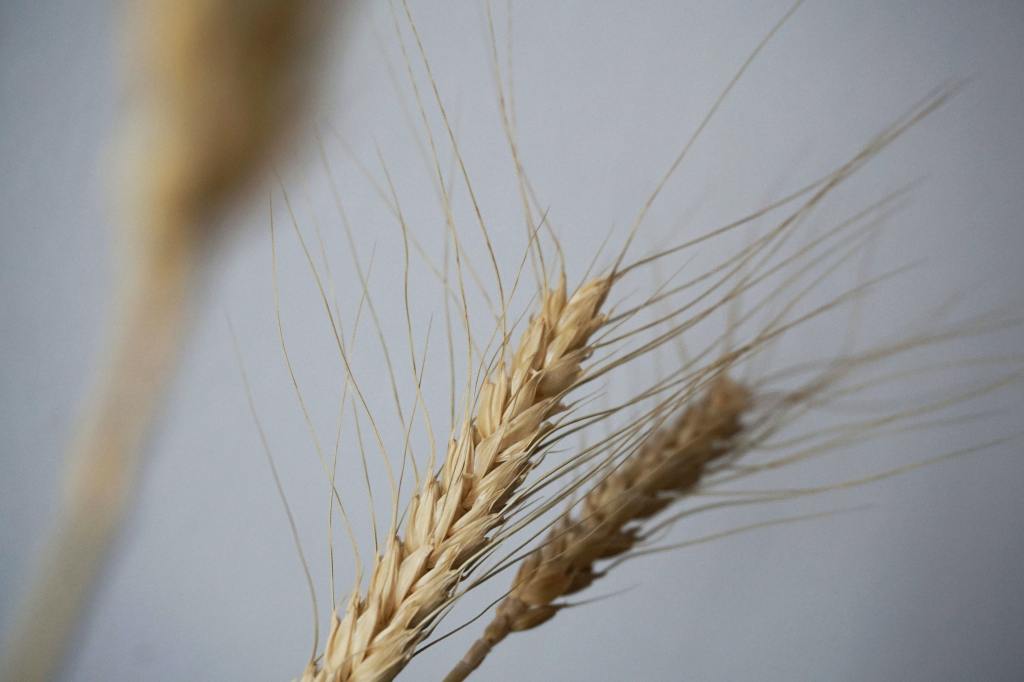
Jesus begins by announcing that his time has come. Soon he will be glorified. Jesus wants them to know that not only he will soon die but that all who follow will also pay a price as well. In verse 24 Jesus says, “Unless a kernel of wheat falls to the ground and dies, it remains only a single grain”. Jesus is paralleling his physical death with the emotional, cultural, spiritual… deaths that all followers of Christ are called to. During the season of Lent the question that Jesus might ask of us today is this: What kernels of wheat do we need to allow to fall to the ground? Is it being greedy with my money? Is it being selfish with my time? Is it judging those who are different than me? What is your kernel of wheat that you need to let go of so that you and those you meet can experience true life?
As a society we have come to see humility and death as the enemies – physically, emotionally, and even spiritually. We do all we can to stave off death. This is the right and godly thing to do with a child or young parent or many others. Yet for each of us there comes a time when our physical death is a welcome friend. As a society we look down on humility. Instead we are taught to be strong, to be independent, to work for success in life. We’re taught that once we accumulate these things, all will be good. Until we do. Then we learn that meaning and purpose and love and contentment and peace and joy and hope cannot be earned or bought. Living as a person of the world, these eternal gifts are elusive.
We must be willing to die to pride, fear, arrogance, anxiety, selfishness, doubt, greed, lust, envy, racism, jealousy, judging, anger, prejudice, worry, elitism, injustice… as we seek to follow Jesus. As Jesus says in verse 25, we must “hate his [or her] life in this world”. Only then will we be willing and able to die to self and to begin to walk as a disciple of Jesus Christ, following him daily and one day into eternal life. May you and I be willing to do the hard work of this call to die to self. May the Lord bless our journeys.
Prayer: Loving God, your Spirit leads and guides me daily, holding up to me those kernels that still need to die. I’ve plucked off leaves now and then. Help me to get to the roots. For those things that still separate me from you and from others, grant me the strength to die to these barriers and sins. Thank you God. Amen.
Verse 12: “You, O God, are strong… You, O Lord, are loving”.
In our reading today David begins by acknowledging that all of us are “nothing”, “only a breath”. We are each but a blip on God’s timeline. Therefore, David advises us not to trust in the things of this world, saying, “Do not set your hearts on them”. These are sobering thoughts. Yet they do not need to be frightening or to make us anxious. Our passage concludes with these words concerning God: “Surely you will reward each person according to what he has done”. We each have control over this reality. We are who controls and has influence over how God rewards us.
We are God’s creation, made in his image, born with the spark of the divine within us. We are also flesh and bone, drawn to the things of this world. David has experienced both sides of this, just as we have. As he writes from a place of maturity in his life and in his faith, he states, “You, O God, are strong… You, O Lord, are loving”. These two characteristics of God are what allow us the opportunity to receive an eternal reward that continues our relationship with the Lord. God’s strength is what guides us and empowers us to withstand the temptations of this world most of the time. God’s love is what forgives and redeems us when we fail to withstand. Thanks be to God for both his love and his strength!
Prayer: Lord God, as strong as you are, you understand my weakness. As loving as you are, you understand my selfishness. You understand both because in Jesus you walked both out in the world. So your love is always stronger than my weakness against the powers of the world. Guide me as I go out into the world; use me to help others know of your love and strength. Amen.
Verse 12: “Each of us will give an account of himself to God”.
“The Weak and the Strong”. In my Bible, that is the title of the section we are reading for today. Simply reading those words trigger an inner reaction doesn’t it? We think of those “strong” in the faith as those who we think are mature, who hold fast to God at all times… We think of those who are “weak” as those who seem to struggle with sin often, as those who don’t understand all the finer points and who do not quite get the insider language. We naturally think of “strong” as better and “weak” as something less.
Does someone who eats meat have a stronger faith than someone who does not? Or does the vegan have stronger faith? Are you holier or stronger in the faith if you go to worship on Sunday instead of Saturday or Wednesday? No, no, no! That is Paul’s point. Moving forward to today, a question would be: does it matter how you take communion? Are those who practice intinction (dipping the bread in the juice) somehow “ahead” of those using the little sealed cups that you have to peel the wafer and juice out of? We could also ask: does how and when you were baptized determine if you have strong or weak faith or even if you will enter heaven? If you were baptized into Jesus Christ matters. Being immersed versus sprinkled will not result in a better “room” in heaven. These and many more things would fall under the “disputable matters” found in verse one.
For Paul, what matters is if we “live to the Lord”. Paul correctly asserts, “Each of us will give an account of himself to God”. I think the basic questions we will answer for Jesus are something along these lines: Did you know me? Did you love God and neighbor above self? Were you striving to die to self and sin over and over again so that I could be Lord of your life?
Paul reminds us that Jesus died to be both the Lord of the living and the dead. For Christ to be our Lord when we’ve departed this earth, he must be Lord while we are on this earth. Each day may we answer these questions, “Yes! Yes!! Yes!!!” Day by day may we each bring God the glory.
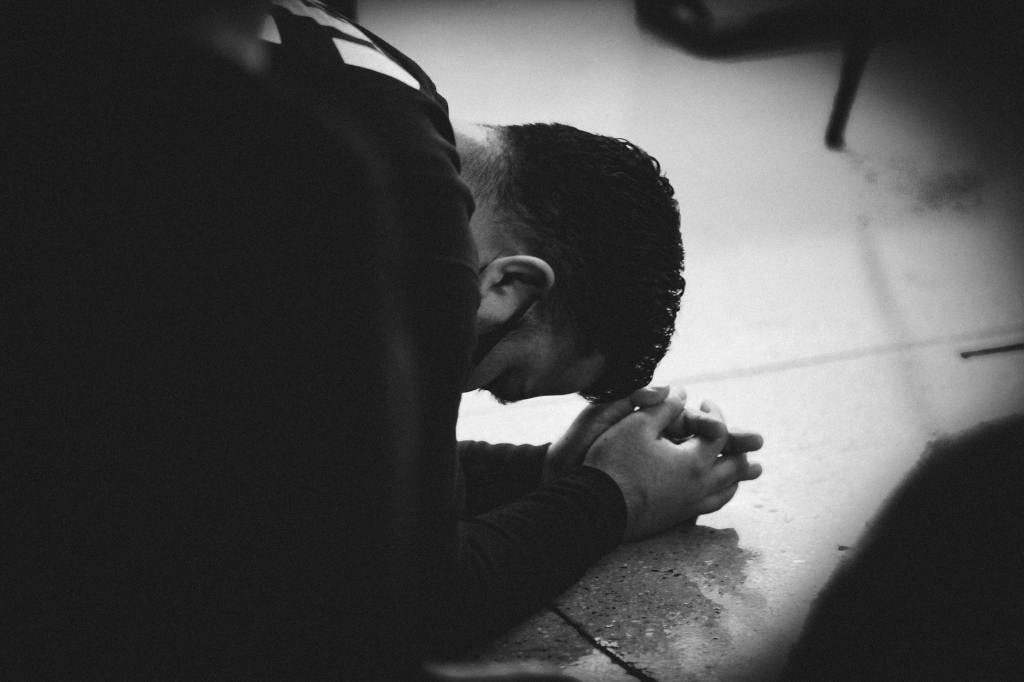
Prayer: Lord, on those days when I want to be selfish and in control, when I am struggling with whose I am, gently enfold me in your love. In those moments when I begin to want to climb upon that throne, remind me that I belong on my knees, worshipping you alone. Help me, Lord, for I am weak. In you, I am strong. Lead me day by day to walk in your footsteps. Amen.
Verse 18: “I’ll work for you seven years in return for your younger daughter Rachel”.
After stealing Isaac’s blessing from his brother Esau, Jacob runs away to his mother’s family in Haran. His mother, Rebekah, had schemed to get the son she loved more the coveted birthright. Her love for Jacob led her to place him before his older brother Esau. Once Jacob safely arrives in Haran, he soon meets Laban, Rebekah’s brother. Laban says to Jacob, “You are my own flesh and blood”. All seems to be going well.
After staying with and working for Laban a month, Jacob is asked to name his wages. Being in love with Rachel, Jacob names his price: “I’ll work for you seven years in return for your younger daughter Rachel”. He must love Rachel very much. The time flies by – “they seemed like only a few days” – and Jacob asks for her. After a big feast Laban sends Leah, the older sister, to lie with Jacob. In the light of morning he realizes he has been tricked. In that moment he must have known what Isaac and Esau felt when they found out what Jacob and Rebekah did to them. Just as Rebekah’s love for Jacob led her to do what she thought she had to do, so too does Laban’s love lead him to do for Leah, his oldest daughter. To Jacob’s protest, Laban replies that it is custom to marry off the oldest daughter first. He grants Rachel to Jacob too, in exchange for seven more years of labor. Jacob willingly agrees.
Love is a strong and powerful emotion. We have all done things for love too. And we’ve all had people look at us and question our decision. That is the path of sacrificial love too. It is a love that leads one to place the other before one’s own needs… It is the kind of love Jesus practiced and calls for from his followers. May we seek to love well today.
Prayer: Living God, your call is to do anything in the name of your great love. Give me a servant’s heart today. Make my love pure and generous. Guide me to be love in the world. Amen.
Verse 17: “When they saw him, they worshiped him; but some doubted”.
At the very end of Matthew’s gospel, Jesus gathers with his disciples for the last time. Once they see the risen Christ the disciples worship him. In this gospel only the women who came to the tomb have seen the resurrected Jesus. If we only had this gospel it would seem a big leap from seeing Jesus die to receiving these instructions that we read today. Fortunately in Luke’s gospel we have a few accounts of Jesus appearing after his resurrection and in John we add other accounts of Jesus’ forty days after his death. So the disciples have seen and interacted with the risen Lord several times themselves. Yet at the end of verse seventeen we read, “but some doubted”.
Much like these few that doubted and much like Thomas in John 20, we too can experience times of doubt. Often our doubt comes when we are just beginning to walk as a Christian, in that time when we are “working out” our faith. I think that doubt is a natural part of any new and developing relationship. It takes some time and experience to build trust… As one makes the commitment to follow Jesus as Lord and Savior, we feel like our faith is strong. We feel like it can carry us through anything. And then a crack develops. Maybe it is caused by a tragic event, maybe it is someone saying something counter to our faith. Our mind and heart question God and doubt begins to creep in. This is right where some of the disciples are. Jesus has died and the Jews are saying that he was not really resurrected. Like we do at times in our faith journey, some doubted.
The doubting did not bother Jesus when Thomas finally saw him. He simply reassured Thomas. In today’s passage it does not bother Jesus either. He grants the disciples – all of them, not just the ones without doubt – the power and authority to go and makes disciples of all nations. Doubt is part of our faith. When we are able to trust God through our doubt, it leads to wrestling with our faith. Almost always this leads to growth. Do not fear moments of doubt. Jesus does not mind a bit. They are refining points. Be open and honest with the doubt and God will guide you through it. It is all part of the journey. Blessings on the journey!
Prayer: Lord God, even this day as I doubt, walk with me to build and refine my faith and my commitment to you. Take my doubt and walk me through it. Amen.
Verse 10: “The God of grace… after you have suffered a little while, will himself restore you and make you strong, firm, and steadfast”.
Peter is writing to encourage the followers of Jesus Christ who are in trials and sufferings. As foreign as this sounds to us, suffering for their faith was a regular event. For much of the first 300 years of the church, it was dangerous to be a Christian. The Jews and the Romans were both openly hostile towards Jesus’ disciples and followers. Yet the church thrived and grew. Today we see this same thing happening in places where there is a potential cost to following Jesus. The willingness to risk and to pay the cost refines and bolsters the faith.
Peter encourages the early church to “rejoice that you participate in the sufferings of Christ”. The disciples in the early church were grateful to suffer for Christ because they understood that they were suffering with Christ. They were literally doing what Jesus did. I once read or heard a quote that roughly said: “If you are not suffering a little for your faith perhaps your faith is too little”. In essence the author was getting at the idea that if no one notices you are a Christian, are you really a Christian? There is a lot of truth to that. Too often we like to fly our faith below the radar.
Peter identifies and warns his disciples about the cause of their suffering. We fly low for the same reason. In verse eight he reminds them that “the devil prowls around like a roaring lion looking for someone to devour”. Imagine the power of that verse as the Roman practice of throwing Christians to the lions ramped up. The devil continues to prowl today. His favorite weapons are still fear, doubt, anxiety, worry… Peter encourages the early church and us today to “resist him, standing firm in the faith”. Trust that God is really in control. Remain in Jesus Christ just as he seeks to remain in you.
Peter closes with this promise: “The God of grace… after you have suffered a little while, will himself restore you and make you strong, firm, and steadfast”. Yes, we will suffer at times if we are really living out the gospel faith that Jesus modeled. Yes, we will. God is not only with us in the sufferings, but he will always bring us through stronger and with a deeper faith. May we trust in our Lord and Savior, stepping where he leads us today.
Prayer: Lord God, no one likes to suffer. I don’t like to suffer. Yet at times you call me to do just that. I can rejoice and even thank you for my times of suffering. They have been fruitful and have led to growth in me and in my faith. May your Holy Spirit help me to be willing to do whatever you call me to today. Amen.
Verse 5: “Into your hands I commit my spirit; redeem me, O Lord, the God of truth”.
When David wrote today’s Psalm he must have been at a difficult point in his life. We do not know what was challenging him at this point, but we do get a sense of his trust in the Lord. For David, this trust has been built on many experiences where God has proven trustworthy. As David seeks refuge and lifts his voice to God, he is counting on God to once again be his rock and refuge.
In this life we all face challenges. Some are small and are mostly within our minds. Others are larger and on the life-altering scale. In each case, how we work our way through the challenge can happen many ways. We can put our head down and try to push through. We can pretend it is not happening. We can fiercely take it on and act brave and strong on the outside. We can allow fear or doubt or worry to freeze us up. We can turn to God like David does in today’s Psalm. Often, especially in our bigger challenges, we can try many of these before we surrender and turn to God. We might recall that David tried this method too. He did not jump straight to fully trusting in God either.
As David journeyed with God he had many opportunities to learn to trust God first, to trust in God alone, to seek refuge and shelter and redemption under God’s care. We too have or will have each of these experiences as we journey with the Lord. We too will develop trust… in God. To frame that idea, what experiences have you had that have led to a deepening in your trust in God? When has God been your rock and refuge? As we recall these moments and file them away as God moments, our faith is strengthened. They become a reserve, a place to draw from as our next challenge arises. We begin to live more often into these words from verse five: “Into your hands I commit my spirit; redeem me, O Lord, the God of truth”. As we draw to a close, take a minute or two for yourself and for your faith. Recall God’s trustworthiness and offer God some praise and thanksgiving today.
Prayer: Father God, ever be my refuge and shield. Ever be the one I turn to in both the good and the bad. Ever be the rock upon which I stand. I thank you for your ever-present hand and Spirit that guides, leads, directs, protects… You are an awesome God. Amen.