pastorjohnb

Thoughts and musings on faith and our mighty God!


Leave a comment

Walking Closer

Reading: Psalm 51:1-13

Psalm 51:12 – “Return the joy of your salvation to me and sustain me with a willing spirit.”

In this Psalm David circles his need for forgiveness and cleansing. This need has been brought on by Nathan’s confrontation around David’s sins with Bathsheba. Many were his sins: lust, deceit, adultery, conspiracy, murder… It is the realization of and the weight of these sins that are driving the depth of David’s pleas for mercy…

We also circle our need for forgiveness and cleansing – often. Our sin is like David’s in that it separates us from God. Whether lust or gossip, deceit or a little white lie, adultery or pornography… all sin separates us from God. No matter the sin, to be made right with God, we too must seek mercy, compassion, cleansing, and forgiveness.

To receive these graces of God we must begin where David began: confession. He admits his sin and acknowledges that God is justified in seeing him as guilty, as unclean. David then longs to be cleansed and purified, to be made whole again. Then he can rejoice in God’s presence. David knows, as we do, that God alone is capable of this restoration and redemption.

David also pledges repentance. This is the necessary second step if being made right with God. Confession is not worth much at all if not accompanied by a commitment to walking in a new way. David longs to know God’s truth and wisdom. He wants to have a willing heart. In verse 12 David asks this if God: “Return the joy of your salvation to me and sustain me with a willing spirit.” From this place of contrition and commitment, David will help others to walk closer with God. May this be the path that we seek to walk daily.

Prayer: Lord God, lead us to a time each day when we can reflect on our lives and the heart within. By the power of your Holy Spirit reveal our sins and failures. Guide us to a place of humble confession and genuine repentance. In that place, cleanse us and restore us, equip and encourage us to walk closer with you. Amen.


Leave a comment

Our Great High Priest

Reading: Hebrews 10:19-24

Hebrews 10:19 – “Brothers and sisters, we have confidence that we can enter the Holy of Holies by means of Jesus’ blood.”

Hebrews 10 begins with a description of Christ’s “once-for-all” sacrifice. The author explains that Jesus, through his sacrificial death, put an end to the old sacrificial system. This system was unable to “take away our sins.” In addition, the mechanics of the system prevented a personal connection to God. The priest heard your sin and offered the atoning sacrifice on your behalf. There was also a second barrier to God. The Holy of Holies, the space which held the ark (God’s presence,) was separated off by a huge curtain. The high priest alone entered this most intimate and sacred space just once a year, seeking forgiveness and blessing for the people of God.

Verses 19-24 are a summary of what Christ’s sacrifice means for us. In the first verses we read, “Brothers and sisters, we have confidence that we can enter the Holy of Holies by means of Jesus’ blood.” As Christ breathed his last breath the curtain in the temple was literally torn in two, top to bottom. The physical barrier was removed. Christ opened the way, “a new and living way,” so that we could have a personal relationship with God. Christ is our new “great high priest” that invites us to draw near to God with a genuine, cleansed heart. Forgiveness and cleansing are ours every time we confess and repent of our sins. Jesus’ blood was and is the “once-for-all” sacrifice that stones for our sin. Hebrews also reminds us that we can “hold onto the confession of our hope,” because Jesus is faithful. We have confessed Jesus Christ as our Lord and Savior. It is only in and through him that we can remain faithful too. Thanks be to God.

Prayer: Lord God, thank you for the new covenant, one written on our hearts because Christ’s Spirit dwells in our hearts. This personal and intimate connection is a great gift. You are with us always. Lord, lead and guide us to live out our faith, encouraging one another in love. May this love lead us to be and do good in the world, drawing others into the new and living hope that we have in you. Amen.


Leave a comment

Loving Others, Giving of Self

Reading: John 19:25-27 and 33-35

John 19:34 – “One of the soldiers pierced his side with a spear, and immediately blood and water came out.”

Photo credit: Milo Weiler

On the day of Jesus’ death there are a handful of women and “the disciple whom he loved” at the foot of the cross. The women include Jesus’ mother, her sister, Mary the wife of Clopas, and Mary Magdalene. John is there too, the beloved disciple. Looking down from the cross, Jesus employs a Jewish law, entrusting his mother’s care to John. Jesus created not only a new family but also the community of faith. Loving and caring for one another as a family does will be a mark of the early church. It is the mark of Christ-following communities today.

In the second part of our reading the soldiers are making sure that Jesus is dead. The religious leaders were concerned that the killing of an innocent man was completed before sundown – so that they could properly honor God and the Sabbath. In verse 34 we read, “One of the soldiers pierced his side with a spear, and immediately blood and water came out.” John, a gospel rich in symbolism and meaning, keeps Jesus’ legs unbroken, an unblemished lamb slaughtered for our sins. The water and blood that flow – like the living water of Jesus Christ that we experience in baptism and throughout our journeys of faith. The blood, like the blood poured out for many, cleansing us of our sin.

Today, as we remember the palm parade, joyously celebrating the Messiah, the one who came in the name of the Lord, let us also remember this Jesus in the cross, the one who died as he lived: loving others, giving of self.

Prayer: Lord God, thank you for the faithful witness of John, for his presence in these moments and so many others in Jesus’ life. He testifies to the truth and shares his Jesus with others. May we do the same, O God. Amen.


Leave a comment

So Many Times

Readings: Matthew 6:14-15 and 18:21-22

Matthew 6:14 – “If you forgive others their sins, your heavenly Father will also forgive you.”

Today’s two passages from Matthew are about forgiveness. This practice is essential for all of our relationships. We are, by nature, sinful and selfish creatures. Because of this nature, we will harm, hurt, anger… one another. Sometimes this is unintentional. Sometimes we don’t even know that we hurt one another.

Jesus’ words in Matthew 6 are an addendum to the prayer that he teaches the disciples to pray. We know this prayer as the Lord’s Prayer. These words are really just a restatement of verse 12: “Forgive our sins as we…” So why repeat it? Why again say, “If you forgive others their sins, your heavenly Father will also forgive you?” Maybe because that’s the only part of the prayer where we have an active role. God’s got the other stuff. But us? Yes, Jesus knows how hard it will be for us to forgive as God forgives us.

Chapter 18, verses 15-20, contain Jesus’ teaching on how to deal with a brother or sister who sins against us. The questions from Peter, “How many times?… Up to seven?” comes from his thoughts on this teaching. These are questions we ask ourselves. Jesus’ answer and the parable that follow illustrate how God forgives us and remind us that forgiveness is a two-way street. Jesus tells Peter, “Not just seven times, but rather as many as 77 times.” Seven was extravagant – way above the Jewish social norms. In practical terms, Jesus is saying, “Every time.” Forgive a lot and then forgive lots more. Like God’s forgiveness of us, our forgiveness of one another should be without end. May it be so for you and for me.

Prayer: Lord God, yes, it can be hard to forgive. Really hard. But then I think of the many times when others have had to forgive me for my hurtful words or my harmful actions. And then I think of the millions and millions of times that you’ve forgiven my sins – how gracious and loving you are! Lord, empower me this day and every day to reflect this kind of forgiveness in my life. Amen.


Leave a comment

An Invitation to All

Readings: Mark 14:22-24 and Luke 22:19-21

Mark 14:24 – “This is my blood of the covenant, which is poured out for many.”

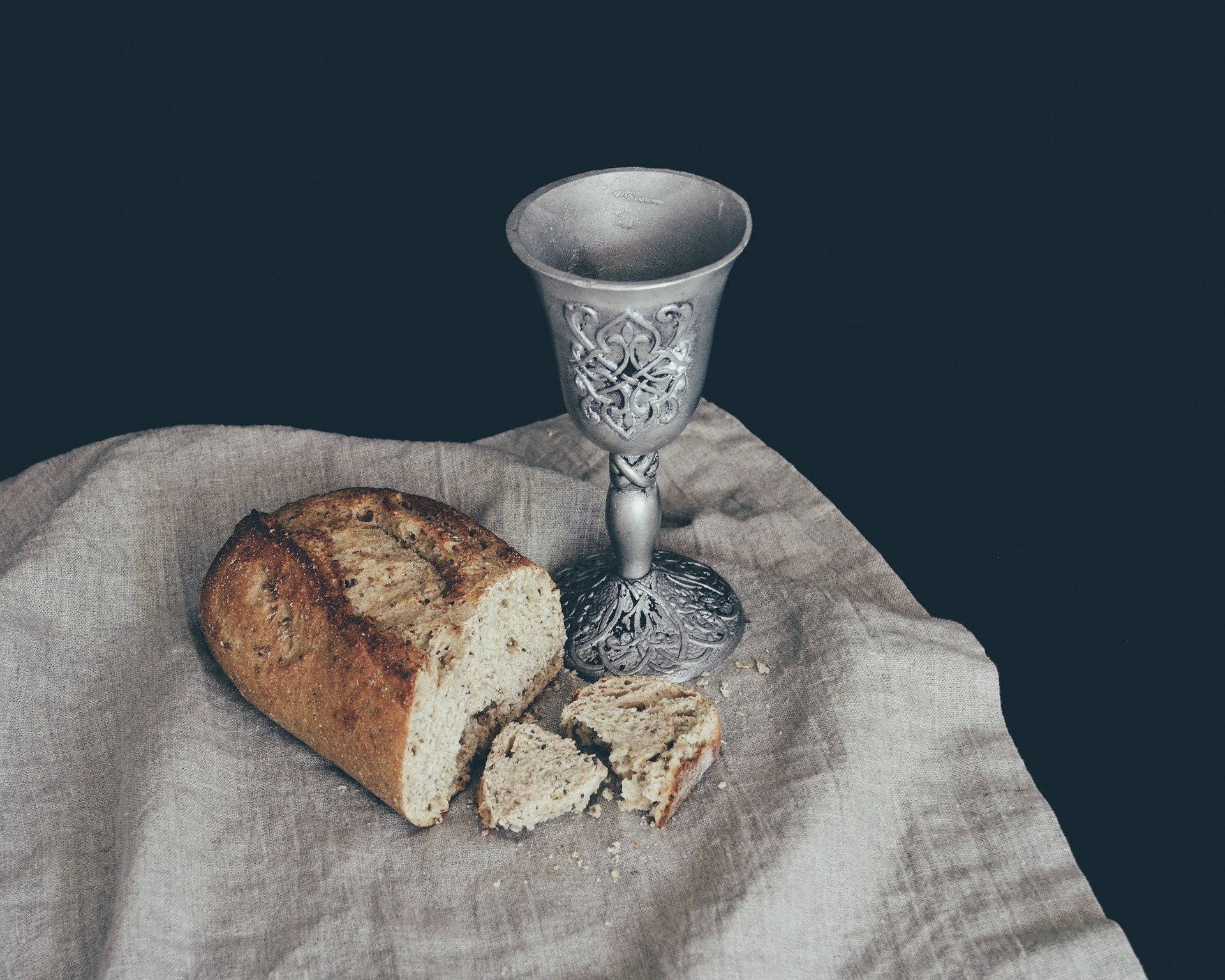
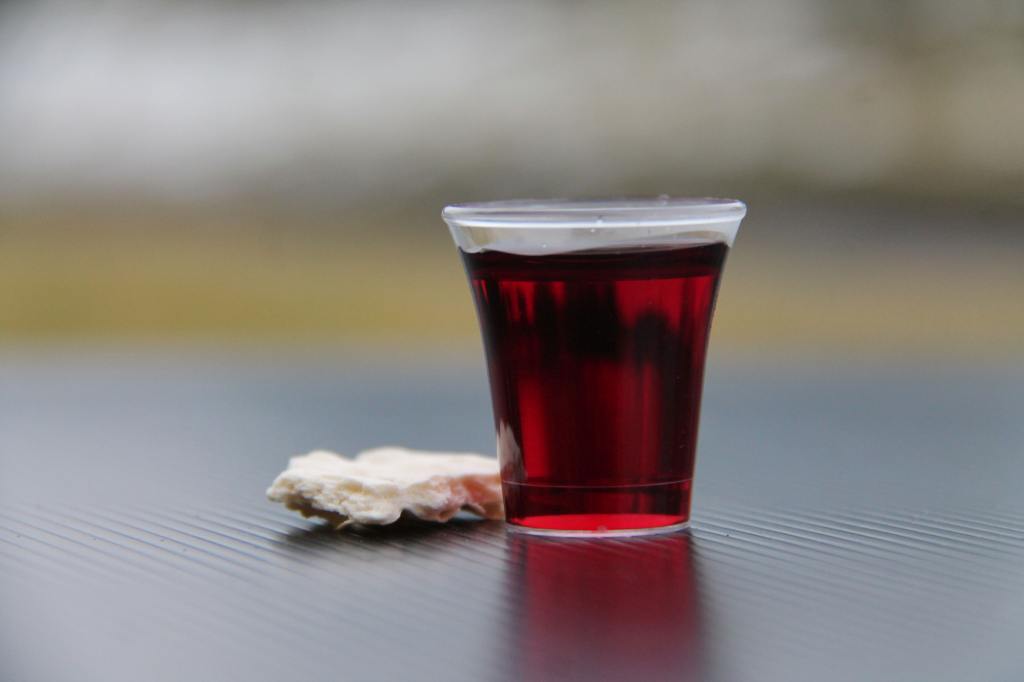
In both passages that we read today, we see Jesus instituting the sacrament of communion. This event is set within the context of the Passover meal. This meal was an annual event in which the Jews would remember and celebrate how God saved them as the angel of death passed over their houses. This final plague led to Pharaoh releasing Israel from bondage and slavery.

Mark and Luke both present Jesus offering the bread as symbolic of his body, broken for them and for us. Jesus’ body will be broken on the cross. In using the common element amongst the rich and the poor and all in between, Jesus takes the everyday and connects bread to himself and to us all.

Both gospels present the cup – representative of Jesus’ blood – as poured out for many, establishing the “new covenant.” Mark recalls these words of Jesus: “This is my blood of the covenant, which is poured out for many.” The new covenant is wrapped in mercy and grace, in forgiveness of sins. This common element of wine – again Jesus connecting the ordinary to his extraordinary gift.

In Mark’s gospel they sing a few songs and head to the Mount of Olives. But in Luke’s gospel, Jesus says, “But look! My betrayer is with me; his hand is on this table.” Jesus celebrates the first communion knowing that Judas will betray him. This is an invitation to us all – sinners each of us – to come to the table of grace. There we too will find welcome and forgiveness. Thanks be to God.

Prayer: Lord God, we humbly thank you for the gift of grace. Your Son did for us what we could not and cannot do for ourselves. It is only because of and through Jesus’ sacrifice that we are forgiven and made new, freed from the bonds of sin and death. Thank you, thank you, thank you. Amen.


Leave a comment

Bring Your Kingdom

Reading: Luke 11:1-13

Luke 11:9 – “Ask and you will receive. Seek and you will find. Knock and the door will be opened to you.”

Today’s passage holds three connected teachings on prayer. The first gives us a model for prayer. The second teaches us to be persistent in our prayers. The third reflects on the goodness of God’s answers to our prayers.

Our passage begins with a disciple asking Jesus to teach them how to pray. Jesus models a prayer life that is worth emulating. The disciple wants to have what Jesus receives when he prays: joy, peace, strength, hope. The prayer Jesus teaches is a simple prayer. It begins with praise to God and quickly moves to seeking God’s will. Notice the focus: God. It then shifts to needs: our need for daily provision and our need for forgiveness – both given and received. The prayer model closes with a plea for protection from the world, our source of temptation.

Verses 5-10 tell the story of a friend in need. Hospitality was and is highly valued in Judaism. In the story a man cannot offer hospitality. He turns to his neighbor, who initially refuses to help. But because of his friend’s persistence around doing a good and right thing, the friends give his what is needed. Connecting to the idea of prayer, Jesus says, “Ask and you will receive. Seek and you will find. Knock and the door will be opened to you.”

Our reading closes by unpacking what verse 9 means in terms of God’s answers to our prayers. Jesus tells us that our heavenly Father, who is good, will surely give good gifts to his children. Running through the bread example and this portion is the meaning of “bring your kingdom.” In the translation that we know better it is worded “your will be done.” This good and right alignment will most often yield a fish or an egg instead of a snake or scorpion. And when our prayers yield what we see as a snake or scorpion at first – may we keep the faith in our good God who works all things towards good for those who love God.

Prayer: Lord God, prayer is at the center of our relationship with you. It is the place where we can openly and honestly express all that is on our hearts and minds – our needs, emotions, struggles, joys, praises. Help us to focus on the ways that our lives bring your kingdom into this world. Empower us to walk and live in faith. Amen.


Leave a comment

Communion = Community

Reading: 1st Corinthians 11:23-32

1st Corinthians 11:28 – “Each individual should test himself or herself, and eat from the bread and drink from the cup in that way.”

Photo credit: Geda Zyvatkauskaite

We seek to “stay in love with God” through various means of grace. One of these is Holy Communion. This sacrament first reminds us of Christ’s loving sacrifice on our behalf. The giving of his innocent blood in place of ours made atonement for our sins, paying the price for forgiveness. We approach this gift with a deep sense of awe and reverence.

Sometimes we do something for a while and it becomes just going through the motions. Perhaps you’ve felt that before with something like the Lord’s Prayer. For the church in Corinth, the Lord’s Supper had become one of those things. It was now causing more harm than good. It was creating division in the church. At this point it was more like what we’d call a “love feast” than what we recognize as a communion with its liturgy and formality. In Corinth, it had become a “private meal” with the rich getting drunk and stuffed while the poor were left hungry and thirsty. The church has forgotten that love, sacrifice, service, and community were at the heart of the Lord’s Supper.

Paul addresses this situation by reminding the church that the Lord’s Supper is centered on and celebrates the new covenant made by Jesus Christ. He also reminds them, though, that this communal celebration begins with individual preparation: “Each individual should test himself or herself, and eat from the bread and drink from the cup in that way.” Each person must come before God, humbling confessing and repenting of their sins. This necessary step prepares each to be made “new” again as the blood of the Lamb washes away their sin. To not take this step is to hide or hold onto one’s sin. This brings judgment and condemnation instead of forgiveness and grace.

For each person to come before God, to confess and repent, it levels the playing field. It places us all equally before the table of grace, all sinners redeemed by his blood. In this way, community is restored. It brought one body to the one bread, one blood. That was Paul’s goal. It should be our goal. May it be so.

Prayer: Lord God, draw us to our knees, to the place of confessing and repenting of our sins. Open up our hands and hearts to release all that separates us from you and from one another. As we come clean, thank you for making us clean. Thank you for your great love that washes away our sins and failures. Thank you for your redeeming love. Amen.


Leave a comment

In the Name of…

Reading: Colossians 3:12-17

Colossians 3:17 – “Whatever you do, whether in speech or action, do it in the name of the Lord Jesus Christ.”

In chapter 3 of Colossians Paul is encouraging the church to clothe themselves with the attitudes and practices of Jesus Christ. Verse 12 reminds the church that they are “God’s choice, holy and loved.” This is quite the status to have! The apostle goes on, inviting the church to “put on” Christ’s attitudes: compassion, kindness, humility, gentleness, and patience. These attitudes (and others Christ exemplified such as welcome, mercy, grace…) should be lived out in all of life, 24/7.

Paul then invites the church to be tolerant and forgiving. These are ‘response attitudes.’ When someone is different from you or sees things from another perspective or when someone hurts or harms you or someone you love, respond with tolerance and forgiveness. How countercultural this invitation is, especially in our world today! Our human instinct, our gut-level reaction is to ignore or ridicule or exclude those who are different, to get even with those who hurt us. These are selfish responses. Christ was not selfish.

As our human nature is to be selfish, Paul encourages the church to put love over all of these attitudes – see everything, speak every word, through the filter of love. From the framework of love, God’s peace will fill our hearts. Christ’s word and Spirit will dwell richly in us. And one last piece of encouragement: “Whatever you do, whether in speech or action, do it in the name of the Lord Jesus Christ.” This is Paul’s early version of the modern slogan, WWJD? It is choosing to filter all that we say and do and even think through the example of Jesus, he who was love lived out. It is the place that we must begin if we are to do good and not harm in our world.

Prayer: Lord God, clothe us this day and every day in Christ. Clothes thusly, empower us to live our compassion, kindness… When life challenges us in our efforts to follow Jesus, when others seek to harm or negatively influence us, raise up the voice of the Holy Spirit. Call us back to the way of Jesus. Whisper tolerance, forgiveness, grace, acceptance, and understanding into our hearts. In all things, use us to reveal the love of Christ to the world. Amen.


Leave a comment

All the Glory

Reading: John 15:5-8

John 15:8 – “My Father is glorified when you produce much fruit and in this way prove that you are my disciples.”

Today’s passage bridges last week’s question of heaven’s existence and this week’s wrestling with unanswered prayer. The two topics of doubt fund answers in Jesus’ teaching about being the true vine. This image is one also used throughout the Old Testament.

In verse 5 Jesus declares the connected relationship: “I am the vine; you are the branches.” If we remain in Jesus, then we will “produce much fruit.” The main fruit aligns with the great commission: making disciples of all nations. We also produce fruit and bring heaven to earth when we bring Christ’s love, hope, mercy, grace, peace, joy, forgiveness… to those in the world. Of this good life Jesus says, “My Father is glorified when you produce much fruit and in this way prove that you are my disciples.” When we remain in Christ we produce fruit in this world, we bring God much glory.

The converse is also true. When we allow ourselves to become disconnected from Jesus, we will then fail to produce fruit for the kingdom. In that broken relationship we cannot do any good work that glorifies God. And, in the end, we will be “gathered up, thrown into a fire,” where there will be, as Jesus often said elsewhere, weeping and gnashing of teeth.

In verse 7 we begin to lean into the outcomes of our prayers. Here too is a connection. Here Jesus tells us that if we “remain in me and my words remain in you,” then what we ask for will be done. Remaining connected to Christ keeps our heart and therefore our prayers aligned with God’s heart and with God’s will and way. Praying in this way will produce good fruit that glorifies God. May it be so.

Prayer: Lord God, our connection to you is so important, so vital. As we spend time each day in prayer and study, our connection strengthens. Then, as we go out into life and into the world, your words, your Spirit, your will and way go with us, guiding us. May this connection empower us to produce fruit as we strive to build your kingdom of heaven here on earth, bringing you all the glory. Amen.


Leave a comment

Righteous Freely

Readings: Acts 4:8-12, Romans 5:18-19, Romans 3:21-25

Romans 3:24 – “All are treated as righteous freely by his grace because of a ransom that was paid by Jesus Christ.”

The words we read in Acts 4 are Peter’s response to the religious leaders who arrested him and John for healing a crippled man then preaching about healing him in Jesus’ name. Peter begins by asking why they’re being examined for doing something good: healing a man. He then takes the opportunity provided by the miracle to once again preach, declaring that the healing came through the power of Jesus’ name. Peter then reminds the religious leaders that they rejected the “stone.” Nonetheless, Peter continues, Jesus has become the “cornerstone” or the foundation of faith. Accordingly, Peter states, “Salvation can be found in no one else.” Jesus alone can save – from a crippling physical condition or from one’s sinful ways or from pride or arrogance or…

In our Romans passages Paul also seems to establish Jesus as “the one.” In chapter 5 Paul states that one person met the righteous requirements just as one man brought sin into the world. We can be made righteous through Jesus Christ just as we were made sinners through Adam. In chapter 3 Paul declares the righteousness is revealed through Christ’s faithfulness. He states that the Law and Prophets point to this revelation of God’s righteousness. This is important for his audience and for us because “all have sinned and fall short of God’s glory.” Sin is in us and on our own we cannot defeat sin and cannot make ourselves righteous. So Jesus stood in our place as the sacrifice for our sins. Because of this righteous act, “All are treated as righteous freely by his grace because of a ransom that was paid by Jesus Christ.” Through Jesus we are saved. The price has been paid. Thanks be to God.

Prayer: Lord God, thank you for your love that takes on, covers, and washes away my sin. On my own I would fall woefully short of your glory. Thank you for Jesus Christ, he who willingly and freely paid the price, becoming my ransom, atoning for my sins. In turn, Lord, use me to reveal Christ to others, especially those in need of healing and forgiveness. Amen.