pastorjohnb

Thoughts and musings on faith and our mighty God!


Leave a comment

Healing and Wholeness

Reading: Isaiah 35:1-7

Isaiah 35:6 – “Then the lame will keep like a deer and the tongue of the speechless will sing.”

Isaiah 35 envisions a time when the wilderness will blossom with life. The dry and barren land will “burst into bloom” as “streams in the wilderness” bring abundant life to the wilderness. Creation itself will “rejoice with joy and singing” as God restores all the earth back to what it was like in the garden of Eden. This restoration will proceed the return of God’s children to this new promised land. Living in exile, imagine what these words of hope would mean and sound like to you. Imagine what they would feel or sound like living in Gaza or Ukraine or on one of our poorest reservations or in an inner city shelter. People in all of these places long for God’s restoration of the land and of all who dwell in it.

After creation is restored, Isaiah envisions the restoration of all of humanity. This is also a return to the way it was in the garden. The weak hands and unsteady knees will become strong. Those with disabilities will be made new and whole again. Verse 6 sums it up beautifully: “Then the lame will keep like a deer and the tongue of the speechless will sing.” Like creation, the restored humanity with celebrate with joy and singing. The trauma and suffering of exile will be no more. Pondering this day would bring great hope and longing to those in exile, in Gaza, in Ukraine, on the reservation, in the inner city…

There will be times and seasons when we find ourselves in dry and barren places or in exile. In these moments when we experience trauma and suffering, we can trust into God to bring healing and wholeness and strength to us and to our lives. This is the promise. God’s grace is here and now. Thanks be to God.

Prayer: Lord God, what hope and promise you offer through the words of Isaiah! To return to a land of abundance for all, to a place without fear or violence or greed, to a time when all people are made whole – what a day that will be. Walk with us daily, O God, guiding us to work to make this envisioned day more and more of a reality here and now. Amen.



Leave a comment

Imagine…

Reading: Isaiah 65:20-25

Isaiah 65:23 – “They won’t labor in vain, nor bear children to a world of horrors, because they will be people blessed by the Lord.”

The themes of yesterday’s reading from Isaiah 65 get fleshed out today as we continue reading. We see what the new heaven and earth will be like. We see the reasons for joy and gladness. Infants will live to see old age. Good health and long life will be enjoyed by all people. All will be housed and have enough to eat. Imagine what this would be like! Sadly, though, this could be a reality right now if we just loved and cared for one another as God created us to do.

In this light, verse 23 hits hard: “They won’t labor in vain, nor bear children to a world of horrors, because they will be people blessed by the Lord.” Many will go to work today wondering when they will earn a living wage, making enough to not have to live paycheck to paycheck. Many will wake their children and wonder if they can feed them another day or if the bills might somehow get paid so that they can still have a roof over their heads. Talk about horrors. What would it take for such as these to be “blessed by the Lord?”

To be blessed, the current people of God must be so intimately connected to God that God would hear and answer before we call or speak. Such an intimate relationship would first require that we love God with all of our heart, soul, mind, and strength. When we love God this way, we find that we love others in the same way. With eyes of love we would see the vulnerable. And as we see them and are moved by the Spirit, God would hear and answer, leading us to be a part of making the new heaven and earth more of a present reality. Imagine what this would be like…

Prayer: Lord God, we have so much more than enough. Because of your great love, we have great abundance. But we also have great greed and an inward focus. Lord, loosen our grip on things. Bend our focus outward, away from self. Send us to the people and places of need. Use us to bring wholeness to our world. Create around us communities where all flourish, where all are blessed. Connect us to one another, spreading hope and grace. Amen.


Leave a comment

May Your Kingdom Come

Reading: Joel 2:28-32

Joel 2:32 – “But everyone who calls on the Lord’s name will be saved.”

Moving from yesterday’s suffering, sin, repentance, and hope, today we move into and beyond the ‘now and not yet’ of Joel 2. Once God has brought the exiles home and returned abundance to the land and to the people of God… or at some point in the future… God says, “After that I will pour out my Spirit upon everyone…” For Joel and his audience, this would be when the Messiah came, inaugurating a new era with a new heaven and earth.

Just proceeding that new era, sons and daughters, old men and young men, even slaves, will receive the Spirit. They will speak of and dream of this new coming kingdom. On that day, when it comes, there will be “blood and fire and columns of smoke” and it will be a “great and dreadful day.” And there is a ‘but.’ In verse 32 we read, “But everyone who calls on the Lord’s name will be saved.” God’s faithful will be saved.

As the story of the Bible continues, thoughts on this day evolve and develop. When Jesus arrived, he brought a dramatic shift in the understanding of the new kingdom. Jesus is clear that Joel’s (and other’s) visions of the new heaven and earth will indeed be glorious on that day, but… But, Jesus said, the kingdom is here now. Jesus taught us disciples to pray, “may your kingdom come… may your will be done… on earth as it is in heaven.” The time that Joel speaks of? Jesus is clear: the time is now. All people – men, women, young, old, slaves, free, rich, poor… – all people can receive the Spirit. All people are invited to live in and to be a part of God’s kingdom here on earth. All who call on the Lord’s name will be saved. O Lord, may your kingdom come and may your will be done! And may it begin with us.

Prayer: Lord God, open wide the doors of our hearts and of our churches! Opened wide, use us to build this kingdom where all are welcomed, where all know that they are beloved of you, and of us. Opened wide, use us to declare that each person, created in your image, one and all, are invited to your table of grace. Use us, Lord, to make this beautiful kingdom a reality here and now. Amen.


Leave a comment

Learn Their Names

Reading: Luke 16:19-26

Luke 16:23 – “While being tormented in the place of the dead, he looked up and saw Abraham at a distance with Lazarus at his side.”

Photo credit: Clay Banks

Reflecting on this passage, John Wesley wrote, “It is no more sinful to be rich than to be poor. But it is dangerous beyond expression.” Wesley lived in England during the start of the industrial revolution. The focus of his ministry was upon the poor – the uneducated, the poorly housed, the miners and factory workers, and others who were being exploited and oppressed by the wealthy. The poverty level was high in the places that Wesley preached, started schools and orphanages, and offered basic but free medical care.

Today’s parable features Lazarus, a poor, sick beggar who is overlooked each day by a rich man. The rich man has more than enough to care for Lazarus but he chooses to not even acknowledge Lazarus’ existence. Perhaps to know him would lead one to care about and for him. As it happens, both die. Lazarus goes to heaven and the rich man goes to hell. In verse 23 we read, “While being tormented in the place of the dead, he looked up and saw Abraham at a distance with Lazarus at his side.” By Abraham’s side, Lazarus has good things. The rich man is tormented in hell. It is only then that the rich man sees and acknowledges Lazarus – but only because he wants something from him. Alas, says Abraham, fates are now fixed. Judgment has come. There is no going from heaven to hell or vice versa.

Poverty continues to be a reality for many people today. Most of us as individuals and certainly we as a nation have more than enough to care well for the Lazarus’ of our day. God’s will and way called for the rich man to care for Lazarus just as God calls out to us today. To be the hands and feet of Jesus requires that we engage those living in poverty, with illness, and in need. This begins with knowing their names. May we learn their names.

Prayer: Lord God, when our relationships with the least of these gets personal, it gets so much more real. So guide us, O Lord, to invest in the lives of those with needs that we can meet. Open our hearts to compassion and love and care. Use us to minister in your name. Amen.


Leave a comment

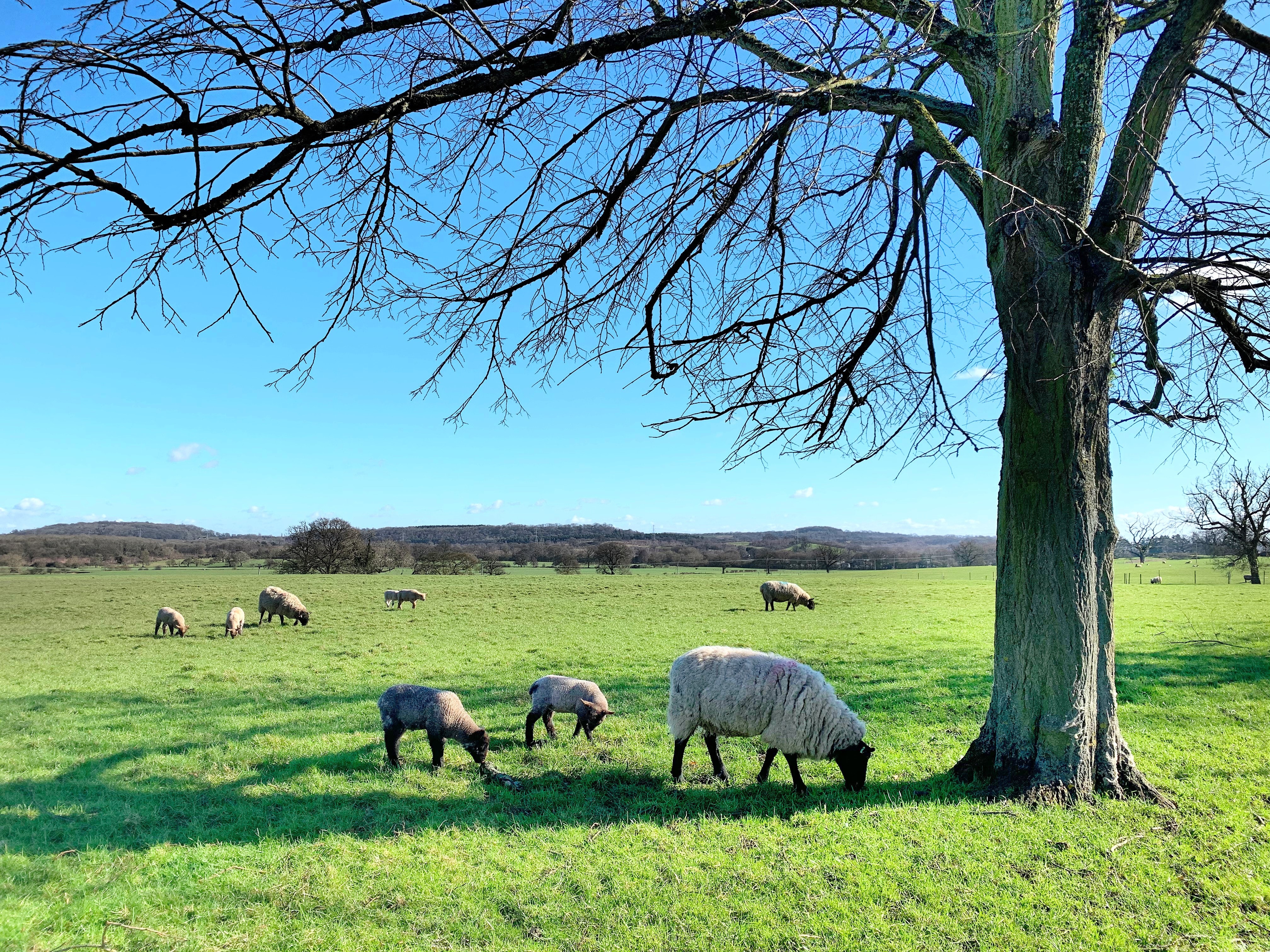
A Good Shepherd

Reading: Ezekiel 34:11-12 and 20-31

Ezekiel 34:27 – “They will be safe on their fertile land, and they will know that I am the Lord when I break the bars of their yoke.”

Photo credit: Ronnie Khan

Chapter 34 begins with the denouncement of Israel’s current leaders. What was the case before exile has continued in exile. God through Ezekiel pronounces doom on these poor leaders for living in luxury while ignoring the weak, the sick, the injured, the strays, the lost. There are many injustices so the flock scattered and then became prey. God promises to hold these bad shepherds accountable.

Beginning in verse 11, God offers the remedy. Here God proclaims: “I myself will search for my flock and seek them out… I will rescue them…” God will gather the scattered and care for the weak, the sick, the injured… As we continue in our reading we see that God will judge between the “fat and lean” sheep – between those living in luxury and those who struggle to survive.

God promises restoration, a new era. A David-like ruler will be appointed and a new covenant of peace will be established. Rains of blessing will pour down. Oppression and injustice will be no more. In verse 27 we read, “They will be safe on their fertile land, and they will know that I am the Lord when I break the bars of their yoke.” Without the yoke of oppression and injustice, there will be peace. There will be no famine; there will be no disgrace.

While the bad shepherds ignored these words of judgment, these words would offer great hope to the weak, the sick, the injured… to those living on the margins and edges. These words feel very relevant today. As injustices scatter people, as oppression sits heavy on others, as callous acts increase hunger, the people of God long for a good shepherd – not just for ourselves but also for the least of these among us. God’s children long for the rains of blessing and for a time of peace and grace. O God, may it be so.

Prayer: Lord God, you’ve always, always, always had a heart for the weak, the sick, the injured… You’ve always, always, always called for the faithful to join you in your care for the least of these. Lord, bridge the huge gulf between our reality and your preferred future. Use us to be a part of that bridge, each in our own ways caring for the weak, the sick, the injured… for the scattered and the oppressed. Amen.


Leave a comment

Here and Now

Readings: Luke 17:20-21 and 22:14-20

Luke 17:21 – “Don’t you see it? God’s kingdom is already among you.”

In Luke 17 some Pharisees ask Jesus when God’s kingdom is coming. Maybe they hope Jesus will turn into the kind of Messiah they’re looking for: strong, powerful, able to defeat the Romans. Or maybe they hope that since Jesus claims to be the “Son of Man,” then he’ll be able to tell their when their Messiah will come. Inviting these religious leaders into the present reality, Jesus says, “Don’t you see it? God’s kingdom is already among you.” Open your eyes and hearts, it is here and now.

This can be a question Christians can ponder too. One can think that accepting Jesus will be a cure for all that ails us. One can think that life will only be blessed because we’re following Jesus. No, all of life still happens. Jesus will and does walk with us, bringing peace and hope in the storms, comfort and strength in the trials… In turn, we offer these to others. This is the kingdom of God at work here and now.

Almost a week later, Jesus gathers in Jerusalem with his disciples. It is Passover and they are gathered around the table. Jesus shares two interesting things with the disciples. First, he “earnestly desires” to share this meal with them. Second, he tells them, “I won’t eat it until it is fulfilled in God’s kingdom.” Little did they know, this would be the next day. Jesus then share the bread as his “body… given for you.” Then the cup is shared as the “new covenant… poured out for you.” After Jesus fulfills these words and their promise, completing this act of sacrifice, followers of Christ will remember this gift by celebrating Holy Communion. Each time, in that moment, God’s kingdom is here and now.

Prayer: Lord God, thank you for your presence with us and through us. When we experience or share your light and love, your grace and peace, your hope and strength, the kingdom of God manifests itself here and now. We are reminded of the depth of your light and love… in the sacrifice you made on the cross. When we remember this act, we are made new again, here and now. Thank you for this gift. Amen.


Leave a comment

For All People

Reading: 1st Timothy 2:1-4

1st Timothy 2:1 – “First of all, then, I ask that requests, prayers, petitions, and thanksgiving be made for all people.”

As we begin 1st Timothy 2, Paul encourages Timothy (and us) to offer prayers for everyone – “for all people.” Paul assumes that Timothy will pray for the regulars: family, friends, people he knows who need specific prayers. This is likely familiar territory. Maybe you, like me, have a standard list of people and situations that you pray for every day plus a few that are in your prayer list for a time or a season.

Paul next singles out praying for “kings and everyone who is in authority.” Why would Paul do this? Well, look no further than our current reality. In Timothy’s day it was the Roman authorities and the Jewish religious leaders who were persecuting the church. What prayers might Timothy lift for those in authority? What prayers might help lift that are in alignment with God’s will and heart? May our godly thoughts on these questions guide our prayers for our leaders.

In verses 3 and 4 Paul gives Timothy (and us) the “why.” Paul reminds us that it is “right” and that it “pleases” God when we offer prayers for all people, especially for those that are hard for us to pray for. It is our charge. First and foremost, it should be so because God desires for “all people to be saved” and to come to “a knowledge of the truth” – to understand and know God’s will and heart for themselves. Second, to pray hard prayers, that changes and empowers our hearts too. As our prayers become better aligned with God’s desires, our world will better reflect God’s kingdom here on earth. May our prayers work towards this goal and hope.

Prayer: Lord God, open our hearts wide, enabling us to pray as you call us to pray. And, Lord, open wide the hearts of our leaders, filling them with what fills your heart: mercy, grace, compassion, love. Guide all of our leaders to be leaders for and of all people, working for the good of all people. Amen.


Leave a comment

Don’t Be Far

Reading: Psalm 22:1-2 and 7-11

Psalm 22:11 – “Please don’t be far from me, because trouble is near.”

Photo credit: Shane Rounce

This week we’ve explored the biblical witness to the reality of heaven (and hell.) As believers there are many times when we experience heaven on earth. We find joy in living with love and hope. We demonstrate our love of God by loving neighbor. We experience blessing through fellowship in the faith community and through God’s presence in Spirit. And there are also times when we feel like David feels in Psalm 22. In a moment of trial or suffering we feel separate from God, experiencing something more like hell on earth.

Verses 1 and 2 express the separation that we feel at times. Where are you God? Why have you left me alone? Why don’t you respond to my pleas and prayers? These are questions we’ve asked and will ask again. They are an honest admission of a very uncomfortable feeling.

In verses 7-8 David shares the trouble that is near. He is suffering and God feels absent. Others ridicule him and his faith in this God who is clearly not rescuing him from this hardship. Then there is a shift in verses 9-11. David remembers his long walk with God – “from birth.” God has always been his God. Oh yes, you’ve always been David’s God. And you are always our God. So David prays, “Please don’t be far from me, because trouble is near.” It is an honest plea to again experience heaven here on earth. In our moments of hardship, may this too be our prayer to God.

Prayer: Lord God, there will be moments when we feel apart from you. Doubt, fear, worry, anger – they can all create this open space. In these moments, O God, remind us too of our long walk with you, of the many, many times when we’ve experienced your presence, hope, love, comfort… Guide us to lean into you, closing the space in between. Amen.


Leave a comment

Present and Future Reality

Readings: John 5:25-29 and Luke 19:7-10

Luke 19:10 – “The Human One came to seek and save the lost.”

Photo credit: Nathan Dumlao

God sent Jesus to save, not to condemn, to give eternal life, not to bring eternal punishment. Today’s readings speak to this and to the reality that salvation is both a present and future reality.

In John 5 Jesus declares that “the time is coming – and is here!” Those who are dead in their faith can hear Jesus’ words and have their faith come to life. This is the present reality. Jesus also speaks into the heaven-hell reality. “All who are in their graves” – the physically dead – they too will hear Jesus’ voice one day. When that day comes, some will be resurrected to life (heaven) and some will be resurrected to judgment (hell.) In the end, we all have a destination. How we live in the present will determine our outcome.

Turning to Luke 19 we enter the story of Zacchaeus. Jesus has just invited himself to Zacchaeus’ house. This causes everyone to grumble. A large crowd had gathered to see Jesus. What could or would he do for them? To choose Zacchaeus, tax collector and known sinner – unbelievable! In response to the crowd or to Jesus’ invitation (or both?) Zacchaeus declares his faith. He speaks in the present. Jesus tells the crowd that salvation has come to Zacchaeus. Jesus adds, “The Human One came to seek and save the lost.” Jesus came to change hearts and lives in the present. Jesus came to save and to bring eternal life to the lost. Thanks be to God.

Prayer: Lord God, your intent for all people isn’t just to enter heaven one day. It is also for us to experience heaven on earth here in the present – “on earth as it is in heaven” is what we pray each Sunday. Help us to walk daily in faith, being heaven to others so that they too can begin to experience your intent for their lives in the here and now. Amen.


Leave a comment

Timeless and Eternal

Readings: Psalm 145:8-9, Joshua 6:17-21, Micah 6:6-8, Isaiah 2:4-5

Psalm 145:8 – “The Lord is merciful and compassionate, very patient, and full of faithful love.”

Today we wrestle with the violence of the Bible. It is fairly common in the Old Testament. But the brutality and totality shock us today. While this violence has no place today, the timeless character of God is the lasting truth that we can stand upon today, tomorrow, and forever.

In Psalm 145 we read, “The Lord is merciful and compassionate, very patient, and full of faithful love.” These are traits we associate with God, words enfleshed by Jesus: merciful, compassionate, patient, loving. In the next verse we’re reminded that these good qualities extend to “everyone and everything.” This is the God we know and experience personally.

Then we turn to Joshua 6. These verses are part of the conquest of Jericho, just as Israel is beginning to take possession of the Promised Land. As the walls are about to come down, these are the instructions: “The city and everything in it is to be utterly wiped out as something reserved for the Lord.” That is what happens. All humanity and all livestock – all slaughtered. This atrocity turns out stomachs and rightly so. And it also reflects a common practice in the world at that time. Other people groups also practiced this, known as “the ban.” It was a way of eliminating outside influence and of giving the first fruits of battle to God (or to gods) as a holy and pleasing sacrifice.

In Micah 6 we see God’s timeless desire for humanity. Instead of offering God huge or voluminous offerings, the prophet reminds us that God requires justice, faithful love, and a humble walk. These traits reflect the divine call to love God and neighbor. Turning to Isaiah 2 we get an end game picture. One day war, still a present reality in our world, will be no more. Swords and spears will be turned into tools used to care for one another. All will then walk in the light of the Lord. One day.

Prayer: Lord God, walk with us and guide us as we read and process what happened at Jericho and at other times in the ancient world. Lead us to understand that these events were specific to that time and culture. Draw us to your timeless and eternal: good, justice, love, mercy, peace, grace. Keep these arching over our understanding of you and your word. Amen.