pastorjohnb

Thoughts and musings on faith and our mighty God!


Leave a comment

Wonderful Love

Reading: Luke 23:39-43

Luke 23:42 – “Jesus, remember me when you come into your kingdom.”
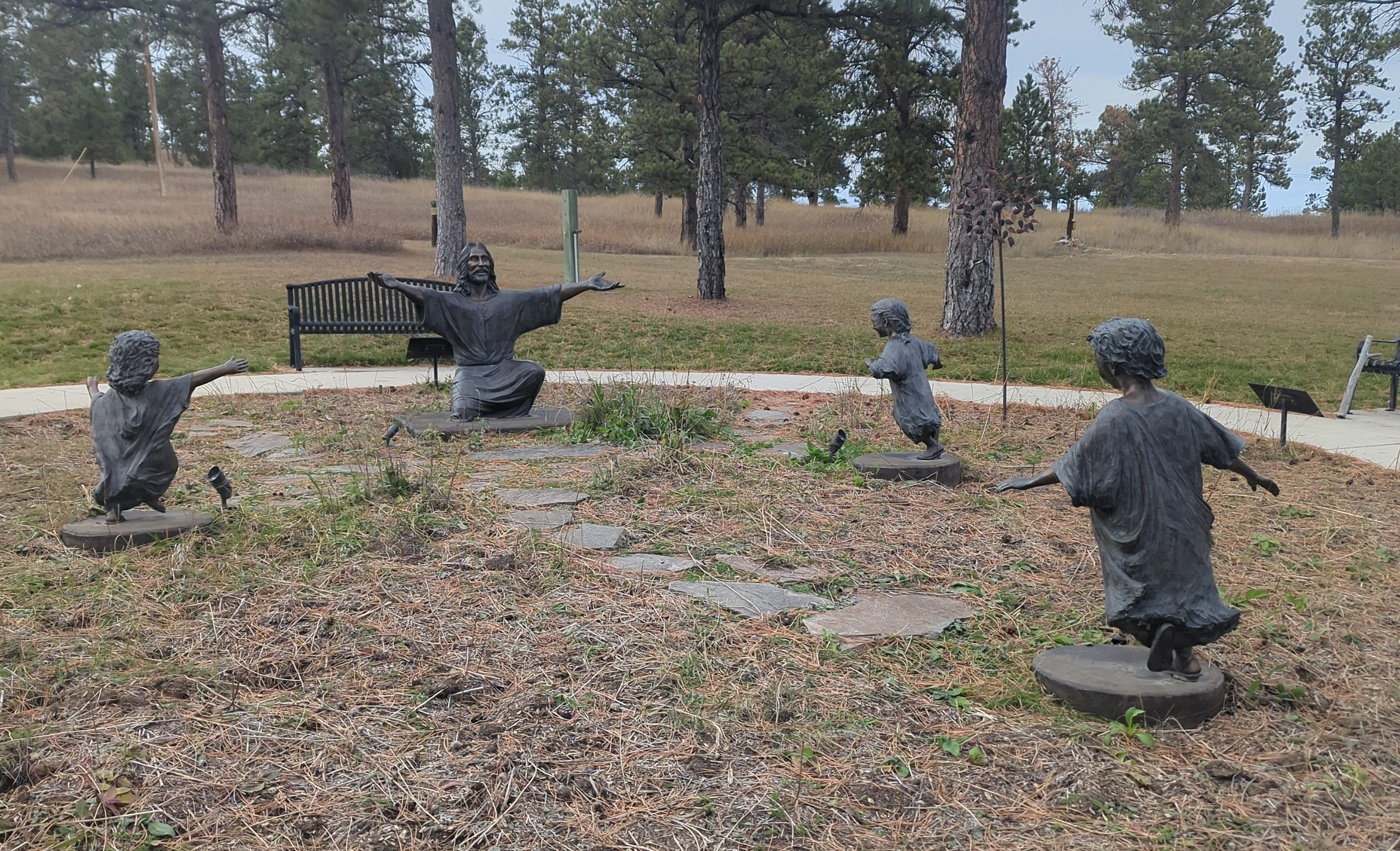
As we continue in the crucifixion scene, we read Jesus’ only real interaction with anyone since he spoke to the mourning women on the way to the cross. In our reading today one criminal joins in the mockery and adds a selfish request: “Save yourself and us!” It is then that another voice speaks, this time for Jesus. The second criminal asks the other, “Don’t you fear God?” This is a telling question. He recognizes that they’ll soon die and that he’ll soon stand before the next judge – the one who will pronounce a sentence of eternal light and love or one of eternal torment and darkness.

Turning to Jesus, the second criminal says, “Jesus, remember me when you come into your kingdom.” He wants to go where Jesus, the innocent one, is going. Jesus offers him words of assurance, of welcome, of love. Yes, “today you will be with me in paradise.” This is so interesting to me. Jesus does not require a confession of sin first. He doesn’t quiz the man about his past life. Jesus doesn’t wait for a pledge of repentance or for a request to be baptized. The man just wants to be with Jesus for whatever is next. He longs for a reality-changing relationship with the Lord. Jesus welcomes the man in love.

This remains who God is. We don’t have to be perfect to present ourselves to God. In fact, God does some of God’s best work when we come broken or hurting or humbled or vulnerable. It us then that we are most malleable, most ready to be made new again. This is love. Thanks be to God!

Prayer: Lord God, it is reassuring to know that your love never changes. At our very best and at our very worst, your love is the same. It is a wonderful love. Lord, help us to have this kind of love. Amen.



Leave a comment

Springs of Joy

Reading: Isaiah 12

Isaiah 12:2 – “God is indeed my salvation; I will trust and won’t be afraid.”

Our four readings this week collectively speak of God’s continuing transformation of the world. Together these readings help us as Christians to understand how we are to participate in this transformation. Today’s hymn of trust in Isaiah 12 comes after Isaiah’s preaching about Judah’s unfaithfulness and about the coming wrath of God. An invading army will soon decimate Jerusalem, leaving behind a “burning stump.” In the long term, though, this fire will also work to refine and transform God’s people. Isaiah speaks of a day when a shoot (child) from that stump will lead Israel into a time of peace and grace.

Isaiah 12 celebrates the time after God’s refining fire. The opening verse looks forward to when God’s anger has been spent. Then God’s comfort will come in. This leads Isaiah to write, “God is indeed my salvation; I will trust and won’t be afraid.” God, Judah’s strength and shield, will rescue and redeem, will restore and save. These promises are consistent with who God is and are therefore true for our reality too. When we sin and fall short, creating separation from God, we feel the refining fire of conviction. This leads us to confession and repentance, beginning the transformation process within us.

Being made new by these “springs of salvation,” God’s people will draw water of joy. The restored people will exalt God for the “glorious things” that God has done. When the Holy one is among us, Spirit leading and guiding us, then we too will sing for joy, declaring that God is indeed among us. As God works in our lives, transforming us from the inside out, we will be filled with joy as we live as new creations proclaiming our faith and trust in the Lord. Living as light and love, we will draw others to the Lord. May it be so.

Prayer: Lord God, we thank you for your redeeming work in our lives and in our world. Each time that we are refined and transformed we are drawn deeper into faith. Each time we are made more into Christ’s image. Use us to bring this invitation to all of creation, inviting all to be made whole, to be made new again. Amen.


Leave a comment

Our Response?

Reading: Joel 2:23-27

Joel 2:26 – “You will eat abundantly and be satisfied, and you will praise the name of the Lord your God.”

The book of Joel begins with a lament over the destruction of Israel and the causes of this great devastation. The invading armies are like locust – they strip the land bare and leave suffering in their wake. In response, Joel calls for fasting and repentance, both as means to draw close to God once again. Midway through chapter 2 God promises to respond to the changed hearts of the once again faithful people.

As we turn to verse 23, through Joel, God invites the “children of God” to rejoice and be glad. God promises to send rain upon the land, “a sign of righteousness.” This abundant rainfall will lead to an abundant harvest. The grain, grapes, and olives will fill threshing floors and storage vats. In stark contrast to the years of suffering and hunger, God says, “You will eat abundantly and be satisfied, and you will praise the name of the Lord your God.” The peoples’ shame will be no more and they will know “that I am the Lord your God.” God’s love and provision will be clearly evident.

For those who haven’t faced hunger as a way of life, think of recent images in Gaza, in slums outside major urban areas, in poverty-stricken third world nations. Many in our world and even in our nation lack food security. Recent policy changes will likely put more people into this situation. In these places of suffering and hunger, as it was for the people of Joel’s day, shame is often present. Living today in a land of great abundance, we must ask ourselves why hunger is such an overwhelming issue for so many people. It should not be so. As the people of God, what is our response to this injustice?

Prayer: Lord God, open our eyes and hearts to the food needs around us. Whether it is people living in “food deserts” or people wrestling with the decision to buy gas to get to work or to buy food to put on the table, raise up your people to respond. Move us out into the world, filled with compassion, bringing our abundance along with us. Lead us to care well for those created in your image, so that they too might “praise the name of the Lord.” Amen.


Leave a comment

Disciplined Faithfulness

Reading: 2nd Timothy 2:8-15

2nd Timothy 2:15 – “Present yourself to God as a tried-and-true worker… one who interprets the message of truth correctly.”

Photo credit: Aaron Burden

In today’s reading Paul is encouraging Timothy to pass on the message of the good news faithfully and correctly. In verses 8-10 Paul reminds Timothy of the example that Paul has set. Paul’s focus is on Jesus. This focus has led to suffering (he is in prison) yet Paul endures so that others “may experience salvation in Christ Jesus with eternal glory.” Paul’s faithfulness has allowed others to know the good news of Jesus Christ.

Verses 11-13 present the reality of our faithfulness when held up against Christ’s. When we do live faithfully – dying to ourselves, enduring suffering – then we live and rule with Christ. When we deny these things, living for self, then Jesus denies us too. In sin, we create this separation. Hope comes in the last verse: even when we are disloyal, Christ is faithful – that’s just who Jesus is. This is why Jesus is always there, always present to us.

Verse 11 engages the fourth step of Ignatuis’ Examen: repentance. Paul appeals to Timothy and to readers of this text to “die together” with Jesus Christ. This involves making the choice to die to those sins, both words and actions, that deny the Christ within us. Confession and repentance naturally flow out of step three (review) and they bring forgiveness, which brings us back into living faithfully with Jesus. To this end, Paul encourages Timothy to “not engage in battles over words” that cause harm. Such good advice for today! Paul then says, “Present yourself to God as a tried-and-true worker… one who interprets the message of truth correctly.” This connects back to Paul’s words in verses 1-7, where he offers examples of disciplined faithfulness. This faithful daily living allows us to not only interpret the message correctly, but it also helps us to live it correctly, bringing God the glory and honor and praise.

Prayer: Lord God, on the good days, we are able to live faithfully, witnessing to your love and grace. But when life gets hard or when we suffer, the walk is more difficult. In these times, make your power and presence known in our hearts. Empower us to the disciplined faithfulness that allowed Paul to endure all things. Amen.


Leave a comment

Not My Will

Reading: Luke 22:39-46

Luke 22:42 – “Not my will but your will must be done.”

We are on the verge of the season of Lent. The 40 days leading up to Easter begin this week with services on Ash Wednesday. The service focuses on our need to be reconciled to God. The ashes remind us of our mortality. They are imposed in the shape of a cross as a reminder of our commitment to Christ. The season of Lent is one of prayer and repentance, preparing ourselves for Easter.

Intentional preparation is part of our faith. We read, study, and meditate on scripture to prepare ourselves for our day to day living. We pray to prepare ourselves for a meeting, an event, a hard conversation. In our passage today Jesus did as he often did. He went to the garden to spend intentional time in prayer. He sought to prepare himself for what lay just ahead: arrest, trial, rejection, suffering…

Jesus invites the disciples to pray too. He knows that they will soon face testing. As Jesus prays he admits his own human struggle, asking God to “take this cup of suffering away.” The divine Jesus knows full well what’s about to befall the human Jesus. Recognizing the necessity of what is about to unfold, Jesus adds, “Not my will but your will must be done.” Strengthened, Jesus prays even more earnestly.

The disciples have fallen asleep, “overcome by grief.” The crowd is on the way to arrest Jesus. The disciples have not prepared themselves. One disciple will act impulsively. Then all of the disciples will flee the scene. Jesus will move forward, empowered by prayer. As we ready ourselves to enter this season of Lent, may we too be empowered by prayer, frequently praying, “Not my will…”

Prayer: Lord God, lead and guide us to be intentional as we enter this season of Lent. May it be a time of earnest prayer, committed study, honest introspection, and whole-hearted repentance. Day by day, may our walk with you prepare us to celebrate Easter resurrection. Amen.


Leave a comment

Stand on the Word

Reading: Luke 3-4:13

Luke 4:13 – “After finishing every temptation, the devil departed from him until the next opportunity.”

Photo credit: Aaron Burden

Luke begins the story of John the Baptist’s ministry by listing the political and religious leaders at the time John began to call people to a baptism of repentance. The baptism showed they were changing hearts and lives and wanted God to forgive their sins. This fulfills the words of Isaiah 40.

John’s ministry is not without confrontation. In addition to being arrested by Herod, John harshly addresses the crowd, declaring that they must produce fruit that reflects their changed hearts and lives. (In Matthew’s gospel these words are addressed to the Pharisees and Sadducees.) This fruit would be sharing one’s extra clothes and food with those in need. It would include being ethical and moral in how you do your job. John warns that being a child of Abraham won’t save them. The ax is already at the roots of that tree. This exchange makes me wonder, what hollow faith claims do we try to stand upon?

Because of John’s words, people begin to wonder if he is the Christ. He quickly dispels that, reminding them that he is preparing the way for the one who will baptize with “the Holy Spirit and fire.” John continues to proclaim the coming kingdom of God.

This is revealed as Jesus comes to be baptized. After praying, the Holy Spirit descends and God says, “You are my son, whom I dearly love; in you I find happiness.” Luke then gives Jesus’ genealogy, connecting Jesus back to Adam, the one who walked and talked with God. This is Luke’s way of showing that Jesus came to save all of humanity.

Our reading today closes with the temptation of Jesus. Led into the wilderness by the Holy Spirit, Jesus fasts and prays for forty days. Satan comes and tempts Jesus with food, power, and testing God. Each time Jesus stood upon the word of God. We closed with, “After finishing every temptation, the devil departed from him until the next opportunity.” Satan tests us in this way too, waiting until we are weak or tired or stressed or vulnerable… In those moments of temptation, may we too stand upon the word of God!

Prayer: Lord God, when we get too comfy, thinking church attendance and/or Bible study is sufficient, remind us that you expect us to produce fruit as a sign of a changed heart and life. Yet, may that church attendance and Bible study serve to protect us when Satan comes knocking. Amen.


Leave a comment

Trust and Honor the Lord

Reading: Malachi 1-2

Malachi 2:8 – “But you have turned from the path. You have caused many to stumble… You have corrupted the covenant of Levi.”

Photo credit: Daniel Hooper

Throughout Malachi we hear a call to holiness. The people’s holiness should be reflected in all areas of their lives: in worship practices, in service, in marriage, in interactions with one another. Unfortunately, God’s people are far from holy. So Malachi calls for repentance, for changed hearts.

Chapter 1 begins with the people questioning God’s love for them. They are struggling along while neighbor Edom is doing well. God reminds them that God chose Jacob, not Esau. In turn, God asks them, “Where is my honor?” The priests despise God, accepting blind, lame, and sick animals for the sacrifices. God takes no delight in this and goes so far as to suggest closing the temple doors. “Nevertheless” God says, God’s name will be honored among the nations. Just not at home. God will curse those who bring impure offerings when there are healthy males in the flock. This conversation with God makes me wonder: when do we bring impure or less than our best as offerings to the Lord our God?

Chapter 2 begins by addressing the priests. God threatens a curse on them. Then maybe the covenant with Levi will be honored. To live within the covenant is life and peace. There would be true instruction on their lips. If only. God declares, “But you have turned from the path. You have caused many to stumble… You have corrupted the covenant of Levi.” We too are called to hold one another accountable, to help one another to walk daily in faith. How are we doing with this calling or charge?

Turning to the people, God asks, “Isn’t there one father?” God is reminding them that they’re one family. God then asks why they all cheat each another. God uses their marriages to foreign wives as an example. The men are breaking the covenant with their wives. God tells them to cover the altar with “tears, weeping, and groaning” – signs of repentance. This chapter closes with a declaration that God is tired of the people’s words. The people are questioning God’s goodness and justice. This is something that we continue to do. May we instead choose to trust and Honor the Lord our God.

Prayer: Lord God, you continue to call us today to holiness in all of life. You desire pure hearts that seek to be your light and love, your grace and kindness in the world. When temptations arise, when we become half-hearted, send your Holy Spirit to revive us, to strengthen our faith. Empower us to walk your path. Amen.


Leave a comment

Receive Your Reward

Daniel 12:1 – “At that time, every one of your people who is found written in the scroll will be rescued.”

Today we read Daniel’s visions. These difficult and challenging words carry both a historical meaning and they speak into future times as well. In the historical sense, these words deal largely with Antiochus IV, a Greek king who heavily persecuted the Israelites. His reign brought the first known attempt by a political ruler to wipe out a religion. The historical time frame is 176-164 BCE. These words come much later than Daniel 1-6, set around 400 BCE.

Daniel’s first vision is of four beasts. These kingdoms will rise and fall. All will impact God’s people. But in the end, “the holy ones of the Most High will receive the kingship.” In the end, God will triumph. The fourth, the most evil, represents Antiochus. The 3 1/2 years lines up with his actual reign, as do the wars fought with the “southern king” – Egypt.

Daniel’s second vision of the ram and he-goat are about Persia/Media and the Greeks/Alexander the Great. As strong and powerful and dominant as Alexander will be, his kingdom is divided into four smaller, weaker kingdoms. This vision is followed by Daniel’s prayer in chapter 9. His humble words of confession and repentance move heaven. Gabriel is sent. He affirms Daniel as “greatly treasured” but also confirms the persecution soon to come upon God’s faithful.

Chapter 10 offers insight into another battlefront – the heavenly conflict. Michael helped in the battle against Persia’s powers so that the messenger could get to Daniel. Chapter 11 is some review – the battles between Antiochus and Ptolemy III of Egypt. It is about the persecution the people of God will face too. They are assured that this too will end.

Chapter 12 closes the book of Daniel with words of hope, with words of resurrection and rescue. The messenger speaks of the faithful who “will shine like the stars forever and ever.” In the end, Daniel is also encouraged. He’s told that he “will rest and will stand to receive your reward.” He too will be a part of this glorious eternity. May we also persevere through the challenges, remaining humbly faithful, trusting in God’s power to rescue and redeem.

Prayer: Lord God, as we read these words that the people of God lived through, we too are reminded of the lasting nature of evil. Antiochus wasn’t the first or the last to persecute the faithful. More came. More are yet to come. Lord, lead us to walk in faith, humbling turning to you, the only one with the power to save and rescue. Amen.


Leave a comment

God Will Teach Them

Reading: Jeremiah 13-16

Jeremiah 13:11 – “Just as a linen undergarment clings to the body, so I created the people of Israel and Judah to cling to me.”

Photo credit: Kenny Eliason

Our reading today begins with an illustration. Jeremiah buys, wears, and then buries an undergarment in the Euphrates River (in Babylon.) He digs it up and it is ruined, just like the people of God will be. God laments, “Just as a linen undergarment clings to the body, so I created the people of Israel and Judah to cling to me.” Because of their sin and disobedience, God will not have pity or compassion or mercy. They will be “dragged off to exile” and God will “scatter you like straw.”

Drought comes. It initially gets their attention. The people acknowledge their sin but then accuse God of being absent. God responds by telling Jeremiah not to pray for them. And God won’t accept their fast or their offerings. God will send war, famine, and disease. Brief attention is given to the false prophets. Yes, God says, they too will die – and their families. Chapter 14 closes with another attempt by the people. Yes, we’ve sinned. Yes, we’re sinning. But don’t reject us, don’t break your covenant. There is no repentance, no intent to turn from their sins.

God is so upset that God declares that even if Moses and Samuel came and interceded for the people, God still wouldn’t listen. God’s hand is set against Judah. The widows will “outnumber the sand.” In 15:10 Jeremiah laments his treatment. God asks, “Haven’t I taken care of you?” Jeremiah declares his love for God’s word. God offers to take him back – if he is faithful. God then promises to rescue and protect Jeremiah.

In chapter 16 God tells Jeremiah not to marry or to have children. That’s how bad it will be. The people are accused of being worse than their ancestors. Even so, in verses 14 and 15 we find hope. One day God will bring them home. But first they will be paid back double for their sins. God will teach them. “They will understand that I am the Lord,” declares God. Yes they will.

Prayer: Lord God, sin and disobedience break your heart. They create separation between who we are being and who we are meant to be. Teach us too, O Lord, how to walk faithfully and obediently. Guard us from sin. Plant your word in our hearts, enabling us to shine your love out into the world. Amen.


Leave a comment

The First Steps

Readings: Psalms 25-28

‭Psalm 25:10 – “All the LORD’s paths are loving and faithful for those who keep his covenant and laws.”

Photo credit: David Brook Martin

Psalm 25 is a prayer for forgiveness and protection. The psalmist’s declaration of trust is followed by a request to prevent any shame from coming their way. The psalmist edges up to asking God for forgiveness – don’t remember my sins. Verse 10 sums up the psalmist’s belief and what they hold to be true: “All the LORD’s paths are loving and faithful for those who keep his covenant and laws.” If one is faithful, one experiences God’s love. That is the hope. Closing the Psalm, because he or she looks to the Lord, well then, God should forgive their sin and end their suffering. Save me God – because I seek you.

The next Psalm declares the author’s innocence. There are echoes of the book of Job in Psalm 26. Give me justice, God, because I have integrity. Examine me, God, because I’m innocent. I don’t spend time with the wicked. No, I love being in your presence, God. So save me! As was the case with Job, we too feel injustice when good people suffer – especially when it is us.

Psalm 27 is a song of hope during suffering. There is a trust in God’s light and salvation. It is a trust that counters fear. Again the psalmist seeks to be in God’s presence. There God will shelter us, will hide us, and will set our feet high upon a solid rock, above the storms of life. The Psalm closes with a “sure faith” that he or she will experience God’s goodness. In our storms, may this be our hope and our trust.

We close today’s readings with a petition that God would hear and respond. Psalm 28 begins by saying “don’t refuse to hear me” because “you are my rock.” Today I read this and other parts of these Psalms as transactional. I too can treat God that way at times. Returning to the text, a request is made to give the wicked what they deserve. This too would bring relief to the psalmist. The Psalm closes with a declaration of hope, trust, and rejoicing.

Throughout these four Psalms there is a common theme. We must be faithful to and connected to God if we desire for God to hear and respond to our prayers. While this is true, it pre-supposes a relationship as the first step. I am also struck today by the lack of introspection, confession, and repentance. These are essential elements – steps – for a healthy relationship with God. May we take these first steps today. It is where our relationship with God begins anew each day. May it be so.

Prayer: Lord God, you’ve created us in your image, designed us to live in a relationship with you. We can sense this connection, this call. But we are not always faithful. We stray and we fall short. Have patience. Build our trust and faith. Guide our steps. Order them according to your heart. Bless us as we seek to walk daily with you. Amen.