pastorjohnb

Thoughts and musings on faith and our mighty God!


Leave a comment

Live Out These Words

Reading: Matthew 6:9-11

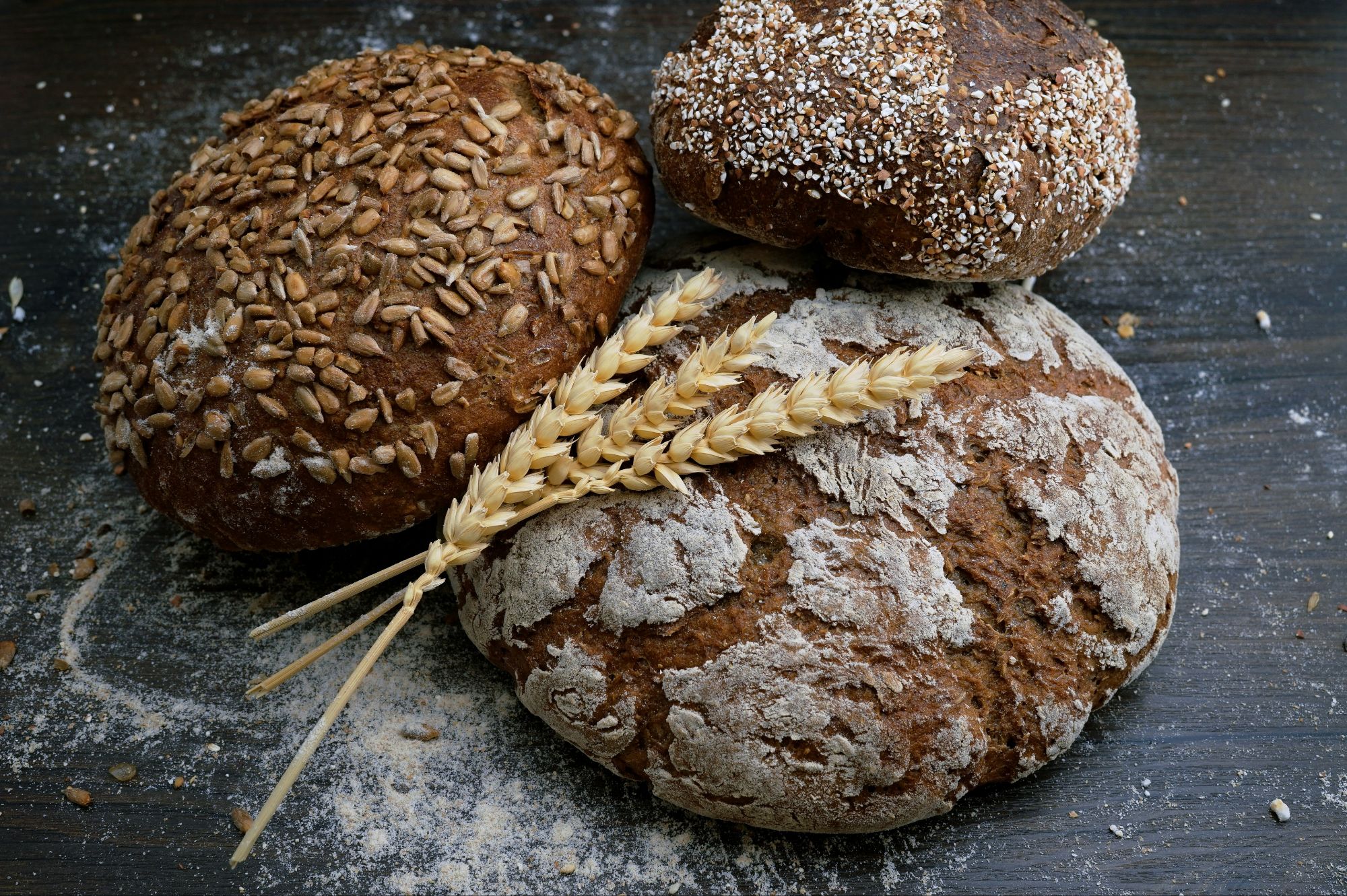
Matthew 6:11 – “Give us the bread we need for today.”
Today’s reading brings us a portion of “The Lord’s Prayer.” It is just three short verses but, as it was with much of what Jesus said, there is a lot to these words. There are three requests of God in these verses. And there are actions and responses required of us.

Verse 9 reads, in part, “uphold the holiness of your name.” Jesus is asking God to keep God’s holiness ever on our hearts and minds. To uphold this requires much of us. First and foremost we recall the charge to be holy as God is holy. Moment by moment we are charged with being like Christ was in the world: holy, yes, but also compassionate, forgiving, generous, empathetic, present.

Verse 10 asks God to “bring in your kingdom.” This asks God to make earth like heaven, to have God’s will done here on earth. This, of course, requires our cooperation and help. It calls us to love and care for “the least of these” and to stand against injustice, oppression, violence… These evils have no place in God’s kingdom – in heaven or here on earth.

Lastly, “Give us the bread we need for today.” This asks God to provide our daily bread – our physical sustenance – and to provide for our other needs too. This is a charge to trust in God. It is not a prayer for God to help us get what we think we need or to empower us so that we can be self-sufficient. No, it is a prayer of surrender, leaning into God’s care and trusting that this will be more than sufficient.

In all ways may we strive to live out these words.

Prayer: Lord God, guide us today to walk in the footsteps of Jesus, hearing your voice, feeling your nudges. Lead us to be in the world as Christ was in the world – loving others more than self, serving humbly and gently. Deepen our trust and faith in you as we experience your power working in us and through us, transforming us and your world. Amen.



Leave a comment

Raining Down Love

Reading: Colossians 3:12-17

Colossians 3:14 – “And over all these things put on love, which is the perfect bond of unity.”

Credit: Rebecca Gelaney

Today’s reading is a call to authentic holy living. Paul begins by inviting the Colossians to being “clothed” in the practices and attitudes of Jesus. The Colossians are encouraged to put on “compassion, kindness, humility, gentleness, and patience.” These five characteristics, when lived out fully each day, would reflect Christ to each other and to the world.

The focus then shifts to the other side of the equation: how to act and be with one another when the other isn’t practicing these Christlike traits. Paul exhorts the believers to be “tolerant with each other” and to regularly practice forgiveness. They are to do these things because God regularly does this with them.

Paul then turns to what John Wesley said “contains the whole of Christian holiness.” This one characteristic connects and undergirds all the others. In verse 14 Paul writes, “And over all these things put on love, which is the perfect bond of unity.” In all you do and say and think, lead with love. Doing so we will find that the peace of Christ does control our hearts. Leading in love we will express gratitude to God and for one another. Because of our love for our brothers and sisters in Christ, we will teach and warn each other, helping all to walk in faith.

In all things, in all ways, in all places and times, may we “do it all in the name of the Lord Jesus.” This witness of love holds the power to transform hearts, systems, cultures, and nations. May it be so.

Prayer: Lord God, you call us to be love in the world, to bring light into the darkness. Use us as a witness that stands out from the ways of the world. Use us to rain down love into all of our relationships, into all of the brokenness, into the lives of all that we interact with. Fill us to overflowing with the spirit and heart of Christ, pouring these things back out into the world all around us. Amen.


Leave a comment

A Heart Tuned

Reading: Micah 6:6-8

Micah 6:7 – “Will the Lord be pleased with thousands of rams, with many torrents of oil?”

“What does the Lord require?” That is the title for the section of scripture that we read today. We learned yesterday, from Luke 10, that a good answer is to love your neighbor. It becomes a great answer when we understand that our “neighbor” is anyone in need. Loving God with all that we are was the other part of the legal expert’s “correct” answer to the same basic question. Today we read Micah’s thoughts on this question. The prophet focuses on both sides of the love God, love neighbor concept.

Micah begins with the “religiously correct” answer. Sacrificial offerings were the culturally acceptable response to your God/god, whether you were Hebrew or Moabite or Canaanite. Although Israel’s understanding was not quite as transactional as this process was with pagan gods, there was certainly an element of checking the box at this point in Israel’s history. Their going through the motions disgusted God. That is why Micah, tongue-in-cheek, asks, “Will the Lord be pleased with thousands of rams, with many torrents of oil?” Speaking to the pagan practices and to the point he is making, he next asks, “Well, then, how about my oldest child instead?”

The real answer to the title question comes in verse 8. It is a heart tuned fully to God. That is what is “good.” That is what God “requires.” This is because a heart tuned to God will naturally be a heart tuned to our neighbors. In the last part of verse 8 the prophet reveals what this heart looks like: “to do justice, embrace faithful love, and walk humbly with your God.” To work to make things right, to be faithful in our relationships with God and with one another, to humbly allow God to transform us, day by day, more fully into God’s image. May it be so.

Prayer: Lord God, we are much like the people of Micah’s day. Just tell me when I have to show up for church, just take my offering, just let me check the box. We want the easy. That leaves more for us. Yet you want so much more. Yes, worship and giving are important. But you want our heart, not our things. You want our unconditional love, not our passing attention. Lord, tune our hearts to yours. Lord, teach us what humility and justice and faithful love truly look like. Remind us of Jesus. Amen.


Leave a comment

Love Your…

Reading: Luke 6:27-36

Luke 6:35 – “Instead, love your enemies, do good, and lend expecting nothing in return. If you do, you will have great reward.”

Our passage today comes from a section titled, “Behaving as God’s Children.” The title alone alerts us to the fact that Jesus is about to lay down some serious expectations. Verse 27 reveals the challenge inherent in the word to follow: “But I say to you who are willing to hear.” So our question as we begin: Are we willing to hear these words of Jesus?

Diving in, Jesus says, “Love your enemies.” For Jesus this entails doing good, blessing, and praying for those who hate, curse, and mistreat us. Reminiscent of Saturday’s reading from Matthew 5, here too Jesus says to go above and beyond, offering the other cheek or the shirt off our back. Summing up verses 27-30, Jesus says, “Treat people in the same way that you want them to treat you.”

As if the first instructions were not enough, Jesus next asks some questions that speak to loving our enemies and treating others as we want to be treated. If we love those who love us or if we do good or lend to those who do good or lend to us,  Jesus asks, “Why should you be commended?” He points out that even the sinners do these things. Continuing, Jesus advises us, “Instead, love your enemies, do good, and lend expecting nothing in return. If you do, you will have great reward.” Expect nothing in return. Act as God acts, being kind and compassionate.

These words, these instructions, are very challenging. They are counter-cultural. As the notes in my study Bible say, “This love is never conditioned upon the other person’s behavior; it is motivated and empowered by its giver and not its receiver.” May we love well from the deep reservoir of God’s love that resides in each of our hearts. May it be so.

Prayer: Lord God, you speak words today that are hard to hear, hard to really live out. Your words to love our enemies call us deep into your upside-down kingdom. These are world- and life-changing words. Walk with us, O God, transforming both our lives and our world. Such is the great reward – becoming more like Christ. Amen.


Leave a comment

Holy and Righteous

Readings: Proverbs 2:11-12 and Hebrews 12:7-10

Proverbs 2:11 – “Don’t reject the instruction of the Lord… don’t despise his correction.”

When I was growing up and would misbehave, my parents would discipline me. At the time I saw it as punishment. Once, my mom found me playing with my G.I. Joes and I had new clothes for them. She put two and two together. The next morning my parents brought me to the store, had me hand over the stolen clothes, and had me apologize to the manager. He offered words of thanks and grace – both to me and to my parents. I learned a lot from that experience.

In today’s verses from Proverbs, we read, “Don’t reject the instruction of the Lord… don’t despise his correction.” There is love behind the correction that God offers. To raise a child in the way he or she should go, to train up a disciple to walk in the way of the Lord – both are examples of receiving favor. It is not easy to correct a son or daughter. Our parents and our Lord do the hard thing because they want the very best for us. That, to me, is a major difference between punishment and correction.

Turning to Hebrews 12, our verses come in the middle of a chapter that speaks of running the race of faith. The call is to run with discipline, remembering one’s training, persevering and not giving up. The writer reminds the reader of Jesus’ example then quotes our passage from Proverbs 2. In verses 7-9 we are first encouraged to “Bear hardship for the sake of discipline.” We’re then reminded of how our parents disciplined us out of love and then to recognize the greater love that God has for us. The discipline we receive from God leads us to “share in his holiness.” Through this sharing, as we mature, we will yield “the fruit of righteousness.” These are the ways that God works to transform us more and more into the image of his son, Jesus Christ. For this love we say, thanks be to God!

Prayer: Lord God, open our hearts and minds to your transforming love. Bend our will to yours, allowing us to follow your lead and to accept your guidance and direction, your discipline and correction. We recognize that you desire the absolute best for us. Fill us with your Spirit and with wisdom, empowering us to follow Jesus Christ, our Lord and Savior. Amen.


Leave a comment

Rooted and Built Up

Reading: Colossians 1-2

Colossians 2:7 – “Be rooted and built up in him [Christ], be established in the faith, and overflow with thanksgiving just as you were taught.”

Colossians, as a whole, presents a beautiful picture of Christ as the fullness of God, as the agent of creation and redemption, and as the one who empowers the church to faithful living. In the face of rival, more worldly teaching, Paul presents a Christ fully capable of changing and transforming hearts and lives into a new, holy, and blameless way of living.

Colossians begins with thanksgiving and a prayer. Paul offers thanks for their faith in Christ and for their love of all of God’s people – both outcomes of Epaphras’ teaching. The message of hope has been growing and producing fruit in all of their good works. Paul prays that they will be strengthened and will grow in their knowledge of God’s will. He prays that they will endure hardships with patience so that they “can take part in the inheritance” – eternal life.

A hymn about Christ’s work comes next, in verses 15-20. This hymn celebrates Christ as the creator of all things and as the glue that holds all things together. Christ is the one who reconciles all to God – including those in the Colosse church. Paul encourages them to stay rooted in their faith. He warns against this “philosophy and foolish deception,” these human rules. Paul encourages them to live in and with Christ: “Be rooted and built up in him [Christ], be established in the faith, and overflow with thanksgiving just as you were taught.” Being baptized into Christ’s death, Paul says, now live alive in Christ. Stay connected to Christ, Paul implores. May it be so for us as well.

Prayer: Lord God, lead and guide us in our walk of faith. Open our hearts and minds to the fullness of Jesus Christ. Help us to truly be reconciled to you, living as light and love in this world. Guard us from the false teachings of the world and of the evil one. Root us deeply in Christ. Establish our faith on the rock. Empower us to faithful living through the power of the Holy Spirit. Amen.


Leave a comment

From One Degree to the Next

Reading: 2nd Corinthians 1-3

2nd Corinthians 2:16 – “We smell like a contagious dead person to those who are dying, but we smell like the fountain of life to those who are being saved.”

Today we begin Paul’s second letter to the Corinthian church. It was written about 18 months after his first letter, written on the heels of a humiliating personal experience in Corinth. Of his 13 letters, this is Paul’s most personal letter. He wants to reestablish his place of authority as an apostle and he wants to restore his relationship with the church.

Chapter 1 begins with a declaration that God is the God who comforts us. God does this so that we can comfort others. We share in Christ’s suffering too. Paul speaks of the troubles “far beyond our strength” that God rescued them from in Asia. Because of this rescue, Paul and his companions have set their hope on God.

Paul then speaks of their conduct. It has been with “godly sincerity and pure motives.” They desire for the Corinthians to more fully understand their own faith. Paul wants to visit again, but has delayed the visit. He did not want to visit when still so upset. In fact, he wrote in tears with an “anxious and troubled heart.” Even so, he asks the church in Corinth to forgive and comfort the one who humiliated Paul. He states that he is testing them with this request – “to see if you are obedient.”

Next Paul talks of his ministry. He notes that it is like “the fragrance of the knowledge of Christ.” It goes before then and “We smell like a contagious dead person to those who are dying, but we smell like the fountain of life to those who are being saved.” This is a powerful thought and image. It begs the question: What does our life and ministry smell like to others?

Chapter 3 connects the church to Paul. They are the letters of Christ, the fruit of his ministry. Christ is written on their hearts by the Holy Spirit. They represent the new covenant, established by Jesus, sustained by the Spirit. Daily they are being transformed into the image of Jesus Christ, “from one degree of glory to the next.” What a thought! May it be so.

Prayer: Lord God, at times we receive comfort and at times we give comfort. At times we suffer and this equips us to comfort others in their suffering. We daily seek to write Christ more and more upon our hearts, deepening our faith and hope. As we do so, God, transform us more and more into the image of your son, Jesus Christ. Amen.


Leave a comment

More and More God’s People

Readings: Nehemiah 8, Nehemiah 9, Nehemiah 10

Nehemiah 9:33 – “You have been just in all that has happened to us; you have acted faithfully, and we have done wrong.”

The people gather to have Ezra read the instruction scroll to them. Men, women, and children old enough to understand gathered. There is a real sense that this represents the whole community. Ezra reads for about six hours and then the Levites go out amongst the people to explain the reading. The people begin to weep. But Nehemiah, Ezra, and the Levites tell them not to weep – this day is holy. It is a day of great celebration.

The next day they gather again. Ezra reads about the Feast of Booths. The people make booths, remembering Israel’s time in the wilderness. This hasn’t been celebrated since the days of Joshua. Ezra reads for seven days. The Levites interpret. On the eighth day they put on “funeral clothes” and they fast. They confess their sins and the past sins of Israel. Then they worship God.

Most of chapter 9 is a beautiful retelling of the highlights of Israel’s history. The Levites go from creation to Abram and the covenant to the plagues… and right up to their own time. The cycle of sin, punishment, crying out occurs several times. Each time is followed by God’s mercy, patience, and faithfulness. Verse 33 is a great summary statement: “You have been just in all that has happened to us; you have acted faithfully, and we have done wrong.”

All of Israel then makes a written and sealed agreement – a covenant – to be faithful and obedient to God. They will be holy and set apart. They will honor the Sabbath and they will support the temple. The direction is set. Israel will be God’s people once again.

Prayer: Lord God, thank you for this beautiful picture of a faithful and committed family of God. Your word penetrated hearts and transformed them. As we read and study your word may we too be transformed. Make us more and more into who and what you want us to be. Amen.


Leave a comment

Transformed Not Conformed

Reading: Romans 12:1-2

Verse 2a: “Do not conform to the pattern of this world, but be transformed by the renewing of your mind.”

Paul shifts gears as we turn to chapter 12. The last 4 verses of chapter 11 are a doxology. This closing prayer of praise to God wraps up the focus of the last few chapters and shifts our thinking to the “how” of living as a believer. Paul begins chapter 12 urging us to “offer your bodies as a living sacrifice.” Paul, as Jesus often did, is using an old word in a new way. To the Jews a sacrifice was the lamb or dove or grain or oil that was brought to the altar in the temple. Often blood was spilled and life was lost. In other sacrifices the offering was poured out or burnt upon the altar. There was a finality to each particular sacrifice.

Paul’s call is to be “living sacrifices.” This is an ongoing giving of self to God and to others. In Jesus’ language it is dying to self again and again in order to truly love God and neighbor. So, how do we place ourselves in a position to do this? We make the intentional choice to live according to God’s will and way. It’s not easy. The world is always tugging at us. For the daily battle, Paul offers this advice: “Do not conform to the pattern of this world, but be transformed by the renewing of your mind.” Winning this battle requires an intentional choice to say “NO” to the ways and norms of the world. Saying “no” to the world allows us to say “YES” to God’s transformation of our minds. This renewing of our mind is an ongoing process. Day by day it shapes us more and more into God’s image. It brings us closer and closer to understanding and then living out God’s “good, pleasing, and perfect will.” May it be so for us all each day.

Prayer: Lord God, we need you so much in this battle to transform ourselves into who and what you call us to be. The voice of the world is so loud and so convincing at times. Elevate the voice of the Spirit over this constant buzz. Hearing the Spirit more clearly, lead us to be transformed more and more into the image and example of Christ. Amen.


Leave a comment

God Alone

Reading: 1st Corinthians 3:1-9

Verse 6: “I planted the seed, Apollos watered it, but God has been making it grow.”

Paul addresses the church in Corinth as “worldly” people. In them he still sees jealousy and quarreling. He asks, “Are you not acting like mere humans?” In the same way that Jesus was calling his followers to more in the Sermon on the Mount, so too is Paul challenging the Corinthian church to rise above the petty struggles of the world. Caught up in these worldly cares, the church is divided. Christian love and care and fellowship are hard to find or experience in this church at this moment.

Voicing a humility that is currently lacking in Corinth, Paul reminds them that he and Apollos are “Only servants, through whom you came to believe – as the Lord has assigned to each his task.” Pointing up to the power of God, he continues, “I planted the seed, Apollos watered it, but God has been making it grow.” Yes, he and Apollos and others have humbly served. But God alone sprouted and grew their faith. God alone.

This perspective is important for the church to understand and to live out. It remains as important today as it was in Paul’s time. Yes, all have been blessed with gifts from God and we are all expected to use these gifts to build up the church and the kingdom of God. But the gifts are not inherently ours. They are from God. And it is God alone who does the work of healing or transformation or salvation. Yes, we play a role. We are only “servants.” Like Paul we too know that we must rely on God alone to change lives, including our own. As Paul concludes, “We are God’s fellow workers.” Thanks be to God.

Prayer: Lord God, you alone have the power to save, to redeem, to restore, to bring new life. I am powerless to bring change or to make anything grow. Yet I know you call me to service. So I ask that you would use me today as your fellow worker. Put me to your work. Fill me with guidance from the Holy Spirit so that you may be made known. Amen.