pastorjohnb

Thoughts and musings on faith and our mighty God!


Leave a comment

One Day

Reading: Psalm 50: 3-6

Verse 3: “Our God will come and will not be silent”.

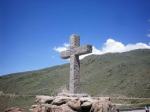
Photo credit: Bill Oxford

The reality of God is on full display in these verses from Psalm 50. While we prefer to avoid this truth about God, in fact he will one day judge us all. Whether we stand or kneel before him all by ourselves or whether we come to the throne of judgment following the rapture or the final days, we will all find ourselves in the place of judgment. The psalmist opens with “Our God will come and will not be silent”. The creator of this world and all that is in it has the right to determine our worthiness to enter his perfect eternity. God will not be silent on that day.

Continuing into verse four the psalmist declares that God will indeed “judge his people”. As the fire devours some, God will bring before him the “consecrated ones” – those who chose to enter the covenant to live in right relationship with God and with one another. Ultimately the comparison will be made with Jesus, the one who came and showed us what it means, what it looks like to love God and neighbor with all that we are. We have no better example. While God does not expect us to be perfect, to never sin, to always get it just right, God does expect us to strive to be more like Christ, to resist sin, and to ever answer and follow the call of the Holy Spirit. To use a John Wesley term, we are ever “going on to perfection”. Day by day we are to seek to grow in our love of God and in our love of neighbor, coming closer and closer to the perfection that we find in Jesus Christ so that one day we may be perfected.

The day and hour remain unknown. One day the righteous one will come, God himself as judge. As we consider the condition of our soul and as we ponder our daily walk with Jesus, where will we be judged worthy? Where are we still falling short? Day by day may we honor the covenant more and more, ever bringing increasing glory to the Lord of Lords and King of Kings.

Prayer: Lord God, walking day by day with you is such a joy. Yet some days I fail to love you completely. Other days I fail to love my neighbor as Jesus would have loved them. Each day become more of me so that I may reflect more of you to the world. Grow in me so that I may grow in you. Amen.

Leave a comment

Who and What?

Reading: Matthew 22: 15-22

Verse 20: “Whose portrait is this? And whose inscription”?

As the end of Jesus’ ministry draws to a close, the tension between Jesus and the religious leaders has escalated. Early in the final week of his life the Pharisees send some folks to test Jesus, to try and trap him. Even when they are flattering Jesus to soften him up, their words have truth in them. The words of these envoys belie their dilemma. Jesus is a man of integrity – so why are they trying to trap him? Jesus is one who teaches the truth – so why begin with words that are not believed by the ones that sent them? Jesus is not swayed by men – so why try to trap him with a political and religious question? Because Jesus is all of these things, to find or catch him sinning is not possible. So the religious leaders distress to trickery.

After calling out the hypocrisy, Jesus asks for a coin to use in his answer to their question: “Is it right to pay taxes to Caesar or not”? A “yes” would anger many Jews. They resent the Romans and their oppressive taxes. A “no” would be seen as treason by the Romans. Jesus chooses a better answer than a ‘yes’ or ‘no’. After receiving a denarius, he asks the questions, “Whose portrait is this? And whose inscription”? Before going on to hear Jesus’ answer to the original question (that is for Sunday), let us apply these questions to ourselves.

If our lives were held up for all to see and examine, what would be the answer to the question of whose image we bear? This question gets at the root or core of who we really are. When others look at us, do they see the image of Jesus Christ? Do they see one who has integrity, who speaks truth, who is not swayed by the things of the world? Or do they see one who is willing to be a little immoral at times, one who will occasionally bend the truth, one who sometimes does chase after the things of the world, or one who does all three?

Who and what we are matters. It matters to God and it matters to the witness that we have to the world. Who we are, and, more importantly, whose we are really are great things to consider. May our reflection today upon these questions lead us closer to living in the image of Jesus Christ, our Lord and Savior.

Prayer: Lord of all people and of all the earth, in each of my words, in each of my actions, in each of my thoughts, may I bring you the glory. May all that is selfish and prideful and sinful be laid aside in the pursuit of your son, Jesus Christ. Amen.


Leave a comment

Refined and Reshaped

Reading: Exodus 16: 2-8

Verse 3: “You have brought us out into this desert to starve this entire assembly to death”.

As the nation of Israel travels in the desert it is a time of testing and refining and reshaping. The journey began with a great freeing miracle in the Passover. The possibility of new life lay ahead as they exited Egypt. They were no longer slaves living in a foreign land. Shortly after leaving God again intervened on their behalf, providing a way through the sea. They were spared a return to slavery. But the experience of these powerful miracles soon gave way to the reality of their situation. The first grumbling for water was satisfied but it came with the first warning to “listen carefully to the voice of the Lord”.

About 45 days after leaving Egypt, the nation has now run low on food. Water and food are essential to life. The people begin to once again grumble against Moses and Aaron. Remembering the good old days – the days when they sat around pots of food as SLAVES – they say to them, “If only we had died at the hand of the Lord in Egypt”. Continuing on, the Israelites say, “You have brought us out into this desert to starve this entire assembly to death”. They are once again testing God. When they feared dying when trapped against the sea, they complained and God provided the way. When they complained about the bitter water, again God provided the way. God will respond. God’s intent was not to bring his nation out of slavery just to die in the desert. But there are provisions this time. It will be necessary to begin listening to that voice of the Lord. As Moses speaks God’s commands, they must begin to listen. God is beginning to refine and shape their obedience. They are being readied for what lies ahead.

Our journeys with God include similar elements. There are times in our lives when needs are not being met. After one too many nights of Ramen noodles, it can be easy to slip into grumbling or complaining or having a “woe is me” attitude. We also have experiences where God provides a way – literally sending food our way or opening a door at other times. Like the parting of the sea and like water from the rock, as God reigns down food from heaven, it will reassure the people, it will refine their faith, it will begin to shape them into obedient people. Even so, the Israelites will again doubt, will again turn to fear instead of trust. We too are a work in progress. Our faith journey has its share of times when we need refined and reshaped too. We all need reminded from time to time that God is faithful and that God loves us dearly. Each time we are drawn a little closer, we are more assured of his love, and we emerge walking a bit closer, more obediently. May our loving and faithful God continue the good work that he has begun in each of us.

Prayer: Dear God, thank you for your continual work in my life. There was that time in the hospital when you were tangibly present. And there was that time when you opened a door when I couldn’t see a way. And, and, and… Through my doubt and worry, through my questioning and even anger, you provided the way. Thank you, God. Amen.


Leave a comment

Believers in Fellowship

Reading: Acts 2: 42-47

Verse 44: “All the believers were together and had everything in common”.

The book of Acts records the early history of the church. In our passage today Luke writes about what makes the church the church. It remains true today. The early Christians learned about Jesus and God. They spent time together in fellowship meals (that included what we call communion) and in times of prayer. The Holy Spirit was present, filling them with awe and empowering the apostles to offer signs and miracles. Generosity abounded. No one was in need as they cared for one another. They were a community. Verse 44 summarizes this: “All the believers were together and had everything in common”. Over all of this was their faith in Jesus Christ, revealed in their love for one another. Non-Christians, who were primarily Jews with a few Romans mixed in, noticed. In some cases, they were drawn to the love and became followers of Jesus Christ.

There are many times when the church today reminds us and the larger world of the picture painted by Luke today. That picture continues to attract people to the church. In times of trial, the body surrounds someone or a family or group of people. In times of need people step up both financially and physically. At gatherings there is joy and love present. This is the common “scene” in many churches. But the scene outside most all of our churches is much different than the scene outside the early church in Jerusalem.

Although “the Lord added daily to their number”, the city was not particularly welcoming or friendly to this new group. The church was a very small minority in a very Jewish and Roman world. Neither the Jews nor the Romans liked these Christians. At this stage they were sort of tolerated. As the church stuck and started to grow the persecution and worse would grow too. The reality of this fellowship of believers would change soon. Yet it would grow and grow and grow. God remained at work in and through the church. The same remains true today. Faith and love still guide the way. The Lord still draws us closer and closer while inviting others in. Praise God!

Prayer: Lord God, I am so thankful for the church. Although not a building, it is a “place” filled with loving and faithful people. I am blessed to be a part of your church. Continue to be present to us, to lead and guide us in fellowship with you, with one another, and with the world. Amen.


Leave a comment

Walking Closer

Reading: Matthew 26:14 – 27:66

Verse 26:14 – “And while they were eating, he said, ‘I tell you the truth, one of you will betray me'”.

Jesus has been in ministry for three years. All of the men who sit around the table with him have been with Jesus for those three years – hearing the teachings, seeing the miracles, observing his example. It is hard to imagine any of these twelve men turning on Jesus. They have gathered to celebrate the Passover, an ancient tradition in the Jewish faith. On this sacred night when they remember and celebrate God’s mighty saving acts that led the Israelites to freedom, Jesus will be arrested, tried, and beaten. As they share the Passover meal, Jesus shares these words: “I tell you the truth, one of you will betray me”.

It amazes me that Jesus could share this sacred and special time of faith and fellowship with the one who betrayed him. It is hard for me to even see someone who has betrayed me, never mind to sit and share a meal with them. It is hard to be kind and pleasant to one who has turned on me, never mind serving them the bread and cup. In passages like these I see face to face with my reality: I have a long ways to go in my walk with Jesus.

As we celebrate Palm Sunday and the triumphal entry today, we are on the edge of Holy Week. On Thursday we will again come face to face with this story and then with the crucifixion on Good Friday. Events along this week’s journey will again serve to remind me of my love of Jesus as well as of my areas of needed growth. I can envision what it would look and feel and be like to fellowship with my Judases and to offer them the Lord’s Supper. As I walk the road to Calvary with Jesus this week, may I come nearer to the place of loving those who harm and hurt me and those I love. As I follow in Jesus’ footsteps, may I come one day to walk in them.

Prayer: Lord God, thank you for where I am in my journey of faith. I am grateful for my place in your family and for the walk so far. I know I am not what I was, but can also see that I have far to go. Lead and guide me to follow closer and closer, day by day. Amen.


Leave a comment

Acceptable?

Reading: Isaiah 58: 1-5

Verse 2: “They seem eager to know my ways… and seem eager for God to come near them”.

Isaiah 58 starts with a pronouncement from God. In verse one God encourages Isaiah to “shout it aloud. Do not hold back”. Proclaim it from the rooftops! The message is something God wants all the people of Judah to hear. Getting right to the point, God declares the rebellion of the people, laying their sins before them. In verse two we get a hint at the heart of the problem: “They seem eager to know my ways… and seem eager for God to come near them”. In these phrases, the key word is “seem”. On the surface the people of Judah appear to be seeking God. In verse three the people try to defend themselves, asking why God did not notice their fasting. There is a reason.

Yesterday in church we celebrated communion. At our church we offer communion on the first Sunday of each month. In the words before coming forward there was a prayer and a time to lay our sins before the Lord, inviting us to offer repentance along with confession. Everyone in church took communion. Did all take the opportunity to search their hearts and to make a humble and sincere confession of their sins? Did all humbly desire to repent and go forth walking a more holy life? In an ideal world the answers to these questions would be yes and yes! But maybe someone was thinking instead about the Super Bowl snacks that lay ahead or about which commercial would be their favorite. Maybe someone thought they had no sins to confess. If anyone came and took communion in these or similar mindsets, they were practicing a ritual not participating in a sacrament.

The people of Judah were going through the motions of fasting. Yes, they were abstaining from food. But that is as far as their fast went. They were exploiting their workers. They were quarreling and fighting amongst themselves. The ritual of fasting was not changing their sinful ways. Their ritual fasting was not changing their hearts or helping them to be holy. A fast, when celebrated properly, works to draw one closer to God and deeper into walking in God’s ways. Communion should have the same affect. The same can be said of prayer, worship, Bible study, meditation, practicing Sabbath…

Our section for today ends with this question: “Is that what you call a fast, a day acceptable to the Lord”? Tough question. Reflect on yesterday for a minute or two. Would God ask this question of any part of your day set aside for God?

Prayer: Lord God, it is a bit disconcerting to think about when I just go through the motions instead of choosing to be fully present with you or others. Strip away my busyness, my selfishness, my distractions, my half-hearted efforts. Just as you are fully present with me, may I be so to you and to those you place before me today. Amen.


Leave a comment

Compassion and Love

Reading: Luke 13: 14-17

Verse 16: “Should not this woman, a daughter of Abraham… be set free… from what bound her”?

Jesus heals on the Sabbath, elevating this woman’s need over keeping the law. Compassion and love lead Jesus to action. This “work” on the Sabbath makes the synagogue leader “indignant”. One definition of this word is: “feeling or showing anger because of something unjust or unworthy” (Merriam-Webster). From our viewpoint, healing the woman is neither unjust or unworthy. The leader paraphrases one of the Ten Commandments, basically saying to come be healed on the other six days.

Jesus addresses the leader’s indignant heart. He begins by reminding all there that they care for their animals on the Sabbath, meeting their basic needs. He then extends the idea to someone much more worthy of care: the woman. Jesus says to all there: “Should not this woman, a daughter of Abraham… be set free… from what bound her”? If you care for your ox or donkey on the Sabbath, how much more should you care for a child of God? The religious leaders are shamed, as they should be. Jesus’ point is obvious. The crowd recognizes this, expressing delight in Jesus’ actions. In our hearts, we too cheer for Jesus.

The Sabbath was a day set aside to worship God and to renew the body. The woman was able to do both because Jesus reached out to her. Sometimes in our worship we too are led to deeper love and compassion. Perhaps the message or the scripture or a song or prayer time may trigger action in you. Maybe a “least of these”, like the woman, will be placed on your heart by the Holy Spirit. If so, may you practice love and compassion today, helping another closer to God this day.

Prayer: Heavenly Father, thank you for your story of love and compassion today. Help me to see beyond the surface today and to engage those who need healing and wholeness. Amen.


Leave a comment

Cycling Closer

Reading: Psalm 80: 1-2 and 8-19

Verses 1-2: “Hear us, O Shepherd of Israel… Awaken your might; come and save us”.

Today’s Psalm echoes the emotions and events of the passage from Isaiah 5 that we have read the last two days. God rescued the people from Egypt and led them to the Promised Land. God cleared away the inhabitants and Israel grew and prospered. All was well in the land. Then, starting in verse twelve, things head south. Israel is picked at and ravaged. The psalmist pleas for God to look down and watch over them once again.

This cycle is common in the Old Testament. Life is good when Israel walks in God’s ways. Then sin enters the people. It is usually through engagement with outside people that leads to worshipping other gods. This leads to a consequence from God. In time the people repent and return to walking in God’s ways. All is well again in the land.

In verse sixteen is the admission of guilt. The people do not like the consequence – they are perishing. Again the psalmist asks for God to rest favor upon the people, the children that God has raised up. The psalmist offers God backwards logic: “revive us and we will call on your name”. The Psalm closes with one last plea for God’s face to shine upon the nation of Israel.

When I read and consider this Psalm, it is an easy connection to my life. I journey through the same cycle. I live in close communion with God and life is good, all is well. Then I am tempted and fall into sin. While the actual sins have changed over time, the root cause remains the same: choosing my will over God’s will. This will ever remain part of who I am. It is a battle that will always be fought as long as I draw breath. All followers of Jesus Christ know this cycle, know this battle.

We also know it does not end in defeat. We have hope in our Lord. We receive mercy and grace and forgiveness. God never gives up on us, just like God never gives up on Israel. God continues to till our soil, to mature our faith. As we grow in faith, we sin less often. Our understanding of sin becomes more refined, our eyes become sharpened. We hear the Holy Spirit better and better, avoiding the sin we once stumbled into. God’s face shines brighter. Thanks be to God!

Prayer: Lord God, thank you for the journey that you have walked with me. Thank you for ever being at work within me, drawing me closer and closer to you. May I walk each day a little closer than the day before. Amen.


Leave a comment

God’s Great Love

Reading: Psalm 107:43

Verse 43: “Whoever is wise, let him heed these things and consider the great love of the Lord”.

Psalm 107 is filled with memories of God’s actions on behalf of the people. At times, God’s history with Israel included ‘tough love’ – that necessary love that is hard to administer. It is a love that is usually harder on the parent than on the child. The root is still love.

As we remembered yesterday, our faith journeys are also filled with God’s actions in our lives. Each action is also based upon God’s love for us. Perhaps for you, like the Israelites and like me, the love you experienced was tough love now and then. At the time it was hard to hear or to experience. But looking back it was the best way to handle it. God always knows best.

Each time God took action in the lives of the Israelites, they were drawn closer to God. This too is our story. All of God’s actions are experiences with God’s great love for us. It is truly amazing and wonderful. But it cannot stop there. Like Paul and Peter and all those in the early church, God’s love must be evident in our lives. We cannot simply know God’s love, we must be God’s love. We cannot just know the good news, we must be the good news. We must be the gospel lived out to others.

For the Israelites, when they considered “the great love of the Lord”, it colored or affected all of their relationships. It deepened their love for God, their love for their fellow believers, and their love for the one in need. May it be so for us as well.

Prayer: Lord, lead me to live out my faith today. Guide me to be love to all I meet. Fill my heart, my mind, my words, and my actions with your love today. Amen.


4 Comments

Calling

Reading: Mark 10: 46-52

Verse 50: “Throwing his cloak aside, he jumped to his feet and came to Jesus”.

Jesus arrives to where Bartimaeus is at in today’s passage. The hope that Jesus would pass by is becoming reality. Bartimaeus shouts over and over, “Son of David, have mercy on me” in spite of the crowd trying to quiet him. This will be Bartimaeus’ only shot – the blind man could never get up and go searching for Jesus. This is his one and only chance. Bartimaeus declares who he thinks Jesus is in the name he uses, calling Jesus the ‘Son of David’ acknowledges Jesus’ messianic lineage.

As Jesus and the crowd move along, passing Bartimaeus, Jesus hears Bartimaeus’ calls. Jesus stops and asks the people fo send Bartimaeus His way. Hear the hope realized in Bartimaeus’ response to the call: “Throwing his cloak aside, he jumped to his feet and came to Jesus”. Leaving all he owns on the ground, Bartimaeus rushes to Jesus and in no time he can see. Jesus tells Bartimaeus that his faith has healed him. Leaving all behind, Bartimaeus then follows Jesus.

All Bartimaeus had to leave behind was his cloak. It is not much – most would probably refuse the tattered thing if it were offered to them. I’d like to think that if all I had was an old coat, I could leave that behind to follow Jesus. I have much more than an old coat to leave behind. How about you? It is paradoxical, but perhaps because I have so much, it is harder to give up a little to follow Jesus.

The voice of God continues to call out through the Word and through the Holy Spirit. Over and over, Jesus calls out. God calls for obedience and love. When our faith cries out, or when it gently nudges us, may we respond as Bartimaeus did – throwing all aside, rushing forward to Jesus.

God, help me to be willing to follow. Help me to lay aside myself and my ‘things’ to follow you. May my faith lead me on, drawing closer and closer to you. Amen.