pastorjohnb

Thoughts and musings on faith and our mighty God!


Leave a comment

Not My Will

Reading: Luke 22:39-46

Luke 22:42 – “Not my will but your will must be done.”

We are on the verge of the season of Lent. The 40 days leading up to Easter begin this week with services on Ash Wednesday. The service focuses on our need to be reconciled to God. The ashes remind us of our mortality. They are imposed in the shape of a cross as a reminder of our commitment to Christ. The season of Lent is one of prayer and repentance, preparing ourselves for Easter.

Intentional preparation is part of our faith. We read, study, and meditate on scripture to prepare ourselves for our day to day living. We pray to prepare ourselves for a meeting, an event, a hard conversation. In our passage today Jesus did as he often did. He went to the garden to spend intentional time in prayer. He sought to prepare himself for what lay just ahead: arrest, trial, rejection, suffering…

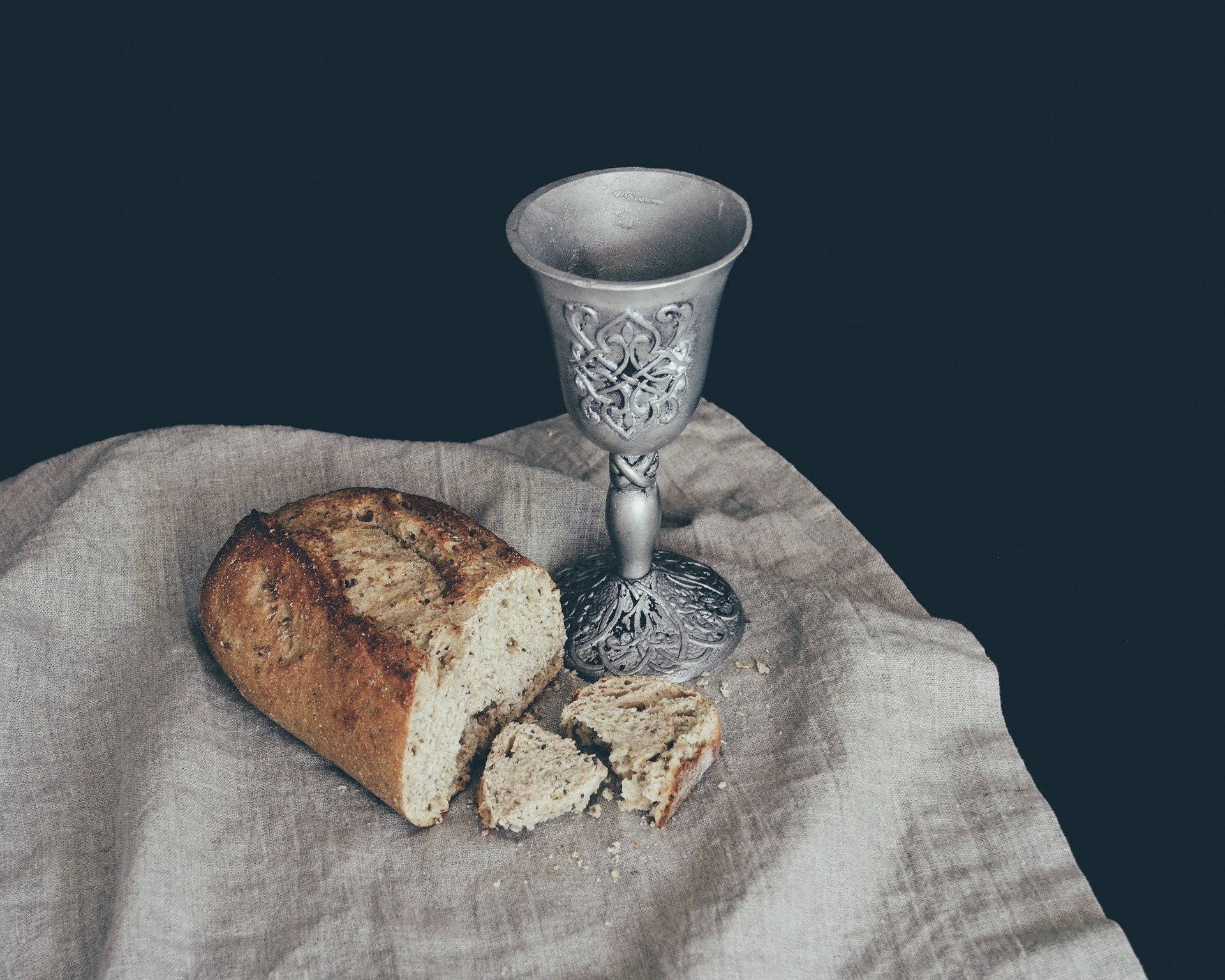
Jesus invites the disciples to pray too. He knows that they will soon face testing. As Jesus prays he admits his own human struggle, asking God to “take this cup of suffering away.” The divine Jesus knows full well what’s about to befall the human Jesus. Recognizing the necessity of what is about to unfold, Jesus adds, “Not my will but your will must be done.” Strengthened, Jesus prays even more earnestly.

The disciples have fallen asleep, “overcome by grief.” The crowd is on the way to arrest Jesus. The disciples have not prepared themselves. One disciple will act impulsively. Then all of the disciples will flee the scene. Jesus will move forward, empowered by prayer. As we ready ourselves to enter this season of Lent, may we too be empowered by prayer, frequently praying, “Not my will…”

Prayer: Lord God, lead and guide us to be intentional as we enter this season of Lent. May it be a time of earnest prayer, committed study, honest introspection, and whole-hearted repentance. Day by day, may our walk with you prepare us to celebrate Easter resurrection. Amen.


Leave a comment

Faithful Actions

Reading: James 2:14-24

James 2:24 – “So you see that a person is shown to be righteous through faithful actions and not through faith alone.”

As we come to a close reading scripture and applying is to John Wesley’s “Three Simple Rules,” we turn to James 2. This short passage works well to illustrate how doing no harm, doing good, and staying in love with God should work together in the life of a believer.

Our passage begins with a question: What good is it to say you’re a Christian if you don’t act like one? To claim to have faith does nothing. James points to wishing well someone in need without meeting those needs. You are, then, in fact, doing harm to the image of Christ.

As he continues, James argues that one cannot separate faith from your actions. Yes, he says, to believe is good. But our faith cannot stop there. It must flavor or impact all areas of our lives. James cites Abraham as an example of one whose faith was “made complete” by his actions. Nearly sacrificing his only son Isaac, Abraham’s obedience to God through faithful actions brought him to the place of righteousness. To faithfully follow God’s word, nudges, whispers… leads us to do good for the image of Christ.

Woven into Abraham’s example is one who stays in love with God. Abraham listened to the voice of God. He chose to worship God alone – elevating his love of God over his love for his own son. In summary, James writes, “So you see that a person is shown to be righteous through faithful actions and not through faith alone.” May this be what the world sees through our faith as well.

Prayer: Lord God, interweave into our lives these three practical pieces of faith. Guard us against doing harm and lead us to do good. Fuel both of these practices through the power and presence of the Holy Spirit in our hearts. May our love for you arch over all we say, do, and think, drawing others into the great love that you have for us all. Amen.


Leave a comment

Bring Your Kingdom

Reading: Luke 11:1-13

Luke 11:9 – “Ask and you will receive. Seek and you will find. Knock and the door will be opened to you.”

Today’s passage holds three connected teachings on prayer. The first gives us a model for prayer. The second teaches us to be persistent in our prayers. The third reflects on the goodness of God’s answers to our prayers.

Our passage begins with a disciple asking Jesus to teach them how to pray. Jesus models a prayer life that is worth emulating. The disciple wants to have what Jesus receives when he prays: joy, peace, strength, hope. The prayer Jesus teaches is a simple prayer. It begins with praise to God and quickly moves to seeking God’s will. Notice the focus: God. It then shifts to needs: our need for daily provision and our need for forgiveness – both given and received. The prayer model closes with a plea for protection from the world, our source of temptation.

Verses 5-10 tell the story of a friend in need. Hospitality was and is highly valued in Judaism. In the story a man cannot offer hospitality. He turns to his neighbor, who initially refuses to help. But because of his friend’s persistence around doing a good and right thing, the friends give his what is needed. Connecting to the idea of prayer, Jesus says, “Ask and you will receive. Seek and you will find. Knock and the door will be opened to you.”

Our reading closes by unpacking what verse 9 means in terms of God’s answers to our prayers. Jesus tells us that our heavenly Father, who is good, will surely give good gifts to his children. Running through the bread example and this portion is the meaning of “bring your kingdom.” In the translation that we know better it is worded “your will be done.” This good and right alignment will most often yield a fish or an egg instead of a snake or scorpion. And when our prayers yield what we see as a snake or scorpion at first – may we keep the faith in our good God who works all things towards good for those who love God.

Prayer: Lord God, prayer is at the center of our relationship with you. It is the place where we can openly and honestly express all that is on our hearts and minds – our needs, emotions, struggles, joys, praises. Help us to focus on the ways that our lives bring your kingdom into this world. Empower us to walk and live in faith. Amen.


Leave a comment

Fill Us, O Lord

Reading: Colossians 2:6-12

Colossians 2:11 – “In him you were also circumcised with a circumcision not administered by human hands… stripping away the old self dominated by sin.”

Paul begins our encouragement for today by imploring the believers to “live… in the same way you received him.” Harkening back to the day they came to faith, Paul implores the believers to keep up the same fire, the same zeal. Paul encourages them to remain rooted in Jesus and to build up their faith, establishing themselves in Christ. This process, Paul writes, will lead to an overflow of thanksgiving and joy. These are good reminders for us too.

Next Paul invites them to be wary about falling back into our being drawn into the ways of the world. Potential dangers include new philosophies and false teachings that are counter to Christ’s teachings. Perhaps if even greater danger is conforming back to their old ways, back to the selfish and sinful ways of the world.

Paul reminds the believers that they have been “filled” with Christ. He reminds them that “In him you were also circumcised with a circumcision not administered by human hands… stripping away the old self dominated by sin.” The physical act of circumcision that sets the Jews apart from the world has become a spiritual act that sets the Christian apart from the world. The old self was “buried” in the waters of baptism. The new self emerged and was “raised up” through faith in Jesus Christ as Lord and Savior. Now the power of God resides in Spirit in the believers.

So what must we do to walk daily with and in the Lord? It goes back to the opening verses. Seek to live “in Christ” – to live as Christ lived, following his example. Pour into your faith – build it up, deepen your roots in Christ. Allow the joy of faith to fill your heart to overflowing – share your faith. May it be so.

Prayer: Lord God, open wide our hearts today and fill us with your love. Open wide our minds today and fill us with your Spirit. Open wide our hands today and fill us with your strength. Then, in all things, use these things, allowing them to flow out of us and into the world, bringing you all the glory and praise. Amen.


Leave a comment

Love as Well

Reading: Romans 12:17-21

Romans 12:21 – “Don’t be defeated by evil, but defeat evil with good.”

Photo credit: Kate Remmer

Our five verses from the end of Romans 12 come from a section in which Paul is arguing that love is the primary command. In and over and through and around all things, first apply love. Paul is elevating here what Jesus lived out. If we, like Jesus, allow love to lead and guide all that we say, think, and do, then we will be continuing Christ’s work of building the kingdom of God here on earth.

In verse 17 Paul warns about repaying evil with evil. That’s our natural reaction, often our first thought, isn’t it? It’s what we see in the culture all around us. Be upside-down instead. Choose love. Choose the good. In this spirit we’re encouraged to “live at peace with all people.” Paul offers some realism here: “to the best of your ability.” Some folks want nothing to do with getting along with others. Their evil intents guide all of their actions.

Paul, however, doesn’t advise us to avoid such people. Leave all the revenge and paying back to God. Paul does advise us to look for our opportunities – our chances to be love. If the one who is our “enemy” is hungry then feed them. If they are thirsty then give them a drink. In loving on such as these, we are piling upon them our love, a way of sharing faith that could one day influence them too. In this way, we will be living out Paul’s wonderful admonition: “Don’t be defeated by evil, but defeat evil with good.”

While we may think that Paul is channeling his inner Jesus with all of this “love your enemy” talk, he is quoting from Proverbs 25. Love was at the core of who and what Jesus was, yes. But love is also at the core of the Old Testament. This should be no surprise. God is love. May we be so as well.

Prayer: Lord God, empower us today and every day to be love when the world expects hate. Guide us to ever choose the good, eschewing the temptation to do harm. Through our counter-cultural and upside-down life draw others towards Jesus Christ, our earthly model of love and peace. Amen.


Leave a comment

A Heart Tuned

Reading: Micah 6:6-8

Micah 6:7 – “Will the Lord be pleased with thousands of rams, with many torrents of oil?”

“What does the Lord require?” That is the title for the section of scripture that we read today. We learned yesterday, from Luke 10, that a good answer is to love your neighbor. It becomes a great answer when we understand that our “neighbor” is anyone in need. Loving God with all that we are was the other part of the legal expert’s “correct” answer to the same basic question. Today we read Micah’s thoughts on this question. The prophet focuses on both sides of the love God, love neighbor concept.

Micah begins with the “religiously correct” answer. Sacrificial offerings were the culturally acceptable response to your God/god, whether you were Hebrew or Moabite or Canaanite. Although Israel’s understanding was not quite as transactional as this process was with pagan gods, there was certainly an element of checking the box at this point in Israel’s history. Their going through the motions disgusted God. That is why Micah, tongue-in-cheek, asks, “Will the Lord be pleased with thousands of rams, with many torrents of oil?” Speaking to the pagan practices and to the point he is making, he next asks, “Well, then, how about my oldest child instead?”

The real answer to the title question comes in verse 8. It is a heart tuned fully to God. That is what is “good.” That is what God “requires.” This is because a heart tuned to God will naturally be a heart tuned to our neighbors. In the last part of verse 8 the prophet reveals what this heart looks like: “to do justice, embrace faithful love, and walk humbly with your God.” To work to make things right, to be faithful in our relationships with God and with one another, to humbly allow God to transform us, day by day, more fully into God’s image. May it be so.

Prayer: Lord God, we are much like the people of Micah’s day. Just tell me when I have to show up for church, just take my offering, just let me check the box. We want the easy. That leaves more for us. Yet you want so much more. Yes, worship and giving are important. But you want our heart, not our things. You want our unconditional love, not our passing attention. Lord, tune our hearts to yours. Lord, teach us what humility and justice and faithful love truly look like. Remind us of Jesus. Amen.


Leave a comment

The Narrow Road

Reading: Luke 10:25-37

Luke 10:36 – “What do you think? Which one of the three was a neighbor to the man?”

Photo credit: Jan Huber

Today we turn to the parable of the Good Samaritan. This is very familiar ground. The lessons Jesus taught remain as relevant today as they were the day that he told the story. The religious continue to try and limit who is acceptable and worthy. We continue to see and define others by arbitrary things like ethnicity, race, gender, religion, education…

As the passage opens, a legal expert tests Jesus. The opening question is just to set up the second question. Any 5-year-old Jew could’ve answered the opening question. It’d be like asking a 5-year-old in one of our churches, ‘Who died on the cross for our sins?’ The second question has the meat on the bone. Jesus has been preaching that God’s kingdom and the salvation that he brings is for all people. He’s been eating with tax collectors and touching lepers. Clearly Jesus’ understanding of who a good Jew’s neighbor is needs some correcting.

The story unfolds and Jesus picks a most unlikely hero. A Samaritan would be about as far from a Jew’s neighbor as anyone could be. And he does not just stop and help. Maybe the legal expert could’ve tolerated that. Like, it might’ve been okay to stop and talk to Zacchaeus, but to go to his house and to eat with him? The Good Samaritan goes way above and beyond too. He shows mercy to the one in need. He is the one who sets for us an example.

Of this story, John Wesley writes, “Let us renounce that bigotry and party zeal which could contract our hearts into an insensitivity for all the human race, but for a small number whose sentiments and practices are so much our own.” From about 31 AD to the late 1700s to today. May it be so.

Prayer: Lord God, encourage and empower us to walk the narrow road. It is narrow. Our faith is assaulted on both sides – culture on the one side, “religion” on the other. The path of Jesus, the way of love, is a narrow lane. As you held back the waters of the Jordan, hold back these evils, O Lord. Be with us each moment as we seek to build your upside-down kingdom of love in this thin space. Amen.


Leave a comment

Not Far?

Reading: Mark 12:28-34

Mark 12:34 – “You aren’t far from the kingdom of heaven.”

Today’s interaction between Jesus and the legal expert comes amidst clashes between Jesus and the temple leaders, the Pharisees, and the Sadducees. These various religious groups are trying to test and trap Jesus with their questions. The legal expert has been present for at least the last interaction with the Sadducees.

Our reading today is a good, practical reminder: not all religious leaders were against Jesus. We tend to cast out the blanket statement that ALL religions leaders were opposed to Jesus. Impressed with Jesus’ answer to the Sadducees, the legal expert asks Jesus’ opinion on the most important commandment. Jesus gives the “correct” answer. Any nominal Jew would give this answer. These commands from Deuteronomy 6 and Leviticus 19 form the core belief in the Jewish faith. Simply put: love God, love neighbor.

The legal expert compliments Jesus’ answer then rephrases these commands using his own words. The words “a full understanding” are an interesting choice. Perhaps this reflects his openness to Jesus and his teachings. Most of the religious leaders rejected the idea that Jesus was God’s son. Perhaps the legal expert is considering if Jesus is indeed the fuller revelation, the deeper understanding, of who and what God is.

This openness continues as the legal expert adds a thought to his paraphrase. He elevates these two commands far above all the sacrifices and offerings required by the Jewish system. Today we might say, “If you check all the boxes but do not love…” Jesus responds beautifully to the legal expert: “You aren’t far from the kingdom of heaven.” May love also be our only guide in all we say, do, and think.

Prayer: Lord God, when we pass by that hungry person and tell ourselves that we went to church on Sunday or when we ignore that nudge to reach out to that elderly neighbor and tell ourselves that we read our Bible that morning or when we harshly judge that struggling single parent and tell ourselves that we’ve been praying for them, Lord have mercy. Lord, have mercy. Amen.


Leave a comment

Stepping Beyond Easy Love

Reading: Romans 12:9-16

Romans 12:13 – “Contribute to the needs of God’s people, and welcome the strangers into your home.”

In Romans 12:9-16 Paul calls us to love. He emphasizes loving without pretending. Other translations say “love without hypocrisy.” Paul is calling for genuine, sincere love, not fake or false love. Some of the time we can be tempted to love in ways that are superficial. We might, for example, say that we’ll pray for someone but be unwilling to take the obvious step that would be the answer to the prayer.

Paul connects this “pretend” love to cursing those who harass us and to thinking we’re better than or smarter than others. Genuine love would work against us being two-faced and against being arrogant. We are called to “hate” these evils and to “hold on to what is good.” Paul also lays out what it looks like to hold onto the good.

We are to love and honor one another. We are to be enthusiastic as we serve one another. We are to meet each other’s needs. We are to welcome in the strangers. (What a call to be the church both inside and outside the walls of the building!) We are to rejoice with the joyful, and we are to cry with those in sorrow. We are to bless others. We are to consider everyone as equals. We are to associate with those “who have no status.”

Much of what Paul writes in today’s passage parallels Jesus’ challenging words from yesterday in Luke 6. In essence both tell us to love those who are hard to love. There is also the same counter-cultural element to Paul’s words today. Love the stranger, love those without status or voice. There is risk in this call. Genuine love often involves risk.

Prayer: Lord God, as we’ve been reminded, sometimes it is easy to love. It is good and right to genuinely love our family, our friends, our church. Yet you call us to so much more. Encourage us to step beyond these familiar and safe circles of love. Guide us out into the unknown waters of the stranger. Lead us to stand on the uneven and rocky ground of the marginalized. Remind us, Lord, that in these places, we stand with you. Amen.