pastorjohnb

Thoughts and musings on faith and our mighty God!


Leave a comment

Faith, Love, Compassion

Reading: Matthew 14-15

Matthew 15:6-7 – “You do away with God’s Law for the sake of the rules that have been handed down to you. Hypocrites!”

Photo credit: Nathan Lemon

Today’s two chapters cover a wide variety of topics – abuse of power, feeding and healing, doubt and fear, great faith. In some stories, these topics intertwine. Chapter 14 begins with the death of John the Baptist. Abusing his power is nothing new for Herod. Here it costs John his life. At his birthday party, Herod promises “anything” to his daughter-in-law. She asks for John’s head. Jesus learns of this, is grieved, and withdraws to a “deserted place” by himself.

The crowds find Jesus and bring the sick to him. With compassion he heals them. Late in the day, the disciples urge Jesus to send them away to buy food. His response: “You give them something.” The impossible becomes reality as 5,000 men plus women and children eat their fill from 5 fish and 2 loaves. In the end each disciple holds a basket full of leftovers. Later, in chapter 15, Jesus feeds a crowd of 4,000 men plus women and children.

Jesus dismisses the crowd, sends the disciples on across the lake, and goes up the mountain to pray. In the early morning he comes to them, walking on the water during a storm. Here is where Peter walks in the water – until his fears and doubts overcome his faith. Jesus rescues him. Later it is a Canaanite woman, another outsider, who shows great faith, persevering until Jesus heals her daughter.

At the start of chapter 15 there is an encounter between Jesus and the religious leaders. Being “clean” is the core issue. Jesus says, “You do away with God’s Law for the sake of the rules that have been handed down to you. Hypocrites!” His example: man’s rule (giving money to the temple) has overridden God’s Law (honor father and mother.) This too is an abuse of power. Getting to the core issue, Jesus tells the crowd and then the disciples that it is what comes out of the mouth (and therefore out of the heart) that makes one unclean. When one allows evil thoughts, adultery, insults… to form in the heart and then to come out of the mouth, then one becomes unclean. May it not be so.

Prayer: Lord God, like today’s reading, life brings a variety of challenges as we seek to walk faithfully with you. Faith, love, compassion – may these be our guides as we strive to love you and to love neighbor in all the ways we can, in all the times we can. Amen.


Leave a comment

Right Living

Readings: Proverbs 12 and 13

‭Proverbs 13:13 – “Trouble will come on those who despise a word, but those who respect the commandment will be rewarded.”

One theme that we see in today’s readings is the value of being willing to listen to God. Fools tend to think that their way is the right way but the wise are willing and open to advice. A wise son (or daughter) listens while mockers do not. Parents who love their children discipline them. Those who withhold discipline “hate their children.” When we choose to listen to and to follow God’s will and ways, we grow in both wisdom and in our faith.

We also grow in God’s favor. This is a second theme that we see today. God favors the good but condemns the wicked. The way of the righteous leads to life. The detestable path of the wicked leads to death. As the righteous walk this good path, they rejoice in the light. The lamp of the wicked will go out, leaving them in darkness. May our light shine for all to see.

This theme of right living is also revealed in how we impact or affect others. The plans of the righteous are just and their words are full of truth. This gives good guidance to their neighbors. The wicked deceive, leaving neighbors to wander. There’s a personal application too. Righteousness guards our words and our lives. Wickedness only misleads. Actions matter too. The prudent act intelligently but fools display stupidity. Walk with the wise and become wiser. Befriend fools and invite trouble.

We also find some practical advice in today’s readings. If one works the land, they will have plenty to eat. Empty pursuits yield nothing good. The lazy have strong desires but get nothing. The diligent are satisfied. Not wealthy, but satisfied, content, blessed. May it be so for you and for me.

Prayer: Lord God, in all we do and say and think, may we honor you and bring you the glory. In all that we seek, work, and strive for, may we consider first your will and your way. In our interactions and encounters, may our lives be a witness to your design and purposes for our lives and for our world. Amen.


Leave a comment

Holy Living

Readings: Leviticus 19, Leviticus 20, Leviticus 21, Leviticus 22, Leviticus 23

Leviticus 20:26 – “You must be holy to me, because I the LORD am holy, and I have separated you from all other peoples to be my own.”

Photo credit: Shane Rounce

Today’s readings are all about living as a holy people. Each of these laws or instructions rest upon the same foundation: God is holy so God’s people need to be holy. This foundation is the ethical, moral, and spiritual standard for living in community with God and with God’s people.

Although chapter 19 can feel like a hodge podge of topics – don’t lie, don’t turn to idols, leave some crops for the needy, no cross breeding, no cuttings or tattoos – taken as a whole, they can be summed up in verse 18: “You must love your neighbor as yourself.” This is half of the shemah, the daily Jewish prayer. We’ll add the other half as we read in Deuteronomy.

The practice of worshipping Molech begins chapter 20. The practice of this Canaanite religion is strictly prohibited. This is followed by sexual prohibitions. In this chapter the practice of idolatry is equated with prostitution and adultery. The root need for these prohibitions is summed up in verse 23: “You must not follow the practices of the nations that I am throwing out.” Instead, for the Israelites, “You must be holy to me, because I the LORD am holy, and I have separated you from all other peoples to be my own.” God is holy so God’s people need to be holy.

Chapters 21 and 22 deal with special laws for the priests. The call to holy living is elevated when applied to the priests. They are set apart from the people set apart. The priests are to be living examples of God’s holiness. This is why priests with imperfections are limited in their service.

Our reading for today closes in chapter 23 with instructions for the holy or sacred times. Note that this section begins with a reminder to keep the Sabbath. This weekly observance is essential to holy living. The yearly events remember and celebrate significant events with God. The Passover and connected Festival of Unleavened Bread celebrate the exodus. The Festival of Weeks begins with thanks for the first fruits and concludes by thanking God for the harvest. The Festival of Booths remembers their time in the wilderness, where God provided again and again. The Day of Reconciliation is also included. This celebrates God’s mercy and grace and forgiveness.

Each day and each festival reminds the people of God’s love and care. They remind the people of God’s holiness and of their call to reflect this holiness. To remember and to celebrate reinforces their faith and their commitment to God. May we too remember and celebrate the ways that our holy God has touched our lives, calling us to be holy as God is holy.

Prayer: Lord God, flowing through these chapters we see again and again the call to holy living and to live as a people set apart from the ways of the world. Strengthen our understanding of these calls and empower us to live holy and faithful lives as people in but not of the world. Amen.


Leave a comment

Hear the Invitation

Reading: Ezekiel 34:20-24

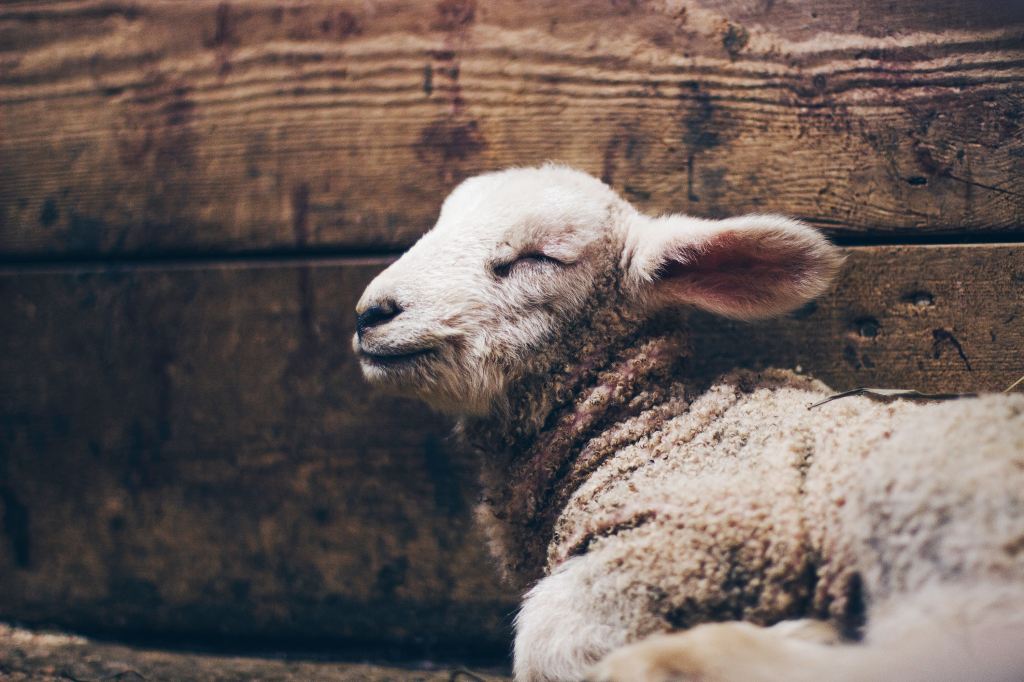
Verse 22: “I will save my flock, and they will no longer be plundered. I will judge between one sheep and another.”

Continuing with the prophet Ezekiel today he first addresses those who are harming the flock. In verse 20 God declares that there will be judgment of “the fat sheep and the lean sheep.” The fat sheep are bullying the lean sheep. They shove and goad those with less power, less voice, less everything. In New Testament terms, the fat sheep are not loving their neighbors. They are, in fact, doing just the opposite. The rich and powerful are plundering the weak. God promises, though, to save the whole flock – the fat and lean alike.

Yes, God’s promise is to all the sheep. God promises both salvation and rescue. God foretells a time of judgment to come. These gifts from God are for all people. Some have accepted God’s grace and have entered into a personal, saving relationship with the Lord. Others sense God’s presence and can feel God reaching out to them but haven’t yet accepted the invitation. The open invitation remains there today. Our question is this: Who do we know that needs to once again hear the Invitation that Christ offers to all people?

Our Old Testament passage closes with the promise of a new king, of one from the line of David. Ezekiel isn’t speaking of the actual King David – he lived about 400 years before Ezekiel. He is speaking of one who will come from David’s line, from the root of Jesse. Ezekiel is speaking of our Lord and Savior, Jesus Christ. He is speaking of the hope of all the world, the Messiah.

Prayer: Lord God, you are ever reaching out, ever seeking to walk in relationship with your creation. Thank you for the connection we have, for the relationship that daily guides our living. Use us to help others to know you as Lord and Savior, coming to know the power of salvation and the gift of grace. Amen.


1 Comment

Love God AND Neighbor

Reading: Matthew 22:34-40

Verses 37 and 39: “Love the Lord your God… love your neighbor.”

Photo credit: Greg Rakozy

As we turn to our gospel text for this week once again the religious leaders are testing Jesus. They view Jesus as an adversary and try again and again to discredit him, to bait him, to trap him… Today in the text it is framed in a question about the Law: “Which is the greatest commandment?”

Jesus answers as even the most nominal Jew would answer, quoting from the Law of Moses. Reciting from Deuteronomy and then from Leviticus, Jesus basically says, “Love the Lord your God… love your neighbor.” Here Jesus is combining these two commands, in essence making them one command. Let us note “how” Jesus says to follow these commands. Jesus reminds us that we are to love God “with all your heart… soul… mind” – love God with all that we are, with our whole selves. Then Jesus says we are to love our neighbors “as yourself.” Love as you would hope to be loved. Connecting the two, love your neighbor as God loves you: with all of God’s heart, soul, and mind. That is how we are to love our neighbors, which, of course, to God and to Jesus means all people.

In today’s Disciplines devotional, author Sophia Agtarap sums up a recent sentiment found on shirts, bumper stickers… this way: “Love your neighbor who doesn’t look like you, think like you, love like you, speak like you, pray like you, vote like you.” This is a pretty inclusive list of folks that we can surely want to exclude from our “neighbor” definition. Yet if we are to really live God with all of our heart, soul, and mind, then we must truly love such as these. May it be so today and every day for you and for me.

Prayer: Lord God, do what you need to do in my heart to enable me to really live out these commands. Thank you. Amen.


Leave a comment

Paying It Back

Reading: Matthew 22:15-22

Verse 20: “Whose image is this? And whose inscription?”

Today we return to the teaching about paying taxes. In our time together yesterday we considered how we ourselves bear and reflect the image of God. The question we ended with was: How do we give to God what is God’s? This question asks us to wrestle with how or what we give back to God, drawing from the time, talents, and resources that God has given to us. Our response to this question either deepens or lessens our relationship with God. But it also affects our relationships with one another. That is our focus today.

To hear and understand that we are created in and bear the image of God leads us to the realization that this is true for others too. It is true for our parents, for our spouses and significant others, for our children… It is also true for that difficult neighbor, for that busybody coworker, for that stranger on the street corner… Often it is harder to treat those such as these the same way we would treat our family or close friends.

Yet the reality is that these too bear the image of God. They too were woven together in the womb by God’s hands. So when we next encounter that neighbor or coworker or stranger or… we will once again have a choice. We can treat them as the world does – ignoring, fighting back, getting even. Or we can treat them as God treats us. We can take the blessings of love, kindness, humility… and pay them back to God by paying them forward to that neighbor, coworker, stranger… May it be so.

Prayer: Lord God, when I encounter the other, may I first see you in them. Through that lens, help me to be generous and welcoming, compassionate and caring. And, then Lord, help me to see me – the old me. Through this lens, help me to then offer the love and grace poured out so abundantly in my life. Amen.


Leave a comment

Love Does No Harm

Reading: Romans 13:8-10

Verse 10: “Love does no harm to a neighbor. Therefore love is the fulfillment of the law.”

Turning to the first half of this week’s Epistle reading, Paul calls us to love one another. Paul, just as Jesus did, emphasizes that “he who loves his fellow man has fulfilled the Law.” Paul, again reiterating one of Jesus’ teachings, offers a few of the 10 Commandments and says these and all other commandments are summed up in “Love your neighbor as yourself.” Whether reading Paul or reading Jesus, the charge is clear: love one another.

In verse 10 Paul writes, “Love does no harm to a neighbor.” Many years later this concept would become the basis for the first of John Wesley’s “Three Simple Rules”: Do no harm. Wesley picked up on Jesus’ example and on Paul’s words, making the verbage shorter while also expanding the scope to include things like the environment. While the world has changed greatly since the days of Paul or Wesley, this rule of life is still greatly needed in our world and in our lives.

How can we, how can you and I, embody and live out “love does no harm to a neighbor?” How do we model a love that intentionally chooses not to harm our fellow humans or the world we all live in? We begin by accepting the call to minister to all the world. We next recognize and engage the image of God that is inside all people. And then we really commit to loving all of our neighbors, especially when it is hard. From this place of being in the world as Christ was in the world, we will do no harm as we encounter each person from a place of love. May it be so for us all today and every day.

Prayer: Lord God, open my heart wide to all people – those like me, those that are beloved by you. All people. Fill me with your love, Lord. Use me and guide me to truly love as you love – without condition, generously, abundantly. As I gather with others may it always be in your name. May your presence be with us and in us. Amen.


Leave a comment

Transformed Not Conformed

Reading: Romans 12:1-2

Verse 2a: “Do not conform to the pattern of this world, but be transformed by the renewing of your mind.”

Paul shifts gears as we turn to chapter 12. The last 4 verses of chapter 11 are a doxology. This closing prayer of praise to God wraps up the focus of the last few chapters and shifts our thinking to the “how” of living as a believer. Paul begins chapter 12 urging us to “offer your bodies as a living sacrifice.” Paul, as Jesus often did, is using an old word in a new way. To the Jews a sacrifice was the lamb or dove or grain or oil that was brought to the altar in the temple. Often blood was spilled and life was lost. In other sacrifices the offering was poured out or burnt upon the altar. There was a finality to each particular sacrifice.

Paul’s call is to be “living sacrifices.” This is an ongoing giving of self to God and to others. In Jesus’ language it is dying to self again and again in order to truly love God and neighbor. So, how do we place ourselves in a position to do this? We make the intentional choice to live according to God’s will and way. It’s not easy. The world is always tugging at us. For the daily battle, Paul offers this advice: “Do not conform to the pattern of this world, but be transformed by the renewing of your mind.” Winning this battle requires an intentional choice to say “NO” to the ways and norms of the world. Saying “no” to the world allows us to say “YES” to God’s transformation of our minds. This renewing of our mind is an ongoing process. Day by day it shapes us more and more into God’s image. It brings us closer and closer to understanding and then living out God’s “good, pleasing, and perfect will.” May it be so for us all each day.

Prayer: Lord God, we need you so much in this battle to transform ourselves into who and what you call us to be. The voice of the world is so loud and so convincing at times. Elevate the voice of the Spirit over this constant buzz. Hearing the Spirit more clearly, lead us to be transformed more and more into the image and example of Christ. Amen.


Leave a comment

Restore, Reconcile

Reading: Genesis 45:1-4

Verse 3: “His brothers were not able to answer him, because they were terrified at his presence.”

In chapter 45 of Genesis, Joseph finally reveals who he is to his brothers. In the previous 3 chapters he has demonstrated his power and might. Joseph has used his position of authority to both provide for and to test his brothers’ hearts. The brothers have felt totally powerless before this man who is second in command in all of Egypt. As chapter 44 closes it is Judah (the one who came up with the idea to sell Joseph to the traveling merchants) who begs for mercy, offering himself up in place of Benjamin. Judah tells Joseph that losing a second son would kill his father.

The willingness to sacrifice self for others finally breaks Joseph. He clears the room and sobs wildly before his brothers, so overwhelmed is he by this act of courage and love. Joseph then reveals his identity to his brothers. In the text we see their reaction: “His brothers were not able to answer him, because they were terrified at his presence.” How they must’ve feared for their lives. What revenge would he seek? What justice would he extract from them?

Joseph does not want to punish. He wants to restore and reconcile. He wants a new relationship with his brothers. This type of love and mercy and grace and forgiveness is modeled for us almost 1,600 years later as Jesus offers these gifts from the cross. Even to those who treated him so, Jesus offers grace, love, mercy, and forgiveness. These are the first steps towards a new and right relationship. Through Christ, God desires a relationship with you and with me. Through Christ we are offered restoration and reconciliation. May these, in turn, be offered outward as we strive to truly love our neighbors today and every day.

Prayer: Lord God, what love and grace are modeled for us first in Joseph today and then ultimately in Christ Jesus. What depth of mercy and forgiveness that you offer to me, a sinner. As you continue to change my heart, O God, use me more and more to spread abroad your love and grace, your mercy and forgiveness. Amen.


Leave a comment

Great Cost

Reading: Matthew 10:32-39

Verse 38: “Whoever does not take up the cross and follow me is not worthy of me.”

Returning to Matthew 10 today Jesus gets crystal clear concerning the cost of discipleship. He begins by reminding the disciples of the eternal reality: deny me here and I’ll deny you in heaven; acknowledge me here and I’ll acknowledge you in eternity. He’s asking them if they are all in.

In verses 34-37 Jesus directly addresses the cost of discipleship. He starts by telling them that he “did not come to bring peace, but a sword.” Faith is a comfort; it is not meant to be comfortable. Jesus challenges us to be more like him, not more like the world. In a world where most people have wealth and possessions and power and status as their gods, to be a follower of Jesus will put us in conflict with family, friends, and neighbors.

Then, in verse 38 Jesus drives it home. Here he says, “Whoever does not take up the cross and follow me is not worthy of me.” To take up one’s cross is to stand against those in power, against those with wealth, against the world’s success standards. In Jesus’ day this was the Romans and the Jewish religious leaders. It was risky, dangerous, costly. That is the path of discipleship.

Jesus closes our passage for today once again speaking of true life. When we find life in this world comfortable, easy, safe – we lose our heavenly connection. But when we are willing to die to the things of this world, we gain true life. It comes with a great cost. May we be willing.

Prayer: Lord God, help me to walk the walk each day. Give me the courage and trust to shed the things of this world, instead putting on your love and grace and mercy and compassion. Use me to invite others into the life that you offer – the beautiful, hard, joyful, challenging life of a follower of Jesus. Amen.