pastorjohnb

Thoughts and musings on faith and our mighty God!


Leave a comment

Because You Obeyed

Reading: Genesis 22:15-18

Genesis 22:18 – “All the nations of the earth will be blessed because of your descendants, because you obeyed me.”

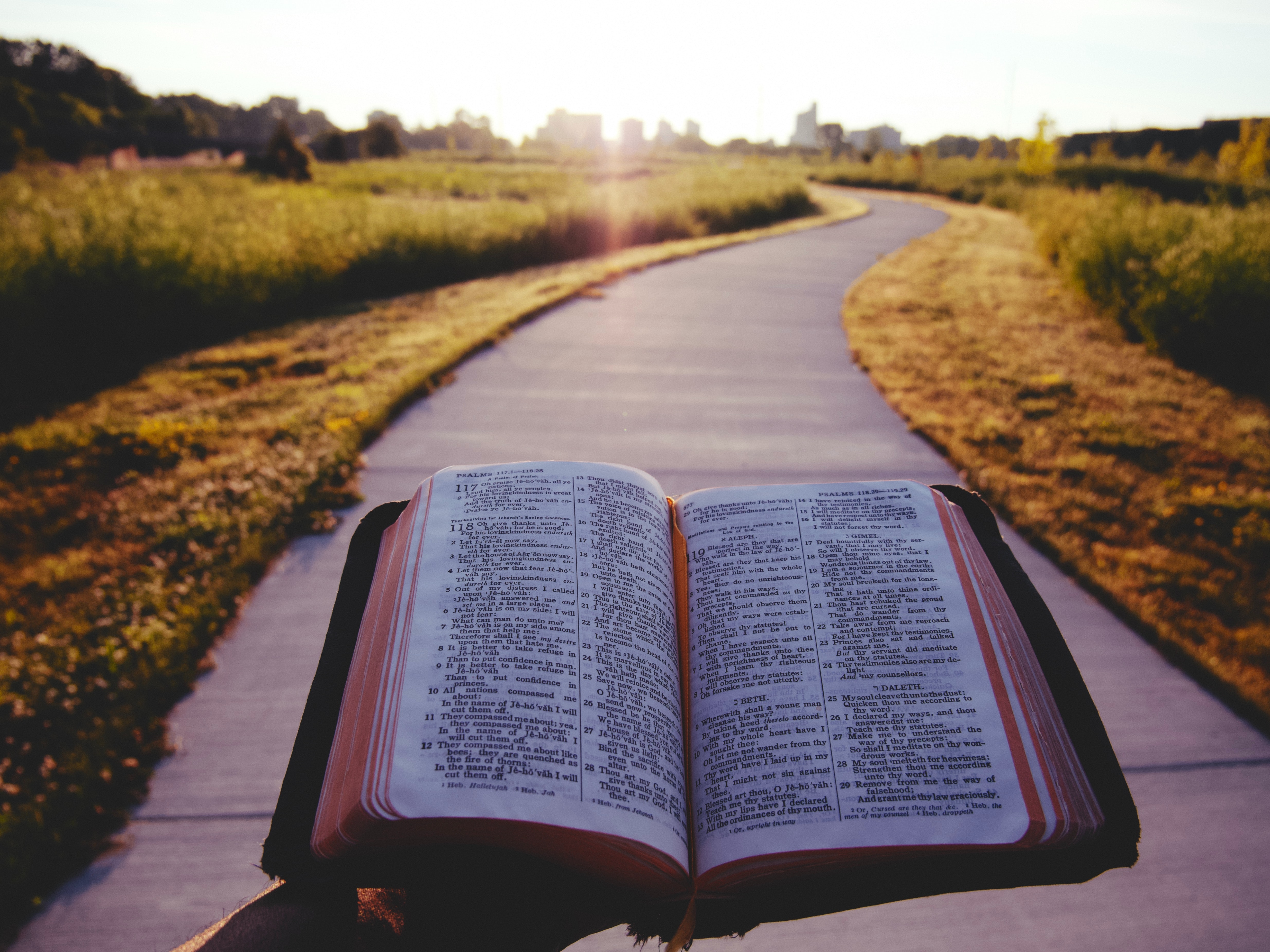
Photo credit: Aaron Burden

As we pick up the story from yesterday, a lot has happened in the text. Abraham and Isaac arrived at the place. Abraham built an altar and arranged the wood. He then tied up Isaac and laid him on the wood. Abraham prepared to sacrifice his son – his only son, the son he loved – raising the knife. It was then that the Lord’s messenger called out, acknowledging Abraham’s reverence for God. Looking up, he saw a ram stuck in the dense underbrush. God indeed provided the offering for the sacrifice.

Turning to today’s reading, the messenger speaks again. Because Abraham did not hold back his son, his only son, God will bless Abraham “richly” and will give him “countless descendants.” In addition, these descendants will “conquer their enemies’ cities.” With these words the messenger is reiterating the promises that God has already made to Abraham. Because Abraham was faithful, the promises remain in effect.

The same is true for us concerning God’s promises to us. The promises of presence and guidance, of comfort and strength, of hope and salvation – they remain our promises as long as we walk faithfully with God. But these promises are not ours alone. The saints before us laid claim to them and lived faithfully as they walked their journeys of faith. God speaks about the next step in Abraham’s story. In verse 18, God’s messenger says, “All the nations of the earth will be blessed because of your descendants, because you obeyed me.” There is a through line here. Because Abraham was obedient and faithful, his descendants will be obedient and faithful. Because they were obedient and faithful, all the people of the earth will be blessed. We are part of this through line. One day, may the Lord say to each of us, “Because you obeyed…”

Prayer: Lord God, we are thankful and we celebrate Abraham and the many other saints – some in the scriptures, some in our lives – who have given us examples of obedient and faithful living. Lord, use us in turn to pass along the faith to others, blessing the world. Amen.


Leave a comment

Freed to Live

Reading: Romans 8:12-17

Romans 8:14 – “All who are led by God’s Spirit are God’s sons and daughters.”

Romans 8 begins with Paul reminding us that we are set free by the Spirit. As Paul develops his argument, he tells us that we have been set free from the law of sin and death. Living by and under the law of Christ’s Spirit, we receive life and righteousness. As we lean into today’s reading Paul reminds us that because we are living under Jesus Christ, we have an obligation. It is not an obligation to selfish or sinful living. That life leads to death.

Our obligation is to live by the Spirit, putting “to death the actions of the body.” Doing so we become part of verse 14: All who are led by God’s Spirit are God’s sons and daughters.” The Spirit of Christ adopts us as children of God. Therefore we don’t have to live in fear under the old spirit of slavery, under the ways of the world. We can remember the fears we felt back when we were children of the world: Am I good enough? Do I have enough? Amen I popular? Am I powerful?…

Living under Christ, our identity is rooted in our place in the family of God. Paul reminds us that because “we are children, we are also heirs.” Although we may suffer at times with Christ, we will also one day be glorified with him. This is the outcome of our faith: the salvation of our souls. Trusting in this we are freed to live as Jesus lived in this world, loving God and loving neighbor every day. Thanks be to God!

Prayer: Lord God, what a blessing it is to live as your child, led and guided by your Spirit within us. Attune all that we are to your will and way, reflecting who and what you are to the world. Use our words and actions to glorify you. Amen.


Leave a comment

I Am… or Maybe?

Reading: Mark 14:61-62, Matthew 26:63-64

Mark 14:61 – “Are you the Christ, the Son of the blessed one?”

Our two readings come from the same place in Jesus’ story. He has been arrested at night and stands trial before the Sanhedrin, the Jewish ruling council. This group leads under the power of the Romans. While this arrangement limits their power, the religious leaders still have a great amount of influence over the Jewish people.

For the first part of his trial, Jesus remains silent. He will not respond to false accusations. When the high priest, Caiaphas, asks, “Are you the Christ, the Son of the blessed one?” Jesus answers. The question is worded differently in Matthew’s gospel, but the intent is the same. The hope is for Jesus to incriminate himself.

In Mark’s gospel Jesus responds, “I am.” It is a definitive answer. This aligns with the direct nature of Mark’s gospel and with his focus on encouraging the church to be thr church. Mark would like the church to respond to this type of question definitively. In word and action, Mark would like to see the church talk and act in ways that are easily identifiable as “Christian.”

In Matthew’s gospel the response is almost a non-response: “You said it.” Maybe. In both gospels Jesus adds that they’ll see the “Human One” sitting at God’s right hand and then coming on the clouds. In Matthew this feels like a “one day” statement: “One day you’ll know that I am the Messiah.”

As I read and ponder these two accounts, I wonder what kind of a follower I am. And I wonder what kind of a church we are. In my/our words and actions, do I/we state that I/we follow Christ as Lord and Savior? Or does our example say, “Maybe?”

Prayer: Lord God, encourage and empower me and my brothers and sisters in Christ to declare our faith in you in all ways. In the kindness, mercy, grace, love, care, compassion, generosity… that we live out, may the world know that you are Lord and Savior. Amen.


Leave a comment

Certainly God’s Son

Reading: Mark 15:25-39

Mark 15:32 – “Even those who had been crucified with Jesus insulted him.”

In verses 25-39 of Mark 15, he encapsulates the actual death of Jesus Christ. Fifteen verses is all that Mark gives to this event. Most of these verses cover how the outsiders insulted, made fun of, and mocked Jesus. Most turn Jesus’ words upon him, demonstrating their lack of understanding. Even his fellow sufferers join in, insulting Jesus.

At 9 AM Jesus is nailed to the cross. A charge of insurrection hangs above his head: “The king of the Jews.” Passersby and the religious leaders insult and mock Jesus. These taunts contain truth though. The temple of his body will be “rebuilt” as he rises three days later. He will save many as they do see and believe in the resurrected Christ.

At noon the world goes dark. For three hours God and creation mourn what is happening. Perhaps this is the time that Jesus took our sin upon himself, suffering on behalf of sinners. It would make sense turn that at the end of this time he would utter his last earthly words, shouting, “Eloi, eloi, lama sabachthani.” God could not abide being in the presence of sin.

At 3 PM Jesus lets out a loud cry and breathes his last. At this moment the curtain that separated the Holy of Holies from the temple’s common area is torn in two. The old temple system has come to an end. The new covenant has been established. We join the centurion, declaring, “This man was certainly God’s Son.” Thanks be to God.

Prayer: Lord God, how the world misunderstood you. With at least one eye always focused on self, it was hard to see you clearly. We too can struggle with this, with only being partly committed. Yes, in our own ways, we insult and mock you. Lord, forgive us and draw our eyes to the cross, where we see the depth of your love and grace. Thank you, Jesus. Amen.


Leave a comment

Not Far?

Reading: Mark 12:28-34

Mark 12:34 – “You aren’t far from the kingdom of heaven.”

Today’s interaction between Jesus and the legal expert comes amidst clashes between Jesus and the temple leaders, the Pharisees, and the Sadducees. These various religious groups are trying to test and trap Jesus with their questions. The legal expert has been present for at least the last interaction with the Sadducees.

Our reading today is a good, practical reminder: not all religious leaders were against Jesus. We tend to cast out the blanket statement that ALL religions leaders were opposed to Jesus. Impressed with Jesus’ answer to the Sadducees, the legal expert asks Jesus’ opinion on the most important commandment. Jesus gives the “correct” answer. Any nominal Jew would give this answer. These commands from Deuteronomy 6 and Leviticus 19 form the core belief in the Jewish faith. Simply put: love God, love neighbor.

The legal expert compliments Jesus’ answer then rephrases these commands using his own words. The words “a full understanding” are an interesting choice. Perhaps this reflects his openness to Jesus and his teachings. Most of the religious leaders rejected the idea that Jesus was God’s son. Perhaps the legal expert is considering if Jesus is indeed the fuller revelation, the deeper understanding, of who and what God is.

This openness continues as the legal expert adds a thought to his paraphrase. He elevates these two commands far above all the sacrifices and offerings required by the Jewish system. Today we might say, “If you check all the boxes but do not love…” Jesus responds beautifully to the legal expert: “You aren’t far from the kingdom of heaven.” May love also be our only guide in all we say, do, and think.

Prayer: Lord God, when we pass by that hungry person and tell ourselves that we went to church on Sunday or when we ignore that nudge to reach out to that elderly neighbor and tell ourselves that we read our Bible that morning or when we harshly judge that struggling single parent and tell ourselves that we’ve been praying for them, Lord have mercy. Lord, have mercy. Amen.


Leave a comment

Care Well

Reading: Genesis 1:26-28

Genesis 1:26 – “Let us make humanity in our image to resemble us so that they may take charge of... all the earth.”

Today we turn to the day of creation when Father, Son, and Holy Spirit created humankind. In connection with one another, God says, “Let us make humanity in our image to resemble us so that they may take charge of... all the earth.” Humanity is to be like the divine in the ways that we are in the world. Keeping this in mind, how we understand “take charge” bends toward steward, care for, protect, guard, and love.

This week we have been considering prayer. Some of our thoughts have focused on unanswered prayer. What would it look like to blend the best intents of ‘take charge’ with some of the unanswered prayers that people pray? What would our world be like if we ourselves sought to be the answer to people’s needs?

If we saw the resources that we have been blessed with as ways to care for the hungry, the sick, the naked, the imprisoned, then how would our world change? If we saw our role as the protector and defender of the vulnerable, the weak, the marginalized, the oppressed, then how would their lives change? If we were willing to risk and sacrifice on behalf of those without voice, without power, how would a new reign of justice and mercy become the reality in our world?

Because we are created in the divine image, we have within us the ability, the power, and the heart to care well for our world and for all of the earth. May it be so.

Prayer: Lord God, bend our hearts towards your heart. Remove the selfish, inward focus that creeps into our hearts, our thinking, our way of acting and being in the world. Empower us to be the answer to these questions pondered today. Amen.


Leave a comment

The Will to Choose

Readings: John 3:16-16 and 34-36, and John 14:1-7

John 3:17 – “God didn’t send his son into the world to judge the world, but that the world might be saved through him.”

Photo credit: Kelly Sikkema

John 3:16 is about as well-known as any verse in the Bible. God sent his one and only son into this world, taking on flesh, becoming one of us, so that he could die on our behalf, removing our sins, opening the way for us to enter eternal life. This is a beautiful picture of sacrificial love.

The next verse reminds us of God’s unconditional love: “God didn’t send his son into the world to judge the world, but that the world might be saved through him.” God’s first choice is not to be a God of judgment but a God of love, mercy, grace, and salvation. This is what God desires for all humanity, not judgment. God also created humanity with free will or the will to choose. So we can choose to not choose Jesus as our Savior. We can choose to live for self. We can choose to be judged. We can choose to ignore the words of life that Jesus speaks, to ignore the prompting and guidance of the Holy Spirit. In doing so, we invite “the angry judgment of God” upon ourselves.

Jumping forward to John 14, it is a heavy moment. Sandwiched around the command to love one another “as I have loved you” is the news of Judas’ betrayal and of Peter’s denial of knowing Christ. Jesus tells the disciples to not be troubled but to trust in God and in him. He then promises that he will come back for them so that they can be with him in heaven. In response to Thomas’ confusion, Jesus says, “I am the way, the truth, and the life.” Jesus’ life and example are the way to know God and God’s truths. They are the way to live the life that God intended for us to live, the life here and now that leads one day to life eternal. May it be so for you and for me.

Prayer: Lord God, you sent your son to save and redeem us. You desire this for each and every one of us. It must break your heart to see the one you wove together in the womb, the one you created for relationship with you, choose the ways of the world. Lord, break our heart for what breaks yours. Amen.


Leave a comment

Supremely Good

Reading: Genesis 1:24-2:4a

Genesis 1:26 – “Let us make humanity in our image to resemble us so that they may take care of the fish…”

Today we conclude the first creation story, reading about days six and seven. These time frames separate acts of creation. They may or may not be 24 hour periods. The sixth “day” begins with God speaking into existence the “livestock, crawling things, and wildlife.” God again saw that this was good.

Next God says, “Let us make humanity in our image to resemble us so that they may take care of the fish…” Note that the language is different. The words “us, make, our, image” imply a collaborative effort. Most theologians read this team effort as involving Father, Son, and Holy Spirit. There is also an implication that humanity does not merely come from the other parts of creation like the earth growing plant life. One cannot read these words and not understand that humanity is to care for this earth as God does and would. We are to do so because we are not merely made from the elements of this earth. We also carry some of the divine within ourselves.

At the end of this period God looks at the creation and declares that it is “supremely good.” From the chaos and disorder at the beginning to the completed, ordered, purposeful world, it is now supremely good. The world was as it was intended to be. And then God rested. God set aside a day, making it holy. It was a day without work. Later this will become known as the Sabbath – a day to rest, renew, and recharge physically, a day to reconnect with God. This too is part of God’s goodness, order, and purpose. Thanks be to God.

Prayer: Lord God, in the story, the process is finished. Day 8 begins our tenure as caretakers or stewards of this world and all that is in it. Lord, help humanity to reclaim our role, especially in the ways that we care for one another. May we see and treat all of humanity as brothers and sisters also created in your divine image. Amen.


Leave a comment

People of Grace and Love

Reading: Philemon

Philemon 1:15 – “Maybe… Onesimus was separated from you for a while so that you might have him back forever.”

Today we turn to Paul’s letter to Philemon. He is appealing to Philemon to receive Onesimus back not as a slave but as a brother in Christ. Paul walks the fine line between coercion and appeal, at least twice crossing this line. Paul writes this letter not just to Philemon but also to the church that Philemon is a part of. What Paul asks of Philemon extends to the whole community of faith.

As I read this story today my mind went to the parable of the prodigal son. It also reminds me of estrangements that I’ve heard of in families I know well. We’re familiar with and maybe even have been involved in stories of separation, in experiences where one party somehow hurt or offended the other, making reconciliation difficult. In the story of the prodigal son we see how grace and love overcome the harm done to welcome the younger son back into the family. We are left hanging concerning the younger son’s estrangement from the older brother. We hope that they are reconciled. In situations we’ve experienced (or are still experiencing), love and grace are the keys to reconciliation.

Just as the younger brother and perhaps that family member or friend changed for the better to open the door for reconciling, so too has Onesimus changed. As a brother in Christ he has become useful to Paul. To Philemon he writes, “Maybe… Onesimus was separated from you for a while so that you might have him back forever.” Maybe the younger son had to experience the bottom of the pit to change. Maybe that estranged family member or friend had to experience something really hard to be changed. When change occurs, though, the ball is in our court. We hope that Philemon received Onesimus back as a brother in Christ. May we too be people of grace and love.

Prayer: Lord God, reconciliation is not easy. At times we are deeply wronged. Perhaps we’ve also suffered financially or physically. When the hurt and pain are deep, Lord, may your love and grace be deeper still. Through these, heal the hurt and pain in our hearts. Lead us then to be as you are, generous and abundant in our love and grace. Amen.


Leave a comment

“Water” to “Wine”

Reading: John 1:1-2:12

John 1:5 – “The light shines in the darkness and the darkness doesn’t extinguish the light.”

Today we begin the Gospel of John, written about 30 years after Matthew, Mark, and Luke. John tells the story of Jesus, Son of God, dwelling among human beings, giving life and the Spirit to those who receive and believe in him as the Son of God, as Lord and Savior.

The Gospel begins connecting Jesus to eternity. Channeling the words and feel of Genesis, John establishes Jesus as the “Word” who was with and is God. In Jesus is light and life. John declares that Jesus is “The light shines in the darkness and the darkness doesn’t extinguish the light.” Even though the light shone on all people, Jesus’ own people didn’t recognize or welcome him. Even so, “the Word became flesh” and dwelled among humanity, revealing grace and truth, making God known.

The religious leaders sent representatives to ask John, “Who are you?” He tells them he’s not the one, not Elijah, not a prophet. Pushed further, John says he is the one “crying out in the wilderness” preparing people to receive Jesus. The next day (very Genesis-like) John sees and names Jesus as “the Lamb of God who takes away the sins of the world.” Baptizing Jesus, John sees the Spirit descending and resting upon Jesus, “the one who baptizes with the Holy Spirit.”

The next day the first disciples are called – some by Jesus and some by one another. On the third day, Jesus is at a wedding in Cana. Here we find a great mother-son exchange. The wedding hosts have run out of wine and Mary brings it to Jesus’ attention. He replies, “My time hasn’t come yet.” Likely looking straight at Jesus, Mary tells the servants, “Do whatever he tells you.” The water jugs are filled and it turns into wine – the best wine. Jesus’ glory is revealed. The disciples believe in him.

Prayer: Lord God, thank you for taking on flesh, for stepping down out of heaven’s glory to bring it to earth. Your light continues to shine into the darkness of our world and our lives. You continue to turn the “water” of our lives into the best possible “wine.” Thank you, Lord Jesus. Amen.