pastorjohnb

Thoughts and musings on faith and our mighty God!


Leave a comment

God’s Light and Imprint

Reading: Hebrews 1:1-12

Hebrews 1:3 – “The Son is the light of God’s glory and the imprint of God’s being.”

The title of this opening section of Hebrews in my home Bible is “The Son is God’s Ultimate Messenger.” The author of Hebrews raises Jesus up far above the prophets and the angels. Most of our passage today contains quotes from the Hebrew scriptures, known to us as the Old Testament. Using these seven quotes, the author roots Jesus in Judaism’s sacred scriptures and holy traditions. Together these quotes establish Jesus as God’s son, as creator of the world, as justice and righteousness personified, as controller of the angels, and as eternally reigning.

The heart of today’s reading, though, is found in the opening verses. It is Jesus who “in these final days” spoke as God’s prophet. Through the message that Jesus gave, he “maintains everything.” Jesus’ words and power hold all things together under him. The one who created the world is the one who holds it all together. In verse 3 we read about how this is possible: “The Son is the light of God’s glory and the imprint of God’s being.” Here the author gets at the core of the incarnation, of Emmanuel, God with us. In Jesus we see the light of God and we see the character of God. Jesus is God in the flesh.

In word and deed Jesus reveals God’s love, mercy, grace, hope… lived out on earth. And when Jesus was done setting the example for us to follow in this life, “he carried out the cleansing of people from their sins.” Jesus became our atoning sacrifice so that we could continue to follow his perfect example after falling short. Providing a way for us imperfect creatures to be made right again with God, Jesus then “sat down at the right hand” of God, awaiting our arrival in heaven. There we will forever worship the Lord. Thanks be to God!

Prayer: Lord God, we praise you today for your word and example that endures forever. We thank you for showing us the way to love unconditionally, to forgive without count, to dwell in beloved community, to walk together in faith. Be with us now and always. Amen.


Leave a comment

Radical Love

Reading: Luke 23:33-38

Luke 23:34 – “Father, forgive them, for they don’t know what they’re doing.”

Our readings today and tomorrow focus on Jesus’ crucifixion. The way of Jesus stands in very sharp contrast to the ways of the world. This contrast begins in verse 33. The Romans crucify three people. Two crucifixions are just and one is unjust. All three accomplish the same goal: eliminating those who challenge your power. This remains the way of the world.

Those present at the crucifixion, all three groups named in today’s reading, they all equate power with strength, control, wealth, status. The religious leaders and the soldiers and the Roman governor sneer at and mock Jesus. They all want (or say they want) Jesus to exert some of his power to come down off the cross: “Save yourself.” That’s what we’d try to do. We’d try to save ourselves. Many there that day that utter these words have seen the miracles and heard the unearthly wisdom of Jesus’ teachings. Pilate’s sign above Jesus’ head mocks him too. A king? Surely he would save himself if that were true. Today we continue to mock and sneer at things and at people that do not meet our expectations and/or that we do not understand.

Jesus’ power runs counter to all of these ways of power and of the world. As he is physically being nailed to the cross – large spikes being driven through his palms and his feet – Jesus says, “Father, forgive them, for they don’t know what they’re doing.” As John Wesley noted in a sermon, Jesus ignores this incredible pain because he is more worried about the salvation of all involved in the crucifixion. Forgiving others always, this is power. The way of love for God and neighbor triumphs over all things. Thanks be to God for this most excellent way of love.

Prayer: Lord God, what great power we see in your radical way of love. It was unaffected by the things of the world going on around you. It was an unconditional love that reached out to those harming you and taking your life. Lord, fill us with this powerful love. Filled, send us out as your radical love lived out in the world. Amen.


Leave a comment

Glory, Mystery

Reading: Haggai 2:6-9

Haggai 2:7b – “I will fill this house with glory.”

Photo credit: Paul Pastourmatzis

As we continue in Haggai 2 today, the focus shifts. The encouragement of the people in their work on the temple shifts to focus on what God will do. The words in verses 6-9 speak of the present and of the future. They speak of the here and of the there. These words are promises from God. And they can be every day truths.

We begin with “in just a little while.” These words could mean later today or tomorrow or 2,000 years from now. We know that God’s time is not our time. We also know that God’s timing is perfect. In God’s time, God will make the “heavens… earth… land… sea quake.” Connecting back to words and images from the Genesis 1 narrative, we’re reminded that God controls all of creation. In the next verse we are included: “all the nations.” This shaking will lead to action, in both the created world and in us.

God declares that ‘soon’ “the wealth of the nations will come” to God’s house. In the near future, the empire of Persia will financially support the rebuilding and glorification of the temple. But is has been said that the greatest resource of any nation is its people. Here we edge into eternity or maybe a great revival, when all people will kneel and all tongues will confess that Jesus Christ is Lord. Keeping on this track, silver and gold can be material possessions but this could refer to much more. Gentile and Jew? Lost and saved?

The second temple will be a glorious structure. There will be “prosperity” at times. In these times, yes, God will “fill this house with glory.” There will also be times of corruption and greed. Jesus will overturn some tables one day. And what if prosperity isn’t financial at all?

Prayer: Lord God, we know that your love is unconditional, that your mercy is endless, that your grace is ever overflowing. We know that you created and are over all things, us included. But there is so much that we don’t know. There is much mystery. And that is good. Today we ask, O God, that you would help us to step into that mystery, to imagine your possibilities, to trust you into the unknown. We know that you are in all these things. And you are in us. Thank you, God. Amen.


Leave a comment

Practice and Model…

Reading: Matthew 6:14-15

Matthew 6:14 – “If you forgive others their sins, your heavenly Father will also forgive you.”

Today’s two short verses come at the end of Jesus teaching the disciples the Lord’s Prayer. This prayer is a prayer that we know by heart. Most of us recite these words each Sunday and at other times as well. Of all that Jesus taught in the Lord’s Prayer, the only part that he felt needed a little emphasis was the part about forgiveness. Did Jesus know that we would struggle with seeking and offering forgiveness?

In verses 14 and 15 Jesus emphasizes our role in being people of forgiveness. There is a feel here that if we are not people who regularly and consistently practice and Model forgiveness, then we will not be forgiven by God for our sins. This understanding does not, however, align with other passages about forgiveness in the scriptures. No other passage contains what feels like “conditions” to be forgiven by God. So then, what is Jesus getting at here in verses 14 and 15?

First, forgiveness is like love, generosity, grace, compassion, comfort… We must practice and model these facets of who and what God is. When we do, we experience God’s forgiveness, love, generosity… in deeper and more transformational ways. Living out a more Christ-like life draws us closer to Christ. Second, as we practice and model forgiveness we begin to grow into the “as far as the east is from the west,” your sin is more, practice of God. Truly understanding God’s unconditional and complete ways of forgiveness leads us to practice and model this kind of forgiveness in our lives and relationships. May it be so for you and for me.

Prayer: Lord God, day by day lead us to develop, to grow into, to truly live out forgiveness in the ways that you do. Being able to let go, not holding onto past hurts, not plotting getting even, it is truly freeing. In this place, we are so closely aligned to you and your heart. Draw us there, closer and closer, O God, encounter by encounter. Thank you. Amen.


Leave a comment

Breathing New Life

Reading: Ezekiel 37:1-11

Ezekiel 37:6 – “When I put breath in you, and you come to life, you will know that I am the Lord.”

Ezekiel witnessed Nebuchadnezzar’s siege and defeat of Jerusalem. He saw the leaders and then many others, himself included, taken away into Babylonian exile. Judah, like Israel to the north, was devastated. The temple was destroyed. Their relationship with God has been broken by their sin. Living in exile, hope was growing very thin and despair grew daily.

In chapters 33-36 Ezekiel begins to speak of redemption and restoration. He writes of changing their ways and of receiving a “new heart.” He leans into the image of God as the good shepherd who promises to rescue and protect the sheep. Speaking to the mountains of Israel, God through Ezekiel promises that the cities will be rebuilt and inhabited. Even with all of these hopeful words spoken, for those living in exile, the despair felt too great. Was all this even possible? Could God do it? Our passage today is God’s response to these questions.

In chapter 37 Ezekiel is taken in spirit to a valley full of very many dry bones. God asks the prophet if he thinks the bones can live. (Talk about impossible, right?) Ezekiel responds, “Lord God, only you know.” God says they can. After coming together, God adds sinew, flesh, and then skin. Then God says to the bodies, “When I put breath in you, and you come to life, you will know that I am the Lord.” Through Ezekiel’s words, new life enters the bones, “an extraordinarily large company.” They stand in the valley, as if waiting. God then tells Ezekiel (and therefore Israel), “Human One, these bones are the entire house of Israel.” God will restore and redeem not just some of God’s people. God will restore and redeem all of God’s people.

In our dry seasons of faith, in our times of sin and separation from God, in our experiences in the wilderness and in exile, God longs to redeem and restore us, to breath new life into our faith. O God, may it be so.

Prayer: Lord God, you will stop at nothing, you will do anything, you will try everything in order to bring us back into right relationship with you. This is true no matter how far we’ve run, no matter how deep we’ve fallen, no matter how long we’ve wandered. Thank you for your unconditional love and your unfailing grace. Amen.


Leave a comment

Because God Loves Us…

Reading: 1st John 4:7-21

1st John 4:12b – “If we love each other, God remains in us and his love is made perfect in us.”

Photo credit: Shane

Our passage begins with John imploring us, “dear friends,” to love one another. The foundation for this charge is built upon two things. First, love is God. Love comes from God. God is love. Second, those who practice love are born from God and know God. There is a relationship formed as a believer professes Jesus Christ as Lord and Savior. This relationship is grounded in God’s love.

All relationships are two-way. The apostle John first establishes proof of God’s love for us in the fact that God sent Jesus to be the atoning sacrifice for our sins. John also reminds us that God has given us the indwelling presence of the Holy Spirit. This is the second proof. This is how God’s love remains in us and enables the relationship to be two-way. We next read about how we offer proofs of our love of God through our love for one another.

In verse 12 we read, “If we love each other, God remains in us and his love is made perfect in us.” John Wesley picks up on this idea in what he called ‘going on to perfection.’ Wesley understood the Christian faith as a process of unending growth. Loving more and wider changes the believer for the good, maturing and deepening our faith. Now, this call to love and the process of maturing in our faith – they are not easy.

John reflects this as he writes these words of encouragement: “Perfect love drives our fear.” To love one another as God loves us will call us to risky places, to challenging conversations, to situations where we lie self on the line. Yet we do not go alone nor do we do these things by ourselves. Because God loves us, God goes with us into these places, situations, and conversations where we are called to be love and light, hope and peace, trust and justice, grace and forgiveness. Through God’s unconditional and faithful love, may we seek and strive to love all of our brothers and sisters just as God loves us.

Prayer: Lord God, emboldened by your love, guide us to step out in faith, without fear and without concern for self. Bring us into all the places and lives that need to know your love. Empowered and encouraged by the Holy Spirit, lead us to practice your love well so that others may come to experience and know your love in their hearts. Amen.


Leave a comment

A Big Love

Reading: John 13-31-35

John 13:34b – “Just as I have loved you, so you also must love one another.”

Jesus is nearing the cross at this point in John’s gospel. Judas has just left to betray Jesus. Soon, through his death and resurrection Jesus will be glorified. He has spent his life, especially the last three years, glorifying God through how he lived. This process of mutual glorification is a part of the life of a Christian. Our faithful living brings glory to God. This is the building of the kingdom here on earth. In the end, our faithful living will result in our place in God’s glorious heaven.

For Jesus, the return to God’s side is rapidly approaching. He plainly tells the disciples, “I’m with you for a little while longer.” They will want to remain with Jesus, but for now this is not to be. Jesus, however, will remain a part of their lives. In spirit, Jesus will continue to be present to his disciples.

Beginning in verse 34, Jesus tells them how to continue this relationship. Giving what he calls a “new command,” Jesus tells the disciples to love one another. This command to love neighbor has been around for thousands of years. What’s ‘new’ is in the details: “Just as I have loved you, so you also must love one another.” Like Jesus’ “You have heard… but now I say…” statements, this new command takes Leviticus 19:18b to a whole new level. As disciples the call isn’t just to live as the good Samaritan loved. No, the call is to love as Jesus loves: unconditionally, without limit, completely. This is a big love. When we love this way, all will know that we are a disciple of Jesus. May this be the love that we practice always.

Prayer: Lord God, this is not an easy-to-accomplish call. To love others as you love us? That is a deep and rich and layered love. It is a love often with a cost. Lord, work in our hearts, open them wide so that we can practice and live a love that reflects your love. Guide us to be your love lived out in the world. Amen.


Leave a comment

Do as I Do

Reading: John 13:12-17 and 34-35

John 13:15 – “I have given you an example: Just as I have done, you also must do.”

Photo credit: Felipe Correia

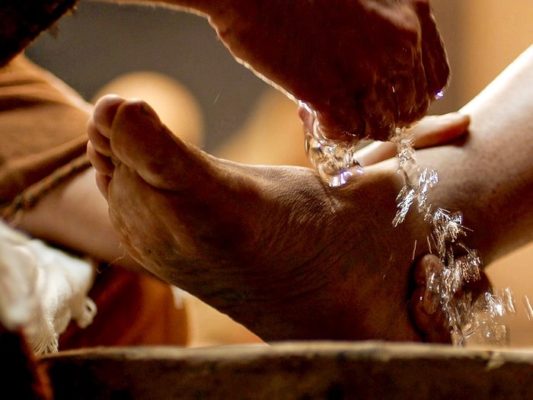
After washing the disciples’ feet, all twelve pairs, Jesus returns to the table. He asks them, “Do you know what I’ve done for you?” Jesus is not going for “washed our feet.” Acknowledging his role as Teacher and Lord, he calls them to also be willing to wash each other’s feet. A disciple was to model the sacrifices made by their teacher, to follow their example. Jesus reiterates this cultural norm when he says, “I have given you an example: Just as I have done, you also must do.” Do as I do.

Now, this is just an example. Foot washing isn’t the only act of service Jesus calls his disciples to. He intentionally chose the lowest, most menial task in their present setting to illustrate his call to serving one another. We will all face unpleasant, menial, low-level tasks and situations. Will we humbly and willingly choose to serve or will we look around to see who we can force to do said task…? Jesus says: do as I do.

Jesus then elevates the call as we get to verses 34-35. I, you, we can go through the motions. We can do the hard thing when others are watching. Here Jesus calls his disciples to an always command to “love one another.” Fleshing this command out, he says, “Just as I have loved you, so you must love one another.” His love was unconditional covenant love. It is a love that remains committed and obedient no matter what. Of this kind of love, Jesus says, do as I do. May it be so.

Prayer: Lord God, it would be easier to just kinda love like you love. Maybe we could pick and choose? Oh, but you loved Judas. You washed his feet, just like the rest. And Peter’s too. If there were any not to pick that night… Lord, help us to do as you do, to love as you love. Guide us to live out the love that you modeled 24/7. Help us to love this way. Amen.


Leave a comment

Fear, Shame, Guilt…

Readings: Matthew 26:69-75 and 27:3-10, 15-26

Matthew 27:24 – “So he took water and washed his hands in front of the crowd.”

Photo credit: Falaq Lazuardi

Today’s readings contain denial, betrayal, and giving in to social pressure. These actions are driven by fear, shame, guilt, regret, greed, power. These are actions and emotions that we too wrestle with as we try to walk faithfully with our Lord and Savior, Jesus Christ.

Peter had followed the mob who had arrested Jesus – at a distance. He feared being caught up in what was happening. In the high priest’s courtyard, Peter is accused three times of being with Jesus. Each time Peter’s denial of Jesus grows stronger as the fear rises. His fear turns to shame as the rooster crows. When was the last time that you denied Jesus, either in word or deed? What “crowed” to lead you to tears?

Judas agreed to betray Jesus for thirty pieces of silver. Seeing that Jesus is condemned to die, Judas feels “deep regret” for betraying “an innocent man.” The religious leaders refuse to change course. Guilt and regret lead Judas to take his own life. When have you felt deep regret because you betrayed Jesus? How did you resolve your inner turmoil?

Pilate has the power of life and death in his hands. He tries to free Jesus. His wife tells him to “leave that righteous man alone.” Tension builds and Pilate gives in to the mounting social pressure. To try to relieve his guilt and regret, he “took water and washed his hands in front of the crowd.” Pilate allows the power to slip through his fingers like the water slips through. We’ve all given in to the crowd, turning away from Jesus. What do you do to relieve your guilt and regret?

Prayer: Lord God, it is hard to admit, but at times we’ve played the roles of Peter, Judas, and Pilate. When we’ve failed you, we’ve felt what they feel. It is our human nature rising up to protect self, position, status… In our next moments of testing, Lord, raise up the voice of your Holy Spirit. May it be louder and stronger than our fear, shame, guilt… And when we fail, remind us of your unconditional love and endless grace. Amen.


Leave a comment

Radical and Unconditional

Readings: Isaiah 56:1-8 and Matthew 21:12-16

Isaiah 56:6-7 – “Everyone who keeps the Sabbath… who hold fast to my covenant: I will bring them to my holy mountain, and bring them joy in my house of prayer.”

Photo credit: Jon Tyson

Beginning with Isaiah 56 we feel the connection that God desires to have with all people who act justly and do what is right. To those who keep the Sabbath and honor the covenant, God’s salvation is “coming soon.” God’s prophet includes two groups that are normally excluded from the temple: immigrants and eunuchs. In verses 6 and 7 we read, “Everyone who keeps the Sabbath… who hold fast to my covenant: I will bring them to my holy mountain, and bring them joy in my house of prayer.” In New Testament language we would say there is no Jew or Gentile, no slave or free, no rich or poor… All people – all – who are devoted to God’s ways are welcome in God’s “house of prayer,” the temple. These were radical words to the closed-circle Jews of Isaiah’s day.

Turning to Matthew 21 we see another prophet doing and saying radical things. Entering God’s house, Jesus forces out the people changing money into temple coins and the folks selling animals for sacrifice. Quoting from our Isaiah 56 passage and Jeremiah 7:11, Jesus denounces these profiteering practices. Cleared of these “crooks,” the blind, the lame, and the children enter the temple. Jesus makes space for these normally excluded groups, mirroring the spirit of Isaiah 56. He heals the blind and the lame and rejoices over the children. The religious leaders are angry about all of this. Their closed circle has been broken wide open by the radical and unconditional love of God present in Jesus. May this breaking open of the circle and of our hearts also be our regular practice as we seek to follow Jesus’ example.

Prayer: Lord God, it is a beautiful thing when you reclaim and include those often excluded and unwelcome by the religious of the world. You create each and every one of us in your image. You weave each of us together in the womb with intention and purpose. From our first breath you long to walk in relationship with each of us. Lord, as you walk with us, fill us with your radical and unconditional love. Filled with this great love, may our regular habit be to include and welcome all people into your house and into your family. Amen.