pastorjohnb

Thoughts and musings on faith and our mighty God!


Leave a comment

Rooted in Belief

Reading: John 6:25-35

John 6:29 – “Jesus replied, ‘This is what God requires, that you believe in him who God sent.'”

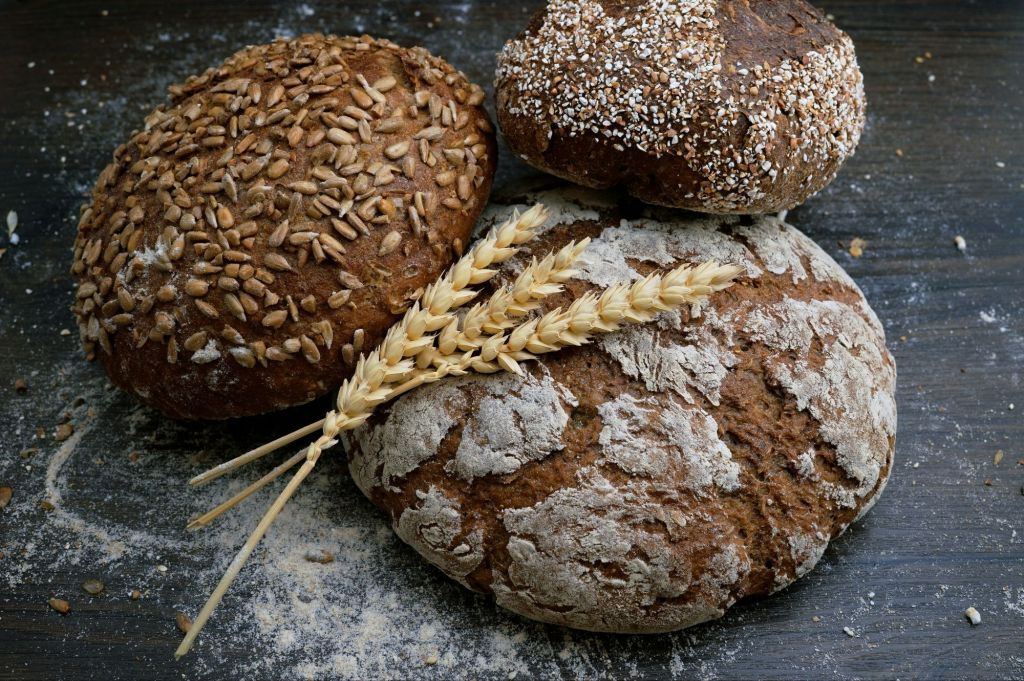
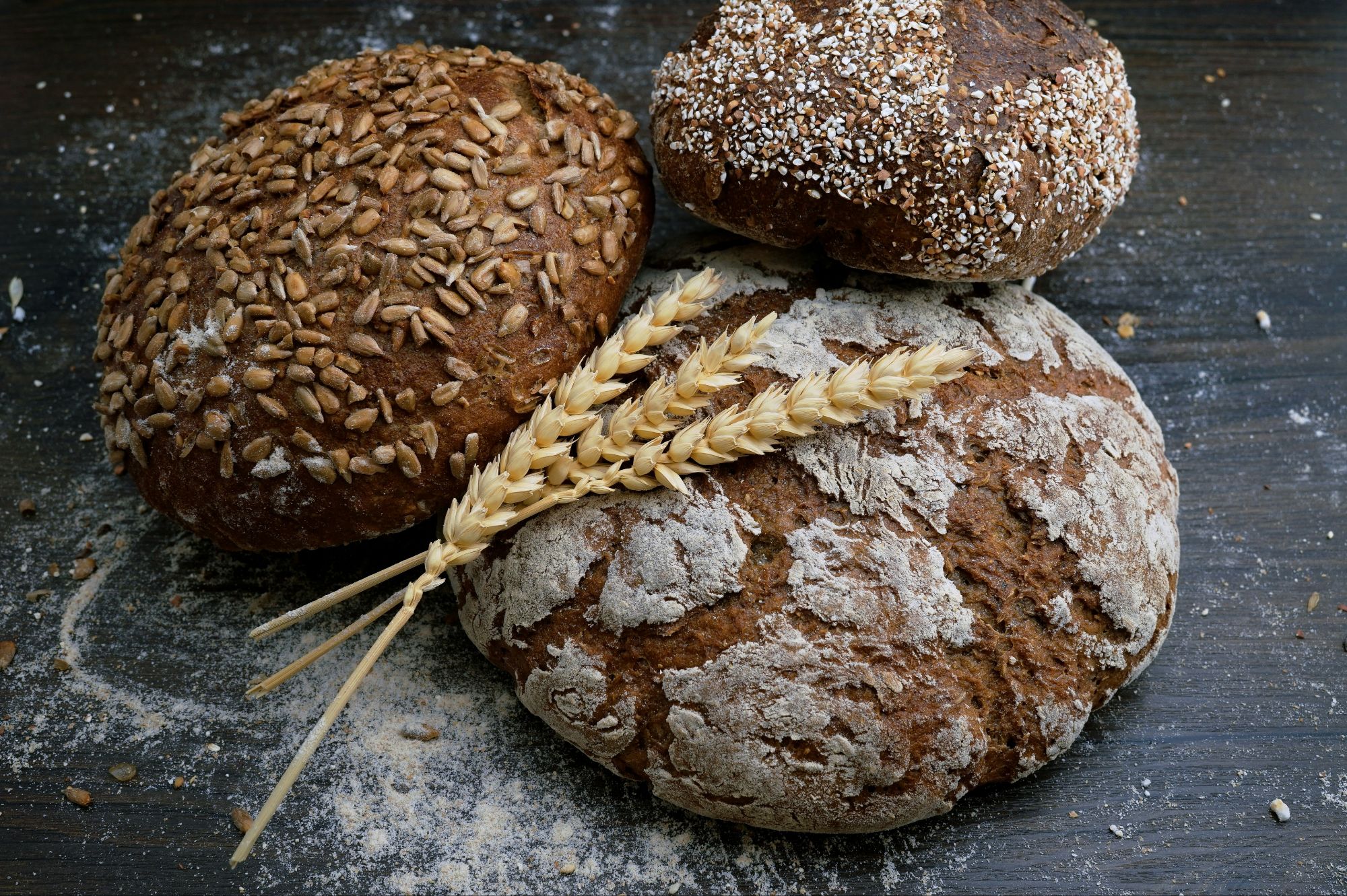
Photo credit: Marek Piwnicki

In today’s gospel reading Jesus redirects the peoples’ focus. The day before, this crowd had been part of the miracle known as “the feeding of the 5,000.” They have followed the disciples to Capernaum, hoping to find Jesus there, hoping for more bread. He quickly points out that they missed the work of the divine within the feeding miracle. All they “saw” was the food. Jesus tells them to quit working for that temporal “food” and instead to seek “the food that endures for eternal life.”

We too need to hear these words of Jesus because we often strive after temporal things. Even in our lives of faith, our striving can become like checking boxes. Yup, went to church on Sunday. Read my Bible this week. Check. Prayed for my neighbor in need. Check that one too! Hearing the call to the eternal, the crowd asks Jesus what we can ask: “What must we do?” Jesus’ response is a redirect. It’s not about doing at all. Jesus says to the crowd and to us: “This is what God requires, that you believe in him who God sent.” Faith starts with belief in Jesus and it grows from this foundational place.

Even though Jesus’ direction seems clear to us, the crowd again asks, “What sign will you do…” A million miracles in themselves will not lead to faith. The choice for faith, again, begins with belief in Jesus as the one who is “the bread of life,” the one who satisfies our eternal hungers and thirsts. In time, yes, faith through belief will lead to experiencing God’s power and presence in ways that feel miraculous and will lead to service in the kingdom of God. But faith must always be rooted in our belief in Jesus Christ as our Lord and Savior. May it be so for you and for me.

Prayer: Lord God, we can do easily get caught up in striving after things, in checking boxes to assure ourselves of our progress. Help us to understand that it is not in the doing that “things” happen. Instead, lead us to trust that you alone are the one “doing” the work, even when we are serving you and others. Grounded in our belief in you alone, may our faith in you witness to your powerful presence in our lives and in the world. Amen.

Leave a comment

What We Need

Reading: Matthew 7:7-11

Matthew 7:7 – “Ask, and you will receive. Search, and you will find. Knock, and the door will be opened to you.”

Today’s teaching on prayer comes in the middle of “The Sermon on the Mount,” a collection of Jesus’ core teachings found in Matthew 5-7. It is the largest block of Jesus’ teachings in the gospels. John Wesley, the founder of Methodism, called these words “the sum of all true religion.” Gandhi, a non-Christian, read the sermon every morning.

Jesus begins this section on prayer with these words: “Ask, and you will receive. Search, and you will find. Knock, and the door will be opened to you.” These words fall within the context of the larger sermon. Plucked out of this context, they can make God feel like a genie in a bottle – except with unlimited wishes. All of the sermon points towards how to love God and neighbor as God intends us to. The idea of asking, searching, and knocking fall within and are aligned with God’s intent for our lives.

This becomes clear as we read on. Addressing daily provision as his example, Jesus muses upon what a father would give a child who asks for bread or for a fish. These are basic staples of their diet. Recall the feeding of the 4,000 or the 5,000. What did the boy have in his lunch sack? Continuing, Jesus points out that no good earthly father would instead give their child a stone or a snake. Extending this idea, Jesus adds, “how much more will your heavenly Father give good things to those who ask him.” Yes, our good God will provide for our daily needs when we ask, search, and knock.

Prayer: Lord God, thank you being a good, good father. Thank you for watching over us and for providing what we need. And thank you for not spoiling us or granting our every whim. We know how that turns out. We, in turn, are called to love you and to love others through the same good and generous practices that you model. Lead us to care well for the needs of others as we are able. Amen.


Leave a comment

Here and Now

Readings: Luke 17:20-21 and 22:14-20

Luke 17:21 – “Don’t you see it? God’s kingdom is already among you.”

In Luke 17 some Pharisees ask Jesus when God’s kingdom is coming. Maybe they hope Jesus will turn into the kind of Messiah they’re looking for: strong, powerful, able to defeat the Romans. Or maybe they hope that since Jesus claims to be the “Son of Man,” then he’ll be able to tell their when their Messiah will come. Inviting these religious leaders into the present reality, Jesus says, “Don’t you see it? God’s kingdom is already among you.” Open your eyes and hearts, it is here and now.

This can be a question Christians can ponder too. One can think that accepting Jesus will be a cure for all that ails us. One can think that life will only be blessed because we’re following Jesus. No, all of life still happens. Jesus will and does walk with us, bringing peace and hope in the storms, comfort and strength in the trials… In turn, we offer these to others. This is the kingdom of God at work here and now.

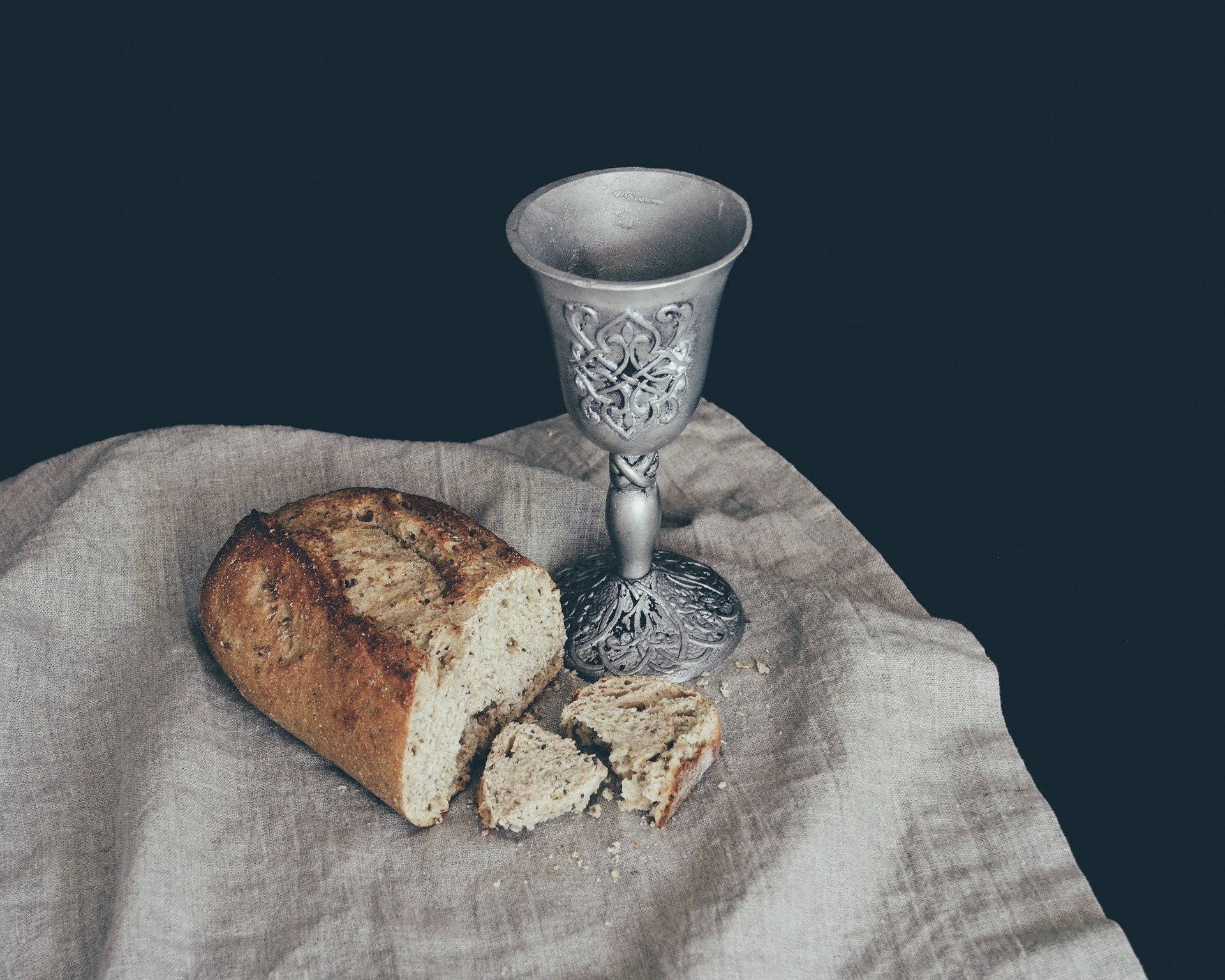
Almost a week later, Jesus gathers in Jerusalem with his disciples. It is Passover and they are gathered around the table. Jesus shares two interesting things with the disciples. First, he “earnestly desires” to share this meal with them. Second, he tells them, “I won’t eat it until it is fulfilled in God’s kingdom.” Little did they know, this would be the next day. Jesus then share the bread as his “body… given for you.” Then the cup is shared as the “new covenant… poured out for you.” After Jesus fulfills these words and their promise, completing this act of sacrifice, followers of Christ will remember this gift by celebrating Holy Communion. Each time, in that moment, God’s kingdom is here and now.

Prayer: Lord God, thank you for your presence with us and through us. When we experience or share your light and love, your grace and peace, your hope and strength, the kingdom of God manifests itself here and now. We are reminded of the depth of your light and love… in the sacrifice you made on the cross. When we remember this act, we are made new again, here and now. Thank you for this gift. Amen.


Leave a comment

An Invitation to All

Readings: Mark 14:22-24 and Luke 22:19-21

Mark 14:24 – “This is my blood of the covenant, which is poured out for many.”

In both passages that we read today, we see Jesus instituting the sacrament of communion. This event is set within the context of the Passover meal. This meal was an annual event in which the Jews would remember and celebrate how God saved them as the angel of death passed over their houses. This final plague led to Pharaoh releasing Israel from bondage and slavery.

Mark and Luke both present Jesus offering the bread as symbolic of his body, broken for them and for us. Jesus’ body will be broken on the cross. In using the common element amongst the rich and the poor and all in between, Jesus takes the everyday and connects bread to himself and to us all.

Both gospels present the cup – representative of Jesus’ blood – as poured out for many, establishing the “new covenant.” Mark recalls these words of Jesus: “This is my blood of the covenant, which is poured out for many.” The new covenant is wrapped in mercy and grace, in forgiveness of sins. This common element of wine – again Jesus connecting the ordinary to his extraordinary gift.

In Mark’s gospel they sing a few songs and head to the Mount of Olives. But in Luke’s gospel, Jesus says, “But look! My betrayer is with me; his hand is on this table.” Jesus celebrates the first communion knowing that Judas will betray him. This is an invitation to us all – sinners each of us – to come to the table of grace. There we too will find welcome and forgiveness. Thanks be to God.

Prayer: Lord God, we humbly thank you for the gift of grace. Your Son did for us what we could not and cannot do for ourselves. It is only because of and through Jesus’ sacrifice that we are forgiven and made new, freed from the bonds of sin and death. Thank you, thank you, thank you. Amen.


Leave a comment

The Great Commands

Reading: Matthew 22:34-40 and 7:9-12

Matthew 7:12 – “Treat people in the same way that you want people to treat you.”

Photo credit: Shane

In Matthew 22 the Pharisees get together and decide to test or trap Jesus. Their religious rivals, the Sadducees, have just been left speechless after their attempt to trap Jesus in his words. The Pharisees send one forward to test Jesus with a question: What’s the greatest commandment? The Law has 613 (or 623) commands. Which is the most important one Jesus?

Quoting from the Law, Jesus identifies the Deuteronomy law to love God with all that you are. He quickly adds one from Leviticus: “love your neighbor as you love yourself.” For a devout Jew these are the two core commands. These two verses form the heart of a prayer offered each and every day, both morning and night. While the concept of loving God and neighbor is easy to understand, the actual execution of these commands can be very hard. To date, I believe that Jesus is the only one with a 100% success rate.

Jesus offers some practical application tips in chapter 7, verses 9-12. Here he uses parenting as the analogy. If your child asks for bread or fish because they are hungry, who would give them a rock or a snake instead? Well, no good parent would. Jesus then reminds us that the one who loves us as children will do the same and even more. He then generalizes this teaching on loving well to others, adding, “Treat people in the same way that you want people to treat you.” Give that person in need not just bread but some water too. Give that stranger not just a fish but a place to stay too. Just as the Lord our God is good and loving and generous, Jesus says, you do the same.

Prayer: Lord God, the call is clear: love well, love deeply, love genuinely. You have modeled this and your son Jesus modeled it. We have no excuses. We can’t play dumb. Yet we sure can struggle to love you with all that we are and to love others as we love ourselves. Lord, encourage and empower us today to love as you call us to love. When we waver, strengthen us by the power of your Holy Spirit. Thank you, God. Amen.


Leave a comment

The Spirit Gives Life

Reading: John 6:22-7:10

John 6:51 – “Whoever eats this bread will live forever, and the bread that I will give for the life of this world is my flesh.”

After feeding the 5,000, the crowd realizes that Jesus is “missing.” They follow the disciples by boat to Capernaum and find Jesus already there. They ask how he got there. Ignoring their question he implies they are looking for more bread. Jesus encourages them to work for “food that endures for eternal life” – the food that he will give. The crowd wants to know what to do to receive this bread. Just believe in the one sent by God. The crowd, though, wants a sign, something like the manna. Their hearts and minds are stuck in the concrete and tangible. Jesus tries to get them to understand the spiritual.

Jesus first reminds them that it was not Moses who gave the manna. He says that in the same way God has once again sent bread from heaven. The crowd desires this bread. To them Jesus says, “I am the bread of life.” Eat and never be hungry. Believe and have eternal life. Their ancestors are manna and died. Eat from Jesus and never die. He declares, “Whoever eats this bread will live forever, and the bread that I will give for the life of this world is my flesh.”

The crowd is lost. How can one literally eat his flesh and drink his blood? Jesus says this is necessary to remain in him and for him to remain in them. They are stuck in the literal. They grumble. This is a hard teaching. Jesus reminds them that the Spirit gives true life. He’s inviting them to think spiritually. The flesh cannot do this. God must enable people to believe in and to receive Jesus. Many cannot hear what Jesus is saying. Many turn away and no longer follow him.

Jesus asks the 12 if they want to leave too. Peter asks, “Where would we go?” Peter declares that Jesus holds the words of eternal life and is the one sent by God. The 12 believe. Jesus’ brothers struggle. They want him to go to Judea, to “show yourself to the world.” Jesus tells this his time has not come yet. Or has it come?…

Prayer: Lord God, sometimes we too get stuck, get hung up on something, fail to understand. Here we too can struggle with belief. In these moments, Lord, may the Holy Spirit lead and guide us, opening our hearts and minds to your will, your way, your plan, your purposes. You are truly the word of life. Thank you. Amen.


Leave a comment

Hearts on Fire

Reading: Luke 24

Luke 24:33 – “Weren’t our hearts on fire when he spoke to us along the road and when he explained the scriptures for us?”

In all four Gospels it is the women who go to the tomb on the third day. In Luke’s Gospel the “men” in “gleaming bright clothes” ask the women why they’re looking for the living (Christ) among the dead (tomb.) The angels remind the women of Jesus’ own words about all these things. On the road to Emmaus and during his appearance to the disciples Jesus does this too. As the women share their story, their words are “nonsense” to the disciples. Sometimes a story is just too wild or too crazy or too unbelievable for us to wrap our heads around it right then and there.

The risen Jesus, unbeknownst to the two disciples, comes and walks with them. Jesus unpacks all the scriptures written about him as they walk along. Urged to stay with them, likely eager to continue this conversation, Jesus is revealed as he breaks the bread. Cleopas and friend return right then to Jerusalem to share their story with the rest of the disciples.

Mid-story Jesus appears. The gathering of disciples is “terrified and afraid,” thinking Jesus a ghost. He shows them his hands and feet – the scars from the nails – and he eats a piece of fish. Grounding them in these realities, Jesus then opens their minds to understand all that had been written about him in the Law, the prophets, and the Psalms. Jesus then commissions them to preach about the forgiveness of sins that leads to “changed hearts and lives” – the message preached since John the Baptist first appeared on the scene.

Before ascending into heaven, Jesus repeats God’s promise to send “heavenly power” – the Holy Spirit. The Spirit has the power to do for us as it did for the first disciples. This is summed up in the Emmaus disciples’ words: “Weren’t our hearts on fire when he spoke to us along the road and when he explained the scriptures for us?” May it be so.

Prayer: Lord God, just as the risen Christ did for those first disciples, please continue to open our hearts to your words. Fill us with understanding and with a fire to share what we know and believe – that you still are the power to change hearts and lives. We are each example number one in the story that we have to tell. Amen.


Leave a comment

Divinity and Humanity, Strengths and Weaknesses

Reading: Luke 22

Luke 22:42 – “Not my will but your will must be done.”

Our reading begins with Judas agreeing to hand Jesus over. It must be an opportunity without a crowd. This time comes as Jesus goes to the Mount of Olives to pray, which he does regularly. Another regular event was the celebration of the Passover meal. Peter and John are tasked with setting it up. At the table, though, Jesus becomes irregular. He changes the words and the meaning of this ancient ritual. The bread represents his body and the cup of wine represents the new covenant of his blood. He will become the new Passover lamb, sacrificed for many.

At the table, Jesus tells the disciples that his betrayer is present. They question who it could be, which leads to an argument about who is the greatest. To prove that we’re not the “weak link” we often resort to sharing our strengths to prove our own innocence. Jesus reigns them in, reminding them to become low, like a servant, like Jesus himself. He also offers words of encouragement. Because they have (and will) continue to walk with Jesus, one day they’ll eat and drink at his table in heaven. One day they’ll each sit on a throne overseeing the tribes of Israel.

Jesus shifts gears, sharing with the disciples that Satan will “sift you all like wheat.” Peter boldly states that he is ready to go to prison or even to die with Jesus. Alas, Peter, you will deny Jesus three times this very night – all before the rooster crows. Jesus then goes to the Mount of Olives to pray. He first asks God to take away this cup of suffering and death. He then prays, “Not my will but your will must be done.” Jesus is committed to God’s plan. He’s then betrayed by a kiss, is arrested, is beaten and questioned. In the midst of all this, he heals a servant. Peter denies him three times, then breaks down, sobbing uncontrollably. Jesus makes the claim that he will now be seated at God’s right hand. His words seal his fate.

Prayer: Lord God, a plan hurtles towards completion. We know the story and the steps. We’re reminded of both Jesus’ divinity and of his humanity. We too carry these within us. We’re also reminded of the disciples’ strengths and weaknesses. We too possess plenty of both. Lord, be present to us today so that we too might know and follow your will. Amen.


Leave a comment

Real Stories

Reading: Mark 14

Mark 14:31 – “But Peter insisted, ‘If I must die alongside you, I won’t deny you.’ And they all said the same thing.”

Just before the Passover, Jesus is in Bethany. A woman anoints Jesus with some very expensive perfume, preparing his body for burial. Although the disciples think this is a waste, Jesus defends her and tells them that her actions will be remembered and told as part of the good news. Judas leaves and agrees to betray Jesus.

Gathering the 12, Jesus celebrates the Passover. Again his instructions about how and where come true. Jesus announces his betrayal and they all ask, “It’s not me, is it?” While eating the meal Jesus says of the bread, “Take, this is my body.” Taking the cup, he says, “This is my blood of the covenant, which is poured out for many.” After singing praises, they head out to the Mount of Olives.

There, Jesus tells them they will all fall away. Peter boldly declares his loyalty to Jesus. But Jesus says to Peter, before the roosters crowd twice you’ll deny me three times. Peter insists, “If I must die alongside you, I won’t deny you.” The other eleven say the same thing. Yet when asked to pray with and for Jesus, they all fall asleep. Jesus struggles with the coming suffering, yet remains committed to God’s plan and purposes.

Judas then comes with a mob and betrays Jesus with a kiss. Jesus is arrested and all the disciples run away. We too profess a faith willing to die for Jesus yet in those moments when discipleship has a cost, how often we too run away. A sham trial seals Jesus’ fate. It is Jesus’ words of truth that actually condemn him.

We close today with Peter living our Jesus’ words. Three times Peter denies being with Jesus. The rooster crows. Peter recalls Jesus’ words and breaks down in tears. We too are familiar with failing Jesus and with the feelings of remorse. They too are signs of our humanity. And they are a step on the path of mercy and grace. Thanks be to God for both.

Prayer: Lord God, how real today’s stories are. Sometimes we are the woman – a part of a story of faith. Sometimes we are Peter – sure of our rock solid faith yet so vulnerable to fear. And sometimes we’re Judas – betraying you with our words and actions. No matter what, though, you love us just the same. For your great and unconditional love, we say thank you. Amen.


Leave a comment

Trust, Faith… Each Day

Reading: Matthew 6

Matthew 6:24 – “No one can serve two masters.”

Photo credit: Wesual Click

As Jesus continues the Sermon on the Mount he addresses showy religion, prayer, and fasting. To give to the poor or to pray or to fast in ways to be noticed by others – then that recognition will be our only reward. Jesus advises us to do these things in private or in secret. Then our reward will come from God. When we pray, Jesus cautions against “a flow of empty words.” He gives us a simple and humble prayer, one grounded in loving God and neighbor. We know this prayer as “The Lord’s Prayer.”

Jesus then addresses our tendency towards our “treasures.” Today he’d caution us against collecting homes, cars, the latest gadgets, bigger bank accounts… Instead he encourages us to collect treasures in heaven. Some examples of how to do this were given in verses 1-18. In verses 22-24 Jesus connects this struggle into the common Old Testament, Jewish understanding about good/evil, light/dark. In first century Palestine the eye was seen as the window or door to the heart (or soul for us). Jesus clearly believes the best choice is light. He then states, “No one can serve two masters.” God and wealth is the example Jesus gives. While probably the biggest struggle for most of us, there are many other things that we can prioritize over our relationship with God.

Chapter 6 closes with perhaps one of our greatest adversaries in our battle to trust God: worry. We can worry about so many things, big and small. Jesus points to the birds and lilies – examples of parts of creation that God cares wonderfully for. He points out that we are worth much more than these to God. We are told to “desire first and foremost God’s kingdom.” Keep God #1 in your life, Jesus says, and “all these things” will be given to you by God as well. Jesus concludes, “Stop worrying about tomorrow… Each day has enough trouble of its own.” Trust God each day, believing that our “daily bread” will come from our God who loves us.

Prayer: Lord God, you call us to a simple faith, to a day by day walk with you. To focus on the day, to live each moment, we have a chance to notice the opportunities and ways you call us to love completely. To stay in the moment, it focuses our heart on you and in your presence in our lives each day. Help us to live a simple and honest faith today, O God. Amen.