pastorjohnb

Thoughts and musings on faith and our mighty God!


Leave a comment

May They Know

Reading: 2 Kings 2: 1-12 (and 13-14)

Verse 9: “Let me inherit a double portion of your spirit”.

Continuing from yesterday we see that Elisha and Elijah have at last arrived at the Jordan River. This is a place of transitions – it is where Joshua took on leadership from Moses as the Israelites crossed over into the Promised Land. Joshua struck the water with Moses’ staff and they crossed over on dry land. Elijah takes his cloak and strikes the water – Elijah and Elisha cross over on dry land.

Elijah knows the time has come. He asks Elisha what he can do for him before he is taken from him. Elisha responds, “Let me inherit a double portion of your spirit”. He wants to continue the work of his master and to do so to an even greater degree. Elisha wants to be twice as connected to God. Elijah understands the request and the enormity of the request. He tells Elisha that it will be so if he sees him being taken away. After the chariots of fire whisk Elijah away to heaven, Elisha tears his clothes in grief.

In verses thirteen and fourteen we see that the cloak has been left behind for Elisha, just as the staff was given to Joshua. Asking, “Where now is the Lord, the God of Elijah”? he strikes the Jordan with the cloak and crosses over on dry land. Clearly God is now with Elisha. The mantle has been passed. The Spirit of the Lord is upon Elisha.

At the close of Jesus’ ministry he too passed the mantle on to his disciples. To each of his disciples Jesus gave the gift of the Holy Spirit. In this way, Jesus passed on the mantle – the task of being God’s love lived out in the world. Joshua would go on to lead as Moses had led, Elisha would go on to prophecy as Elijah had. In the same way, as disciples we are to go on as Jesus taught us to. Led by the Spirit we are to continue in his footsteps, offering sacrificial service, radical welcome, unconditional love, undeserved grace… Just as Jesus stood out from the religious and political leaders of his day, we too are to stand out.

The fifty prophets stood at a distance watching. As Elisha struck the Jordan and crossed over on dry land, they knew a prophet was in the land. As folks stand and watch us, may they know that Jesus is in the land. May they know.

Prayer: Lord God, pour out your Spirit. May it be evident in me. As others see me, watch me, hear me, spend time with me, may they sense the presence of Jesus within me. May this presence lead to questions, to conversation, and to the sharing of faith. Amen.


Leave a comment

Reverence and Awe

Reading: Psalm 111

Verse 2: “Great are the works of the Lord; they are pondered by all who delight in them”.

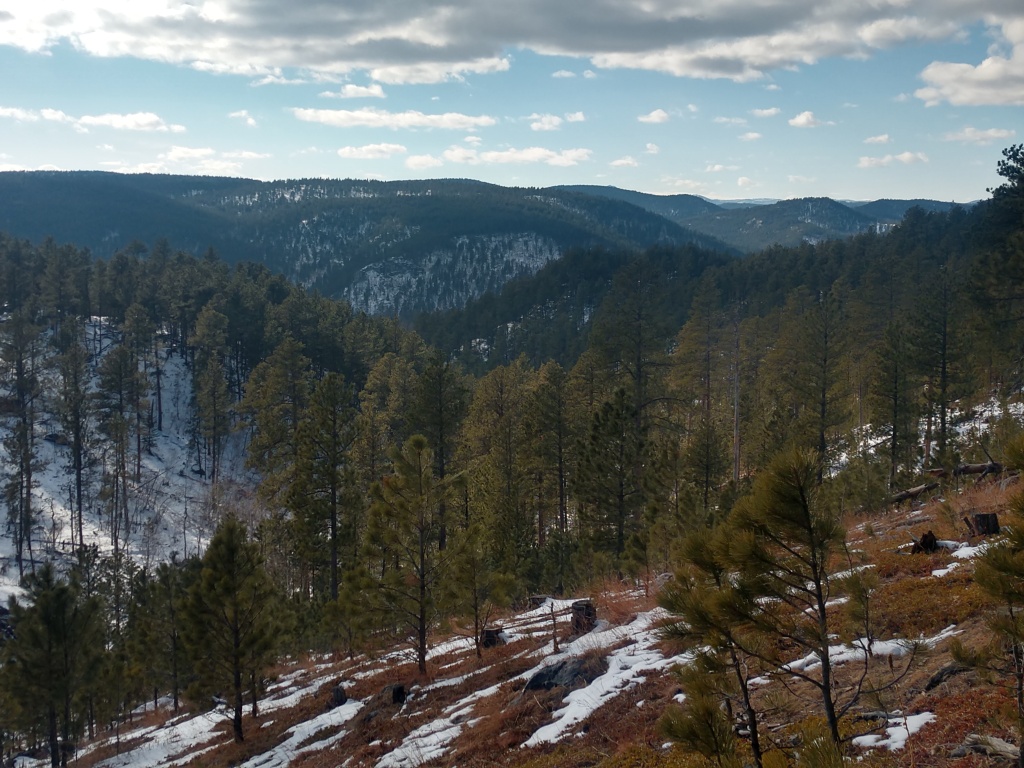
Psalm 111 is all about praising God. We can be drawn to praise in a variety of ways. Two days ago, for example, my wife and I were on a hike. There was about four inches of snow blanketing the ground. The sky was so blue. At times we would pause – sometimes along the path after a long uphill stretch and sometimes at a place that afforded a view. At both kinds of stops we were amazed by God’s creation. Along the path we stopped and could take in the small details and could hear all of the quiet sounds of nature. At the viewing stops, we could see out across the plains to the east or we could look west across the rolling hills covered in snow and pines. Here we could sense God’s grandeur and the majesty of creation. Here too we were reminded of our awesome God. We were able to praise God for the work of his hands.

In verse two the psalmist declares: “Great are the works of the Lord; they are pondered by all who delight in them”. On Sunday afternoon it was God’s creation that led us to delight in him. On Sunday morning it was a man’s testimony about God’s work on a mission trip that led us to praise and delight. In the first half of Psalm 111, God’s grace and compassion and provision are what draws the writer to praise God. These gifts of God are wrapped in the covenant, which also connects to the reasons to praise God found in the second half of the Psalm. Working out the covenant to Abraham, the psalmist remembers how God gave them the Promised Land. Recalling the steadfastness, faithfulness, and uprightness of God, the psalmist looks to the redemption that God provides, ordaining his covenant forever. Here I connect to the Psalm most personally. The redemption of God came in the person of Jesus, he who established the new covenant forever through his blood shed on the cross.

The Psalm closes by reminding us that “the fear of the Lord is the beginning of wisdom”. In the Biblical sense, fear is not being afraid of God. It is a fear in terms of reverence and awe. It was what I felt as I was awestruck gazing out at the scene pictured above. It is what you have felt when you have been caught by God’s power or love or grace at different times in your life. As our response today, may we too offer words of thanksgiving and praise to the Lord our God!

Prayer: Lord God, thank you for the many, many times when I have been amazed by your great works. These revelations, these epiphanies, are such a blessing. You are an amazing and awesome God! Amen.


Leave a comment

Forward in Faith

Reading: Mark 1: 16-20

Verse 18: “At once they left their nets and followed him”.

Photo credit: Jillian Werner

In today’s passage Jesus calls the first four disciples. They are just regular people. All four are fishermen, used to a hard life. They work long hours, endure the weather, and rely upon the water for their livelihood. This day began just about like every other day – until Jesus walks along the shore. This scenario is true for most of us. Our days start about the same each day and then sometimes Jesus shows up, calling us into ministry.

First Jesus comes to Simon and Andrew. They are at work when Jesus comes, casting their nets into the sea. He simply says, “Come, follow me, and I will make you fish for men”. We read that “at once” they left their nets – right there in the water – and followed. The call of James and John is similar. They are mending their nets when Jesus calls them. “Without delay” James and John leave their father and the hired men behind to follow Jesus. Is this the lesson we are to take from today’s reading?

It certainly is one of them. Most of the opportunities we have to “come and follow” are moments unfolding in life at that time. The person the Holy Spirit nudges us towards may not be there any more or the particular need may not be there when we see them the next time. The door or window of opportunity that is open when the Spirit whispers in our ear may close or shut if we say we’ll get to it “tomorrow”. And, honestly, what call would Jesus give to you or me that would compare to the call these four fishermen received today? Well, honestly, each call rises to the level of being a disciple.

The first step for Andrew, Simon, James, and John is the first step for each of us. The first step is to decide if we trust Jesus. When we are nudged to go to that person or when the Holy Spirit whispers into our heart, we have no idea where that step will take us. Yet, just like these fishermen, we are called to step forward in faith. As Jesus calls us today or tomorrow or another day, may we each trust in the Lord. Without delay, may we go where the Lord sends us.

Prayer: Lord God, I’ve come to see that “not now” most often means “no”. Help me to be better in those moments when you call. That “thing” that feels oh so important is never as important as the person or need you are calling me to. Make me more obedient, Lord. Amen.


Leave a comment

Undeserved? YES!

Reading: Matthew 20: 1-16

Verse 1: “The kingdom of God is like a landowner who went out early in the morning to hire men to work in his vineyard”.

Today’s parable in Matthew is the second in a row where Jesus teaches about God’s upside-down kingdom. If we were the workers who were hired early in the morning, we too would be upset when we received the same pay as those who worked only one hour. Like these workers, it would not matter a whole lot to us that we agreed to our pay before we even started working or that it was a fair days wage. Similarly, those who worked nine hours would be pretty upset, those who worked six hours would be kind of upset… On the surface level we struggle with this story just as we can sometimes struggle with the story of the thief on the cross found in Luke 23.

Jesus’ actual behavior also reflects this upside-down feel. He did not spend most of his time in the temple. He did not recruit his followers from elite rabbi schools. Jesus himself was not even trained as a professional rabbi. The religious leaders were much like the full day workers in our parable. They cringed and recoiled when Jesus forgave the sins of adulterous women and greedy tax collectors and the lame and deaf and mute – those obviously carrying the lifelong burden of some unrepentant sin. Like the thief on the cross and the workers who only came at the last hour, people like these do not deserve such easy grace, such free flowing forgiveness.

Do we sometimes cringe and recoil at who God continues to invite into the kingdom of God? Do we ever walk into church on a Sunday morning and wonder, Who let them in? If so, we need to check the inner religious snob hiding inside of us too.

I do not know about you, but I am glad that God is the God of late in life professions of faith and death bed confessions of Jesus as Lord. That expression of generous and unconditional grace is the same exact grace that forgives my struggle with pride for the zillionth time. Yes, yes, we rejoice at that grace. Whether one comes at the first hour or at the last hour, may all hear about and come to experience that same extravagant and wonderful grace.

Prayer: Loving and generous God, it is so wonderful to live within your abundant and generous grace. Even though I may not deserve to experience it over and over, you continue to pour it over me time and time again. Thank you for your love of a sinner like me. Amen.


Leave a comment

Sincere, Devoted, Selfless

Reading: Romans 12: 9-21

Verse 10: “Be devoted to one another in brotherly love. Honor one another above yourselves”.

The section for today is titled “Love” in my Bible. If I had to choose just one word to describe or define God or Jesus, love would be the word. Love guides all that the divine does and says. In today’s passage, Paul encourages us to live the same way.

“Love” is a word that has many applications and even more degrees at the human level. Love, like most words, can be tossed around and can be easily manipulated. It can be twisted for our own purposes. These types of uses fall under the “hate what is evil” part of verse nine. Paul begins today by slicing through all of this by writing “love must be sincere”. Other translations use pure or genuine. It is a calling to love as God and as Jesus love. As Paul urges us to “cling to what is good”, I am reminded of the WWJD slogan. Well, Jesus would love.

In verse ten Paul writes, “Be devoted to one another in brotherly love. Honor one another above yourselves”. The first part of this verse mainly covers agape or brotherly love but the same ideas are essential with all forms of love. Being devoted means commitment and investment in the relationship. It means always honoring and respecting the other person. This approach naturally leads into the second part of this verse. Genuine or sincere love makes the intentional and purposeful choice to place the other person’s needs and wants ahead of our own. This is a call to selfless love. Often it is a sacrificial love. Here too we are reminded of the love that Jesus Christ modeled throughout his ministry and especially on the cross. There he put the needs of the entire world before his own wants as he conceded “not my will but your will be done” to God in the garden.

As we consider what sincere, devoted, selfless love looks like today, may we be thankful for Christ and for others who have loved and who love us this way. And may we strive to love in this model ourselves. May it be so with all we meet.

Prayer: Lord God, to have such a love is admittedly not always easy. The easier path is selfish and inwardly focused. Open my heart to love as you love. Help me to deny self and to even die to those parts of myself. Mold me and shape me to love as you first loved me. Amen.


Leave a comment

Pressing On

Reading: Matthew 16: 21-28

Verse 24: “If anyone would come after me, he must deny himself and take up his cross and follow me”.

In today’s passage Jesus is preparing his disciples for a radical change – his death, followed by him being “raised to life”. The time the twelve have spent with Jesus must have been the best time of their lives. They have witnessed all kinds of miracles and have been a part of a few. They have been side by side with love lived out to the full. They have been blessed with the wisdom of God. If I could just have dinner with anyone in the world, far and away my choice would be Jesus.

The news Jesus delivers is hard to fathom. How could this even happen to the Messiah? How could that be the end of the story? There had to have been a personal side to the emotions the twelve felt too. Peter says, “Never, Lord”! This is the same Peter who was proclaimed the “rock” upon which Jesus would “build my church”. Following these new words from Peter, Jesus says to him, “Get behind me, Satan”. Imagine how that must have stung Peter. The Lord has a way of keeping us humble. Peter is not thinking of the “things of God” – of the plan laid out for Jesus and for humankind. He is not thinking of the Messiah of love, mercy, compassion, sacrifice. Peter is thinking of what Peter wants – to just continue as it has been. We never want to lose someone or something we love.

Jesus then turns to all of the disciples and says, “If anyone would come after me, he must deny himself and take up his cross and follow me”. For Peter and probably for all of the disciples, the initial denial will be the desire for Jesus to stay with them. The death and resurrection are critical pieces of the plan. They will also be asked to deny self in many more ways as they follow the risen Lord. They will each take up the cross and sacrifice many things along the journey. Such is the cost of discipleship. It is a sobering thought.

Like the twelve, we prefer life to be good, to move along smoothly. It is well with our souls when we are surrounded by those we love, enjoying life, feeling closely connected to the Lord. But the storms of life come, we are drawn to crossroads, we too face death and loss. And at times we too must take up our faith, stand with or for Jesus, and count the cost. This is how we carry our cross. With God, it is always one we can bear, always a path we can tread. It is so because we do not walk alone. As we long for our reward, may we each press on toward the goal of heaven, trusting in God each step of the way.

Prayer: Redeeming and saving God, strengthen me for the journey ahead. Grant me the power to walk the path you place before me. Fill me with your love, mercy, compassion, sacrifice. Each day may I offer all that I am in service to you, my Lord and King. Amen.


Leave a comment

Faithful Sons and Daughters

Reading: Romans 8: 12-25

Verse 15: “You did not receive a spirit that makes you a slave again to fear, but you received the Spirit of sonship”.

In today’s passage we continue with Paul’s words concerning our struggle with sin. Over the past few weeks the readings from Romans have focused on our inner conflict with good and evil. In this week’s verses Paul begins by speaking of an “obligation” that we have. That obligation, using Paul’s word, is to live in alignment with God. What allows us to fulfill our obligation is the Holy Spirit dwelling within us.

Once we choose Christ over self and all the other things of this world, we are then led by the Spirit. In verse fifteen Paul writes, “You did not receive a spirit that makes you a slave again to fear, but you received the Spirit of sonship”. It is wonderful that we do not have to be slaves to fear or sin any longer. But what does it mean to receive “sonship”? In that culture your name meant everything. Just consider how often the Bible refers to someone as ___, son of ___. In that culture the son(s) almost always followed in their father’s footsteps. Why was Jesus a carpenter? Why were his brothers carpenters? Because Joseph was a carpenter! And it was also about more than your occupation. Jesus would have learned how to be a skillful and honest and hard-working and humble carpenter. Character and faith were passed along too.

What is Paul implying then about us receiving a spirit of sonship? As we read on Paul tells us that it means we are “heirs of God and co-heirs with Christ”. As believers in God and as followers of Jesus we seek to be like Jesus. His main occupations were humble servant and obedient son. The qualities that Jesus exhibited are to be our qualities as well: loving, kind, patient, gentle, self-controlled, merciful, gracious, generous, forgiving… This is the obligation when we choose to be called children of God.

Following isn’t always easy or comfortable. At times we will also be called or led to “share in his sufferings”. Placing self after God and others will lead to times of suffering. That is the way of the cross. But the cross also led to glory. We too are promised that we will share in that glory one day. The “redemption of our bodies” brings us hope. One day we too will experience our final adoption into our heavenly home. Until that day, may we all walk as faithful sons and daughters of the Lord our God.

Prayer: Father God, thank you for inviting me into the family. There is no place I’d rather be. Grant that I may walk as a faithful child of yours today, sharing your love and grace and mercy with all that I meet. May it ever be so. Amen.


Leave a comment

Remaining Connected

Reading: Genesis 25: 19-34

Verse 21: “Isaac prayed to the Lord on behalf of his wife, because she was barren”.

Last week we looked at the miraculous story of finding a wife for Isaac. The baby born when mom and dad were 90 and 100, respectively, marries a wife that clearly God had a hand in selecting. Remember how the servant’s prayer was exactly how things unfolded in finding Rebekah? It seemed like a fairy tale beginning to a storybook marriage. But then, in today’s passage, we find that it is not exactly the case. They cannot have children. Rebekah is barren.

One of the main reasons for marriage was to have children, to produce heirs. Children were a couple’s pride and joy. They were a sign of God’s blessings. But Isaac and Rebekah were without children. Like Abraham and Sarah before them, like Zechariah and Elizabeth and many other couples to follow, this barrenness was like a cross to bear. And like all the other cases of barrenness that we read about in the Bible, God chooses to intervene in their behalf. In verse 21 we read, “Isaac prayed to the Lord on behalf of his wife, because she was barren”. God responds with twins! As it was with all of these couples, God has a plan and will work it out in his time and in his way.

Although for most of us barrenness is not our issue, for some couples it is. Others deal with sickness or disease. Some struggle with an addiction. Anger, doubt, anxiety, pride, selfishness, loneliness, singleness – the list of things we bring to God is long. We all need God’s intervention. Whatever valley we are in or whichever sin we are currently dealing with, we all need God to answer our prayer. For us, as it well may have been for Isaac, the waiting is the hardest part.

In the passage it sounds so easy: he prayed and they become pregnant – all in one verse. We’d all like our prayers answered in what appears to be expediency. But more often our reality is like Isaac and Rebekah’s reality – married when he was 40, the twins are not born for another 20 years. For us there is often a span of time that falls between our initial prayer and God’s response. Isaac and Rebekah remain connected to God and God remains connected to them. They trust in God’s plan. May we do so as well.

Prayer: God of all, you created this world and continue to create, to form, to shape, to guide. Help me to have a faith that is trusting and patient, content and assured. Lead me to a faithful and long walk with you. Amen.


Leave a comment

Losing One’s Life

Reading: Matthew 10: 24-39

Verses 38-39: “Anyone who does not take up his cross and follow me is not worthy of me… whoever loses his life for my sake will find it”.

Jesus’ words today are really about the cost of discipleship. Over the years, the cost has been varying degrees of suffering and sacrifice, depending on the era and location. In Jesus’ day, he and his disciples were oppressed by both the Jews and the Romans. Both saw Jesus and his small group of followers as a potential threat and as a people who were not worshiping the “correct” way. Beatings and imprisonment and death would become the norms for some time. Similar costs exist in places around the world today. But here in our nation and in most of the western world the cost of following Jesus is maybe a little rejection and perhaps some scorn or ridicule. At times our faith may cost us a job or some friends.

After explaining the costs to his disciples and followers, Jesus closes with these words: “Anyone who does not take up his cross and follow me is not worthy of me… whoever loses his life for my sake will find it”. The cross is standing out from the world and giving instead of taking. It is to live in the world as Jesus lived in the world, offering all of himself before considering what he could get out of another. It was standing up for the ones without voice or power. This is the idea of dying to self, of losing one’s life for Christ’s sake. It is placing self after faith and family and others. It is being selfless.

In our modern culture, this is not an easy place to be. We are told that the way is narrow that leads to life abundant and eternal. The losing of self leads to community and connection, to deeper relationships with God and with one another. It is living for the building of the kingdom of God here and now. It is love itself lived out in all we do and say and think. May this be the sacrifice we each make day by day.

Prayer: Lord God, the opportunities are there. If I will but get outside of my comfort zone, outside of my walls. It is engaged with the world, giving freely of self, that life is really blessed and full of joy. May I humbly serve you this day. Amen.


Leave a comment

For All

Reading: Romans 8: 6-8

Verse 8: “God demonstrates his own love for us in this: while we were still sinners, Christ died for us”.

As the second half of our Romans reading opens, we are reminded again of how God is in control. We read, “at just the right time”. Not a moment too soon, not a few days too late. Perhaps it was when humanity needed saving the most. Maybe it was when things lined up just right from God’s perspective. Possibly it was a tipping point that none of us can see from this side of the veil. But at just the right time, “Christ died for the ungodly”. That is me and that is you and that it all people everywhere. Christ died for all.

The act of sacrificial death born out on the cross begs the question: Why? Paul answers the question in verse eight: “God demonstrates his own love for us in this: while we were still sinners, Christ died for us”. Why? Because God loved you and me and all of humanity so much that he was willing to send his son to die a painful death. Why? Because the price had to be paid for the sins of the world – mine, yours, all of ours. Why? Because resurrection can happen only after death. It is quite the demonstration of love.

If Christ was willing to die for us while we were still sinners, what should our response be to those we encounter that need healing or redemption or restoration or new life? Should we be willing to go as far as Jesus went to minister to those he met? If not death, then how far should we be willing to go to end injustice in all forms, to break bonds and addictions, to cross unspoken barriers, to offer forgiveness and grace? Should we even have a line?

When Jesus encountered someone in need, he did not have them fill out a questionnaire to determine if they qualified or fit certain parameters. He did not evaluate them to see if they were worth his time and energies. No, Jesus came for all and he loved all. We see this reflected in his death – he died for all. And before his final departure, Jesus instructed his followers to go and do likewise. Today, may we seek to model that same love – no conditions, no qualifications, no strings attached. May we simply love and serve all we meet today.

Prayer: Loving God, open my heart to your love, that in receiving I may give. Bind my will to your will and my ways to your ways. Empower me to love and serve others well today. Amen.