pastorjohnb

Thoughts and musings on faith and our mighty God!


Leave a comment

God’s Longing

Reading: Hosea 6-10

Hosea 6:6 – “I desire faithful love and not sacrifice, the knowledge of God instead of entirely burned offerings.”

Chapter 6 begins with an invitation to return to the Lord. In justice God had injured and struck down Israel. In righteousness God will heal and bind them up. The rest of chapters 6-10 detail the sins of Israel: nationalism, idolatry, false worship, and trusting in self. All are guilty. Again and again Israel has not chosen to walk in the ways of the Lord.

God begins our reading with two rhetorical questions. Hod wonders what to do with Ephraim (Israel) and Judah. God’s hope is stated in verse 6, “I desire faithful love and not sacrifice, the knowledge of God instead of entirely burned offerings.” Israel is going through the motions, doing the things. But there is no sincerity or meaning in their worship. Because of their unfaithfulness, God will “bring them down.” In chapter 8 God declares that Israel has broken the covenant, making idols of gold and silver. They will be swallowed up and will go into Assyria, “a wild ass wandering alone.”

Israel’s sacrifices do not please God. Therefore, their bread will be for “their hunger alone.” It will not come into God’s house. In 9:8-9 the priests are addressed. Even though they are supposed to be “God’s watchmen” rejection is in God’s house. They are corrupt and wicked. The priests attend to the regular sacrifice, yes, but they do not check Israel’s sins. They do not speak out and call our Israel’s sins. They too are a part of the evil. God declares, “I will drive them out of my house. I will love them no more.”

Chapter 10 closes with hope once again. God calls Israel to “sow for yourselves righteousness, reap faithful love.” It is time to seek the Lord. Then, in turn, God promises to “rain righteousness upon you.” Israel has “plowed wickedness… reaped depravity.” God longs for covenant renewal. But the people must be willing. God longs for this today. May it be so.

Prayer: Lord God, you see all of your children’s sins. You see our sin. Yes, at times we too choose selfishness, idolatry, pride. Break us of these evils, Lord. Heal and bind up our sins. Guide and lead us to be people of righteousness and justice. Rain down your power and love. Rain down justice and righteousness. Amen.


1 Comment

Paths Diverge Sharply

Readings: Proverbs 3

‭Proverbs 3:34-35 – “He mocks mockers, but he shows favor to the humble. The wise gain respect, but fools receive shame.”

Today’s reading first invites us to hold onto loyalty and faithfulness, to bind them on our necks, to write them on “the tablet of your heart.” In later years the Jews would write scriptures on pieces of paper and would place these in small boxes that they strapped to their forearms and foreheads. They knew that wisdom came through a relationship with God that was founded on God’s word. These phylactery boxes were visible reminders of God, much like the crosses and tattoos many Christians wear today.

Solomon reminds us, the sons and daughters, that wisdom brings happiness, long life, wealth, and honor. With wisdom, our work and our sleep is pleasant and peaceful. We are encouraged to hold onto sound judgment and discretion. Wisdom gives us the ability to think through things, to make good decisions. Wisdom also builds up in us humility as we learn more and more about trusting in God and not in self. These practices will bring “life” to our “whole being” – heart, mind, body, and soul.

In verses 27-35 we find some warnings followed by the outcomes of choosing evil or of choosing wisdom and of walking in a relationship with the Lord. The warnings: don’t harm your neighbor, don’t accuse for no reason, don’t envy violent people. Those who choose these paths are cursed, detestable, mocked, and shamed. Those who choose the path of wisdom are close friends with God, are blessed, shown favor, and gain respect. The best choice is clear. The two paths diverge sharply. “My son, [my daughter,] don’t forget my instruction.”

Prayer: Lord God, your ways are good, just, right. Your heart is full of love, grace, compassion, mercy. You give provision for those in need, peace for those who are troubled. Lord, fill us with your wisdom so that we too can be these things lived out in the world today. Amen.


Leave a comment

One Problem

Readings: Job 1, Job 2, Job 3, Job 4, Job 5

Job 1:21 – “The LORD has given; the LORD has taken; bless the LORD’s name.”

Photo credit: Marek Pospisil

We begin Job today. Whereas in Esther there was a threat of suffering that prompted action, in Job the suffering comes – in one huge jolt. Both Esther and Job “argue” against the universally held belief of the time: obey God and be blessed, disobey God and be punished.

As Job begins the narrator makes a very important statement for us to hold to as we read this book: Job is honest and full of integrity; he fears God and avoids evil. Job is so righteous, in fact, he makes sacrifices just in case his children have sinned. Because Job is righteous, in ancient thoughts, he should not suffer. But suffer he does! At the hands of the Adversary, Job loses all his livestock, his servants, and all 10 children. This would lead a lesser man to curse God. Not Job. He says, “The LORD has given; the LORD has taken; bless the LORD’s name.” Job too operates, at least for now, under the blessing and punishment paradigm.

To further test Job’s faith the Adversary receives permission to afflict Job’s health. Severe sores cover his whole body. Job’s wife – who has also experienced this rush of loss and who knows herself to be innocent of sin – encourages Job to just curse God and die. Why fight it? But Job responds much the same way: how can one accept good from God but not bad from God as well? Again the paradigm.

Job’s three friends arrive. Eliphaz, Bildad, and Zophar sit with Job for seven days. They too look at Job in his present state and assume that he is a great sinner. Why else would this happen to him? Job speaks first, rueing the day he was born. In the religious thinking of the day, there was no concept yet of an afterlife. The greatest gift of God was life itself. Job wishes that he had never received this gift. This is an indication of Job’s struggle to understand what is happening to him.

Eliphaz responds. He sees Job as a sinner who needs to repent. This drives all that he says. If one “plows sin” then one “sows trouble.” He encourages Job to put his case to God. He reminds Job that God wants to forgive and will bind up and heal. One problem: Job is sinless. What case can he possibly bring before God?

Prayer: Lord God, what wrestling we begin today! Suffering and loss continue to be a part of our lives and our world. Questions continue to abound! As we walk with Job, his friends, with you, help us to gain understanding and insight into who you really are: not the cause but the one who walks with us. Amen.


Leave a comment

Such… Good… News

Reading: Isaiah 61:1-4

Verse 1: “The Lord has sent me to bring good news to the poor… to bind up… to proclaim release for captives… liberation for prisoners.”

As Isaiah’s ministry and Israel’s time in exile is coming to a close, the prophet offers these words of hope and promise. These words were written to a people living in captivity in a foreign land. These words can be applied to many times and to many people who are experiencing exile in many forms. These words spoke to the people of Jesus’ day as they lived under the Roman occupation. These words speak to many people today. These words speak to you and to me.

Verse 1 is so powerful. It is jam-packed with hope, promise, rescue… It begins with a call to “preach good news to the poor.” Maybe this is material good news – food, help with rent or gas or utilities, warm clothes for the winter. Maybe this is spiritual aide that helps them to know that they are beloved and worthy, that they matter and belong to God and to us. Then there is “binding up” those who are broken and hurting. Verses 2 and 3 also touch on this. The binding up is healing for the ill and the suffering. It is also comforting those who grieve. It is drawing in the lonely. There is also proclaiming the freedom from captivity and darkness that the Lord brings. This encompasses the Israelites literal release from Babylon. It also includes release from addictions and other abusive relationships or from unjust situations and systems. And it includes freedom and release from our sins and from the guilt and shame that is often connected to our sin.

In one form or another we have each experienced each of these forms of the good news. As followers of Jesus Christ we too are sent to bring this good news to others. Taking where we have been, recognizing how we got to where we are at, may we help others to experience the good news of Jesus Christ our Lord.

Prayer: Lord God, walking and living with you, we’ve experienced firsthand all of what Isaiah speaks of. We’ve been healed, freed, rescued… Use each of us today and every day to bring the good news of Jesus Christ to those who need healing or hope, release or rescue, restoration or redemption. Amen.


Leave a comment

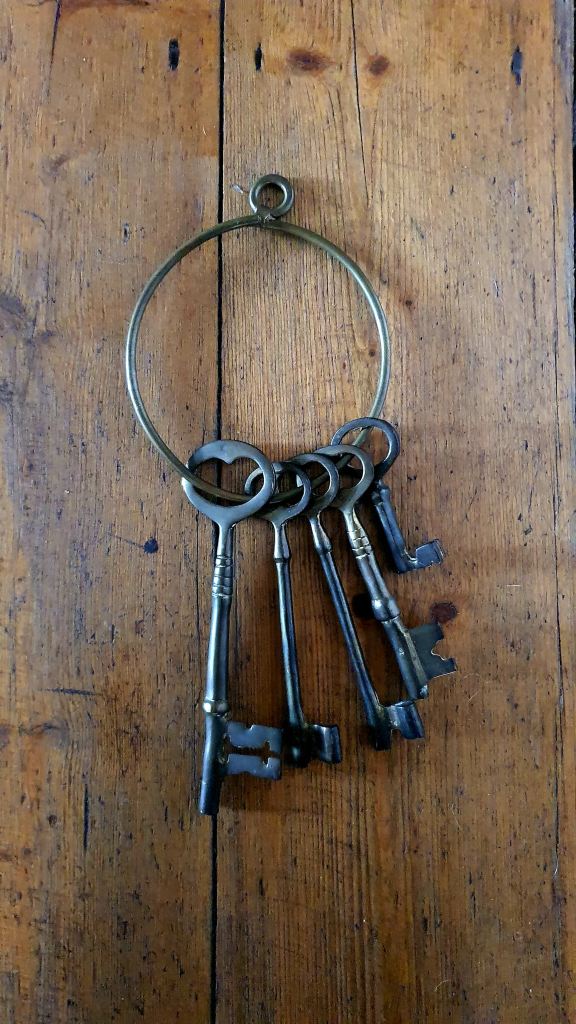
Keys

Reading: Matthew 16:13-20

Verse 19: “I’ll give you the keys of the kingdom of heaven.”

Photo credit: Nerene Grobler

Jesus pauses to get a pulse on how things are going. He asks the disciples who people say he is. The response provides a pretty impressive list of prophets. Jesus has a good amount of respect from the general population. Then he turns to the 12, to his inner circle, to the ones who have been with him practically 24/7 for almost 3 years. He says, “What about you? Who do you say I am?” This is a personal question.

Simon answers first, declaring Jesus the Christ, the Messiah, the Son of God. Jesus recognizes that the Spirit has given him this answer and because of this he says that Peter is blessed. Continuing Jesus renames Simon to Peter, which translates “rock.” He then identifies Peter as the one upon whom Jesus will build his church. Peter will be the leader of the early church.

And then Jesus says, “I’ll give you the keys of the kingdom of heaven.” Keys represent access to knowledge. Peter – and all others who come to call on Jesus as Messiah and Lord – will receive all the knowledge necessary to bind or set free from bondage those struggling with or trapped in sin. Just as the Spirit revealed Jesus’ true identity to Peter, so too will the Holy Spirit reveal the words and actions needed to bring others to Christ, the one who sets us free from our sins. With a holy confidence may we witness to this good news!

Prayer: Lord God, thank you for all who have poured into me, building up my faith and my knowledge of you. Thank you for those that continue to do so, including the Holy Spirit. Continue to fill me. Continue to use me to share the good news with a world in need of Jesus Christ. Amen.


Leave a comment

For This Reason

Reading: John 12: 27-33

Verse 27: “Now my heart is troubled… It was for this very reason I came to this hour”.

In our passage for today we see a mingling of the human and the divine. The human part of Jesus says, “Now my heart is troubled”. He knows what lies ahead. Jesus is well aware of the events that will unfold. The betrayal. The beating. The nails. The agony. The pain and then the last breath. My heart would be greatly troubled too. This side of Jesus ponders asking God to “save me from this hour”.

Jesus is not only human. There is a connection to the divine too. He is God incarnate, God in the flesh. The divine within triumphs as he says, “It was for this very reason I came to this hour”. Yes, Jesus came to show us what it looks like to obediently live out God’s love in the world. Even more, though, he came to defeat the powers of sin and death – humanity’s two great enemies. In defeating the two main weapons of Satan, Jesus glorifies God. God has the final word. This small victory is a taste of the final victory that will come when Jesus returns at the end of this age. In this moment, God speaks from heaven, affirming Jesus’desire to glorify God through the cross.

Our passage closes with Jesus pointing towards the other side of the cross. In verse 32 he says, “But I, when I am lifted up from the earth, will draw all men [and women] to myself”. When he is resurrected the chains of sin and death will be forever broken. Freeing humanity from that which binds us to the earth, Jesus draws us to himself, to the eternal. There is more, though. Jesus does not wait for us to die to draw us to himself. As we live out our earthly lives the Spirit draws us into Jesus’ love, peace, grace, strength, beauty, joy, hope, forgiveness… as we live as a child of God. In Spirit, Jesus walks this life with us through the highs and lows and every place in between.

One day we will be lifted up and will experience the full glory of God in eternity. Day by day we experience Jesus’ presence in all of life. As we do so, may we seek to help draw others to Christ, bringing God the glory in all we do and say and think. This is the reason that we exist too. May we draw others to Jesus, sharing his love with all we meet.

Prayer: Lord God, your son gave all for me. In your great love for us you gave him up to the powers of this world. Thank you. Guide me, O God, to give all for you. Use me as you will. Pour me out for others. Amen.


Leave a comment

Hope in Exile

Reading: Ezekiel 34: 11-16

Verse 16: “I will search for the lost and bring back the strays. I will bind up the injured and strengthen the weak”.

Ezekiel was one of God’s prophets. He ministered to Israel during their time in exile in Babylon. After being defeated by the Babylonians, many Israelites were dispersed throughout the kingdom of their conquerors. These words from God’s prophet would bring hope during a difficult time. These words of God would remind the people that their current experience will not be their reality forever. Both of these circumstances are true today. In our current pandemic, there is no doubt that this is a difficult time for almost everyone. Although it feels like it has been a really long time, we know that the virus and its effects will not last forever. Yet, in the midst of it, we are much like the Israelites in Babylon – isolated, feeling powerless, becoming a bit hopeless, grieving, separated.

Beginning in verse eleven God reveals his plan. In this verse God tells the people that he will “search for my sheep and look after them”. In the next verse God promises to “rescue them” from isolation, from exile, from “all the places where they were scattered”. Then God shares that he will bring them back home. In verse thirteen God states, “I will bring them into their own land”. God will search for his children; God will rescue them and gather them; and, God will bring them back home. Living in a time of defeat, in a time of exile, to hear that God is still God, that God loves and cares for them, that God will once again bring them all back together – these are words of healing and hope.

During these COVID times, just as was the case in exile, some people are coping or doing okay, some are not. Those who are naturally resilient, those who are disposed to optimism, those whose faith has grown in these times – these folks are going alright. There is a middle group who are mostly getting by. They have some of these positive characteristics, but life is now a delicate balance. And there are those who have depleted their reserves of these characteristics. They are struggling emotionally, physically, spiritually, relationally. This last group, especially, needs to hear verse sixteen’s promise: “I will search for the lost and bring back the strays. I will bind up the injured and strengthen the weak”. God has a special love for those hurting the most. Jesus, his son, modeled this love. Jesus, our Lord, calls us to follow his lead. To those around us most feeling like they are in exile, may we share these words of hope and love. And, if we dare, may we be these words of hope and love. May it be so for you and for me.

Prayer: Lord God, lead and guide me to the list, to the strays, to the weak. Set my feet towards those hurting in my communities. Break my heart for what breaks yours. Fill my broken heart with your love and care. Use me to bring hope to those without. May it be so. Amen.


Leave a comment

In and With Christ

Reading: Matthew 18: 18-20

Verse 20: “For where two or three come together in my name, there I am with them”.

Today’s verses remind us that if we seek to make Jesus a part of our decisions, our actions, and our prayers, then he will be there with us. Coming out of his teaching on the process of seeking reconciliation with a brother or sister in Christ, Jesus reminds us that what we bind on earth (or loose) will be bound (or loosed) in heaven. That is pretty serious. Yet when we have walked the process and have covered it in prayer, we are assured of the outcome.

Walking the process, staying attuned to Jesus’ teachings and witness, covering it all in prayer – these steps form the foundation of verse nineteen as well. If we gather with our brothers and/or sisters in Christ and we come to a decision that has been covered in Christ, then we are told that God in heaven will respond. Again, the condition is the same. In the last verse we read, “For where two or three come together in my name, there I am with them”. When we gather in Jesus’ name to discern the will of God or to bring our righteous prayers to God, then Jesus is always there. There is power in aligning ourselves with God and in inviting Jesus and his witness into our discussions, decisions, and actions. Jesus will shape and guide all we do when gathered as his disciples and as children of God.

As need arises may we gather physically with our brothers and sisters in Christ and with Christ himself in Spirit, trusting the Father to lead and guide and bless all we do and say and pray. May it be so.

Prayer: Loving Father, help me to always seek your will and your ways first and foremost. Lead me to like-minded brothers and sisters in Christ that we may seek your guidance together. Strengthen the community of faith through our communal prayers. Make us alive in you. Amen.


Leave a comment

Our Battle

Reading: Psalm 149: 5-9

Verse 6: “May the praise of God be in their mouths and a double-edged sword in their hands”.

The Psalm that opens talking about singing, rejoicing, and praising God appears to take a turn in verse six. It begins with “the praise of God” but then a “double-edged sword” enters the picture. There is a call to action in the second half of the Psalm. The praise and worship must always lead to some sort of action. Faith must affect and effect us. In the Psalm there is vengeance and punishment and carrying out of sentences. Taken at face value, it is violent and perhaps offends readers today.

In literal terms, warfare and battle and violence were much more common in ancient times. For Israel, there were clear lines between themselves and the rest of the world. Many of the laws given by God kept the Israelites within their own community. To venture into the world risked being led astray, being made unclean. Even in the New Testament there is an “us versus them” feel hanging in the air every time words like “Gentile” and “Samaritan” are used. For Israel, they were led by God. Guidance, direction, action came through a prophet or by seeking God in prayer. The “carrying out the sentence” would be that which came from God. As the people of God entered the Promised Land, there was much “carrying out the sentence” against the people’s who had inhabited the land “flowing with milk and honey”. They did not go willingly or peaceably.

In the New Testament the writer of Hebrews references a double-edged sword. In chapter four it is described as the word of God. It pierces “soul from spirit” and it “judges the thoughts and intentions of the heart”. It is a refining and purifying action being described by the author. Taken in this sense, for us the sword would slash through the sin and evil in our hearts, much as the Israelites’ swords defended them from the evil in the world around them. We too seek to “bind up” those things that seek to sit on the throne of our heart, replacing Jesus as Lord. Our “sentence” is to live as Christ, being light and love in the world. In doing so we too experience the “glory of the saints”. Our battle is not with flesh and blood but with the dark powers of this world. May we too emerge victorious, singing praises to God as the Lord leads the way.

Prayer: Lord Jesus Christ, lead me to triumph over all that seeks to separate me from you. Help me see what is within that needs to die; be a hedge about me, keeping me from the evils of this world. Fill me with Holy Spirit power for the battle belongs to the Lord. Amen.


Leave a comment

All Over Town

Reading: Luke 8: 37-39

Verse 39: “Return home and tell how much God has done for you”.

Fear has been a common theme this week. Elijah’s fear drove him into the wilderness. Fear runs throughout this passage from Luke 8. Fear led the townspeople to first bind the demon-possessed man and then to drive him away when he kept breaking the chains. The demons inside the man fear Jesus more than another fear – being sent back the the Abyss. The townspeople fear Jesus, asking him to leave rather than risk the change he may work in their lives. The man who was healed also faces fear once again. It is the same fear that Elijah must have felt after he encountered God and was being sent back to the work of prophet.

The man only sits for a little while at Jesus’ feet before those who had driven him away come to drive Jesus away. He seeks a new community with Jesus and his disciples, begging to go with them. But God has a different plan for his newfound life. Instead of coming along, Jesus says to him, “Return home and tell how much God has done for you”. Jesus reminds the man of the power of God that has just brought him freedom. The man who had long been captive to demons was now free. The power of God is enough to lead him to do just what Jesus asked him to do. The man returned to his town and “told all over town how much Jesus had done for him”.

The truth of a changed life makes a powerful witness. The words of healing and restoration that come from the one who was made whole again can change lives. We have all found freedom in Christ. Our story may not be about being freed from something that possessed us, but it might be. It might be about the freedom we found in surrendering control to Jesus. It might be about the new life we found when we let go of our anger or pride or greed. We have all found freedom in Christ. We all have a story to tell that shares how much Jesus has done for us. May we claim our story and may we too share it all over town.

Prayer: God, thank you for grabbing ahold of me and making me new again. I was once lost, but you found me too. May I ever share the good news of what Jesus has done and continues to do for me. Amen.