pastorjohnb

Thoughts and musings on faith and our mighty God!


Leave a comment

A Trusting Place

Reading: Psalm 51: 1-7

Verse 2: “Wash away all my iniquity and cleanse me from my sin”.

In Psalm 51 David is very honest with God. God has just revealed how all-knowing and all-seeing he is through the words of Nathan the prophet. Using Nathan, God revealed the depth to which David had sunk in his lust for Bathsheba. This harsh shock was a wakeup call to David’s cruise control life and faith. When David finally sees clearly the condition of his heart he is staggered by what he sees. This Psalm is the outpouring of this realization. David knows without doubt that he is a sinner in need of God’s mercy.

David begins by asking for God’s mercy. It is a mercy rooted in God’s unfailing love. Then, in verse two, David pleads with God, saying, “Wash away all my iniquity and cleanse me from my sin”. David needs God to take away his sin; this is something he cannot do. David needs God to make him clean. Again, this is something David cannot do. In those times when we sin we too need God’s mercy and forgiveness. We too need God to cleanse and restore us to a right relationship with him. Like David, we must also first come to a place of recognizing and owning our sin and then we must take it before God with a contrite heart and humble spirit.

Lent is a season in the Christian year when we focus in on our relationship with God. Quiet time in prayer and reflection bring us to the place that Nathan brought David. David knew that “against you, you alone, have I sinned”. David recognized the truth that sin comes against God alone. So to God alone David went. In Lent we are invited to do the same – to seek God out in the solitude, to be still and silent before God, to yearn for the Holy Spirit to speak into our hearts. In this place we learn truth and we are “taught wisdom in the inmost place”. This place is a vulnerable place, a trusting place. And it is a place where our God of unfailing love will pour out his mercy, washing us clean, renewing our souls and reconciling our relationship with God. May we trust God with all that we are, becoming new and clean each time we kneel at his throne of grace. May it be so for you and for me.

Prayer: God of mercy and grace, draw me into your light, to the place where all is revealed. Call out my failures and my shortcomings; wash away the guilt and shame. Whisper your truths and your love into my being, empowering me to share your saving grace and redeeming mercy with a world in need. Amen.


Leave a comment

Good Works

Reading: Ephesians 2: 6-10

Verse 10: “We are God’s workmanship, created in Christ Jesus to do good works”.

In our passage yesterday we focused on how God saved us from our sins through his grace and love. Paid for by Christ, grace is available to all who call on Jesus Christ as Lord and Savior. Grace rests upon God’s no-matter-what love. God loves us no matter what we do, no matter what we do not do. This unconditional love is the core of who and what God is. Once we accept this love, Christ becomes alive in us. God’s love comes and dwells in our hearts in the Holy Spirit.

In today’s passage we hear about our response to God’s love and grace. In the gospels Jesus was clear that the highest calling of a disciple is to love -> love God, love one another. Jesus himself defined this as the mark of a disciple. Paul begins today by reminding us that grace is a gift. It is not something we can earn or work for. This is a humbling thought. Because it is a gift, freely and generously given, we are not to boast. We can be tempted to boast about things that God has given us: beauty, strength, physical or intellectual abilities… Humility is the key here too.

Paul does suggest we respond to the gift of grace and to the unconditional love of God. In verse ten Paul writes, “We are God’s workmanship, created in Christ Jesus to do good works”. What are “good works”? Jesus identifies some: feeding the hungry, visiting the sick and imprisoned, clothing the naked, housing the wanderer, loving our neighbor. Good works also include lifting the other, alleviating or sharing other’s burdens, walking through the valleys, sharing food and other blessings, standing with the powerless and marginalized, including others in our faith communities… Simply put, it is being Christ to the world. It is being light and love in the world, sharing the gifts that we have received. May we be generous as we spread his love today.

Prayer: Lord God, help me to love well today. In all I do and say may I share your love with others, helping each to feel the kingdom of God drawing near. Amen.


Leave a comment

Great in Love, Rich in Mercy

Reading: Ephesians 2: 1-5

Verse 4: “But because of his great love for us, God, who is rich in mercy, made us alive with Christ”.

Today’s passage is all about the change that God has made in us. Before Christ we were as Paul writes: “dead in our transgressions and sins”. We lived a life focused on self and on doing whatever we wanted to please self and our earthly desires. We lived according to the “ways of the world” and we were “disobedient” to God. For many of us older folks that meant distancing ourselves from the faith of our childhood and from the faith of our parents. For the younger readers, a larger segment grew up without a childhood church or faith. For all who came to faith the realization came that the things of this world are temporary. They never really satisfy or bring meaning and purpose to this life. Peace, contentment, joy… only come through the eternal relationship that we find in Jesus Christ.

Why didn’t God leave us there, dead in our sin? Why did God continue to pursue us even when we were running from him? We find our answer in verse four: “But because of his great love for us, God, who is rich in mercy, made us alive with Christ”. God’s love is greater than our sin. We were created to be in relationship with God and with one another. God calls and woos and chases us until we make the choice to invite him into our hearts or until we draw our last earthly breath. Faith, however, does not stop at our decision for Christ. Once we accept Christ we are not finished. It is just the beginning of our faith journey. We are not suddenly sinless. Satan continues to pursue us, often with renewed passion, enticing and tempting the flesh still within us. Yet the battle is different, it is changed. The field is no longer level. With Christ alive in us, we do not fight alone. The Holy Spirit leads and guides, convicts and corrects, ever helping us to choose Christ over the world, good over evil, light over darkness.

Lent is a season that reminds us of this battle, that draws us into combat. In Lent we are called again and again to look within, to seek out the parts of us that still need to yield to Christ’s authority and reign. In this seeking and yielding it is grace and mercy that provide the way. In love it is God’s grace and mercy that say our past doesn’t matter, that our selfishness or pride or fear doesn’t control us anymore, that we are loved just as we are. In the season of Lent and in the hard work that we are called to, this is the good news: we are loved, we are forgiven, we are saved by grace. Thanks be to God.

Prayer: Lord, thank you for your love that is so deep that I cannot ever reach the bottom. Thank you for your love that is so wide that I cannot ever see the other side. Thank you for your love that always surrounds me, even when I stumble and fall. What great love. Amen.


1 Comment

Covenant God

Reading: Genesis 17: 1-7

Verse 7: “I will establish my covenant as an everlasting covenant… to be your God and the God of your descendants”.

Photo credit: Geda Zyvatkauskaite

Yesterday as we looked at this passage we focused on how we are to keep the covenant. We are to “walk before God and be blameless”. God set this as the goal and Jesus lived out the example, giving us a goal to aim for, a model to follow. This is “how” we are to live out the covenant. Today we turn to the “why”.

God chose Abram to be the father of not only many nations but of God’s children. This was not something Abram decided and then set out to accomplish. God is the one who offers covenant relationship to Abram and Sarai. God is the one who invites them to be a partaker in the covenant. God is the one who upholds the covenant as God rules over the earth. The question for Abram and Sarai is this: will they trust God to be the covenant keeper?

Abram falls face down before God. He recognizes that God is supreme, almighty, all-powerful. This is Abram saying “yes” to God’s invitation into covenant relationship. In response God changes his name to Abraham, which means “father of many”. Later in the story God also changes Sarai’s name to Sarah, reflecting her role as the mother of nations. God defines the covenant this way: “I will establish my covenant as an everlasting covenant… to be your God and the God of your descendants”. God will be the God of Abraham and Sarah and their descendants forever. The time frame of the covenant again reinforces who is in control and who is the covenant keeper. Like Abraham and Sarah, we are finite, limited, human, flawed. God is eternal and forever and perfect. Abraham and Sarah would seek to walk blamelessly before God, just as we try to do. They would not be perfect, just as we are not perfect. Down through the generations, Abraham and Sarah’s descendants would break the covenant over and over. Again and again, God would keep the covenant of grace, loving us forever. Over and over we end up at the table of grace, being made right again, being restored back into relationship again. This is God’s nature, it is his character. God remains our God. God will always be our God. This is his covenant promise, sealed by his love. Thanks be to God.

Prayer: Loving God, you are forever, you are in total control. You are steadfast and true in keeping the covenant to be our God – to be my God. You love us no matter what. Thank you, God, for loving even me. Amen.


Leave a comment

May They Know

Reading: 2 Kings 2: 1-12 (and 13-14)

Verse 9: “Let me inherit a double portion of your spirit”.

Continuing from yesterday we see that Elisha and Elijah have at last arrived at the Jordan River. This is a place of transitions – it is where Joshua took on leadership from Moses as the Israelites crossed over into the Promised Land. Joshua struck the water with Moses’ staff and they crossed over on dry land. Elijah takes his cloak and strikes the water – Elijah and Elisha cross over on dry land.

Elijah knows the time has come. He asks Elisha what he can do for him before he is taken from him. Elisha responds, “Let me inherit a double portion of your spirit”. He wants to continue the work of his master and to do so to an even greater degree. Elisha wants to be twice as connected to God. Elijah understands the request and the enormity of the request. He tells Elisha that it will be so if he sees him being taken away. After the chariots of fire whisk Elijah away to heaven, Elisha tears his clothes in grief.

In verses thirteen and fourteen we see that the cloak has been left behind for Elisha, just as the staff was given to Joshua. Asking, “Where now is the Lord, the God of Elijah”? he strikes the Jordan with the cloak and crosses over on dry land. Clearly God is now with Elisha. The mantle has been passed. The Spirit of the Lord is upon Elisha.

At the close of Jesus’ ministry he too passed the mantle on to his disciples. To each of his disciples Jesus gave the gift of the Holy Spirit. In this way, Jesus passed on the mantle – the task of being God’s love lived out in the world. Joshua would go on to lead as Moses had led, Elisha would go on to prophecy as Elijah had. In the same way, as disciples we are to go on as Jesus taught us to. Led by the Spirit we are to continue in his footsteps, offering sacrificial service, radical welcome, unconditional love, undeserved grace… Just as Jesus stood out from the religious and political leaders of his day, we too are to stand out.

The fifty prophets stood at a distance watching. As Elisha struck the Jordan and crossed over on dry land, they knew a prophet was in the land. As folks stand and watch us, may they know that Jesus is in the land. May they know.

Prayer: Lord God, pour out your Spirit. May it be evident in me. As others see me, watch me, hear me, spend time with me, may they sense the presence of Jesus within me. May this presence lead to questions, to conversation, and to the sharing of faith. Amen.


Leave a comment

Being In and Sharing Out

Reading: Psalm 147: 1-11 and 20

Verse 11: “The Lord delights in those who fear him, who put their hope in his unfailing love”.

Using the opening verses of Psalm 147, we focused yesterday on some of the ways that God loves and cares for humankind. Recognizing God’s love and care led the psalmist and calls us to praise God. In verses ten and eleven the focus shifts slightly. Although God created the world and all that is in it, God does not find pleasure or delight in the “strength of the horse” or in the “legs of a man” or in any other physical thing or attribute. We feel loved when we reflect on God’s care for us, but we do not praise or worship the home or food or whatever else God provides. We worship and praise the one who creates and provides these things.

God finds pleasure and delight in us, those created in his image. In verse eleven we read, “The Lord delights in those who fear him, who put their hope in his unfailing love”. God delights in those who live in reverence and awe of who God is: holy and perfect, all-knowing and all-seeing, loving and merciful, just and compassionate. God delights in those who place their hope in his love. God finds pleasure when we live in close relationship with God, when we have faith in God, not in any of the things of this world.

How do we live our lives in such a way that shows God that our relationship with him is the most important thing in our life? It begins by striving to follow his example of love and compassion, justice and grace, healing and community. The example was given by God incarnate in Jesus. We show God by connecting with him – personally in prayer and study, corporately in worship and discipleship. If all we say and do is aimed at being in God’s presence and sharing that presence with the world, then we are “living praise” – bringing glory to the Lord. This day may we each be living praise, glorifying God in all that we are.

Prayer: Lord, you are my all in all. Without you I would be lost. Fill me to overflowing with your presence so that all I meet sense your love being poured out into their lives. Amen.


Leave a comment

Reverence and Awe

Reading: Psalm 111

Verse 2: “Great are the works of the Lord; they are pondered by all who delight in them”.

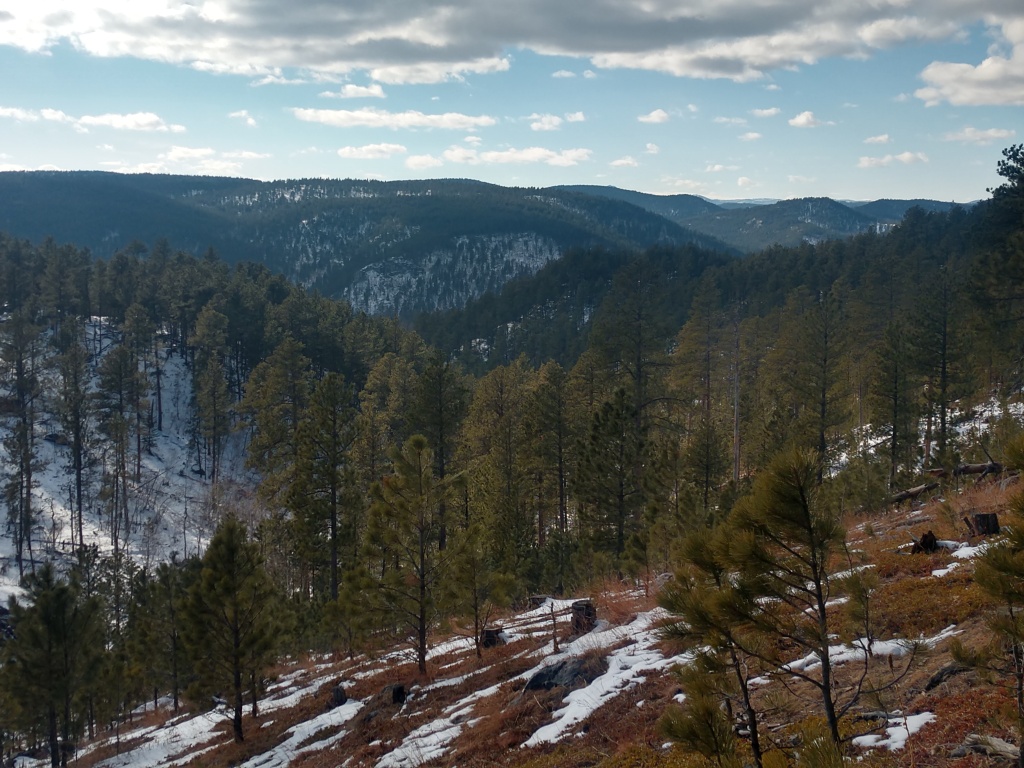
Psalm 111 is all about praising God. We can be drawn to praise in a variety of ways. Two days ago, for example, my wife and I were on a hike. There was about four inches of snow blanketing the ground. The sky was so blue. At times we would pause – sometimes along the path after a long uphill stretch and sometimes at a place that afforded a view. At both kinds of stops we were amazed by God’s creation. Along the path we stopped and could take in the small details and could hear all of the quiet sounds of nature. At the viewing stops, we could see out across the plains to the east or we could look west across the rolling hills covered in snow and pines. Here we could sense God’s grandeur and the majesty of creation. Here too we were reminded of our awesome God. We were able to praise God for the work of his hands.

In verse two the psalmist declares: “Great are the works of the Lord; they are pondered by all who delight in them”. On Sunday afternoon it was God’s creation that led us to delight in him. On Sunday morning it was a man’s testimony about God’s work on a mission trip that led us to praise and delight. In the first half of Psalm 111, God’s grace and compassion and provision are what draws the writer to praise God. These gifts of God are wrapped in the covenant, which also connects to the reasons to praise God found in the second half of the Psalm. Working out the covenant to Abraham, the psalmist remembers how God gave them the Promised Land. Recalling the steadfastness, faithfulness, and uprightness of God, the psalmist looks to the redemption that God provides, ordaining his covenant forever. Here I connect to the Psalm most personally. The redemption of God came in the person of Jesus, he who established the new covenant forever through his blood shed on the cross.

The Psalm closes by reminding us that “the fear of the Lord is the beginning of wisdom”. In the Biblical sense, fear is not being afraid of God. It is a fear in terms of reverence and awe. It was what I felt as I was awestruck gazing out at the scene pictured above. It is what you have felt when you have been caught by God’s power or love or grace at different times in your life. As our response today, may we too offer words of thanksgiving and praise to the Lord our God!

Prayer: Lord God, thank you for the many, many times when I have been amazed by your great works. These revelations, these epiphanies, are such a blessing. You are an amazing and awesome God! Amen.


Leave a comment

Oh Nineveh

Reading: Jonah 3: 5-10

Verse 8: “Let everyone call urgently on God. Let them give up their evil ways and their violence”.

Jonah has made his proclamation known. For three days he walked around Nineveh proclaiming the coming destruction. The words of his warning – or the power of God behind them – hit home, leading the people to repentance. “From the greatest to the least” they fasted and put on sack cloth, both signs of repentance. When word got to the king he too was moved to action. The king issued a decree. In addition to calling for these sign of repentance, he also declared, “Let everyone call urgently on God. Let them give up their evil ways and their violence”. He hoped that if they changed their evil ways, that maybe in his compassion God might relent. God did have compassion. God did not destroy the great city of Nineveh.

As we consider the application of this passage today, how often are we Nineveh? How many times have we had to repent of our evil ways and our violence? As I consider these questions, I realize that sin is a constant battle in my life. Like the prophet Jonah, the Holy Spirit is ever on duty, proclaiming the coming destruction, calling me away from my sin and into faithful prayer and holy living. The same mercy and grace and love that brings renewal and forgiveness to my life are the ones all people can experience when they “fast” from their sins and “put on sack cloth” as a sign of their humility. This mercy, grace, love, renewal, and forgiveness is something God offers to all people.

Taking another angle, who is your Nineveh? Who is that person or group that most needs God’s transforming power to be at work in their lives? You see, at times we are to be like Jonah too, going to “that” person or to “those” people. We are to proclaim the good news of Jesus Christ to all people, sometimes even with words. We are to bear God’s transforming power into all the world, even to our Ninevehs.

By the power and grace of God, may we be aware both of the times when we need to repent and to turn from our evil ways AND of the times when we are called to proclaim that to those who are walking without the God of mercy and grace. May we each faithfully live out both sides of God’s love.

Prayer: God of grace, humble me and convict me when I am living in sin. Walk me to your throne and lead me to kneel there, in that place of love. Use me today to help others to know that place of love so that they too can know your healing and renewing power. Amen.


Leave a comment

Steadfast and True

Reading: Jonah 3: 1-4

Verse 2: “Go to the great city of Nineveh and proclaim to it the message I give you”.

Today and tomorrow we will look at Jonah’s calling and at how the sinful city of Nineveh responded. Just as Samuel was called and just as we are called, there was no mistaking God’s call upon Jonah. God wanted to use Jonah for a specific purpose. Unfortunately, I am sometimes like Jonah – a little reluctant, a lot influenced by my own sense of what is right or who is worthy of God’s love. Remember Jonah’s initial response to God’s call? He ran in the opposite direction. Spit out on the shore, this is God’s second attempt to use Jonah to save Nineveh from its sins. In verse two God directs Jonah: “Go to the great city of Nineveh and proclaim to it the message I give you”. God’s message to Nineveh is like Paul’s message to the church in Corinth. Like Paul was in 1st Corinthians 6, God is direct with his message: “Forty more days and Nineveh will be overturned”.

Sometimes this is how I need God to talk to me: short and direct, not much wiggle room, hard to misunderstand. Sometimes I need words that communicate the gravity or importance of the message. Just as we will see with the Ninevites tomorrow, God’s direct and clear message compels me to action. It is in these moments that I hear and feel God’s love and care for me. It would surely be easier to just let me continue off on my own path. It would be easier to let Nineveh continue down the road to self-destruction. But this is not God’s nature. God loves all of creation and wants to see all redeemed, all brought within his abundant love and gracious care. So God, like with Nineveh, pursues us. Often God pursues us over and over, just like he did with Jonah.

God is steadfast and true. His love never fails. His pursuit is endless. Being reminded of all this today, knowing once again of God’s love and care for all people everywhere, may we respond by going where we are led today. May we hear the call and may we bear God’s love and care to the people and places where God sends us.

Prayer: Lord God, it is good to be reminded of your steadfast love and grace and mercy. Open my ears to your call and my ears to where you want to send me. Guide my hands and feet to share your love and care and mercy with others. Amen.


Leave a comment

Celebrate the Gift

Reading: John 1: 1-18

Verse 16: “From the fullness of his grace we have all received one blessing after another”.

At Christmas we Christians often want to focus on “the reason for the season” and we want folks to see Jesus as the best gift ever. So why do we celebrate the birth? Why do we equate Jesus to a gift?

More than the actual birth, we celebrate all that surrounds the birth. It is first the story of the creator entering his creation. Leaving the glory and perfection of heaven, the light and love of God entered the world more fully. It was in the flesh – where we could see and hear and feel it. Second, it is the story of prophecy fulfilment and of miraculous conception. Things written hundreds and hundreds of years before predicted the events of Jesus’ birth and life as if written in real time. And it is the first story of birth through the Holy Spirit. As followers we too experience this birth. We call it “being born again”. Third, it is the story of God acting in our world through a faithful teenage girl. Mary will always be the mother of Jesus. But she could have been Sue or Beth or Dawn or Erica. God’s penchant for using the ordinary and humble is exemplified here in this story. Fourth, and perhaps most, as John writes, “we have seen his glory”. The birth story reveals God’s glory – his control over all things, his omnipotence and omnipresence, his love for you and me and all the world. We celebrate the birth because it is holy and sacred and because it reveals God’s love and grace and truth.

As wonderful as the birth story is, though, it pales in comparison to the gift that Jesus is to the whole world. First, if one believes in Jesus, they are given the “right to become children of God” – to be born into a new creation, born again into a new relationship with the Lord. Becoming a child of God, we receive the light and love of Jesus into our hearts. This forever changes how we live in this world. We see the world, we see others, and we even see ourselves through this lens of love. Illuminated by his light, we love honestly, purely, unconditionally. Seeing with his eyes, loving with his heart, we live beyond the law of Moses and beyond the law of man. Beyond does not mean outside of these laws. It reflects Jesus’ emphasis that he was “the fulfillment of the law” (Matthew 5:17). For example, Jesus taught over and over that the command to love one another did not just include the Jews but it extended to sinners and to Gentiles and to the sick and the imprisoned and to Samaritans and to the possessed and… Jesus reveals what a life of love and grace and truth looks like when lived out in the world.

Living life as a Christ follower amplifies our hope, peace, joy, contentment; it betters our relationships with others and with the world; and, it deepens our faith and trust in God. We celebrate the birth because Jesus is truly the greatest gift ever. Life lived through and with Christ is simply better. Thanks be to God.

Prayer: God, you are the giver of “one blessing after another”. As I reflect on the ways that the world and that life is better with you, it humbles me. Surrender to your will and way is the path to true life, to full life. Thank you for all of your blessings. Amen.