pastorjohnb

Thoughts and musings on faith and our mighty God!


Leave a comment

Charges and Judgments

Reading: Ezekiel 22-26

Ezekiel 22:30 – “I looked for anyone to repair the wall and stand in the gap for me on behalf of the land… But I couldn’t find anyone.”
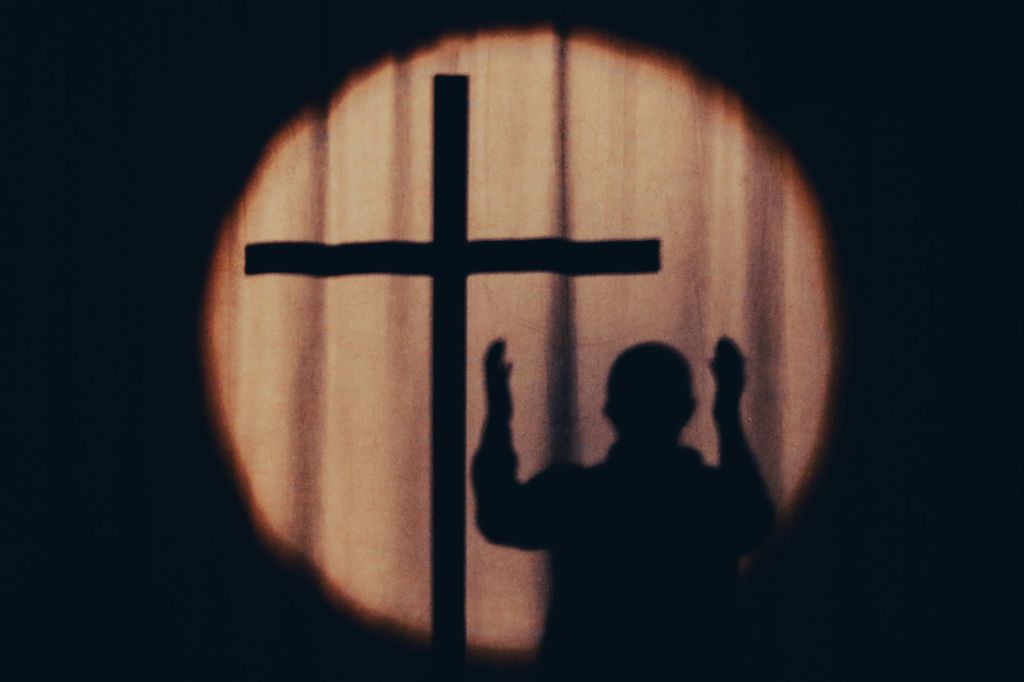
Photo credit: Jametlene Reskp

We begin with chapter 22, where God brings charges against Jerusalem and then closes with a lament, revealing the heart of God. The charges are a summary of how Judah broke each of the Ten Commandments. God will scatter them and refine them like silver in the process. The chapter ends with this lament: “I looked for anyone to repair the wall and stand in the gap for me on behalf of the land… But I couldn’t find anyone.”

Chapter 23 contains an allegory of two sisters. It is the story of Israel and Judah, God’s people who prostituted themselves with multiple foreign powers and their idols, one after the other. The younger sister, Judah, proceeded to outdo the older sister, Israel. Instead of learning from her sister’s wayward ways, she amplified them. God turned both sisters lovers against them, pouring out God’s wrath upon them.

There are two parts to chapter 24. In the first part Judah is compared to a corroded pot. It will be heated so hot that its corrosion will be consumed. Judah will not be cleansed until God’s wrath has fully burned. In the second part, Ezekiel’s wife dies as a part of a sign act. God directs him not to mourn in any way. He follows instructions. So thorough will be Judah’s defeat that they too will walk around in stunned silence, unable to even grieve.

Chapters 25 and 26 contain oracles or judgments about Judah’s neighbors: Ammon, Moab, Edom, Philistia, and Tyre. Ammon and Moab took great delight in Judah’s downfall. Edom joyfully took part in Jerusalem’s destruction. The Philistines exacted revenge for past defeats and losses. All but Edom “will know that I am the Lord.” Our reading closes with the judgment of Tyre. They too ridiculed Judah (and God) at her downfall. The people around Tyre will shudder in terror at what befalls Tyre, who will “disappear” as God leads them “down into the pit.” Such will be the fate of all who oppose the Lord our God.

Prayer: Lord God, our innate selfishness is on full display today. We continue to struggle with want and greed, with lust and desires, with idolatry and disobedience. We are not all that different than Oholah and Oholibah, than Moab or Philistia. We too deserve your wrath. We too should be refined like silver. Instead, you brought grace in the form of your son. Today, Lord God, we thank you that we stand on this side of the cross, where love was poured out instead of wrath. Thank you, Lord Jesus. Amen.


Leave a comment

Songs of Ascent, Part I

Readings: Psalms 120-127

‭Psalm 122:1 – “I rejoiced with those who said to me, ‘Let’s go to the LORD’s house!'”

Psalms 120-134 are collectively known as the “Songs of Ascent.” Each carries the superscription, “A pilgrimage song.” These songs were likely sung by pilgrims on their way up to Jerusalem to participate in one of the three yearly festivals. I wonder which of these Jesus and his followers sang as he rode into the city just before the Passover.

Psalms 120 and 121 are like a call and response. In Psalm 120 the psalmist has been away too long and needs rescue from “lying lips” and those who “hate peace.” Psalm 121 answers with the invite to look to the mountains, to Jerusalem. There you will find your “protector,” the one who “never sleeps or rests.”

Psalms 122 and 123 function in the same way with Psalm 124. Psalm 122 begins with joy over being invited to go up to God’s house, to the city “joined together in unity.” The psalmist turns to God, asking for peace and rest for Jerusalem. Psalm 123 adds a prayer for mercy. They’ll pray attentively until mercy comes. Then Psalm 124 offers encouragement as it recalls God’s rescue and deliverance in the past. The psalmist declares that their help is still in God alone, “the maker of heaven and earth.”

Psalm 125 continues the theme of trusting in God, who, like Mount Zion, is “never shaken.” The psalmist closes this song with a request of God: do good to the good and banish those evildoers. Psalm 126 is similar in structure – remembering when God rescued them, then asking God to rescue them again. Psalm 127 is a bit like Ecclesiastes. Human effort is “pointless.” But children – and lots of them – are a gift from God!

These songs of ascent, like much of the rest of the Psalms, cover a range of emotions and situations. May we use these prayers too as we find ourselves experiencing joy or sorrow, blessing or suffering, belonging or isolation.

Prayer: Lord God, as some of these Psalms or words within call out to us, write them on the tablets of our hearts. Then, by the power of your Holy Spirit, call them to our minds at just the right time. Thank you, Lord. Amen.


Leave a comment

God’s Unfolding Love

Readings: Psalms 54-56

‭Psalm 56:3-4 – “Whenever I’m afraid, I put my trust in you… I trust in God; I won’t be afraid. What can mere flesh do to me?”

Our three Psalms today focus on rescue from enemies. In Psalm 54 it is the proud who have come up against the psalmist. In Psalm 55 it is first in the words of the wicked and then of a friend that has brought “fear and trembling” upon the psalmist. And Psalm 56 there are “so many enemies” that bring misery upon the life of the psalmist. In all three Psalms we find requests to “bring disaster,” to “let death devastate my enemies,” and to bring them down “in wrath.”

At times we feel attacked. It can be with words and/or actions. We can feel our hearts pounding. We can wish to “fly away and rest.” We’ve experienced a friend turning on us. It hurts – bad. We can connect to the emotions running through these passages. As the attack or abuse continues and continues, we too can near the prayers that are rained down on the psalmist’s “enemies.” We can want God to wipe them out so that our hurt goes away. Or… we can punch back, hitting them harder, seeking to end the situation by our own hand or words.

In these Psalms we see again and again a trust in God. It wavers at times, as evidenced in the key verse above. Fear is the antidote to trust and vice versa. Fear can play all kinds of games – buckling our trust, leading us to wish ill on our enemies, tempting us towards revenge. Today, though, my thoughts are drawn to the gospels. My heart is drawn to words that speak of loving our enemies, of blessing those who curse us. As the story of God’s love continues to unfold and as it is more deeply revealed in Jesus Christ, may our faith and trust grow as we really live into the psalmist’s reality check: “What can mere flesh do to me?”

Prayer: Lord God, as we read and work our way through your word, help us to keep in mind the overarching story of your love for all of humankind. May this big story and its revelation in Jesus counter our human tendencies towards hate, revenge, and other forms of evil. Help us not to fear but to instead trust in your bigger, better plan for our lives and for your world. Amen.


Leave a comment

God Surrounds Us

Readings: Psalms 1-4

‭Psalms 4:1 – “Answer me when I cry out… Set me free from my troubles! Have mercy on me! Listen to my prayer!”

Today we begin the Psalms. These words of lament and praise have guided and given voice to faith and suffering for thousands of years. They invite us to walk this road too. Originally the Psalms were Israel’s song book. As do our hymns and praise songs today, the Psalms tell the history and the theology of the people of faith – both then and now.

Psalms 1 and 2 serve as an introduction to almost all that follows in Psalms 3-150. Psalm 1 focuses on living according to God’s instruction and Psalm 2 focuses on the kingship of God. Psalm 1 begins with a list of don’ts. If one wants to be truly happy (or blessed) then don’t do these things. We all have our own list. Instead, the psalmist invites us to recite God’s word day and night. In the original Hebrew the word we translate ‘recite’ would have meant literally mumbling or uttering God’s word under one’s breath all of the time.

Psalm 2 acknowledges that the world (i.e. – the wicked) takes its stand against God and against God’s anointed. The one called “son,” the one who shall reign over “all nations” – we read that as Jesus. The psalmist advises the world to worship this king “reverently” and with “trembling.” And again the theme: take refuge in God and be truly happy.

Psalms 3 and 4 are attributed to David. Both are about crying out to God. In Psalm 3 David is hard-pressed by Absalom’s rebellion and pursuit. While we might not be kings facing a coup, we deal with oppressors and others who want to do us harm. In many ways and in many situations we too can cry out, “Answer me when I cry out… Set me free from my troubles! Have mercy on me! Listen to my prayer!” And because God is ever faithful, figuratively and literally, we can “lie down and fall asleep in peace.” God surrounds us always. Thanks be to God.

Prayer: Lord God, you do fill our hearts with joy. Your face does shine upon us. We do not need to fear because you save and you rescue. When we rant and rave like the world, draw us to the Lord our refuge. Be intimately acquainted with our ways, O Lord, as we strive to grow intimately acquainted with your ways. Amen.


Leave a comment

Clearly at Work

Readings: Ruth 3 and Ruth 4

Ruth 3:10 – “May you be blessed by the LORD, my daughter! You have acted even more faithfully than you did at first.”

Today’s passage begins with Naomi caring for Ruth. It is a bit of a role reversal but she is the one from this culture. Naomi lays out a plan for Ruth to find a husband and Boaz is the ideal choice. He has been generous and righteous, kind and protective. He has not taken advantage of this situation. Ruth receives instructions and works the plan. This is very risky. Women don’t go to the threshing floor – especially in the middle of the night. And women certainly don’t ask men about things like marriage. But that’s the plan. All goes well. Then the waiting begins.

Boaz goes that morning to the city gate. It is where transactions are made. He is intent on talking with the closer relative. Gathering ten elders as witnesses, Boaz explains the situation – mostly. The closest of kin is willing to buy the land to preserve the family inheritance. Next, Boaz says, you also get Ruth the Moabite too – to preserve the family name too. This is one step too far for the next of kin. They make a formal agreement – sandal and all – Boaz will redeem the land and he will marry Ruth.

The sticking point for the next of kin is marrying a foreign woman. Strictly speaking, he is adhering to the Law. Yet God is clearly at work in a new way here in the book of Ruth. Naomi, Ruth, and Boaz are a part of it. The women in town declare that Ruth is “better for you than seven sons.” In that time and culture ,what a statement! The child born to Boaz and Ruth is named Obed – “the one who serves God.” Our reading closes with some genealogy. It goes like this: Obed -> Jesse -> David. That line eventually ends with -> Jesus. If the line of David and Jesus includes a Moabite woman, then maybe we, as people of faith, should likewise welcome “the other.”

Prayer: Lord God, thank you for this beautiful story. It is living faith as it is meant to be lived – caring for one another, honoring you in all that is said and done, elevating righteousness and faithfulness as our guiding lights. Lead us day by day to walk in these ways. Amen.


Leave a comment

Plans

Readings: Exodus 25, Exodus 26, Exodus 27

‭Exodus‬ ‭25:40… – “See to it that you make them according to the blueprint for them that you were shown on the mountain.”

Today’s readings shift into the building of the tabernacle. The great detail and planning remind us once again that God is good and ordered and creative. All of these details and specifications and vision for the tabernacle were given to Moses by God when he was on the mountaintop. Over and over we read, “See to it that you make them according to the blueprint for them that you were shown on the mountain.” God has a plan and calls Moses and then Israelites to follow the plan exactly. As I pondered application for today’s readings, it came to me: our lives are much like the construction of the tabernacle. God has given us a detailed plan. We read three chapters from it today. Within that plan, in the gospels God even gives us a perfect example of what following the plan exactly looks like. And to boot God gifts us with the Holy Spirit, the indwelling presence of Jesus Christ that leads and guides us.

There is great detail in the plans and in the execution of the plan. We find exact dimensions. We find specific colors and designs. We see specific metals used for specific spaces and purposes. We see talents and gifts put to use to execute God’s plan for the tabernacle. As I read through these chapters I imagined each step and what each item looked like. I envisioned the final product. As Moses received these instructions on the mountain I bet he tried to see each item and the final product as God laid out the plan. This thought draws me back to the Holy Spirit – that indwelling presence that knows God’s plans for our lives and works and prays and works to shape and guide and lead and make us into who and what God created us to be. I wonder: In what ways are we contributing to the Holy Spirit’s efforts in our lives?

What also struck me today was the people’s commitment. Every single thing they used for the tabernacle came from them. Every single thing. In the same way, the church (not the building but the church) relies on each of us to be a part of bringing God’s light and love into the world. What are you bringing?

Prayer: Lord God, we see a wonderful and detailed plan for the tabernacle. You have the same kind of plan for our lives and for our churches. Move us to active involvement in the completion of these plans. Amen.


Leave a comment

God in Jesus -> The Same

Reading: Hebrews 1:1-12

Verse 12: “You remain the same, and your years will never end.”

Photo credit: Tyler Milligan

Today’s text is fitting for this last Sunday and last day in 2023. As we conclude the year, this text reminds us of who and what Jesus Christ is, was, and will be. It reminds us of Jesus’ presence throughout the scriptures and of his place in our lives.

Hebrews begins by recognizing that God spoke through the prophets and has now spoken through Jesus. God incarnate in Christ is “the radiance of God’s glory and the exact representation of God’s being.” Jesus was God’s will, way, and heart lived out as a model for us to follow. After dying for our sins, Jesus returned to heaven to sit for a time at the right hand of God. At the end of the passage we are reminded that one day Jesus Christ will return. He will “roll them up” like a robe and “they will be changed” as the new heaven and earth are created. All that we know will be made new. But not Christ: “You remain the same, and your years will never end.”

As we come to the last day of 2023 and look forward to 2024, this truth remains: God in Jesus is the same today, tomorrow, and forever. This is foundational to our faith. With that in mind, let us reflect on how we can change for the better faith wise in 2024. What faith practices are you willing to commit to in 2024? What changes need made to give faith more of a priority? How can 2024 be an even better year for your relationship with Jesus?

Prayer: Lord God, help us to genuinely reflect on our 2023. Lead us to honestly consider our 2024. Form in us a commitment and an obedience to live more faithfully in the coming year. Amen.


Leave a comment

Into the Community

Reading: Luke 2:22-40

Verse 22: “Joseph and Mary took him to Jerusalem to present him to the Lord.”

The context for today’s passage is Mary and Joseph doing what all devout parents did – they brought Jesus to the temple to be redeemed. This ritual reminds me of our practice of baptism. As is the case with these parents, I can see Mary and Joseph beaming as they bring Jesus before the Lord. They offer the set amount to redeem their son – a sacrifice of two birds, the price required for a poor couple to bring their son back home.

On Sundays when parents present their child for baptism or for dedication, there is a special feeling, a sense of joy really, that covers the sacrament. It is contagious too – the smiles on the faces of the congregation are a little brighter as the child is made a part of the family of God and a part of our faith community. There is a joy in claiming the child and in committing to help that child walk in the way of the Lord.

There is a joy that we find today in Simeon and Anna. Both are devout, Holy Spirit filled Jews that are awaiting “the consolation of Israel” – the Messiah, the Savior. Both speak of the God-driven life that Jesus will lead. Both rejoice in the gift that Jesus is to them and to the world. Both are now at peace in their hearts. It is a beautiful scene.

As I think of baptism and this passage, I can’t quite imagine doing another baptism without incorporating verse 40: “And the child grew and became strong; he was filled with wisdom, and the grace of God was on him.” May it be so for each that we welcome into our community of faith.

Prayer: Lord God, there is such joy in dedicating a child to you. It brings happiness to our hearts to welcome them into the body of Christ. Lord, help us all to keep our commitments to these children. Amen.


Leave a comment

Who Do You Know?

Reading: John 1:1-14

Verse 12: “Yet to all who did receive him, to those who believed in his name, he gave the right to become children of God.”

Photo credit: Nathan Lemon

Today’s reading is one of my favorites in the Bible. It is poetic and flowing and beautiful. It speaks of Jesus’ forever nature, of his light, and of his invitation into the kingdom of God. I find and feel great hope in these words and in the way that they open the circle of God’s love to all people.

Hope and light and love and welcome are often in short supply in our world. The power systems that drive materialism and greed and many other -isms are systems built on fear and darkness and hate and exclusion. They are designed to hold onto power while keeping others powerless. To varying degrees we are all affected by these systems. And those on the fringes are disproportionately affected.

While Jesus came to be hope and light and love and welcome, he also came to build the church. In verse 12 we read, “Yet to all who did receive him, to those who believed in his name, he gave the right to become children of God.” As children of God, as brothers and sisters in Christ, we bear his hope and light and love and welcome to the world. We are called to bring hope to the despairing, to shine light on the darkness, to love those deemed unlovable and unworthy, to welcome the powerless, the lonely, the marginalized, the outcasts… These are the responsibilities of being a child of God, of living as a brother or sister of Christ Jesus.

Now, let’s take a moment to get personal. Who do you know that is currently despairing? Who do you know that is struggling with some darkness? Who do you know that thinks they are unworthy of love? Who do you know that is powerless or is isolated by the systems of this world? And most importantly, how will you be hope or light or love or welcome to that specific person?

Prayer: Lord God, open our eyes and hearts to the needs of those we know. Once we see the needs, Lord, move us to action, to loving as Jesus loved, to serving as he served, to sacrificing as he sacrificed. Use us today to build your kingdom here and now. Amen.


Leave a comment

Bringing the Good News

Reading: Isaiah 52:7-10

Verse 7: “How beautiful on the mountains are the feet of those who bring good news, who proclaim peace… who proclaim salvation.”

Photo credit: Gary Butterfield

Our Isaiah 52 passed is viewed through our New Testament lens as a passage about Jesus. These words certainly “fit” Jesus and the ministry that he offered to his world. The good news of Jesus Christ brought peace to the afflicted and troubled. It brought salvation from those things that kept people bound up and outside of community and wholeness. As disciples and followers of Jesus Christ, we are called to share this same good news with our world.

In today’s Disciplines devotional Cherisna Jean-Marie writes this: “Peace is a human right that comes only when justice is realized” (page 428.) In the devo she shares many injustices – police brutality and violence, immoral elected officials, the inequity of pay for the same job. I could add hunger and poverty, discrimination, and unequal health care and education to her list. You could probably add to the list too. None of these things are things that Jesus would’ve tolerated.

In our status quo world we mistakenly think peace is the absence of unrest or other disturbance. At school a few years ago some of my classmates and I were walking to get frozen custard. Suddenly sirens blared and tires screeched and two officers jumped out of their car in pursuit of two teenage skateboarders. All but one of us craned our necks to watch the pursuit. A bit later, as we ate our custard, one of the white, middle class students began to push back against the BLM movement prevalent at the time and on campus. To help him and most of us understand, my friend Will shared that while we were craning our necks, his first instinct was to run. Although a straight-A student who had never had a run-in with the police, “run!” was his first instinct. He grew up in the city. My eyes were opened.

This is just one example that helped me to realize that many injustices exist, even though they are outside of my little world. Just because there are currently no major protests in our cities – it doesn’t mean many people’s first instinct isn’t to run. Again, this is just one example of many ways that our world is unjust. Without total justice there can be no true peace. Without justice there is a need for salvation. May we be the hands and feet and voices that bring the good news to all people.

Prayer: Lord God, open my eyes to the injustices in my neighborhood and community. Help me to see and feel where there is no peace. Move me, O God of justice, to be your voice, your hands, your feet, your heart in bringing about a world where all people experience your salvation and fullness of life. Amen.