Verse 33: “I will be their God, and they will be my people”.
The new covenant that God is speaking of in today’s passage is different than the old covenants established through Noah, Abraham, and Moses. These older covenants were with the Israelites. They were God’s chosen people, set apart for God. The new covenant will come into being through Jesus’ final sacrifice – the one we read about yesterday. The new covenant is like the old in these ways: it is centered on God’s unconditional love and we cannot reciprocate it. Unlike the old covenants, the new one is not limited to the Israelites. The new covenant extends to all people.
God declares, “I will be their God, and they will be my people” and “all will know me”. The new covenant extends to rich and poor, slave and free, Jew and Gentile, male and female, young and old, saint and sinner. All are invited to the table of grace and to a place in God’s family. Jesus invited all people into the covenant of love. Called to model Jesus to the world, the charge is to love all people. Instead of holding onto our anger or judging others, we are called to be a people of forgiveness and reconciliation. Instead of categorizing and stereotyping, we’re to be people of hospitality and grace. Instead of competition and accumulation, we are to be people of generosity and community.
Each day may we be people of the new covenant, loving all people with all that we are. May all we meet know the love of God that is in us. May it flow out into all the world.
Prayer: Great God of love, your love is both unconditional and unlimited. Help me to love more like you. Give me eyes that see all as worthy of your love and of my love. Bind my heart to the least and the lost. Fill me with your love today as I go into the world. Amen.
Verse 33: “I will put my law in their minds and write it on their hearts. I will be their God and they will be my people”.
Photo credit: Kelly Sikkema
In Jeremiah 31 we see that God is a covenant God. Our passage opens with God promising a new covenant. In verse 31 we read, “The time is coming…” The Lord then references the last covenant – the one given as God led them out of slavery in Egypt. Here the covenant relationship takes on the husband-wife analogy. God led the Israelites to freedom as a husband would lead his wife, gently taking her by the hand and walking with her. During the time in the wilderness God was a constant companion to the Israelites. God guided and protected and provided for Israel. Despite this intimate and personal relationship, Israel wandered soon thereafter. They worshiped other gods, forgetting all that God had done for them.
Instead of breaking the relationship and moving on from Israel, God declares that he will make a new covenant, a better covenant. Instead of writing the covenant on stone tablets, God declares, “I will put my law in their minds and write it on their hearts. I will be their God and they will be my people”. The covenant will shift from external to internal. God’s ways will be in our mind and on our heart. The new covenant will be mediated through Jesus Christ and the Holy Spirit will internalize God’s ways in heart and mind and soul.
Even with such an extraordinary gift, we too can become like the Israelites at times. We forget our true love and chase after the gods and idols of this world. We allow other things to supplant our primary relationship with God. Yet our covenant God remains, continuing to say ‘I love you’ over and over. Instead of allowing the distance that we create to define the relationship, God pursues us, draws us back into relationship. No matter our response, God still says, ‘I love you’. God remains our God. We are his people. Thanks be to God.
Prayer: Covenant God, you love me far beyond what I can even begin to comprehend. Your love goes on and on and on. My love for you is fragile, tenuous, limited. Yet you love me without reserve, without condition. What a wonderful example you give me to follow. Lead me in your love, O God. Amen.
Verse 10: “Create in me a pure heart, O God, and renew a steadfast spirit within me”.
Photo credit: Adrien Olichon
In Psalm 51 the psalmist begins by asking for God’s mercy to wash away their sins. The psalmist admits that “my sin is ever before me”. The author recognizes that his sin is against God and God alone. God has a right to judge him. We can all relate to what the writer of this Psalm is expressing and feeling. We’ve all been there.
The commonly accepted context for this Psalm is the aftermath of David’s affair with Bathsheba and the murder of her husband Uriah. There was certainly a need for God’s grace and forgiveness at this point in David’s life. Although most of our sins are not this egregious, all sin separates us from God and damages our relationship with God and others. God’s mercy and forgiveness are universal needs.
In verse seven David begins to ask for God’s help in restoring the relationship that David broke. He cannot do this on his own. Here he asks God to “cleanse me with hyssop” and then, in verse nine, to “blot out all my iniquity”. These ideas, these phrases, resonate with the sacrament of holy communion. Once forgiven, once cleansed, David can ask God to “create in me a pure heart, O God, and renew a steadfast spirit within me”. In New Testament terms, the old is gone and the new has come. The old sinful self is washed away, replaced by a new self fully turned toward God. As a new creation in God, David desires to feel again the joy of salvation and to have a willing spirit within – one totally obedient to God.
This Psalm also resonates with our Ash Wednesday practices. Many Christians will seek to be restored and to dedicate themselves to a more holy and devout walk with the Lord as we begin our Lenten journey. The imposition of ashes reminds us of our finite nature and draws us to reflect upon our journey with Christ. It calls us to critically evaluate the condition of our souls. It draws us towards living with a more pure heart.
Our reading for today ends with these words: “The sacrifices of God are a broken spirit; a broken and contrite heart, O God, you will not despise”. As we prepare to enter Lent may we find a new path to walk with Jesus, a path guided by just such a heart. With a pure heart we will be pleasing in his sight. May it be so.
Prayer: Lord God, bring me to that place of contrition, to the place of confession and repentance; show me the path to a closer walk, reveal the things I need to leave along the side of the path. Create in me a pure heart with a desire to be yours alone. Break my heart for what breaks yours, O God. Amen.
Verse 2: “Great are the works of the Lord; they are pondered by all who delight in them”.
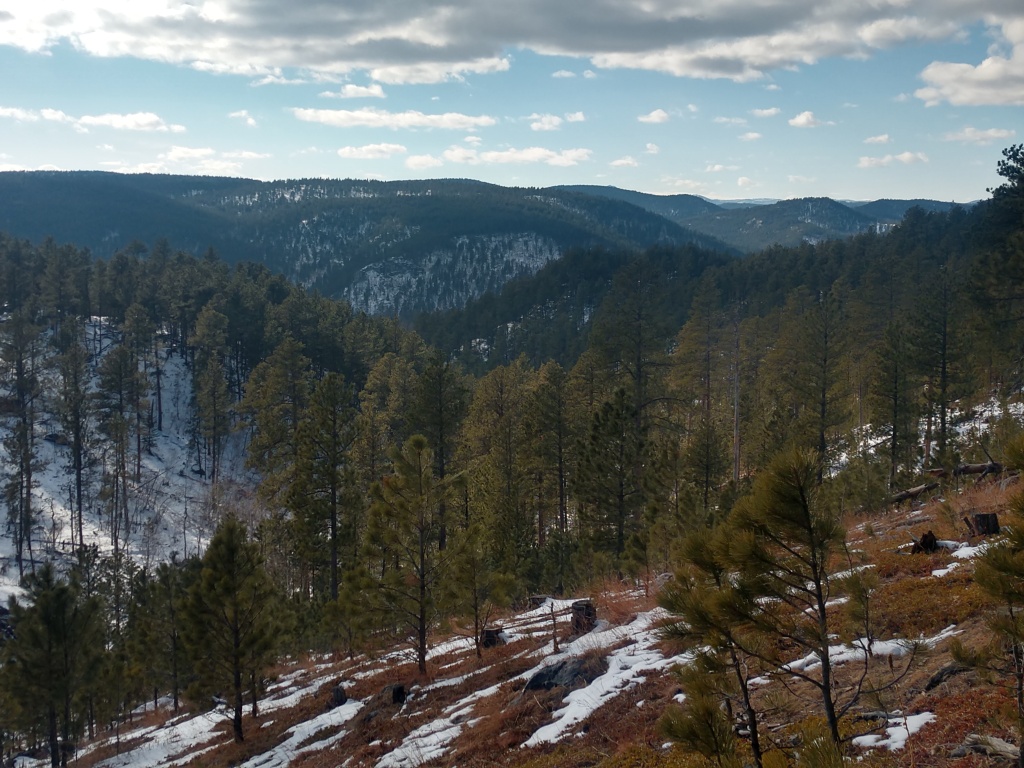
Psalm 111 is all about praising God. We can be drawn to praise in a variety of ways. Two days ago, for example, my wife and I were on a hike. There was about four inches of snow blanketing the ground. The sky was so blue. At times we would pause – sometimes along the path after a long uphill stretch and sometimes at a place that afforded a view. At both kinds of stops we were amazed by God’s creation. Along the path we stopped and could take in the small details and could hear all of the quiet sounds of nature. At the viewing stops, we could see out across the plains to the east or we could look west across the rolling hills covered in snow and pines. Here we could sense God’s grandeur and the majesty of creation. Here too we were reminded of our awesome God. We were able to praise God for the work of his hands.
In verse two the psalmist declares: “Great are the works of the Lord; they are pondered by all who delight in them”. On Sunday afternoon it was God’s creation that led us to delight in him. On Sunday morning it was a man’s testimony about God’s work on a mission trip that led us to praise and delight. In the first half of Psalm 111, God’s grace and compassion and provision are what draws the writer to praise God. These gifts of God are wrapped in the covenant, which also connects to the reasons to praise God found in the second half of the Psalm. Working out the covenant to Abraham, the psalmist remembers how God gave them the Promised Land. Recalling the steadfastness, faithfulness, and uprightness of God, the psalmist looks to the redemption that God provides, ordaining his covenant forever. Here I connect to the Psalm most personally. The redemption of God came in the person of Jesus, he who established the new covenant forever through his blood shed on the cross.
The Psalm closes by reminding us that “the fear of the Lord is the beginning of wisdom”. In the Biblical sense, fear is not being afraid of God. It is a fear in terms of reverence and awe. It was what I felt as I was awestruck gazing out at the scene pictured above. It is what you have felt when you have been caught by God’s power or love or grace at different times in your life. As our response today, may we too offer words of thanksgiving and praise to the Lord our God!
Prayer: Lord God, thank you for the many, many times when I have been amazed by your great works. These revelations, these epiphanies, are such a blessing. You are an amazing and awesome God! Amen.
Verse 15: “The kingdom of God is near. Repent and believe the good news”.
Jesus steps into his ministry as the one who prepared the way has been arrested. John the Baptist has been imprisoned by Herod. John spoke truth against the power of the day and it would cost him his life. Jesus travels to Galilee to begin his ministry. This region to the north was isolated, away from the power structures of the day, home to many in need of the good news. As he begins his ministry Jesus announces, “The time has come”. John had prepared the people for this very moment.
Jesus continues with the message that John had preached. It is one of the constant messages of the entire Bible. The practice of repentance always remains central to the walk of faith. In verse fifteen Jesus says, “The kingdom of God is near. Repent and believe the good news”. In Jesus, God draws near to us. This is what draws us to him, it is what drew the first disciples into following Jesus. In our lives today we have moments when this is especially true. These are the times when we can tangibly feel God’s presence with us. To have any relationship, change is necessary. It is true of our relationship with Jesus. This relationship begins in a place of humility, in the place where we recognize our need for a Savior. Sensing that we are entering a holy space, stepping into the presence of the Messiah, we are naturally led to repentance. Entering that space we feel that we need to be our best. Part of that involves laying aside our imperfections, our sins, our selfishness. Looking within, we see that which separates us from the one we want to draw near to. Repenting of these we draw nearer to the kingdom of God. It is in our moments of closeness to Jesus that we come to belief as we surrender our lives to him. As we continue to draw near we experience grace and mercy and forgiveness as we are made new over and over. We experience freedom from the things of this world as our focus and love shifts toward the eternal. We come to live out the joy and hope and peace that grows from belief and trust in Jesus. We come to see Jesus as the “good news”, as the way, the truth, and the life, as the one who gives us the final victory over sin and death.
This day may we spend time in his very presence, allowing the good news to permeate our very being. May the kingdom of God draw near to you this day!
Prayer: Loving God, you draw near to me in so many ways – in these quiet moments, in the interactions with others, in the ordinary of life. In love you fill me with a peace and hope and joy that nothing in the world can give. Thank you, Lord. Amen.
Verse 11: “You are my son, whom I love; with you I am well-pleased”.
In our passage today Jesus comes to the desert to be baptized by John the Baptist. John was offering a baptism of repentance for the forgiveness of sins. The actual baptism was proceeded by a confession of sins. The waters of baptism represented a cleansing – the old sins were washed away and the person emerged “new” or “born again”. They had repented of their old ways and emerged committed to live a life devoted to and obedient to God. There was an element of turning and walking in a new direction.
As Jesus came to be baptized there was no need for confession. He was without sin. So why come at all? For Jesus, it was a turning point. He was entering into ministry, revealing fully who and what he was. He was turning to something new, beginning to walk as the Son of God. Just as the Spirit hovered over the waters as God spoke in Genesis 1, so too is the Spirit present as God speaks, saying, “You are my son, whom I love; with you I am well-pleased”. With these words of affirmation Jesus begins his formal ministry. Filled with the Holy Spirit, Jesus will teach and heal and restore many as he lives and ministers, being fully obedient to God.
Today, for some, I encourage you to remember your baptism. Remember you are filled with the Holy Spirit and go forth in ministry. For some, I encourage you to reclaim your baptism. Reclaim your place as a son or daughter, seek to draw close once again. Renew your faith commitment and go forth in ministry. And for some, you have never entered the waters of baptism. Reading this, you are at least a little bit drawn to God. I encourage you to become connected to a local community of faith or to talk with your pastor about baptism if you are connected someplace. Continue your journey!
As we each go forth into the world, may we all seek to walk closer to God, following Jesus’ example of love.
Prayer: Lord God, today I pray for all believers. Help each of us to live out our faith more fully, bearing witness to your love. Encourage us, strengthen us, empower us to walk faithfully as your son or daughter today. Amen.
Verse 4: “There will be no more death or mourning or crying or pain, for the old order of things has passed away”.
The book of Revelation is one of judgment and violence and destruction. It is the story of the end of this world and the final defeat of Satan and evil. All that has culminated as we turn to chapter 21 today. Here John opens with this line: “Then I saw a new heaven and a new earth”. Depending on your relationship with God, this sentence can bring hope or it can bring dread. If you are living without or outside of a relationship with God, the idea of this world ending is dreadful. However, for the believer or for those living with persecution or injustice or prejudice or abuse or violence or… then the idea of a new earth is filled with hope.
In the new creation God will dwell with us. God will wipe away the tears. In verse four we read, “There will be no more death or mourning or crying or pain, for the old order of things has passed away”. The hurts and struggles of this earth will be no more. The old order will be replaced with a new order based on love and grace and peace and mercy and joy. It is a day and a reality that many long for. In the meantime, though, we as Christians are called to make this earth more like the new earth that John describes. To do so we must do all we can to end evil and injustice and oppression and… In its place we must bring love and goodness and kindness and equality and hope in Jesus Christ. May we do all we can to make this a better earth for all people.
Prayer: Lord God, use me today to speak for the voiceless, to stand for the powerless, to intervene for the marginalized. Use me today to build your kingdom here on earth. Amen.
Verse 16: “From the fullness of his grace we have all received one blessing after another”.
At Christmas we Christians often want to focus on “the reason for the season” and we want folks to see Jesus as the best gift ever. So why do we celebrate the birth? Why do we equate Jesus to a gift?
More than the actual birth, we celebrate all that surrounds the birth. It is first the story of the creator entering his creation. Leaving the glory and perfection of heaven, the light and love of God entered the world more fully. It was in the flesh – where we could see and hear and feel it. Second, it is the story of prophecy fulfilment and of miraculous conception. Things written hundreds and hundreds of years before predicted the events of Jesus’ birth and life as if written in real time. And it is the first story of birth through the Holy Spirit. As followers we too experience this birth. We call it “being born again”. Third, it is the story of God acting in our world through a faithful teenage girl. Mary will always be the mother of Jesus. But she could have been Sue or Beth or Dawn or Erica. God’s penchant for using the ordinary and humble is exemplified here in this story. Fourth, and perhaps most, as John writes, “we have seen his glory”. The birth story reveals God’s glory – his control over all things, his omnipotence and omnipresence, his love for you and me and all the world. We celebrate the birth because it is holy and sacred and because it reveals God’s love and grace and truth.
As wonderful as the birth story is, though, it pales in comparison to the gift that Jesus is to the whole world. First, if one believes in Jesus, they are given the “right to become children of God” – to be born into a new creation, born again into a new relationship with the Lord. Becoming a child of God, we receive the light and love of Jesus into our hearts. This forever changes how we live in this world. We see the world, we see others, and we even see ourselves through this lens of love. Illuminated by his light, we love honestly, purely, unconditionally. Seeing with his eyes, loving with his heart, we live beyond the law of Moses and beyond the law of man. Beyond does not mean outside of these laws. It reflects Jesus’ emphasis that he was “the fulfillment of the law” (Matthew 5:17). For example, Jesus taught over and over that the command to love one another did not just include the Jews but it extended to sinners and to Gentiles and to the sick and the imprisoned and to Samaritans and to the possessed and… Jesus reveals what a life of love and grace and truth looks like when lived out in the world.
Living life as a Christ follower amplifies our hope, peace, joy, contentment; it betters our relationships with others and with the world; and, it deepens our faith and trust in God. We celebrate the birth because Jesus is truly the greatest gift ever. Life lived through and with Christ is simply better. Thanks be to God.
Prayer: God, you are the giver of “one blessing after another”. As I reflect on the ways that the world and that life is better with you, it humbles me. Surrender to your will and way is the path to true life, to full life. Thank you for all of your blessings. Amen.
Verse 9: “The true light that gives light to every man was coming into the world”.
John’s gospel introduces us to Jesus in a way that is very different from Matthew, Mark, and Luke. There is a holiness, a divinity, a wonder to John’s words. “In the beginning was the Word…” rings with an eternal truth. Jesus’ divine nature is revealed in a powerful way. John wants us to understand the significance of the creator of all things stepping into that creation. The most perfect being that there ever was, the most powerful force in all of existence laid all that aside and became one of us.
Jesus did not come to spend a few years or even a long life just to see what life here was like. He came to reveal God’s plan for what life should be like. In verse nine we read, “The true light that gives light to every man was coming into the world”. The way, the truth, and the life came to show us the way to love our neighbors, to reveal the depth of God’s love for us, and to demonstrate a life lived in total surrender to God. We read how this is possible in verse twelve: “To those who believe he gave the right to become children of God”. This gift came through his sacrificial death. Through death and resurrection Jesus defeated the power of sin, paying the price to redeem us from our sin. Only through the forgiveness that Christ offers can we be made new again, holy and perfect in his presence. Only then can we stand as a child of God.
Thank you, true light, for coming into the world. Thank you, holy Word, for being a part of my life.
Prayer: Dear God, a simple “thank you” today. Amen.
Verses 4-5: “When the time had fully come, God sent his son… to redeem those under the law”.
What a passage we have today! In just four verses, Paul packs some great theological truths. In summary: at just the right time God sent Jesus to redeem us from the law and then sent the Spirit to lead us to live as children of God, destinying us for eternal life. It is quite the summary of the good news.
As we draw nearer to Christmas Eve it is a good reminder that Jesus came at just the right time. When God’s time to send the son arrived, Jesus was born in Bethlehem. While the example that Jesus set concerning how to live out God’s love is important, the main purpose of Jesus’ time on earth was to redeem us, to make heaven our destiny. This is both a present and a future realityy. Let me say that again: heaven is both a present and a future reality. While we await eternity in the Lord’s presence we live to build his kingdom here on earth.
Paul’s emphasis in the letter to the Galatians is the freeing power of Jesus Christ in this life. In Christ we are made into new creations, freed from “the law”. The church in Galatia was struggling with the application of the Jewish law, the Torah. The Christians who had been Jews believed the new Christians should first follow the laws of Judaism. For example, they wanted Gentile believers to be circumcised and to follow the dietary and purification laws. The new believers just wanted to follow Jesus. This was causing division and strife in the church. Paul wants to end this reliance on the old laws of the Jewish faith. For Paul, being created new in Christ Jesus and being filled with the Holy Spirit, believers no longer fall under the old laws.
Even though we do not live under the Jewish law and even though we are Spirit-filled new creations in Christ, we still live with division and strife. We still need redeemed. Although Christ died to free us from the laws of sin and death, we all still wrestle with sin in our lives and many of us are anxious and fear death.
Our journey of faith is one of redemption after redemption. Even though I believe in Jesus as my Lord and Savior and even though I am led by the Spirit, my old self is alive and well within me. My pride and ego, my judgmental attitude, my driven personality all can rise up and lead me to sin. My old self can ignore the Holy Spirit quite easily at times. Yet, thanks be to God, I am “no longer a slave”. Redemption, forgiveness, grace, and mercy are always ready to make me new again. I am a child of God. I am loved. I am an heir to eternal life in Christ. You are too. Thanks be to God!
Prayer: Lord of life, thank you for your love that is always greater than any and all of my sin. Continue to lead and guide me and to better atune me to the voice and the way of the Holy Spirit. Amen.








 pastorjohnb