pastorjohnb

Thoughts and musings on faith and our mighty God!


Leave a comment

Calling Them to Come

Mark 1: 1-5

Verse 4: “John came, baptizing in the desert region and preaching a baptism of repentance for the forgiveness of sins”.

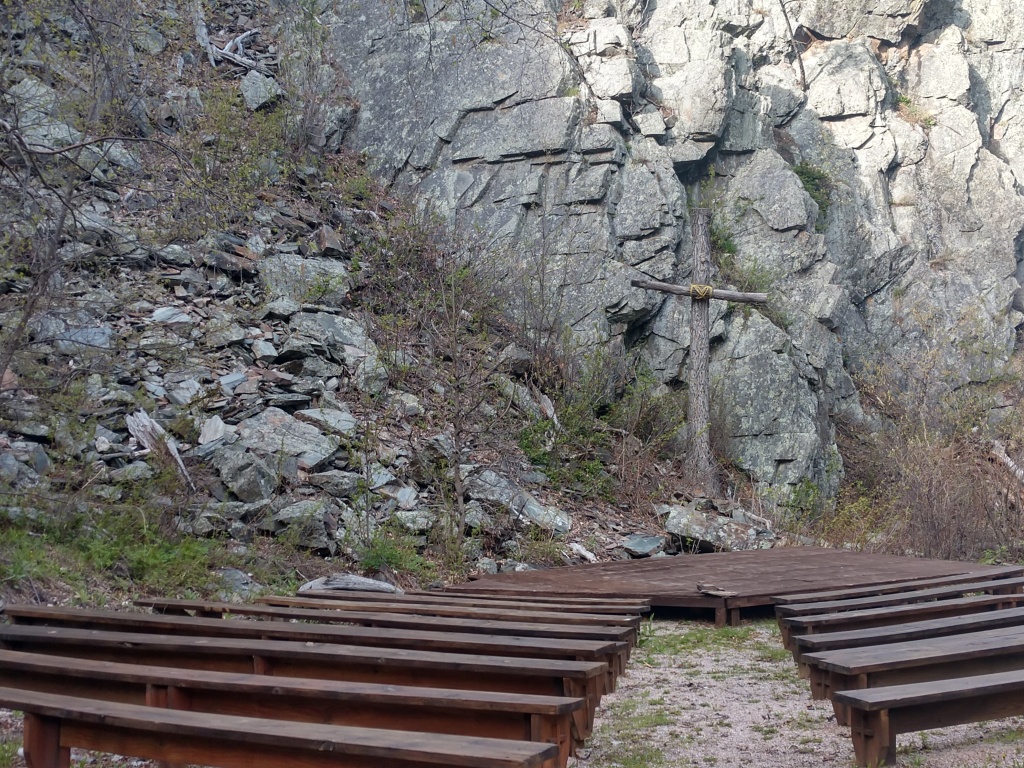
Last week we began Advent with the end of the story – the end of the age when Jesus will return in power and might. This week we jump back to the beginning of the story, with the ministry of John the Baptist. Mark begins his gospel quoting from two of the many Old Testament passages that point to Jesus Christ, the full revelation of God. Mark describes John’s ministry simply: “John came, baptizing in the desert region and preaching a baptism of repentance for the forgiveness of sins”. John set up outside of the temple, outside of Jerusalem – outside of all civilization for that fact. He was calling people back to a simpler way of life from a simple place: the wilderness. It was not a place to come and stay. It was a place to come to, to do what needed done, and to return home from.

As I try to imagine John out there in the wilderness, my mind thinks of “bullhorn guy”. He is that person standing on the street corner, yelling at people through a bullhorn, telling folks that they will end up in hell because of their sins. People tend to go the long way around street corners such as these. We, in general, do not like to consider our sins, much less confess them in public on a street corner. Although the basic message is the same – repent of your sins – John must have been as far from the bullhorn guy as one could get. Mark writes, “The whole Judean countryside and all the people of Jerusalem went out to see him”. There were, of course, some curious folks who went out to see what all this was about. These folks appear in our churches once in a while. A bump in life leads them to check out this faith thing. Others come to appease a significant other or their family at the holidays. The religious leaders showed up too. Not to be prepared or to confess or to be baptized, but to assess the threat to their own power. A lot of people were going to see John. But most people, large numbers of people, went to see John to be made right with God. In verse five we read, “Confessing their sins, they were baptized by him”. They emerged from the waters ready to live a new, more faithful life.

There was a hunger to be close to God, to be a better person, to live a more holy life. This is what drew people out into the wilderness to hear John’s message and to be changed. John called the people to more. As we too live out our days, may our witness call people to more. This day and each day, may our friends and neighbors, our co-workers and classmates – may they see the hope, peace, joy, and love of Christ within us, calling them to more.

Prayer: Lord God, may I be an example of your will and way. May all I do and say and think point people to you and to the saving relationship that you offer in and through Jesus Christ. Amen.


Leave a comment

Look Upon Us

Reading: Isaiah 64: 5b-9

Verse 8: “Yet, O Lord, you are our Father. We are the clay, you are the potter”.

As we continue in Isaiah 64 today, the second half of the passage begins in verse 5b with an admission: “When we continued to sin, you were angry”. Yes, God will come to the help of those who do right, but the sinners? Isaiah asks the correct question: “How then can we be saved”? As a people living in sin, the Israelites were taken into exile. God still loves them, but what can God do with his children who continue in their rebellion? The prophet laments that they have become “unclean” and that their faith has “shriveled up” like a dry leaf. In verse seven his words are honest: “No one calls on your name or strives to lay hold of you”. The situation, the condition of the people’s faith, is not good. Yet there is hope. There is always hope with God.

In verse eight Isaiah speaks of that hope: “Yet, O Lord, you are our Father. We are the clay, you are the potter”. Our God never gives up on us. Yes, we may choose to distance ourselves from God and from our relationships with one another. Our sin leads to separation. Even in the midst of our sin, even then we can cry out to God. Like a petulant child, we cry out only half-heartedly because we remain unclean. We want our way and we want God to do our will too. At that point God hears but does not respond. This is where almost all of Isaiah’s audience is at spiritually. Yet the one who speaks for God has hope. Isaiah knows that God can and will reshape the people. Through the process of defeat and exile, God will fashion Israel back into obedient children once again. Our passage ends with a humble plea: “Oh, look upon us, we pray, for we are all your people”.

In this season, especially in this time of division and discord, in this time of online worship and personal distancing, in this time of illness and loss, Lord, look upon us. We pray for all of your people. Great potter, shape us into something new.

Prayer: Lord God, show us the way. Help me to work through this discord in my soul, through this time of unease. Bring healing to our land, O God. Not just physical healing but also spiritual and emotional and relational healing. Unite us, O Lord, in your love and grace and mercy. Amen.


Leave a comment

Try It

Reading: Matthew 25: 14-30

Verse 18: “The man with one talent went off, dug a whole in the ground, and hid his master’s money”.

In the parable that we will read today and tomorrow, there are three servants. One is not like the other two. One is afraid. He is afraid of failing, of losing his master’s money, of stepping outside of his comfort zone. Unfortunately, many followers of Jesus are like this servant. We are given a talent or gift or skill or dream by God and we stuff it down, we hide it away, we try and pretend it doesn’t exist. Our fear of the “what if” and the “what then” are greater than our trust in God.

Sometimes I wish our faith were more like Thomas Edison’s efforts with the light bulb. It is said that he failed a thousand times before arriving at what we know as the first light bulb. Imagine if we “failed” at being Christ’s light and love a thousand times before someone was moved to accept Christ in that moment. For Edison, each failure was a step closer to his goal. Imagine the impact on others that we would make along the way and consider the change that would be wrought in your faith. Actually, we are each just seed planters, scattering faith here and there, trusting that one day it will sprout and grow. It does not matter if we were the first to plant a seed of faith or if we were the 427th or even the thousandth.

Oh, the power of fear. What if that person rejects me or if they ridicule me? What if I lose that person as a friend? What if the pastor or the church rejects my idea for a good pantry? What if… And there are the “what then”s. The pastor and the church said “yes” and the food pantry has taken off – what then? The step into helping with youth has ignited a passion for serving God and the church – what then?

We want a safe faith, an easy faith. We like a faith without challenge, without risk. I would dare to say that when this is our faith, we have a shallow faith, a hollow faith, a faith without much life or energy. When we step out and step up, when we accept the challenge or calling and risk for our faith, then it comes alive. Don’t believe me? Then try it. Follow the nudge you’ve been feeling, share that ministry idea that God has planted in your heart, say ‘yes’ to that role that you are feeling called to. Try it. Give of yourself and see where God takes you. Go ahead. Try it.

Prayer: Lord God, thank you for the ways and times when you have led me beyond myself and into your plans. As I continue to journey, may I risk for you, for the kingdom of God. Open my eyes and ears and heart to where you are leading. Encourage me to step up and step out in faith. Show me the way. Use me as you will. Amen.


Leave a comment

Serve with All Faithfulness

Reading: Joshua 24: 1-3 and 14-25

Verse 14: “Now fear the Lord and serve him with all faithfulness. Throw away the gods your forefathers worshiped”.

As we enter the story at the end of the book of Joshua, the Israelites have entered and taken full possession of the Promised Land. God has led them to victory after victory under Joshua and now there is peace in the land. In chapter 23 Joshua says goodbye to the leaders of Israel. As a final act, in today’s and tomorrow’s readings, Joshua calls the people together to renew their covenant with the Lord our God.

Faithfulness to God has always been a challenge. In the wilderness, the Israelites whined and grumbled, they questioned Moses and God, they even fashioned and worshiped an idol. On the brink of entering the Promised Land, they doubted and feared that what lay ahead was too big even for God. Now that peace reigns, will the people lose focus on the God who has led them so far? Yes! We do too. I pray really well when in the midst of a struggle or time of suffering. I am dialed in. But when life is good, when all is well in my world, the bright and shiny of the world begins to look better. Joshua knows the people’s history and perhaps he knows about our tendency to drift. So his final action as the leader of God’s people is to gather them all together to tell them: “Now fear the Lord and serve him with all faithfulness. Throw away the gods your forefathers worshiped”. This is Joshua’s version of “love the Lord our God with all your heart, soul, mind, and strength”. Focus on God, throw away all those idols you have stashed at the bottom of the moving box… Idols are always there, however. The peoples living around the Israelites will always have idols to worship. Marriages and other interactions will bring these idols before their eyes and hearts over and over. The temptation will always be present. And so it is with us. The world and the people living around us promote and worship all sorts of idols – money, possessions, popularity, titles… Our modern culture ever calls us towards more, better, bigger, newer… We too need to hear the call to “fear the Lord and serve him with all faithfulness”. As we hear this call again today, may we, like Joshua, choose to declare: “As for me and my household, we will serve the Lord”. May the Lord our God bless each of us today as seek to live out this statement of faith.

Prayer: Lord God, this is a lovely statement, a lofty goal. Make it more than sentiment, more than an ideal. This day – this very day – may I serve you only. Tomorrow will be another day. I’ll have to ask again tomorrow. Today, Lord, today may I serve you only. Amen.


Leave a comment

Everyday Faith

Reading: 1st Thessalonians 2: 9-13

Verse 9: “Surely you remember… our toil and hardship… we worked… not to be a burden… as we preached the gospel”.

Paul writes to the church in Thessalonica to encourage them and to help guide them in their walk of faith. In the section that we read from today, Paul is reminding them of the example that he and his companions set when they were there. The reminder is a call to walk this way too. In verse nine we read, “Surely you remember… our toil and hardship… we worked… not to be a burden… as we preached the gospel”. Paul was what we call a bi-vocational minister. Preaching the good news of Jesus Christ was only part of his day. Paul also worked hard as a tent maker. This is the “toil and hardship” that he refers to. It was hard manual labor. Paul worked so that he was not a “burden”. This was absolutely necessary early on. There were no churches yet, there were no Christians living there, there was no support systems established in the towns that Paul first went to. He had to have a means of support for himself. Paul’s companions also modeled this form of ministry. More importantly, though, Paul wanted those in the church to understand that faith was a part of everyday life. Paul lived out his faith at work as a tent maker just as much as he did when preaching the gospel. This is what he is calling the Thessalonians to and it is what he is calling us to as well.

In verse ten Paul draws their attention to the “holy, righteous, blameless” example that he set when he was among them. He does this as a way to encourage them to live the same way. The Thessalonians heard the gospel and believed in Jesus. They saw the model Paul lived out. Now they were being called or even challenged to live the same way. We too are called and challenged to live “holy, righteous, blameless” lives. To do this, like Paul and like the church in Thessalonica, we must work at our faith. When we do so, we will find the encouragement and urgency to live a life worthy of God. For Paul, part of the work takes place within the community of faith. Worship is our primary means of connecting with God and with one another. Gatherings like small groups and service opportunities also connect us. It is from our time in community that we grow in love of God and in love of neighbor. In community we also find comfort and belonging and other things so needed in this pandemic season. Many are feeling helpless and hopeless right now. Being in Christian community reminds those hurting right now that God is their help and their hope. The other part of our work takes place in our personal relationship with God. Time in prayer, study, and meditation draws us deeper into our relationship with God. Like it was for Paul, faith should be practiced and witnessed to in all parts of our life. May it be so for each of us today.

Prayer: Lord God, in the quiet and stillness of the early morning, I can connect to you. When I enter the world, the busyness of the day, it can be a struggle. Slow me down, attune me to those that I cross paths with, lead me to speak hope and peace, light and love. May it be so. Amen.


Leave a comment

Moving Forward in Trust and Faith

Reading: Joshua 3: 7-17

Verse 11: “The ark of the covenant of the Lord of all the earth will go into the Jordan ahead of you”.

In today’s passage the nation of Israel is finally to the point of stepping into the Promised Land. Their forty year trek in the wilderness comes down to this bookend event. As their journey began, with Pharaoh’s army pressing down on them, in fear they fled on the path that God provided as they walked through the waters. This time, they are not the same people. They now step forward towards danger in trust and with faith in God. The walled city of Jericho stands just across the Jordan.

In the years since they left Egypt the Israelites have been shaped, formed, taught, and brought into community. In our passage today, God assures Joshua that he will go with him, promising to “exalt you in the eyes of all Israel”. God does this by giving Joshua the words to speak and the actions to take as he leads the crossing of the Jordan. Joshua does not lead alone. God has been preparing him and the nation of Israel for this time. The Israelites have a priestly order and they have the ark – the physical item that represents God’s presence with them. In verse eleven we read, “The ark of the covenant of the Lord of all the earth will go into the Jordan ahead of you”. With God leading, the priests carry the ark into the waters. One leader from each tribe steps forward with the ark. Symbolically this represents two important truths: God goes before the people and the people go forth together.

The Jordan River is at flood stage. There could not have been a worse time to attempt to cross the river. Yet the entire nation once again passes through the waters on dry ground. In faith and trust, the people follow Joshua’s lead and the example set by the priests and leaders of each tribe. The journey into the land that God has promised continues.

At times in our faith journeys we too will stand on the edge of moving forward to where God is calling us. There will be a Jericho right there on the other side. It may be a challenge, it may be something we fear, it may be the unknown that lies behind the wall. The call to step forward remains. As you prepare to step forward, answering God’s call or following his lead, who will you call upon to stand with you? And as you make your crossings, how will you become one who stands with others as they step forward in faith and trust?

Prayer: Leading God, sometimes the steps forward are clear – into a promised land where we can see the way. Sometimes it feels more like the unknown. The call forward is there, but the path or where it might lead is unclear. In both cases you still call me forward in trust and faith. May I always sense or hear your call and may I follow where you lead. Amen.


Leave a comment

The Image of…

Reading: Matthew 22: 19-21

Verse 21: “Give to Caesar what is Caesar’s, and to God what is God’s”.

Today’s short passage reminds me of the saying, ‘In the world but not of the world’. As Christians we know that this place is not our home. Yet we also clearly see in Jesus’ example and teaching that our task as disciples is to engage the world – especially the spaces and places where God’s love can bring healing and wholeness and community. Jesus sought to bring people into the circle of God’s love. As he departed this world he gave us instructions to do the same as we seek to make disciples of all people.

In the first half of today’s key verse, Jesus calls us to respect our earthly authorities. It does not matter if they are oppressive and insure that peace is kept via the threat of violence. It does not matter that they worship different gods. It doesn’t even matter that it will be Romans who whip him and drive nails through his hands and feet. The Romans are in authority. God has allowed them that role for a season. Therefore, “give unto Caesar what is Caesar’s”. This same concept applies today. None of us totally agrees with our bosses or teachers or leaders, but we are called upon to respect them, to pray for them, to honor them – whether or not they totally align with our values and beliefs.

Hard as this may be at times, the second half of this verse is even more challenging to truly live out. [“Give unto] God what is God’s”. Well, it all belongs to God. Without God we would not draw breath or inhabit these bodies. Without God we would not know true peace, joy, hope, love, comfort, contentment, grace, mercy… All that we have and all that we are belongs to God. This is what Jesus Christ is calling us to give – our all. Yes, this is a struggle. I fail every day in many ways. Sometimes it is withholding something small that I hope God doesn’t notice, sometimes my rebellion is more out in the open. What then? What then? The Holy Spirit intercedes. Sometimes quietly, sometimes with more conviction than I think I can bear at the time. The Holy Spirit reminds me of who I am and of whose I am. Yes, I am created in the image of God, just as you are. But the mirror works both ways. God sees in us the image of his son. God sees in us one of his children. In endless love, God calls us back into right relationship, back into our place in the family. Thanks be to God.

Prayer: Loving God, it is good to be reminded that I am a beloved child of yours. It is a blessing to be a part of your family, where love reigns over all, covers over all, sustains all. Help me to reflect and share that love each day as I seek to make you known. Amen.


Leave a comment

Called

Reading: 1st Thessalonians 1: 1-10

Verses 2 and 3: “We always thank God for… your work produced by faith, your labor prompted by love, your endurance inspired by hope”.

Paul is writing to the church in Thessalonica. He founded this church early in his ministry. Paul begins his letter to them with some words of thanksgiving for their faith and witness to Jesus Christ. These folks were living in a pagan culture that had no experience with faith in Jesus Christ. The church represented a very small minority. For most of us, growing up, Christianity was the norm. This was not the case for the early followers of Christ.

If we keep this in mind, we better understand what Paul is being thankful for in verses two and three. Here he writes, “We always thank God for… your work produced by faith, your labor prompted by love, your endurance inspired by hope”. In the midst of a pagan world, living out the love of Christ was not easy. Yet this early church worked, labored, endured. They were sustained by faith, love, and hope. In spite of suffering, they had “welcomed the message with joy” and their “faith in God has become known everywhere”. In spite of the culture around them, they were living out their faith well, making Christ known in a pagan culture.

In our part of the world, we now live in what has been called the post-Christian era. As the world has become increasingly secular, the overall witness of the church has declined. Yet there is much work, much labor, still to be done. Recent events have drawn attention to the racial tensions, to the oppression, to the unjust systems in our nation, to the economic disparity… The reality is that almost all of our communities contain the poor, the oppressed, the hungry, the lonely, the widow… All of our communities have people living within who have experienced injustice, oppression, abuse… All of these conditions have existed for a long time.

Just as the people of the church in Thessalonica were called to be faith, love, and hope in the world, so too are we called. Will we be “imitators of the Lord”, perhaps even “in spite of severe persecution”, as we step out into the world around us? Doing so, through the power of the Holy Spirit, our faith will become known as we share the good news of Jesus Christ through our acts of justice, mercy, and kindness. May it be so as we seek to serve Jesus, the one who rescues.

Prayer: Lord God, help me today to be faith, love, and hope in the world. Open my eyes to the needs of my community and guide me by the power of the Holy Spirit to stand with those in need of your presence. Set me apart for service to the King. Amen.


Leave a comment

Learning to Walk

Reading: Matthew 22: 1-12

Verse 12: “Friend, how did you get in here without wedding clothes”?

This week’s gospel lesson is the second in a row from Jesus that focuses in on how he is rejected. They are stories of greed and arrogance and selfishness. These two parables are aimed at the religious leaders in their original context, but they certainly have application for us today.

As our passage opens, Jesus is clear that this parable compares the kingdom of God to a wedding banquet. Jesus begins by explaining that those originally invited refuse to come. A second invite is rejected as well. This time those invited mistreat and kill the servants. A voice had called out in the desert. Some came and heard the call to repentance. They were baptized as a symbol of readiness for the coming kingdom. But John’s call fell on many deaf ears as he ministered in the wilderness. Jesus himself came with a second invite, calling the Jews to really love as God commanded. Jesus’ message centered on the two great commandments: love God with all you heart, soul, mind, and strength and love your neighbor as yourself. The religious leaders refused to accept Jesus as the Messiah, so the call or invite extended past the Jews. Anyone that can be found will be invited to the wedding banquet.

The religious leaders went out and heard John’s call. They hung around and heard Jesus’ words, saw the miracles. Showing up is something about anyone can do. There are folks that show up on Sunday mornings. Simply sitting in a worship service does not make one into a practicing Christian. In our parable today, a man comes to the banquet, but he is not prepared. He chose to hear the call, but failed to ready himself. In Jesus’ day, to attend a wedding, one must dress in the required wedding clothes. These clothes were special and required effort and preparation. But this man just showed up. He was simply there to consume and indulge, not to really be a part of things, not to celebrate with the bride and groom. The Jews and the religious leaders in particular had received the invitations. They still showed up for the Sabbath, thinking they were honoring God simply be being there. They went about their lofty rituals and wore their fancy clothes. They loved these things, not God. They were arrogant and selfish, loving only self and not the many neighbors who needed both physical and spiritual care. They lived inside their self-constructed walls.

We too do this. We do it on Sundays when we show up and go through the motions instead of being open to and looking for God’s Spirit to change us on a Sunday morning. We do it each day when we rush off into our day without first connecting to God in word and prayer. We do it each time we think ourselves a Christian and then ignore the poverty, oppression, and injustices of our communities and our world. Simply put, it is easy to talk the talk. It is much harder to always walk the walk. May we all better learn to walk the walk as we seek to follow Jesus Christ, loving as he first loved each of us.

Prayer: God of all, help me to more fully love you and all people. Turn me from selfishness and self-righteousness, becoming more and more willing to give myself away, becoming more and more willing to risk for the gospel. Use me as you will. Amen.