pastorjohnb

Thoughts and musings on faith and our mighty God!


Leave a comment

The Sovereign Lord

Reading: Isaiah 50: 4-9a

Verse 7: “Because the sovereign Lord helps me, I will not be disgraced”.

Today’s passage from Isaiah has many layers to it. Much of the Bible is written in this way. It spoke to the people of Isaiah’s day, it spoke to the people of Jesus’ day, and it speaks to us. Today’s passage is one of four “Servant Songs” – four writings that can be read and meditated upon from the perspectives of Isaiah and Israel as well as from that of Christ and Christianity. For example, the one given the “instructed tongue” and who is “wakened morning by morning” to listen to God was originally Isaiah and his prophetic words were applied to Israel. These same words are connected to Jesus and therefore are applied to Christians past, present, and future.

Prophets have always reminded the faithful of God’s will and ways and have ever called the people back when they have wandered and sinned. Isaiah spoke the word of God to Israel, guiding them out of exile and back into right relationship with God. In turn, the nation of Israel sought to be the “light upon the hill”, revealing God to the peoples living all around them.

Isaiah embodied the idea of a suffering servant. Verse six encapsulates this sacrificial service. Many years later this same verse would be applied to Jesus and the newly forming Christian faith. Like Isaiah, Jesus “offered his back to those who beat me” and he “did not hide my face from mocking and spitting”. Just as Isaiah claimed power and voice in God’s name, so too did Jesus. The words of verse seven apply equally: “Because the sovereign Lord helps me, I will not be disgraced”.

The Servant Songs remain a call to the family of God. The word of God and the teachings of Jesus continue to instruct us, to sustain us, to guide us. As we take in, study, and apply the word we become people of love and justice and mercy and salvation. We begin to take on the role of suffering servant as we minister to a world in need. The more we follow the way of Christ, the more we hear his instructions, the more we awaken day by day with listening ears, the more we offer our back to those who oppress and abuse – the more we draw the kingdom of God near in our own hearts and in the lives of those in our world. The sovereign Lord remains with us. May we ever be his light and love in the world.

Prayer: Lord God, thank you for pouring out your word each morning, for wakening my heart to your light and love. In times of suffering may I never waver. May I ever trust in you, knowing that you are working to bring all things together. Amen.


Leave a comment

Always, Always

Reading: Psalm 51: 7-12

Verse 11: “Do not cast me from your presence or take your Holy Spirit from me”.

Photo credit: Jonas Jacobsson

Originally the Psalms were songs or prayers used to worship God. The Psalms express the collective whole of our human emotions, the challenges of our faith, and the depth of God’s love for us. Psalm 51 is David’s prayer to God that encompasses all three of these expressions.

Lent is a time when we also express these things as we look within and seek to live a more faithful life. When we do as David does in this Psalm – bearing his heart and soul to a holy and just God – there is a deep trust that God will cleanse us and will bring us healing, that God will “restore to me the joy of your salvation”. There is also a hard reality too. To “create in me a pure heart” and to cleanse me, God has to get a good, clear look at my sins and failures. That is humbling. That feels vulnerable.

Have you ever messed up really bad and you know that you have to go and apologize? You know you need to try and make things right again. You want to restore the relationship. But you really messed up. In your heart and mind you wonder if they’ll forgive you or if they’ll send you packing. Even though David has walked a long time with God, there is a part of him cautious about bringing these sins before God. David really messed up. This feeling runs beneath the surface of the Psalm. In his mind, great is his sin. A part of David wonders if God will restore those “crushed bones”… In verse eleven David pleads, “Do not cast me from your presence or take your Holy Spirit from me”. God, don’t send me packing. These words of David acknowledge God as the one with the power and ability to cleanse and restore, as the one who renews and sustains us. And these words express a desire to be in God’s presence, to continue in relationship with God. This desire connects into David’s request for knowing again the joy of salvation and of having a “willing spirit” within that sustains him.

In our human relationships we do sometimes wonder if they’ll forgive us. Did we mess up too bad this time? With God there really is no doubt, no questioning, no point of being “too bad”. God always, always seek to cast the net wide, to guide us back into a right relationship with him. As David did, we must enter into his holy and just presence, trusting in a love that is greater than all of our sin. Thanks be to God for his love.

Prayer: God, create in me a willing spirit, a deep desire to have a pure heart. Cleanse me daily of my iniquities, restore me often to the joy of your salvation. Grant me a willing spirit that seeks to be in an intimate and personal relationship with you. Amen.


Leave a comment

The Wilderness

Reading: Psalm 107: 1-3

Verse 1: “Give thanks to the Lord, for he is good; his love endures forever”.

Psalm 107 is a Psalm that reminds us of God’s faithful love. It is a song of thanksgiving to the God that never abandons or leaves his people. The Israelites and individuals within the faith community have experienced this faithful love. The nation has experienced exile, slavery, and times of oppression and conflict with those living around them. Individuals like Joseph, David, Samuel, and Job have had their own wilderness experiences. Each time that the community has found themselves in the wilderness, whatever that may be, God has remained present and connected to his people. At times the connection was to a small remnant, but God was always faithful. Experiencing this over and over has led them to “give thanks to the Lord, for he is good; his love endures forever”.

As we experience life we also find ourselves in the wilderness from time to time. We find ourselves there in many ways. Loss and grief can lead us into the wilderness. Moving, job loss, and other forms of unwanted change can lead us to this place. Sudden bouts of physical or mental illness can take us to the place of isolation and fear. Yes, there are many ways that we can find ourselves in the wilderness. If we choose to remain connected to God, then we experience what the psalmist and the Israelites experienced. God remains present. God sustains us. God’s faithful love endures the trials with us. From these experiences we too can proclaim: “Give thanks to the Lord, for he is good; his love endures forever”. Thanks be to God.

Prayer: Lord, your love is grander than the mountains and deeper than the ocean’s depths. Your faithfulness stretches past the furthest star. I am but a tiny speck in the cosmos, but you love me as if I were the only speck. Thank you, God. Amen.


Leave a comment

Looking Up

Reading: Numbers 21: 4-9

Verse 7: “We sinned when we spoke against the Lord and against you. Pray that the Lord will take the snakes away from us”.

Photo credit: Carolina Jacomin

As the Israelites near the end of their journey in the wilderness they are tired, impatient, and irritable. Three weeks into Lent and perhaps a few of us grow tired of the themes of reflection and introspection. In the bigger picture, today the source of our weariness and impatience and irritability is the pandemic. As the Israelites grumble against God and Moses, they are expressing these emotions. They long to go back to what was. Tired of their current situation, they let go of their frustration via complaint. This is the fifth complaint story during their wilderness journey. God has had enough. God sends venemous snakes among the Israelites and many die. Consequences.

Like Jesus’ subversive actions in the temple, this response of God makes us feel a little uncomfortable. Our reality, though, is that we have been here too. We have had the tables turned over a time or two or… We have been bitten by our poorly spoken words or via our sinful actions. We too have experienced how the pain drives us to confession and repentance, to turning back toward God. As we look up to the Lord, just like the Israelites did, we find reconciliation and restoration and forgiveness. God is faithful and moves quickly to bring us back into right relationship.

Lent is a wilderness experience, a season of introspection and reflection. In that spirit, let us consider times when our actions have harmed or caused pain for others. Perhaps we are in the midst of such a time. What words spoken have caused harm? What actions have damaged relationships? What words left unspoken or actions left undone have allowed harm or pain to continue? To wrestle with these questions first requires a humble and contrite spirit. On Ash Wednesday we were reminded that this is the posture of Lent – a humble and contrite spirit. It is what leads to a new heart within us and to the place of healing that God so graciously offers.

The Israelites looked up to the reminder that God is in control, to the serpent fashioned by Moses. Today, we lift our eyes to our source of healing and hope, to the one who offers mercy and grace, restoration and wholeness – Jesus Christ. On this Lenten journey, may the God of love continue to sustain you and to give life, even in the wilderness.

Prayer: Lord of life, you are so gracious and merciful and kind. Your love is overwhelming, your patience without end. Just as you continued to walk with the Israelites, walk with me day by day. Reveal to me the ways that I have caused and do cause harm so that I can repent and become more like your son, the Christ. Amen.


Leave a comment

Blameless, Walking

Reading: Genesis 7: 1-7 and 15-16

Verse 1: “I am God Almighty; walk before me and be blameless”.

Photo credit: Sarah Berriman

Our passage for today and tomorrow begins with these words: “When Abram was 99…” Sarai, his wife, is almost as old. The rest of our passage is about the promise of God’s action in their lives and about what God will require of them. In the rest of verse one God says, “I am God Almighty; walk before me and be blameless”. El Shaddai, God almighty, tells them to be faithful and to be blameless. This was God’s desire for Abram’s and for Sarai’s life. It is God’s desire for you and for me too.

What does it mean to “walk before God”? It is the intentional effort to live all of ones life transparently before God. At times we can pretend that God can’t or won’t see what we are doing or want to do. This becomes a pass to give in the the temptation. To walk before God would prevent such decisions and actions. Knowing that God is almighty means that all is laid bare before him anyway, but making the commitment to walk in his presence says we are ready and desire to live in an honest and intimate relationship with God all of the time.

The second command is to be “blameless”. The execution of this command is like the first – it is the target, the goal, our desire, our hope. But just as it is impossible to always walk before God, so too is it impossible to always be blameless. The intent is the same though. We strive to get up each day and to walk with God every moment, being blameless in his sight. This effort and desire also tells God, ‘yes, I want to be in relationship with you; yes, I want to be like Jesus’.

Up to this point in their lives Abram and Sarai were not perfect or blameless – far from it. Nor would they be blameless or walk with God all the time going forward. God already knew this about them yet still made the promise, still offered the covenant. Why? Because God loves his children and created us to be in relationship with him. Nothing is more pleasing to God than when we love him and seek to live in relationship with him. This day and every day may we seek to walk with God, blameless before him.

Prayer: Lord, today may I walk each moment with you. May my steps be on the path you place before me today. Continue to create in me a pure heart and a willing spirit. Amen.


Leave a comment

The Journey

Reading: Psalm 25: 1-10

Verse 9: “He guides the humble in what is right and teaches them his way”.

Photo credit: Jan Huber

Today’s Psalm is about the trust and assurance that King David has in God. David begins Psalm 25 by lifting his soul up to God. This is what we do in Lent – this season of reflection and introspection. David asks not to be put to shame by God or by his enemies and perhaps not by himself. David then asks God to “teach me your paths”. David wants to know God’s ways, to be guided by God’s truths. His heart desires a closer walk with God. This desire is a the heart of the Lenten season as well.

In verse nine David writes, “He guides the humble in what is right and teaches them his way”. Humility is an essential part of our journey. If we are not humble we can get caught up in the shame that comes with our failures and sins, especially when we internalize the shame. Humility reminds us that we are not perfect and that we do not have to live out our faith on our own. God’s Spirit and the Word and our brothers and sisters in Christ walk alongside us. Humility allows us to learn and grow, both from our mistakes as well as our successes because both are grounded in the goodness and steadfastness of God.

Just as life was for King David, our Lenten journey will not be one steady ascent to the pinnacle of Easter Sunday. While we hope to continue growing closer and closer and to be more and more like Jesus during these forty days, we will have setbacks and pauses. We are limited and imperfect. In verse ten we read, “All of the ways of the Lord are loving and faithful”. All. Each day of our Lenten journey may we keep these truths in mind, allowing them to guide and empower our journey together with God and with one another. May it always be so.

Prayer: Lord God, as I lift up my soul to you, refine it as you may. Teach me your ways so that I may faithfully walk the path to the cross. When I stumble, as I know I will, lift me up and set me back upon your path. Amen.


Leave a comment

Walking Into Places and Spaces

Reading: 2 Kings 2: 1-12

Verses 2, 4, and 6: “As surely as the Lord lives and as you live, I will not leave you”.

Photo credit: Lili Popper

As we begin this week we enter into the end of Epiphany, the season that focuses in on the revelation of Jesus Christ. In this season we highlight who and what Jesus is. Our call, however, is to reveal Jesus Christ to the world every day of our faith journey. It is fitting that this season culminates on Transfiguration Sunday, when the Christ is filled with light, revealing him in all of his glory. In each passage this week we enter into the thin spaces of holiness, into the places where God is at work.

As 2nd Kings opens there is turmoil in the land. The king tries to consult Baal, one of the local pagan gods. Elijah, God’s prophet, condemns this action and proclaims that the king will die. It is also time for Elijah to end his earthly life and to cede the role of prophet to Elisha. After clearly demonstrating that God is with him, Elijah comes down the mountain to walk out his final steps. Three times Elijah tries to leave Elisha behind, seeking to spare him. Each time they arrive at a new place, the local prophets come out and tell Elisha that the Lord is going to take Elijah from him. Three times Elisha asks them not to speak of it. Each time Elijah tries to leave him behind Elisha says, “As surely as the Lord lives and as you live, I will not leave you”. He will not abandon Elijah. He will continue to walk faithfully with him. Elisha chooses to walk into that thin space with Elijah. As he walks through that space, Elisha is transformed from protege to prophet, from student to master, from one who follows to one who leads others into God’s presence.

As believers we too will face times when the Holy Spirit invites us to walk into those thin spaces, into those holy places. We will be called to be the presence of God in the lives of others. We will be asked to walk with another on a difficult journey. We will be asked to sit or pray with another in a time of pain or loss. We will be asked to share our faith and our hope with another who is lost or broken. In these sacred moments we will be called by the Holy Spirit, asked to be the very presence of God to another. Yes, it is scary and hard to step into those places and spaces. We do not go alone. The one who invites goes with us. The Spirit is ever present, ever ready to reveal the power of God’s love, peace, hope, power… through us. As we feel ourselves called and as we stand on the doorstep to these holy and sacred moments, may we too say, “As surely as the Lord lives and as you live, I will not leave you”.

Prayer: Lord God, each time that I have stepped into that thin space, you have been right there with me. Your Spirit leads and guides, strengthens and encourages. Each experience has been holy and sacred. Yet each first step is always hard. It ever requires trust and faith. Continue to give me the courage and belief to step into those places and spaces. Walk with me day by day. Amen.


Leave a comment

Reverence and Awe

Reading: Psalm 111

Verse 2: “Great are the works of the Lord; they are pondered by all who delight in them”.

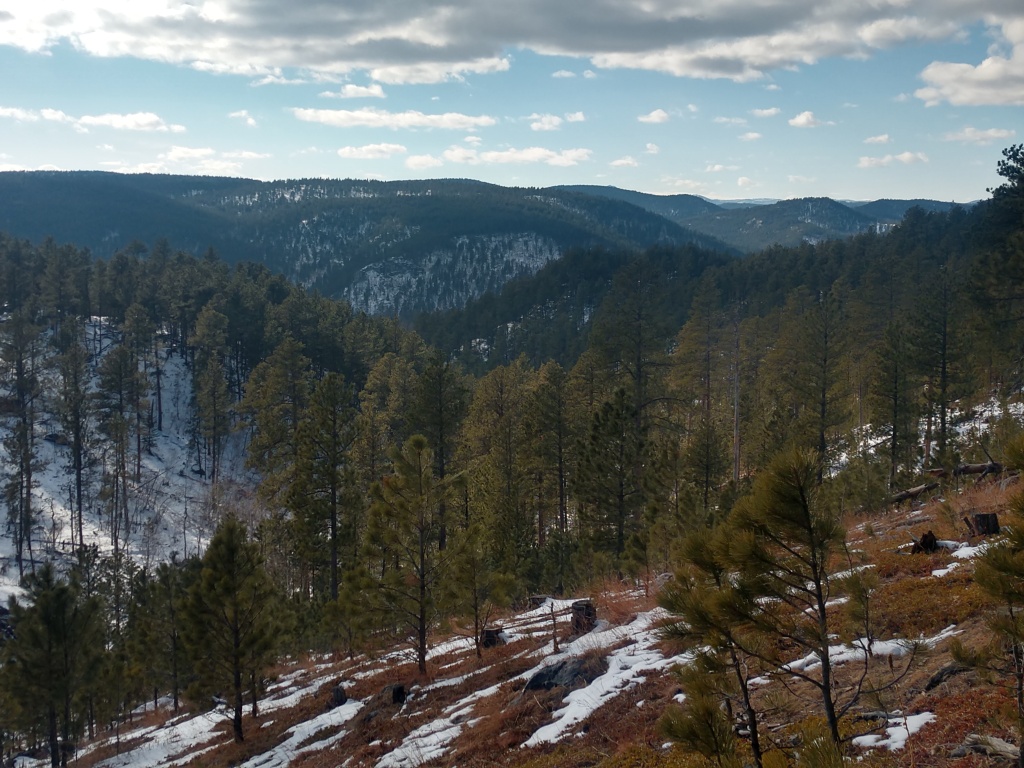
Psalm 111 is all about praising God. We can be drawn to praise in a variety of ways. Two days ago, for example, my wife and I were on a hike. There was about four inches of snow blanketing the ground. The sky was so blue. At times we would pause – sometimes along the path after a long uphill stretch and sometimes at a place that afforded a view. At both kinds of stops we were amazed by God’s creation. Along the path we stopped and could take in the small details and could hear all of the quiet sounds of nature. At the viewing stops, we could see out across the plains to the east or we could look west across the rolling hills covered in snow and pines. Here we could sense God’s grandeur and the majesty of creation. Here too we were reminded of our awesome God. We were able to praise God for the work of his hands.

In verse two the psalmist declares: “Great are the works of the Lord; they are pondered by all who delight in them”. On Sunday afternoon it was God’s creation that led us to delight in him. On Sunday morning it was a man’s testimony about God’s work on a mission trip that led us to praise and delight. In the first half of Psalm 111, God’s grace and compassion and provision are what draws the writer to praise God. These gifts of God are wrapped in the covenant, which also connects to the reasons to praise God found in the second half of the Psalm. Working out the covenant to Abraham, the psalmist remembers how God gave them the Promised Land. Recalling the steadfastness, faithfulness, and uprightness of God, the psalmist looks to the redemption that God provides, ordaining his covenant forever. Here I connect to the Psalm most personally. The redemption of God came in the person of Jesus, he who established the new covenant forever through his blood shed on the cross.

The Psalm closes by reminding us that “the fear of the Lord is the beginning of wisdom”. In the Biblical sense, fear is not being afraid of God. It is a fear in terms of reverence and awe. It was what I felt as I was awestruck gazing out at the scene pictured above. It is what you have felt when you have been caught by God’s power or love or grace at different times in your life. As our response today, may we too offer words of thanksgiving and praise to the Lord our God!

Prayer: Lord God, thank you for the many, many times when I have been amazed by your great works. These revelations, these epiphanies, are such a blessing. You are an amazing and awesome God! Amen.


Leave a comment

Prophets

Reading: Deuteronomy 18: 15-20

Verse 18: “I will put my words in his mouth, and he will tell them everything I command him”.

In today’s passage we see some long term planning. In order to continue to help the people walk faithfully with God, he will raise up prophets like Moses to teach and guide them. In their desert experience, the people were amazed at God’s power and authority, but they were also afraid of God. They feared talking directly with God. They thought only Moses could do so and live. So they asked God for an intermediary, for a prophet to communicate God’s words to the people. God appreciates their idea and decides to continue to raise up prophets like Moses to be his voice to the people. In verse eighteen God says, “I will put my words in his mouth, and he will tell them everything I command him”. Prophets will speak on behalf of God, using the words God gives them. They will be an extension of God’s power and authority. Joshua, Samuel, Nathan, Amos, Micah, Jeremiah, Malachi, Ezekiel, the judges, Isaiah, Daniel… – just a small sampling of God’s prophets.

We are in the season of Epiphany, the season that celebrates the revelation of God incarnate in Jesus Christ. The season begins with the visit of the wise men – the first Gentiles to worship Jesus Christ. Jesus is, of course, in the line of prophets in the human sense. God in the flesh lived among us and spoke God’s words to the people, guiding and teaching them (and us) how to live faithfully with God and with one another. As we learn his ways and as we seek to become more and more like Jesus, we ourselves are living out epiphany – revealing Jesus to the world through our words and actions that reveal Christ alive in us. Today and every day, in all we are, in all we say and do, may we share Jesus with others. In this season, may our very lives celebrate Jesus among us, the living word, God in the flesh, the giver of life. As we live into the fullness of our faith, may others come to know Jesus.

Prayer: Living God, today I thank you first for the prophets, each who came and spoke your word. Each has much to offer us today. I also thank you for Jesus, the fullest revelation of your love and power and authority and might. May he reign each day in my life. Amen.


Leave a comment

Oh Nineveh

Reading: Jonah 3: 5-10

Verse 8: “Let everyone call urgently on God. Let them give up their evil ways and their violence”.

Jonah has made his proclamation known. For three days he walked around Nineveh proclaiming the coming destruction. The words of his warning – or the power of God behind them – hit home, leading the people to repentance. “From the greatest to the least” they fasted and put on sack cloth, both signs of repentance. When word got to the king he too was moved to action. The king issued a decree. In addition to calling for these sign of repentance, he also declared, “Let everyone call urgently on God. Let them give up their evil ways and their violence”. He hoped that if they changed their evil ways, that maybe in his compassion God might relent. God did have compassion. God did not destroy the great city of Nineveh.

As we consider the application of this passage today, how often are we Nineveh? How many times have we had to repent of our evil ways and our violence? As I consider these questions, I realize that sin is a constant battle in my life. Like the prophet Jonah, the Holy Spirit is ever on duty, proclaiming the coming destruction, calling me away from my sin and into faithful prayer and holy living. The same mercy and grace and love that brings renewal and forgiveness to my life are the ones all people can experience when they “fast” from their sins and “put on sack cloth” as a sign of their humility. This mercy, grace, love, renewal, and forgiveness is something God offers to all people.

Taking another angle, who is your Nineveh? Who is that person or group that most needs God’s transforming power to be at work in their lives? You see, at times we are to be like Jonah too, going to “that” person or to “those” people. We are to proclaim the good news of Jesus Christ to all people, sometimes even with words. We are to bear God’s transforming power into all the world, even to our Ninevehs.

By the power and grace of God, may we be aware both of the times when we need to repent and to turn from our evil ways AND of the times when we are called to proclaim that to those who are walking without the God of mercy and grace. May we each faithfully live out both sides of God’s love.

Prayer: God of grace, humble me and convict me when I am living in sin. Walk me to your throne and lead me to kneel there, in that place of love. Use me today to help others to know that place of love so that they too can know your healing and renewing power. Amen.