pastorjohnb

Thoughts and musings on faith and our mighty God!


Leave a comment

Light and Love

Reading: John 1:1-14

John 1:5 – “The light shines in the darkness, and the darkness doesn’t extinguish the light.”

On Christmas Eve day we turn to John 1. While not a birth story in the sense of Matthew 1:18-25 or Luke 2:1-20, our reading today is very much a “birth” story – the birth of our world, the birth of light, the birth of welcome and belief, the birth of God in the flesh, the birth of glory, “full of grace and truth.” Throughout the passage, John uses the image of light again and again. This light is Jesus Christ, God in the flesh.

Each time I read and study and meditate on this passage, something new is learned, applied, realized. This is often the case when we return to a passage. God’s word is alive and active. It meets us where we are at and takes us where we need to go each time we engage a passage. Today as I read and reread these verses, this one stood out: “The light shines in the darkness, and the darkness doesn’t extinguish the light.” My first thought centered on the idea that the light enters the darkness, pushing it away, so to speak. My second thought focused on the idea that light goes as far as its power allows it to go. A small light like a candle will light up a small space. A big light like our sun will light up whole worlds. The light of Christ can make the sun seem like a candle. The light of Christ will shine everywhere and forever, if we allow it to do so.

In today’s Disciplines devotional, Rev. Dr. Dottie Escobar-Frank shared these words: “The true light shines into our hidden spaces, our dirty places, our wounded spots, and illuminates them so that healing and wholesome can be ours.” Christ’s light will shine into our souls, if we allow it in. Christ’s love will make us whole again, if we allow it in. May we say again and again, ‘Come, Lord Jesus, come.’ May it be so. Shine your light and love deep into our hearts and lives.

Prayer: Lord God, so much of who we are desires to walk always with you. This is who you created us to be. The Spirit always leads and guided us in this desire. But the darkness is ever there, too, ready to seep back in. So, Lord, we ask you to fill us with your light and love. Filled, the darkness is held at bay. Thank you, God. Amen.


Leave a comment

So Welcome ____

Reading: Romans 15:7-13

Romans 15:7 – “So welcome each other, in the same way that Christ welcomed you, for God’s glory.”

Photo credit: James A. Molnar

A leper, a tax collector, a prostitute, a demon-possessed man, a blind man, a foreigner, a crippled man, a criminal. A homeless person, a recovering alcoholic, a single mom, an ex-con, a transgender person, a refugee, an immigrant. Which list would be welcomed by Jesus into his presence? Which list would Jesus offer grace, love, mercy, welcome to? “Both” would be the answer for the Jesus that we see and read about in the gospels. Is it the same for you and for me?

In Romans 14 and 15 Paul is addressing how the church should welcome each other as Christ would. Since the beginning of the Christian movement the call has been to be like Jesus. Love like Jesus, forgive like Jesus, welcome like Jesus, extend grace, mercy, hope, peace… like Jesus. Fighting this call is the whole “we’re God’s chosen people” thing. This implies “you are not” to many people. Now, Paul, he was once a Pharisee amongst Pharisees. Back then, he drew the in/out line thick and with permanent marker. Through his conversion experience Paul knows that Jesus removed the line. Jesus welcomed Paul. That line? Seeing through Jesus’ eyes, you can’t even tell that there ever was a line.

Our reading today begins with “So welcome each other, in the same way that Christ welcomed you, for God’s glory.” Pretty clear. But the church still sees the line. So Paul quotes from four Hebrew scriptures that show that the Gentiles (all people outside the old line) are included in God’s plan of salvation. All people. All people.

Go back to the two lists at the start of this devotional. Which one(s) made you pause? Now, insert that name into verse 7. For example ,”So welcome the immigrant in the same way…” Repeat this line again and again for any name that you paused at. Again and again. Do so until “the God of hope” fills you with “all peace and joy” through “the power of the Holy Spirit.”

Prayer: Lord God, help me to understand that Jesus welcomes one and all just like he once welcomed me. Whatever lines I’ve been taught, whatever in/out ideas I’ve derived – erase them, obliterate them. Fill me to overflowing with your hope, love, peace, and joy. Then, by the power of the Holy Spirit in my heart, guide me to welcome all people into your family. Amen.


Leave a comment

Faithful, Joyful Living

Reading: Psalm 100

Psalm 100:1 – “Shout triumphantly to the Lord, all the earth!”

Joy in the Lord flows throughout Psalm 100. Unlike happiness that comes and goes, joy is a state of being. It is a state of being that becomes our “norm” as we spend more and more time walking with the Lord. It is from this state of being that the psalmist declares, “Shout triumphantly to the Lord, all the earth!” This declaration invites all of creation to praise God. This invitation is not limited to the psalmist’s community of faith. It is quite the opposite. All people and all of creation are the work of God’s hands. All are invited. This concept is also echoed in verse 3. We are all the “sheep” of God’s pasture.

The Psalm is filled with action. It calls us to a living faith. We’re invited to serve God with celebration, to offer shouts of joy, to thank God often, and to bless God’s name. This open invitation to active, faithful living and worship creates a place of welcome and community. This kind of living breaks down walls and barriers. Joyful worship draws others in.

Faithful living and joy as our state of being are not rooted in ourselves. We find the source in the last verse. We can be faithful and we can be joyful because of who and what God is. We are made in the image of God – the one who is good, who is loyal in love, who is always and forever faithful. God is our source of joy. God gives us the power to be faithful. God is with us. We are God’s. Thanks be to God!

Prayer: Lord God, we celebrate our place in your pasture. We are your family and you are our God. What joy! From our place of belonging, help us to extend invitation to others. From our place in community, guide us to make all feel included. All for your praise and glory! Amen!


Leave a comment

May Your Kingdom Come

Reading: Joel 2:28-32

Joel 2:32 – “But everyone who calls on the Lord’s name will be saved.”

Moving from yesterday’s suffering, sin, repentance, and hope, today we move into and beyond the ‘now and not yet’ of Joel 2. Once God has brought the exiles home and returned abundance to the land and to the people of God… or at some point in the future… God says, “After that I will pour out my Spirit upon everyone…” For Joel and his audience, this would be when the Messiah came, inaugurating a new era with a new heaven and earth.

Just proceeding that new era, sons and daughters, old men and young men, even slaves, will receive the Spirit. They will speak of and dream of this new coming kingdom. On that day, when it comes, there will be “blood and fire and columns of smoke” and it will be a “great and dreadful day.” And there is a ‘but.’ In verse 32 we read, “But everyone who calls on the Lord’s name will be saved.” God’s faithful will be saved.

As the story of the Bible continues, thoughts on this day evolve and develop. When Jesus arrived, he brought a dramatic shift in the understanding of the new kingdom. Jesus is clear that Joel’s (and other’s) visions of the new heaven and earth will indeed be glorious on that day, but… But, Jesus said, the kingdom is here now. Jesus taught us disciples to pray, “may your kingdom come… may your will be done… on earth as it is in heaven.” The time that Joel speaks of? Jesus is clear: the time is now. All people – men, women, young, old, slaves, free, rich, poor… – all people can receive the Spirit. All people are invited to live in and to be a part of God’s kingdom here on earth. All who call on the Lord’s name will be saved. O Lord, may your kingdom come and may your will be done! And may it begin with us.

Prayer: Lord God, open wide the doors of our hearts and of our churches! Opened wide, use us to build this kingdom where all are welcomed, where all know that they are beloved of you, and of us. Opened wide, use us to declare that each person, created in your image, one and all, are invited to your table of grace. Use us, Lord, to make this beautiful kingdom a reality here and now. Amen.


Leave a comment

Our Faithful God

Reading: Lamentations 1:1-6

Lamentations 1:5b – “Certainly the Lord caused her grief because of her many wrongs.”

Lamentations is a vivid and emotional account of the destruction of Jerusalem and her temple at the hands of the Babylonians. Jeremiah is likely the primary author. The prophet worked long and hard trying to call the leaders and the people back into right relationship with God. But they chose to ignore his words of warning, instead choosing to trust in idols and foreign nations. Lamentations primarily deals with the consequences of these sinful choices but also offers hope in God’s love and faithfulness.

Lamentations personifies Jerusalem as a woman, present in the great destruction, sitting in the ruins. In the first verse we read, “She sits alone, the city that was once full of people.” When I first read this line, my brain read “promise” instead of “people.” Then I thought, yes, once Judah relied on and trusted in God’s promises. Their choice to trust in their own power and efforts has led them to become “slaves” sent away into exile. Maybe my brain read it this way because sadly at times this is our choice too. We choose self over God and/or neighbor, becoming a “slave” to our sin, exiling ourselves from God’s presence.

The author believes that Judah’s tears and mourning and grief are the direct result of her sinful behaviors. In verse 5 we read, “Certainly the Lord caused her grief because of her many wrongs.” While we do not subscribe to the ancient Jew’s understanding of faith as “do good, be blessed… do evil, be cursed,” we do experience tears, mourning, and grief at times as the practical outcomes of our sinful and selfish choices. While we do exile ourselves at times, God always remains present. Our faithful God listens to our painful laments while allowing us to be refined and to grow in faith because of our hard lessons. In this we find hope – as the author of Lamentations does as we turn to chapter 3 tomorrow.

Prayer: Lord God, while we are far from perfect, your perfect love never wavers, never fails. While we wander and separate ourselves from you, your steadfast presence is always right there, ready to redirect, to teach, to forgive, to welcome us back into right relationship. Thank you God!! Amen.


Leave a comment

Safe, Welcoming, Loving?

Reading: Luke 15:1-10

Luke 15:10 – “Joy breaks out in the presence of God’s angels over one sinner who changes both heart and life.”

As today’s passage begins, tax collectors and sinners are gathering around Jesus – “to listen to him.” Jesus often welcomed and loved on such as these, people who were not welcomed or loved by the other group that was present. The Pharisees and legal experts are not there to listen either. They are there to grumble, to complain, and to critique. This second group is unhappy with the “radical” welcome that Jesus offers to all people, especially to these folks that are clearly not part of God’s family.

Many years ago the church that I was a part of had an opportunity to minister to the poor and homeless. The building across the parking lot was purchased with the intent of renovating it to open a day center for this population. Some in the church thought it’d be better to tear it down to have more parking. These voices did not win out. Those typically excluded or kept on the outside found a safe and welcoming and loving place to be during the day, when the local rescue mission was closed.

In response to the religious folk’s hard hearts, Jesus tells two parables. In both, the list thing (a sheep and then a coin) is sought and then found. The finder’s community then celebrates together. In the same way, Jesus says, “Joy breaks out in the presence of God’s angels over one sinner who changes both heart and life.” The same sentiment was often said and/or felt at the day center when another person was brought out of poverty or homelessness or addiction or… The same could be said about our churches and about our very lives. Are we and are our churches willing to be safe and welcoming and loving places? Places that cause the angels in heaven to rejoice?

Prayer: Lord God, open our hearts and hands to the needs around us. Lead us to be people who create safe places, who provide genuine welcome, and who love all people deeply. Guide our churches to live this same Christlike faith. Amen.


Leave a comment

An Invitation to All

Readings: Mark 14:22-24 and Luke 22:19-21

Mark 14:24 – “This is my blood of the covenant, which is poured out for many.”

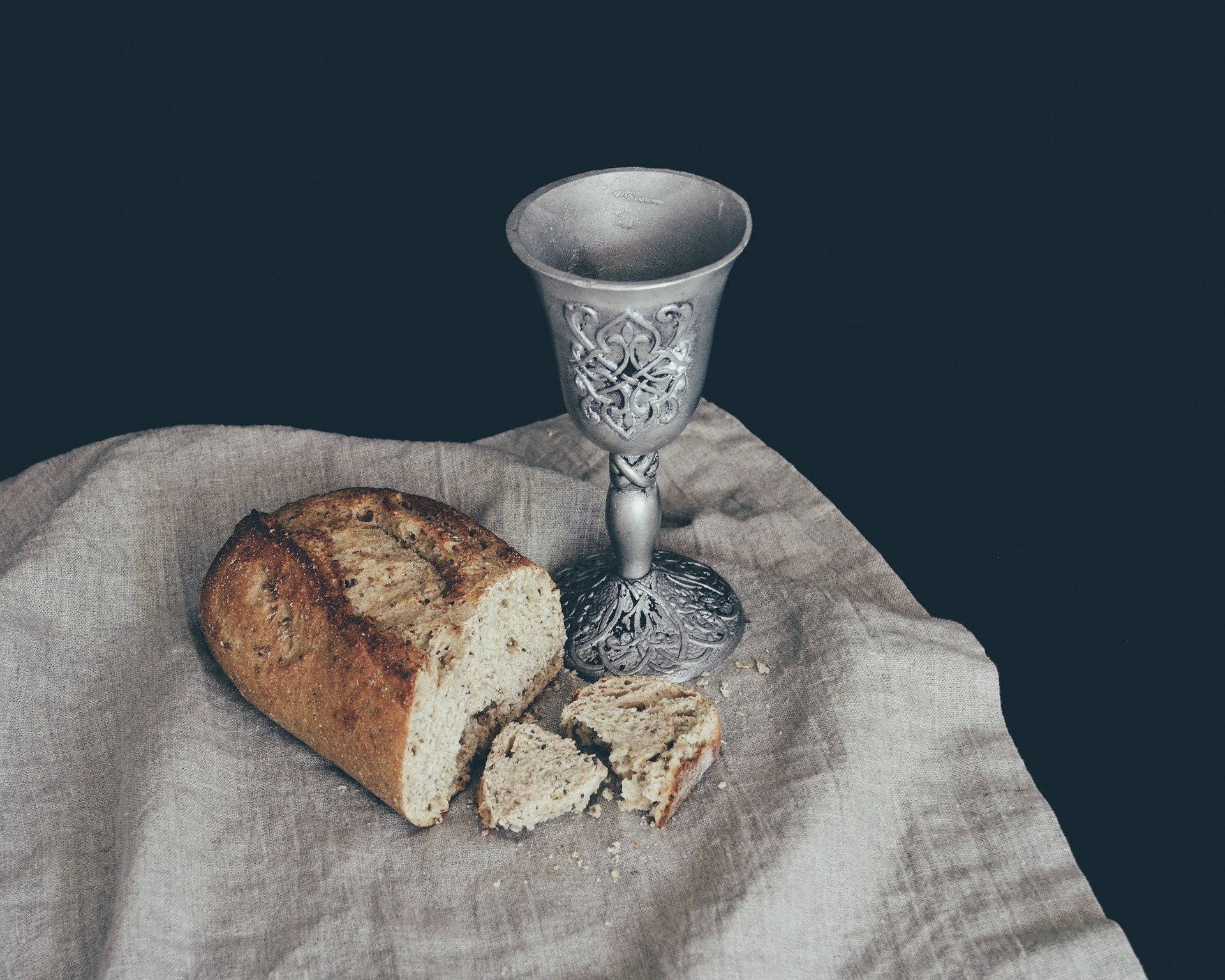
In both passages that we read today, we see Jesus instituting the sacrament of communion. This event is set within the context of the Passover meal. This meal was an annual event in which the Jews would remember and celebrate how God saved them as the angel of death passed over their houses. This final plague led to Pharaoh releasing Israel from bondage and slavery.

Mark and Luke both present Jesus offering the bread as symbolic of his body, broken for them and for us. Jesus’ body will be broken on the cross. In using the common element amongst the rich and the poor and all in between, Jesus takes the everyday and connects bread to himself and to us all.

Both gospels present the cup – representative of Jesus’ blood – as poured out for many, establishing the “new covenant.” Mark recalls these words of Jesus: “This is my blood of the covenant, which is poured out for many.” The new covenant is wrapped in mercy and grace, in forgiveness of sins. This common element of wine – again Jesus connecting the ordinary to his extraordinary gift.

In Mark’s gospel they sing a few songs and head to the Mount of Olives. But in Luke’s gospel, Jesus says, “But look! My betrayer is with me; his hand is on this table.” Jesus celebrates the first communion knowing that Judas will betray him. This is an invitation to us all – sinners each of us – to come to the table of grace. There we too will find welcome and forgiveness. Thanks be to God.

Prayer: Lord God, we humbly thank you for the gift of grace. Your Son did for us what we could not and cannot do for ourselves. It is only because of and through Jesus’ sacrifice that we are forgiven and made new, freed from the bonds of sin and death. Thank you, thank you, thank you. Amen.


Leave a comment

A Regular Practice

Reading: Isaiah 56:1, 3-5, 7-8

Isaiah 56:1 – “Act justly and do what is righteous because my salvation is coming soon.”

The opening of Isaiah 56 is about keeping the Sabbath. The idea of Sabbath originates in the creation story. After creating the heavens, the earth, and everything in and on them, God rested. When God began to formalize who and what God’s people would be, the practice of Sabbath was included in the Ten Commandments. During the time in exile and the period that followed, the keeping of the Sabbath was especially important. It set the Jews apart from the rest of the world. To be Sabbath-keepers remains counter-cultural.

In today’s reading Isaiah is reminding Israel that Sabbath is not just for the Jews. The idea of including immigrants and servants has been a part of Sabbath ever since Moses received what we identify as Exodus 20:8-11. Animals and the earth itself are part of Sabbath rest. Isaiah includes the eunuchs and other outcasts in his words that declare that God’s family and home are places of welcome and inclusion for all people who honor the covenant, who live according to God’s will and ways.

As I reflect on these words today I am struck by how wide open God’s heart is for all who seek to walk as a child of God. I’m also becoming aware that Sabbath is aimed at creating a just world. Rest is part of God’s design for all things – people and all of creation. This concept of rest and shalom, of blessing and renewal also reveals the wideness of God’s love for all people and for all of creation. It is in these times of not doing that we can foster our relationships with God and with one another. This investment of time builds connection and it builds community. May Sabbath be a regular practice for you and for me as we seek to build God’s kingdom here and now.

Prayer: Lord God, thank you for the gift of Sabbath. This time set apart has the power to deepen our love for you and our love for each other. Open us to the wideness of your heart and your love as we practice this discipline. Lead and guide us in this regular practice, O God, so that holiness and justice, and peace and righteousness abound in our lives and in our world. Amen.


Leave a comment

Stepping Beyond Easy Love

Reading: Romans 12:9-16

Romans 12:13 – “Contribute to the needs of God’s people, and welcome the strangers into your home.”

In Romans 12:9-16 Paul calls us to love. He emphasizes loving without pretending. Other translations say “love without hypocrisy.” Paul is calling for genuine, sincere love, not fake or false love. Some of the time we can be tempted to love in ways that are superficial. We might, for example, say that we’ll pray for someone but be unwilling to take the obvious step that would be the answer to the prayer.

Paul connects this “pretend” love to cursing those who harass us and to thinking we’re better than or smarter than others. Genuine love would work against us being two-faced and against being arrogant. We are called to “hate” these evils and to “hold on to what is good.” Paul also lays out what it looks like to hold onto the good.

We are to love and honor one another. We are to be enthusiastic as we serve one another. We are to meet each other’s needs. We are to welcome in the strangers. (What a call to be the church both inside and outside the walls of the building!) We are to rejoice with the joyful, and we are to cry with those in sorrow. We are to bless others. We are to consider everyone as equals. We are to associate with those “who have no status.”

Much of what Paul writes in today’s passage parallels Jesus’ challenging words from yesterday in Luke 6. In essence both tell us to love those who are hard to love. There is also the same counter-cultural element to Paul’s words today. Love the stranger, love those without status or voice. There is risk in this call. Genuine love often involves risk.

Prayer: Lord God, as we’ve been reminded, sometimes it is easy to love. It is good and right to genuinely love our family, our friends, our church. Yet you call us to so much more. Encourage us to step beyond these familiar and safe circles of love. Guide us out into the unknown waters of the stranger. Lead us to stand on the uneven and rocky ground of the marginalized. Remind us, Lord, that in these places, we stand with you. Amen.


Leave a comment

Modeling Christ

Reading: Acts 10:34-38

Acts 10:34-35 – “God doesn’t show partiality… whoever worships him and does what is right is acceptable to him.”

Today’s scripture from Acts 10 serves as a bridge between the first two of John Wesley’s three simple rules. Peter first acknowledges that “God doesn’t show partiality.” He has come to understand that God accepts the Gentile Christians as they are. Peter now sees that their attempts to make these believers Jews first (then Christians) was wrong and was doing harm to these brothers and sisters in Christ. We too can do harm when we seek to elevate what we think is right over what God is doing at the time. We too can put up barriers to people coming to Christ. We do this when we say or imply that they must look or act or dress or… like us to attend church or to be baptized or…

Peter then recognizes that the Gentile Christians are worshipping God and are living out the example of Jesus. Getting past himself, he has come to understand that they are totally acceptable to God. Indeed, “He is Lord of all!” Reflecting back on his three years with Jesus, Peter can see how Jesus himself engaged one and all. Jesus did not show partiality. Instead he demonstrated welcome, acceptance, and love to all people.

Our passage closes with this observation about Jesus: “He traveled around doing good and healing everyone.” Jesus sought to do good to all. He didn’t first check to see if they really believed in him or belonged to a church. Sometimes faith or belief even came after the good act or after the healing. May we always be generous with our acts of kindness and love. Modeling Christ to others, we draw them towards Jesus and his love.

Prayer: Lord God, open our hearts wide too. Lead and guide us to see all people as Jests saw them. Each person was worthy of his time, his attention, his efforts, his love. Help us to engage our world this way too. Amen.