pastorjohnb

Thoughts and musings on faith and our mighty God!


Leave a comment

Our Faithful God

Reading: Lamentations 1:1-6

Lamentations 1:5b – “Certainly the Lord caused her grief because of her many wrongs.”

Lamentations is a vivid and emotional account of the destruction of Jerusalem and her temple at the hands of the Babylonians. Jeremiah is likely the primary author. The prophet worked long and hard trying to call the leaders and the people back into right relationship with God. But they chose to ignore his words of warning, instead choosing to trust in idols and foreign nations. Lamentations primarily deals with the consequences of these sinful choices but also offers hope in God’s love and faithfulness.

Lamentations personifies Jerusalem as a woman, present in the great destruction, sitting in the ruins. In the first verse we read, “She sits alone, the city that was once full of people.” When I first read this line, my brain read “promise” instead of “people.” Then I thought, yes, once Judah relied on and trusted in God’s promises. Their choice to trust in their own power and efforts has led them to become “slaves” sent away into exile. Maybe my brain read it this way because sadly at times this is our choice too. We choose self over God and/or neighbor, becoming a “slave” to our sin, exiling ourselves from God’s presence.

The author believes that Judah’s tears and mourning and grief are the direct result of her sinful behaviors. In verse 5 we read, “Certainly the Lord caused her grief because of her many wrongs.” While we do not subscribe to the ancient Jew’s understanding of faith as “do good, be blessed… do evil, be cursed,” we do experience tears, mourning, and grief at times as the practical outcomes of our sinful and selfish choices. While we do exile ourselves at times, God always remains present. Our faithful God listens to our painful laments while allowing us to be refined and to grow in faith because of our hard lessons. In this we find hope – as the author of Lamentations does as we turn to chapter 3 tomorrow.

Prayer: Lord God, while we are far from perfect, your perfect love never wavers, never fails. While we wander and separate ourselves from you, your steadfast presence is always right there, ready to redirect, to teach, to forgive, to welcome us back into right relationship. Thank you God!! Amen.


Leave a comment

Safe, Welcoming, Loving?

Reading: Luke 15:1-10

Luke 15:10 – “Joy breaks out in the presence of God’s angels over one sinner who changes both heart and life.”

As today’s passage begins, tax collectors and sinners are gathering around Jesus – “to listen to him.” Jesus often welcomed and loved on such as these, people who were not welcomed or loved by the other group that was present. The Pharisees and legal experts are not there to listen either. They are there to grumble, to complain, and to critique. This second group is unhappy with the “radical” welcome that Jesus offers to all people, especially to these folks that are clearly not part of God’s family.

Many years ago the church that I was a part of had an opportunity to minister to the poor and homeless. The building across the parking lot was purchased with the intent of renovating it to open a day center for this population. Some in the church thought it’d be better to tear it down to have more parking. These voices did not win out. Those typically excluded or kept on the outside found a safe and welcoming and loving place to be during the day, when the local rescue mission was closed.

In response to the religious folk’s hard hearts, Jesus tells two parables. In both, the list thing (a sheep and then a coin) is sought and then found. The finder’s community then celebrates together. In the same way, Jesus says, “Joy breaks out in the presence of God’s angels over one sinner who changes both heart and life.” The same sentiment was often said and/or felt at the day center when another person was brought out of poverty or homelessness or addiction or… The same could be said about our churches and about our very lives. Are we and are our churches willing to be safe and welcoming and loving places? Places that cause the angels in heaven to rejoice?

Prayer: Lord God, open our hearts and hands to the needs around us. Lead us to be people who create safe places, who provide genuine welcome, and who love all people deeply. Guide our churches to live this same Christlike faith. Amen.


Leave a comment

An Invitation to All

Readings: Mark 14:22-24 and Luke 22:19-21

Mark 14:24 – “This is my blood of the covenant, which is poured out for many.”

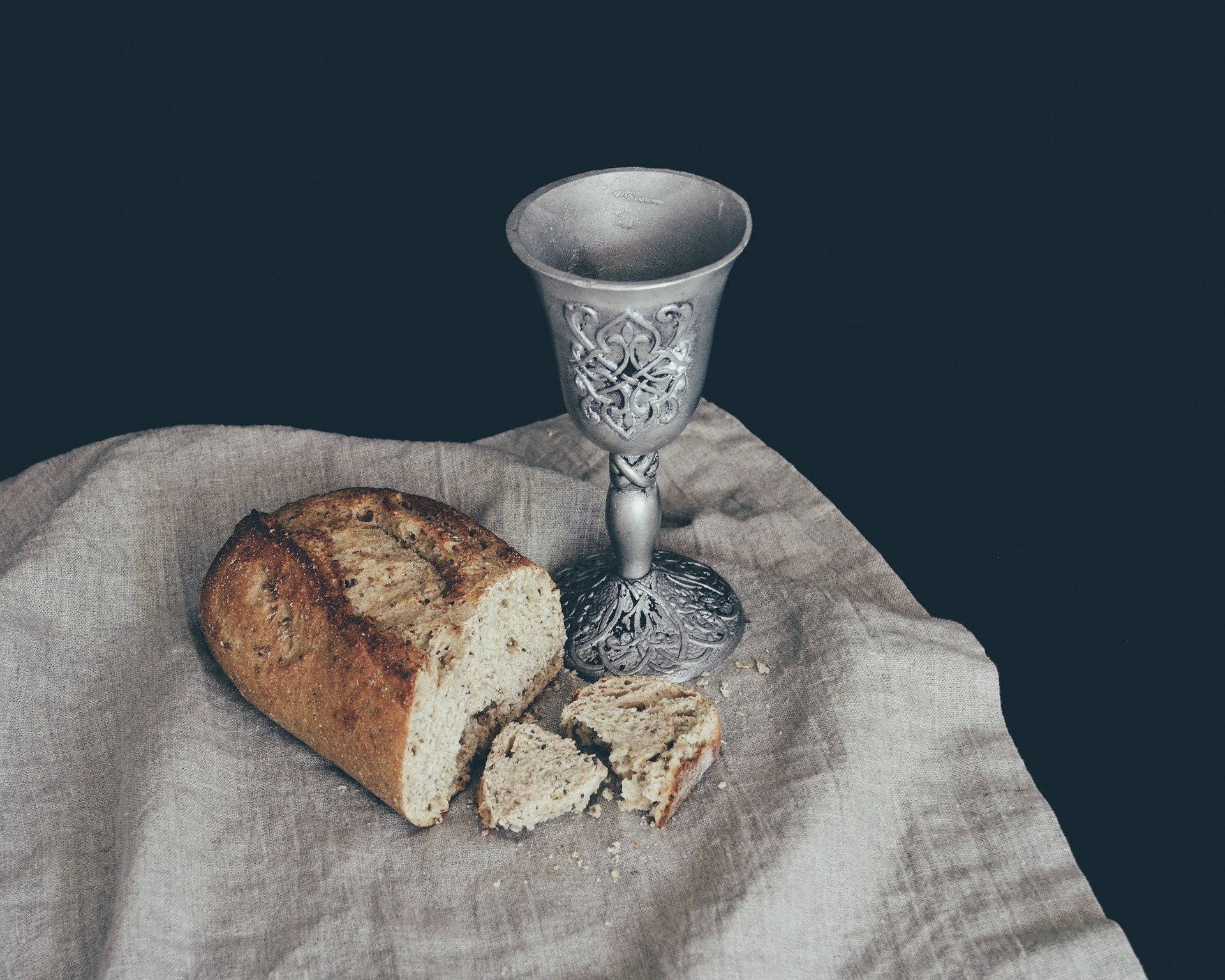
In both passages that we read today, we see Jesus instituting the sacrament of communion. This event is set within the context of the Passover meal. This meal was an annual event in which the Jews would remember and celebrate how God saved them as the angel of death passed over their houses. This final plague led to Pharaoh releasing Israel from bondage and slavery.

Mark and Luke both present Jesus offering the bread as symbolic of his body, broken for them and for us. Jesus’ body will be broken on the cross. In using the common element amongst the rich and the poor and all in between, Jesus takes the everyday and connects bread to himself and to us all.

Both gospels present the cup – representative of Jesus’ blood – as poured out for many, establishing the “new covenant.” Mark recalls these words of Jesus: “This is my blood of the covenant, which is poured out for many.” The new covenant is wrapped in mercy and grace, in forgiveness of sins. This common element of wine – again Jesus connecting the ordinary to his extraordinary gift.

In Mark’s gospel they sing a few songs and head to the Mount of Olives. But in Luke’s gospel, Jesus says, “But look! My betrayer is with me; his hand is on this table.” Jesus celebrates the first communion knowing that Judas will betray him. This is an invitation to us all – sinners each of us – to come to the table of grace. There we too will find welcome and forgiveness. Thanks be to God.

Prayer: Lord God, we humbly thank you for the gift of grace. Your Son did for us what we could not and cannot do for ourselves. It is only because of and through Jesus’ sacrifice that we are forgiven and made new, freed from the bonds of sin and death. Thank you, thank you, thank you. Amen.


Leave a comment

A Regular Practice

Reading: Isaiah 56:1, 3-5, 7-8

Isaiah 56:1 – “Act justly and do what is righteous because my salvation is coming soon.”

The opening of Isaiah 56 is about keeping the Sabbath. The idea of Sabbath originates in the creation story. After creating the heavens, the earth, and everything in and on them, God rested. When God began to formalize who and what God’s people would be, the practice of Sabbath was included in the Ten Commandments. During the time in exile and the period that followed, the keeping of the Sabbath was especially important. It set the Jews apart from the rest of the world. To be Sabbath-keepers remains counter-cultural.

In today’s reading Isaiah is reminding Israel that Sabbath is not just for the Jews. The idea of including immigrants and servants has been a part of Sabbath ever since Moses received what we identify as Exodus 20:8-11. Animals and the earth itself are part of Sabbath rest. Isaiah includes the eunuchs and other outcasts in his words that declare that God’s family and home are places of welcome and inclusion for all people who honor the covenant, who live according to God’s will and ways.

As I reflect on these words today I am struck by how wide open God’s heart is for all who seek to walk as a child of God. I’m also becoming aware that Sabbath is aimed at creating a just world. Rest is part of God’s design for all things – people and all of creation. This concept of rest and shalom, of blessing and renewal also reveals the wideness of God’s love for all people and for all of creation. It is in these times of not doing that we can foster our relationships with God and with one another. This investment of time builds connection and it builds community. May Sabbath be a regular practice for you and for me as we seek to build God’s kingdom here and now.

Prayer: Lord God, thank you for the gift of Sabbath. This time set apart has the power to deepen our love for you and our love for each other. Open us to the wideness of your heart and your love as we practice this discipline. Lead and guide us in this regular practice, O God, so that holiness and justice, and peace and righteousness abound in our lives and in our world. Amen.


Leave a comment

Stepping Beyond Easy Love

Reading: Romans 12:9-16

Romans 12:13 – “Contribute to the needs of God’s people, and welcome the strangers into your home.”

In Romans 12:9-16 Paul calls us to love. He emphasizes loving without pretending. Other translations say “love without hypocrisy.” Paul is calling for genuine, sincere love, not fake or false love. Some of the time we can be tempted to love in ways that are superficial. We might, for example, say that we’ll pray for someone but be unwilling to take the obvious step that would be the answer to the prayer.

Paul connects this “pretend” love to cursing those who harass us and to thinking we’re better than or smarter than others. Genuine love would work against us being two-faced and against being arrogant. We are called to “hate” these evils and to “hold on to what is good.” Paul also lays out what it looks like to hold onto the good.

We are to love and honor one another. We are to be enthusiastic as we serve one another. We are to meet each other’s needs. We are to welcome in the strangers. (What a call to be the church both inside and outside the walls of the building!) We are to rejoice with the joyful, and we are to cry with those in sorrow. We are to bless others. We are to consider everyone as equals. We are to associate with those “who have no status.”

Much of what Paul writes in today’s passage parallels Jesus’ challenging words from yesterday in Luke 6. In essence both tell us to love those who are hard to love. There is also the same counter-cultural element to Paul’s words today. Love the stranger, love those without status or voice. There is risk in this call. Genuine love often involves risk.

Prayer: Lord God, as we’ve been reminded, sometimes it is easy to love. It is good and right to genuinely love our family, our friends, our church. Yet you call us to so much more. Encourage us to step beyond these familiar and safe circles of love. Guide us out into the unknown waters of the stranger. Lead us to stand on the uneven and rocky ground of the marginalized. Remind us, Lord, that in these places, we stand with you. Amen.


Leave a comment

Modeling Christ

Reading: Acts 10:34-38

Acts 10:34-35 – “God doesn’t show partiality… whoever worships him and does what is right is acceptable to him.”

Today’s scripture from Acts 10 serves as a bridge between the first two of John Wesley’s three simple rules. Peter first acknowledges that “God doesn’t show partiality.” He has come to understand that God accepts the Gentile Christians as they are. Peter now sees that their attempts to make these believers Jews first (then Christians) was wrong and was doing harm to these brothers and sisters in Christ. We too can do harm when we seek to elevate what we think is right over what God is doing at the time. We too can put up barriers to people coming to Christ. We do this when we say or imply that they must look or act or dress or… like us to attend church or to be baptized or…

Peter then recognizes that the Gentile Christians are worshipping God and are living out the example of Jesus. Getting past himself, he has come to understand that they are totally acceptable to God. Indeed, “He is Lord of all!” Reflecting back on his three years with Jesus, Peter can see how Jesus himself engaged one and all. Jesus did not show partiality. Instead he demonstrated welcome, acceptance, and love to all people.

Our passage closes with this observation about Jesus: “He traveled around doing good and healing everyone.” Jesus sought to do good to all. He didn’t first check to see if they really believed in him or belonged to a church. Sometimes faith or belief even came after the good act or after the healing. May we always be generous with our acts of kindness and love. Modeling Christ to others, we draw them towards Jesus and his love.

Prayer: Lord God, open our hearts wide too. Lead and guide us to see all people as Jests saw them. Each person was worthy of his time, his attention, his efforts, his love. Help us to engage our world this way too. Amen.


Leave a comment

“Water” to “Wine”

Reading: John 1:1-2:12

John 1:5 – “The light shines in the darkness and the darkness doesn’t extinguish the light.”

Today we begin the Gospel of John, written about 30 years after Matthew, Mark, and Luke. John tells the story of Jesus, Son of God, dwelling among human beings, giving life and the Spirit to those who receive and believe in him as the Son of God, as Lord and Savior.

The Gospel begins connecting Jesus to eternity. Channeling the words and feel of Genesis, John establishes Jesus as the “Word” who was with and is God. In Jesus is light and life. John declares that Jesus is “The light shines in the darkness and the darkness doesn’t extinguish the light.” Even though the light shone on all people, Jesus’ own people didn’t recognize or welcome him. Even so, “the Word became flesh” and dwelled among humanity, revealing grace and truth, making God known.

The religious leaders sent representatives to ask John, “Who are you?” He tells them he’s not the one, not Elijah, not a prophet. Pushed further, John says he is the one “crying out in the wilderness” preparing people to receive Jesus. The next day (very Genesis-like) John sees and names Jesus as “the Lamb of God who takes away the sins of the world.” Baptizing Jesus, John sees the Spirit descending and resting upon Jesus, “the one who baptizes with the Holy Spirit.”

The next day the first disciples are called – some by Jesus and some by one another. On the third day, Jesus is at a wedding in Cana. Here we find a great mother-son exchange. The wedding hosts have run out of wine and Mary brings it to Jesus’ attention. He replies, “My time hasn’t come yet.” Likely looking straight at Jesus, Mary tells the servants, “Do whatever he tells you.” The water jugs are filled and it turns into wine – the best wine. Jesus’ glory is revealed. The disciples believe in him.

Prayer: Lord God, thank you for taking on flesh, for stepping down out of heaven’s glory to bring it to earth. Your light continues to shine into the darkness of our world and our lives. You continue to turn the “water” of our lives into the best possible “wine.” Thank you, Lord Jesus. Amen.


Leave a comment

So It Will Be with Us

Reading: Matthew 24-25

Matthew 24:46 – “Happy are those servants whom the master finds fulfilling their responsibilities when he comes.”

Chapter 24 is almost all about the signs of Jesus’ return. The end of chapter 24 and most of chapter 25 is about being ready or prepared for that day. Chapter 25 closes with the consequences of our decisions and actions leading up to that day. The conversation begins outside the temple, where Jesus predicts its destruction. This leads the disciples to ask about the end times when Jesus will return in glory.

Jesus says there will be many things that will happen. There will be false prophets and false christs. There will be war, famine, earthquakes, great suffering, and persecution. Many will fall away. Then the sun and moon will go dark and the planets will shake. Christ will come on the clouds in great splendor and power. The angels will gather the chosen ones. Jesus then reminds us that no one knows the day or hour. It will come upon the earth just as the flood came upon the people of Noah’s day. The message is clear: stay alert, always be prepared for the day.

From 24:45 through 25:30 we find three parables that describe what it looks like to be alert and prepared. In the first parable we read, “Happy are those servants whom the master finds fulfilling their responsibilities when he comes.” The bad or unfaithful servants will be cut to pieces and thrown into hell when the master returns unexpectedly. In the second parable the wise bridesmaids had plenty of oil (faith.) They will enter the wedding (heaven) when the late groom (Christ) arrives. The door will be closed. The foolish or unprepared will hear, “I don’t know you” when they try to get in. In the third parable the faithful who have put their gifts to work will hear, “Come, celebrate with me.” The lazy and evil will be thrown into the “furthest darkness.”

We close with the parable of the sheep and the goats. This summarizes the results of how one lived. The sheep lived for others, feeding the hungry, visiting the prisoners, welcoming the strangers. They did so in the name of Christ. Eternal life is their final reward. The goats ignored the hungry… Their final reward is eternal punishment. So it will be with us.

Prayer: Lord God, how we live day by day matters. Keep us faithful in the small things, attending to all that you place before us, using the gifts and blessings you have given us to bring your kingdom to fruition. Amen.


Leave a comment

When We Choose

Reading: Obadiah

Verse 15 – “As you have done, so it will be done to you.”

Obadiah condemns Edom for its attitude and for its behavior. The nation of Edom is proud. It rejoices when its ‘neighbor’ is defeated. They choose to then join in the plundering and violence. Edom kills those who escaped Babylon’s swords and they sell the refugees as slaves. There is much for God to condemn and judge concerning Edom and their choices.

There is a long history between Edom and Judah/Israel. These peoples are descended from Jacob and Esau. In real life there was great tension between these twin brothers. That tension persisted down through time. Perhaps today we’d say there is ‘bad blood’ between these two nations. Today, when one side or the other suffers or falls or experiences some defeat, there is often rejoicing on the other side. When long held animosity and tension lie just beneath the surface, that can flow out and lead to things like Edom did to Judah.

This same reality, this same scenario also scales down. We see it between the police and inner city residents. We see it between gangs who compete to thrive upon people’s weaknesses. We see it between neighbors and family members who refuse to even speak to one another. We see the tension there, just beneath the surface, always there. Then, at times, it rises up, it erupts, it shows its ugliness. Such was the case with Edom when Judah fell to the mighty Babylonians.

God declares to Edom, “As you have done, so it will be done to you.” About 750 years later a relative of God’s would share this same sentiment. He encouraged those who saw each other as less than to choose love over hate, empathy over apathy, compassion over condemnation, welcome instead of exclusion. Funny thing is this: when we choose love, empathy, compassion, welcome, grace, forgiveness… it is also said: “As you have done, so it will be done to you.” May it be so.

Prayer: Lord God, it can be hard to choose not to celebrate when a rival loses, to not rejoice when an ‘enemy’ falls. It can even be tempting to join in, to pile on, to release those old, bad feelings. These are the ways of the world. This is not your way. As your children and as your examples in this world, use us to choose the better way, to speak and act and think in ways that reveal your heart for all people. Amen.


Leave a comment

Clearly at Work

Readings: Ruth 3 and Ruth 4

Ruth 3:10 – “May you be blessed by the LORD, my daughter! You have acted even more faithfully than you did at first.”

Today’s passage begins with Naomi caring for Ruth. It is a bit of a role reversal but she is the one from this culture. Naomi lays out a plan for Ruth to find a husband and Boaz is the ideal choice. He has been generous and righteous, kind and protective. He has not taken advantage of this situation. Ruth receives instructions and works the plan. This is very risky. Women don’t go to the threshing floor – especially in the middle of the night. And women certainly don’t ask men about things like marriage. But that’s the plan. All goes well. Then the waiting begins.

Boaz goes that morning to the city gate. It is where transactions are made. He is intent on talking with the closer relative. Gathering ten elders as witnesses, Boaz explains the situation – mostly. The closest of kin is willing to buy the land to preserve the family inheritance. Next, Boaz says, you also get Ruth the Moabite too – to preserve the family name too. This is one step too far for the next of kin. They make a formal agreement – sandal and all – Boaz will redeem the land and he will marry Ruth.

The sticking point for the next of kin is marrying a foreign woman. Strictly speaking, he is adhering to the Law. Yet God is clearly at work in a new way here in the book of Ruth. Naomi, Ruth, and Boaz are a part of it. The women in town declare that Ruth is “better for you than seven sons.” In that time and culture ,what a statement! The child born to Boaz and Ruth is named Obed – “the one who serves God.” Our reading closes with some genealogy. It goes like this: Obed -> Jesse -> David. That line eventually ends with -> Jesus. If the line of David and Jesus includes a Moabite woman, then maybe we, as people of faith, should likewise welcome “the other.”

Prayer: Lord God, thank you for this beautiful story. It is living faith as it is meant to be lived – caring for one another, honoring you in all that is said and done, elevating righteousness and faithfulness as our guiding lights. Lead us day by day to walk in these ways. Amen.