pastorjohnb

Thoughts and musings on faith and our mighty God!


Leave a comment

An Invitation to All

Readings: Mark 14:22-24 and Luke 22:19-21

Mark 14:24 – “This is my blood of the covenant, which is poured out for many.”

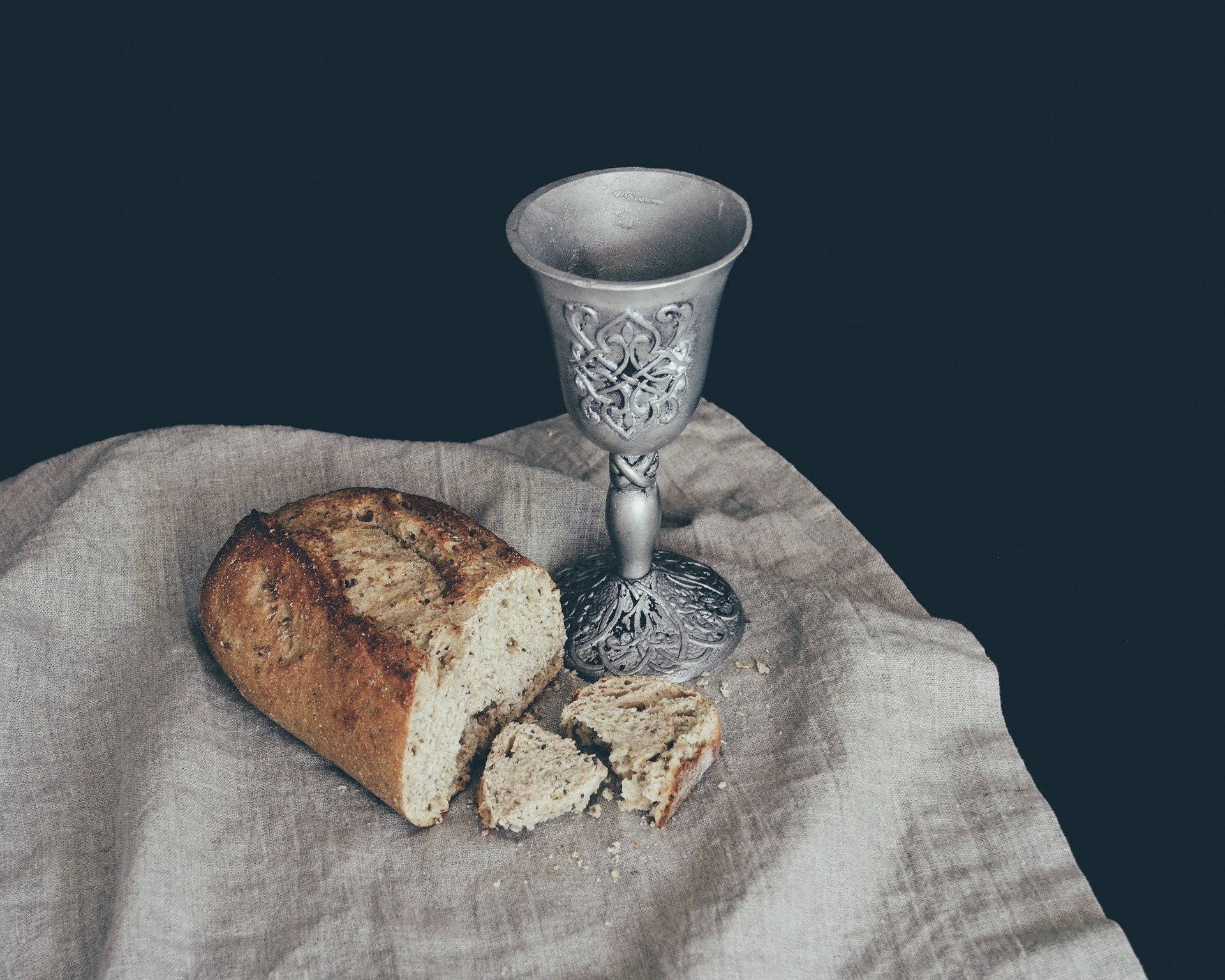
In both passages that we read today, we see Jesus instituting the sacrament of communion. This event is set within the context of the Passover meal. This meal was an annual event in which the Jews would remember and celebrate how God saved them as the angel of death passed over their houses. This final plague led to Pharaoh releasing Israel from bondage and slavery.

Mark and Luke both present Jesus offering the bread as symbolic of his body, broken for them and for us. Jesus’ body will be broken on the cross. In using the common element amongst the rich and the poor and all in between, Jesus takes the everyday and connects bread to himself and to us all.

Both gospels present the cup – representative of Jesus’ blood – as poured out for many, establishing the “new covenant.” Mark recalls these words of Jesus: “This is my blood of the covenant, which is poured out for many.” The new covenant is wrapped in mercy and grace, in forgiveness of sins. This common element of wine – again Jesus connecting the ordinary to his extraordinary gift.

In Mark’s gospel they sing a few songs and head to the Mount of Olives. But in Luke’s gospel, Jesus says, “But look! My betrayer is with me; his hand is on this table.” Jesus celebrates the first communion knowing that Judas will betray him. This is an invitation to us all – sinners each of us – to come to the table of grace. There we too will find welcome and forgiveness. Thanks be to God.

Prayer: Lord God, we humbly thank you for the gift of grace. Your Son did for us what we could not and cannot do for ourselves. It is only because of and through Jesus’ sacrifice that we are forgiven and made new, freed from the bonds of sin and death. Thank you, thank you, thank you. Amen.


Leave a comment

When God Calls…

Reading: Genesis 24:58-67

Verse 58: “I will go.”

After hearing the servant’s account of God’s leading and guiding, Rebekah’s brothers ask her if she will go with the servant. Without hesitation she says, “I will go.” The evidence of God’s hand at work must’ve been strong. She was leaving almost everything and everyone behind to go with a man she’d just met to marry a man she’s never met to live in a place she’d never been. This was a really big “I will go.”

We make choices and decisions all the time. Some are big and important – to marry, to move, to switch jobs, to have kids… We too experience God’s guiding and leading. This often helps in our decision-making. When “doors” open or close we perceive God at work. When the Holy Spirit whispers or nudges or speaks, we sense God at work. In the big decisions we often seek God through prayer or by studying the Bible. Because of this we are open to God’s presence and direction.

We can struggle, though, to sense God at work or to listen to or feel the Spirit in the ordinary. A young woman went to fetch water – for cooking, for cleaning, for the animals? It was for some task that she needed to do. How often do we ignore or put off the prompting because we have a meeting to get to or because we are focused on our task? She paused what she was doing to encounter the stranger and to meet his needs. It was a simple act of welcome and hospitality and generosity. And look where God took it from there!

In those moments when God calls or when the Holy Spirit rises in our hearts or minds, may we be as willing to respond, stepping into a role in God’s kingdom building. May it be so.

Prayer: Lord God, you are there in the small, everyday just as much as you are in the big and important. Help me to understand that I’m not as big and important as I tend to think. Help me to realize that all opportunities matter, that you are in all things. Amen.


1 Comment

In Solitude and Prayer

Reading: Hebrews 5: 5-10

Verse 7: “During the days of Jesus’ life on earth, he offered up prayers and petitions… he was heard because of his reverent submission”.

Photo credit: Patrick Fore

Our passage today reminds us of how Jesus was like us and calls us to be like him. In the first verse we are reminded that Jesus did not come as a high priest. Jesus could have been born into the tribe of Levi and could have assumed the role of priest after finishing all his formal training. He would have then served in the temple or maybe in a local synagogue to start out. In this role Jesus would never have gone out to engage the world. He would not have crossed paths with Gentiles and lepers and prostitutes and the many others that he did heal and bring back into community. Most Jews saw themselves as a people set apart from the world and the priests were a group within this people who were even more set apart and isolated.

Jesus was born into the family of a common laborer – a carpenter. After the miraculous birth and exile in Egypt, Jesus was raised as an ordinary kid in a small town. Jesus learned the family business and spent years in the profession. His parents were good Jews and family was where he first found love and belonging. When Jesus began his ministry at about 30 years of age, he had experienced the good and bad, the hard and joyous of life. Once Jesus stepped into the role of Messiah he did not hunker down in the temple, waiting for folks to come hear his great wisdom. His ministry was radical for the time. It remains radical for today. Jesus traveled the country, teaching, healing, preaching, feeding, reconciling… In all he did, Jesus exhibited a love for and devotion to God. If anyone deserved to be the high priest, it was Jesus. Instead, he lived as one of us.

A regular practice of Jesus’ life was solitude and prayer with God. In verse seven we read, “During the days of Jesus’ life on earth, he offered up prayers and petitions… he was heard because of his reverent submission”. In times of need, Jesus turned to God for comfort, strength, peace. This too should be our practice: to turn to God in our times of need. In our moments of need, we too want to know that we are beloved children of God. We too want to know that God cares for us. We too want to rest in his presence, in our place in the family of God. As we seek to live as faithful disciples of Jesus Christ, may we be like Jesus, ever seeking the loving presence of our life-giving God.

Prayer: Lord God, hear our cries, alleviate our pain and suffering. Draw us near when we seek you; assure us of our place of belonging. Lead us to bring all things to you in prayer, guide us to rest in your presence. Walk with us all of our days. Amen.


Leave a comment

In All of Life

Reading: Mark 9: 2-9

Verse 5: “Peter said to Jesus, ‘Rabbi, it is good for us to be here. Let us put up three shelters'”.

Photo credit: Gian D.

After Peter has a few moments to collect himself and to become aware of the significance of Moses and Elijah talking with Jesus he says, “Rabbi, it is good for us to be here. Let us put up three shelters”. Realizing how special this time is, Peter’s first reaction is to try and preserve the moment. He wants to make it last so he proposes building a place for Jesus, Moses, and Elijah to stay. And then, “suddenly”, a voice from heaven speaks and Moses and Elijah are gone. It is just Peter, James, and John that descend the mountain with Jesus.

Peter, James, and John must have felt much like we feel when our “mountaintop” experience ends and we return to our ordinary lives. There are times or even short seasons when we find ourselves in the very presence of God. Often I am like Peter, not wanting it to end, doing what I can think of to prolong it. But that special time in worship, that mission trip, that sacred moment in the hospital room… – their time comes to a close. The blessing will be given, the bus will bring us home, the circumstance in the room will be resolved – and we return to our regular life. Yet we do not return the same. Peter, James, and John will never see Jesus or their faith in him the same again. They have been changed by their experience.

Coming down the mountain, we too know God better, our faith has grown. Will we allow that to influence or affect how we live in the ordinary? God is present everywhere, not just on the mountaintop (or in the valley). God is ever present in all places and in all circumstances. In the regular of life it takes a little more effort to see God all the time. But if we get accustomed to looking for God, if that becomes our habit, then we will be amazed at how God is present in all of life. May that blessing be yours today and every day.

Prayer: Living God, be present to me today – in the big and in the small. Reveal yourself in worship in mighty and powerful ways; be the still, small voice in all the other moments too, continuing to reveal yourself in all of my moments. Amen.


Leave a comment

The Divine Heart

Reading: Luke 1: 47-55

Verses 52-54: “He has… lifted up the humble… filled the hungry… remembering to be merciful”.

As we read this beautiful song offered up by Mary, I can’t but wonder if the baby in her womb and connected to her heart heard these words and began to internalize them. As a young man Jesus would have been raised by this faithful soul. He would have been taught the faith by Mary and Joseph, learning of how God loved the people and of his great mercy towards them. In her song Mary also personalizes these aspects of God – “called me blessed”… “done great things for me”. In her song Mary glorified both the God of Israel and the God of her heart.

Towards the end of the song Mary recognizes God’s preference for the lowly and meek, for the simple and ordinary. Mary’s God is one who “scatters the proud” and “brings down rulers”. In Jesus’ ministry we certainly see evidence of these actions being lived out and we hear of their completion in his return. In verses 52 through 54 Mary glorifies her God who “lifted up the humble… filled the hungry… remembering to be merciful”. Again, Jesus will live out the heart of his mother and the heart of his God as he ministers to the poor, the lost, the broken, the least, the sinners.

The divine heart clearly connects to and values and loves those who are suffering, those on the fringes, those without power or voice. Just as Mary sings, the divine heart has always loved and cared for such as these. You and I were created with this spark of the divine within us. We hear it beating in Mary’s song and we feel it beating in our own hearts. May we live it out each day.

Prayer: God of the outcast and marginalized, help me to draw close to those you love. Lead me to be your hands and feet and voice in our hurting world. Use me as part of your desire to bring healing and hope. Amen.


Leave a comment

God’s Mercy

Reading: Luke 1: 54-55

Verse 54: “He has helped his servant Israel, remembering to be merciful”.

As we begin this week’s readings, we begin with the closing lines to Mary’s song. After receiving a visit from the angel Gabriel, letting her know that “the Holy Spirit will come upon you”, Mary visits her cousin Elizabeth, who confirms that Mary will indeed be “blessed among all women”. Becoming fully aware that she will be the one who will give birth to the one whose “kingdom will never end”, Mary bursts forth in song. The song ends by recognizing one of the universal truths of the faith: God is merciful.

Mary recognizes that she is part of something that has been long awaited and that she is part of God’s ongoing story. The coming of the Messiah is something that Israel has longed for. The one who will redeem and restore Israel has been a hope for generation after generation. Mary knows that she is part of that plan, now coming into reality. She also acknowledges that her part, as significant and important as it is, to Israel and to the world, is but part of God’s ongoing gifting of mercy to the whole world. At an unexpected time and in a most unexpected way, the one who will save Israel and all who believe is about to enter the world through a most humble servant.

In today’s passage Mary sings, “He has helped his servant Israel, remembering to be merciful”. God has chosen to help Israel once again, demonstrating his great mercy and love. A humble, very ordinary woman was chosen by God to be a part of his continuing revelation. Mary recognizes that this is something that God has done and will do “forever”. As we reflect today on these words from Mary, we must consider how God might use us too, ordinary as we are, to further reveal his mercy and love to the world. In what small yet significant way might God use you or me today or this week to further reveal his great mercy?

Prayer: Loving and most merciful God, thinking about Mary’s circumstances and about how she humbly stepped into what you called her to, I am amazed. To think that you call and seek to use even me is most humbling. Like Mary, guide me by the power of your Holy Spirit, using me as you will for the further revelation of your mercy and love for all the world. Amen.


Leave a comment

New

Reading: Deuteronomy 34: 1-12

Verse 5: “Moses the servant of the Lord died there in Moab, as the Lord had said”.

The book of Deuteronomy closes with the death of Moses. Moses climbs Mount Nebo and God shows him the land that has been their aim for forty years. Moses has led the Israelites for a long time. He has guided and taught them, prayed for and interceded for them. In verse four God reminds Moses that this is the land promised to Abraham… This promise was first made about 700 years ago. This is God’s way of reminding Moses that the story is not Moses’ story, it is God’s story. Even so, death is hard, especially after a forty year relationship.

In verse five we read, “Moses the servant of the Lord died there in Moab, as the Lord had said”. There is a certain factual feel to this verse. I suppose it reflects the reality that death is a fact for us all. Even though we do know this, loss is never an easy thing to experience. Whether our loss is connected to someone’s passing or if it is due to the loss of a job or home or phase in life or of a relationship, grief and pain and mourning come with the loss. In our passage, the people mourn for thirty days and then prepare to move on under a new leader. Thirty days feels like such an arbitrary number. Yes, there is a reason it is thirty days, but the reality is that grief does not always end after thirty days. For some, for those loosely connected to the loss, the grief may not last that long. For spouses and children and close friends, the grief never ends. Time does bring a measure of healing. At some point, if life for the living is to go on, then one must return to the ordinary of life. One returns to work or to caring for the children or to whatever tasks life contained before the loss. A new way must be made. So it is with the Israelites. Under Joshua, the people move forward, on towards the promise. A new era begins.

New. Our faith journey, like life, is filled with new eras, things, relationships, experiences. Grief is but one thing that affects our faith journey. We experience other hard things in life that lead to growth in our faith. Some experiences that lead to growth are good: new insights, new understandings, new depths in our relationship with Jesus Christ and with others. These new experiences, even those that involve loss, remind us that God is ever with us, that God loves us and cares for us, always. In trust we learn to step forward in faith. In those moments or seasons of loss, may we too cling to God’s promises and presence, knowing that we are never alone.

Prayer: Lord God, you are always with me. Even in each painful new thing that has come, I can look back and see your hand guiding, your love comforting. Each experience deepens my relationship with you. In the good and in the bad, you are ever my God. Thank you. Amen.


Leave a comment

Being Kingdom Builders

Reading: Matthew 21: 42-46

Verse 43: “Therefore I tell you that the kingdom of God will be taken away from you and given to a people who will produce fruit”.

Our section for today opens with Jesus quoting from the Old Testament. This is one of many passages that point towards the Messiah. Jesus is the fulfillment of these passages. When he says “the stone the builders rejected has become the capstone (or cornerstone)” he is referring to himself. Jesus will be the stone that is the foundation, the stone that holds all things together. The religious leaders fail to see Jesus this way. For them, this is not “marvelous in our eyes”.

Jesus’ quotation from the scriptures leads into a declarative statement: “Therefore I tell you that the kingdom of God will be taken away from you and given to a people who will produce fruit”. The key attribute is producing fruit. Today we mainly call this “making disciples” but it also includes growing deeper in our faith. The task of making disciples, of growing the early church, will fall mostly to fishermen and other ordinary people. It will also be carried out by healed lepers, recovering prostitutes, reformed tax collectors, and the like. They all lack formal training but have first-hand experience with the cornerstone. It is the story that they tell that continues to draw others in. Theirs are the stories of transformed lives and new hearts. They are stories of love and hope, of mercy and forgiveness, of acceptance and welcome. As these stories drew others in, the church grew. Fruit was being produced.

The chief priests and Pharisees know Jesus is referring to them. They are not at work building the kingdom of God. They are about maintaining the status quo and limiting access to only the holy and righteous – the religious elite. Jesus is differentiating himself from the religious elite. The truth he speaks stings and angers them – “they looked for a way to arrest him”.

When we act like these religious leaders – being judgemental, accepting only those like us, keeping our faith to ourselves – then we are standing at odds with Jesus Christ. When we do not love the marginalized and the broken, the hurting and the lost, then we are not practicing the faith that Jesus modeled. To such as these belong the kingdom of God. Therefore, as disciples of Jesus Christ, may we cast open wide the gates and may we help all to enter into God’s love.

Prayer: Lord God, help me to build the kingdom today. Lead me to tear down walls that separate and limit access. Lead me to open doors that feel closed and to shine light onto the path to your love and grace. Enable me to be love lived out in the world, so that in me others see Jesus. Amen.


Leave a comment

When God Calls…

Reading: Exodus 3: 1-6

Verses 4-5: “God called, ‘Moses, Moses’! And Moses said, ‘Here I am’… God said, ‘Take off your sandals, for the place you are standing is holy ground'”.

Today we hear the beginning of Moses’ call story. It is God’s first direct reach out to Moses. God has certainly been present in Moses’ life – guiding Pharaoh’s daughter to find the basket and to be moved by compassion. God was there when Moses stood up for his kinfolk and was there guiding him to flee, preserving his life. We all encounter God in similar ways. God closes and opens doors for us, for example, to help guide our lives. God’s Holy Spirit leads us in our decisions of both action and inaction. God is always present and engaged in our daily lives. Out tending the flock, God comes close to Moses.

There on Mount Horeb, we read, “God called, ‘Moses, Moses'”! God called and Moses responded. Prerequisite one to being called is to have a relationship with God. Moses knew God and he recognized that it was God calling. The next necessary step is the response: “Here I am”. Like I do from time to time, Moses could have skipped this step. The burning bush probably helped. I too pay better attention to God when something in my life is on fire. But not always. In the day to day of life – especially in the day to day of life – when I am out there tending to the ordinary, I can miss the extraordinary. Moses is told that he has come close enough. As the story continues, God says, “Take off your sandals, for the place you are standing is holy ground”. The sand and rocks there on the mountain were not holy because of themselves. They were holy because of a holy God’s presence.

We also can encounter God in the ordinary, in the regular places that become holy because God has shown up. It can be in nature – by a pure mountain lake, beside the ocean, on a path through the wildflowers. It can be in a church. But it can also be in the grocery store aisle or at a concert or event. Our limitless God is not bound by time or physical spaces. Anywhere and anytime we can experience the holy. Our questions are these: when God calls our name, are we attuned enough to hear and are we courageous enough to say, “Here I am, Lord”?

Prayer: Omnipotent and omnipresent God, keep my eyes wide open and my heart fully in touch with you. Guide the Holy Spirit within me to lead me to walk in your ways and to practice your will and purposes for my life. May it be so. Amen.


1 Comment

Extraordinary

Reading: John 2: 1-11

Verse 7: “Fill the jars with water”.

At His mother’s request, Jesus takes action. The six empty jars – the ones used for religious rituals – are standing nearby. Jesus tells the servants, “Fill the jars with water”. I do not sense any hesitation on their part. In fact, our Bibles tell us that “they filled them to the brim”. They do not just put some water in the jars. There is an expectation of something here. Maybe they could sense it in Mary and Jesus’ conversation.

The water that was placed in the jars was just ordinary water. It was probably drawn from the local well – from the well that all the people and animals living in and around Cana drink from every day. But once inside the jars the water becomes something extraordinary. Not just wine, but really good wine. The master of the wedding banquet notes, “you have saved the best until last”.

On one level, in the here and now, this story tells us to look for and to expect God’s abundance in extraordinary ways. The jars are filled to the brim. This is how God wants to fill us. God does not want us to experience some of His love, grace, mercy,… He wants to fill us so full that it even overflows! What is inside the jars is extraordinary because of Jesus. This too is God’s desire for all who follow Christ. When Jesus is in us, we are ‘in the world but not of the world’. We belong to heaven. In this world, we stand out and we are called to be a glorious witness to God and His coming kingdom.

This is the second level of our extraordinary abundance. The passage points to the eternal. Like the wine at the banquet, our best is yet to come. We begin to experience what is to come in our earthly life. God is ever at work in us, sanctifying us – making us more and more like Jesus, living more and more in His image. Through this process we grow in our faith and life is better. Yet this life is just a small glimpse of heaven – not even a little peek. It is just the beginning of a taste. We await a far more exceeding time in glory. This too will be extraordinary!

Prayer: God, thank you for walking with me through this life. In the blessings and in the trials, I know you are there. You have so much more for me than I can even imagine. Help me to trust, to step where you lead, allowing me to spread your love and to help build the kingdom here on earth. Amen.