pastorjohnb

Thoughts and musings on faith and our mighty God!


Leave a comment

Discipleship

Reading: Mark 11: 1-7

Verse 7: “When they brought the colt to Jesus and threw their cloaks over it, he sat on it”.

Photo credit: Juan Gomez

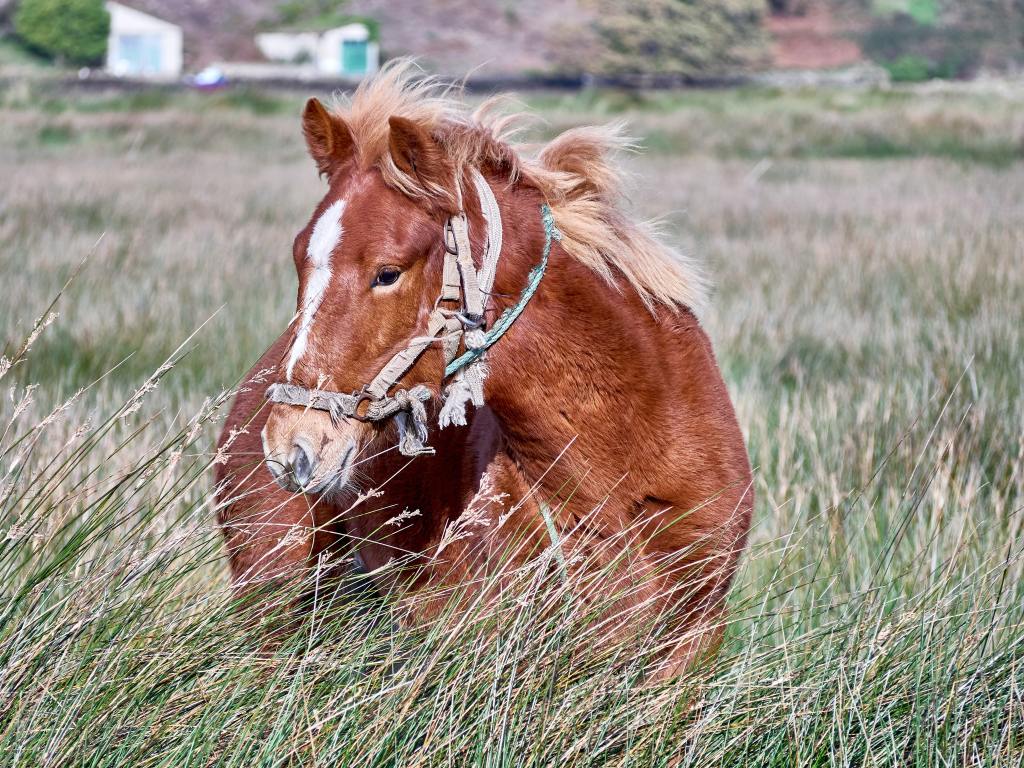
Our passage for today opens with an act of discipleship. In the literal sense Jesus instructs two disciples to go and do something for him. The two are instructed to go and get a colt for Jesus. They are told to enter the village ahead, there they will find a colt. They are to untie it and, if anyone asks, to tell the people that Jesus needs it. And, yes, don’t worry – we’ll return it when we’re done with it. They are not borrowing a cup of flour from the neighbor. Culture must have been much different back then.

Up to this point in Jesus’ ministry his popularity has risen and fallen. Many were initially attracted to the miracles but the more he spoke of the cost of discipleship, the more the crowd thinned. Yet his name was known. In whose name could we go today to commandeer a car or even a bike? Who among us would be so daring to even attempt such a thing? We would be so full of doubt and questioning. But what of these two disciples?

The disciples do as Jesus says. They find the colt just as he said they would. They answer the question that Jesus said might be asked just as Jesus told them to. And they return to Jesus with the colt that “no one has ever ridden”. What impression or effect did this act of faith have on these two disciples? How did this shape their faith moving forward? Verse seven tells us, “When they brought the colt to Jesus and threw their cloaks over it, he sat on it”. Seeing Jesus there, assuming a place and position new for him, how did they see their role?

At times the Holy Spirit calls us to action. It whispers or nudges us to an action or to speak words. We too often ask, “Say what?” or “Do what?” How would our faith and our lives be different if we simply did as these two disciples did? Where would our faith take us if we truly lived with Jesus Christ as the Lord of our life?

Prayer: Lord God, your call is persistent, your love is unchanging. In those moments when I begin to question, when I try to hesitate long enough for the opportunity to pass, spur me to action. When I fail to respond immediately, well up in me a quick compassion and an unquenchable love for those you place before me. Thank you, Lord. Amen.


Leave a comment

Good Works

Reading: Ephesians 2: 6-10

Verse 10: “We are God’s workmanship, created in Christ Jesus to do good works”.

In our passage yesterday we focused on how God saved us from our sins through his grace and love. Paid for by Christ, grace is available to all who call on Jesus Christ as Lord and Savior. Grace rests upon God’s no-matter-what love. God loves us no matter what we do, no matter what we do not do. This unconditional love is the core of who and what God is. Once we accept this love, Christ becomes alive in us. God’s love comes and dwells in our hearts in the Holy Spirit.

In today’s passage we hear about our response to God’s love and grace. In the gospels Jesus was clear that the highest calling of a disciple is to love -> love God, love one another. Jesus himself defined this as the mark of a disciple. Paul begins today by reminding us that grace is a gift. It is not something we can earn or work for. This is a humbling thought. Because it is a gift, freely and generously given, we are not to boast. We can be tempted to boast about things that God has given us: beauty, strength, physical or intellectual abilities… Humility is the key here too.

Paul does suggest we respond to the gift of grace and to the unconditional love of God. In verse ten Paul writes, “We are God’s workmanship, created in Christ Jesus to do good works”. What are “good works”? Jesus identifies some: feeding the hungry, visiting the sick and imprisoned, clothing the naked, housing the wanderer, loving our neighbor. Good works also include lifting the other, alleviating or sharing other’s burdens, walking through the valleys, sharing food and other blessings, standing with the powerless and marginalized, including others in our faith communities… Simply put, it is being Christ to the world. It is being light and love in the world, sharing the gifts that we have received. May we be generous as we spread his love today.

Prayer: Lord God, help me to love well today. In all I do and say may I share your love with others, helping each to feel the kingdom of God drawing near. Amen.


Leave a comment

Walking God’s Way

Reading: Psalm 19: 7-14

Verses 12-13: “Forgive my hidden faults. Keep your servant also from willful sins”.

In today’s reading David begins by reminding us of the beauty of God’s laws. In verses seven through ten David praises God for his laws, statutes, precepts, commands, and ordinances. Taken as a whole and commonly known as the Law, these ways of God lead and guide the faithful. David rejoices in the law, naming it as perfect, trustworthy, pure, right, radiant, and sure. To illustrate how much he values the law, David notes that it is more precious than “much pure gold”. Reading Psalms like this draw us into studying and learning about God’s ways. For David, and for followers today, the law both “warns” and also yields “great reward”. Understanding and living God’s ways is the path to true life now and one day in eternity.

Walking God’s path is not always easy. In verses twelve and thirteen David writes, “Forgive my hidden faults. Keep your servant also from willful sins”. At times we all suddenly think things in our hearts that we should not. These hidden sins feel private but are known by God. Even though committed in secret, we must confess them to God. We are also tempted on a regular basis. Satan is ever on the prowl, ever seeking to lead us to step off the path, ever enticing us to satisfy self. These are the sins that we have a choice in. The seed is planted and sometimes we allow it to grow and take root. When we allow this to continue to fruition, we commit a willful sin. These too must be confessed to the Lord.

Just as God’s ways are beautiful and life-giving, so too is his mercy and grace. Unlike the law, we are at times imperfect, impure, unjust, unrighteous. God forgives. God cleanses. God restores. As David prays, so too may we pray: “May the words of my mouth and the meditation of my heart be pleasing in your sight”.

Prayer: God of mercy and love, guide me this day to walk in your ways, doing what is right and what is pleasing to you. Thank you for the love that always brings me back when I stumble. Amen.


Leave a comment

Habits and Practices

Reading: John 2: 18-22

Verse 20: “It has taken 46 years to build this temple”.

Yesterday we read about Jesus clearing the temple and we’re asked to consider where we could stand against some wrongs or evils in the world around us. In today’s passage we see the reaction of the religious leaders – those in charge of the temple. They want to know by what authority Jesus can do what he has done. In a way, they are asking if they can just go back to business as usual tomorrow, when he is gone. They ask for a sign and Jesus does give them one. They will just have to wait to see the truth of him rising after three days in the grave. Most of the religious leaders will deny that event too. Almost all will fail to connect Jesus’ resurrection to his answer to the question about his authority.

The market place in the temple courts probably began simply – some guy looking to help out travelers from afar by selling doves for sacrifices. And then another guy set up shop selling sheep. Eventually the sellers moved out inside the temple courts and some priest thought about requiring temple coins for their purchases. Money changers became a necessity and soon enough a thriving enterprise was born. Jesus challenged the corruption of this system. In response to Jesus’ cryptic answer the religious leaders say, “It has taken 46 years to build this temple”. In a way they are saying that the temple and the market place have always been here. In our churches and other organizations we say, “We’ve always done it that way”. So what it has become broken or corrupt or no longer is effective or isn’t holy or sacred anymore? One of the good things about the pandemic is that it has forced us to examine the practices and routines of the church. This season has been a time to let some things die, to imagine new possibilities, and to make changes to things that were ineffective, irrelevant, or outdated. Many of us have gone through the same process in our own lives and in our faith. This season of Lent invites us to do that hard work, to go deeper.

Although perhaps not 46 years, what habits or practices have you fallen into or out of that have lessened your walk with the Lord? What needs changed?

Prayer: Dear Lord, you still have the ability to do wonders and to work miracles. What in me needs addressed? Open my eyes to see and bind my will to yours. Make me more like you. Amen.


2 Comments

Dominion

Reading: Psalm 22: 23-31

Verse 28: “Dominion belongs to the Lord and he rules over the nations”.

Photo credit: Erik Van Dijk

The words that we read in today’s Psalm seem far from the realities of our world. The world feels like it is full of suffering. Many of their cries seem to go unanswered. The poor do not appear to be satisfied. All the earth has not turned toward the Lord. In the midst of these continuing realities, verse 28 calls us to a higher truth, to an eternal reality: “Dominion belongs to the Lord and he rules over the nations”.

The hope that we find in our faith reminds us that this world and its trials are temporary. God is truly in charge and one day the Lord will be the only king or ruler. All people past and present will “kneel before him”. This is a future scene that one day will come. As we live out our day to day lives, do we simply wait for Christ to return or to call us home? Do we just go through the motions of life and live with the suffering and the cries and the plight of the poor? Should we be okay with all the lost souls?

As Christians in the modern world reading these words written long ago by King David, our role is to connect to that “future generation” and to be the ones who “proclaim his righteousness” and who share the hope we have with a world in need. Rather than seeing ourselves as David and the Jews did and do – as a chosen people set aside for God – may we see ourselves as Jesus saw and lived out his ministry: as one sent into the world to minister to needs, to care for the marginalized, to alleviate suffering. May we, by our words and actions, proclaim that the kingdom of God has drawn near, manifesting this reality in the world. May all that we do and say reveal the dominion and rule of Christ here and now. In and through us, may Christ reign.

Prayer: Lord God, open my eyes and heart to the cries of the suffering and to the needs around me. Lead and guide me to make your love known in this world. Amen.


1 Comment

Remember Your Baptism

Reading: 1st Peter 3: 18-22

Verse 21: “This water symbolizes baptism that now saves you also… the pledge of a good conscience toward God”.

Today’s reading connects Jesus’ saving act on the cross to our baptism and to Noah’s experience in the great flood. Peter begins by reminding us that Christ died for us all – “the righteous for the unrighteous” – so that we could be in right relationship with God. Peter reminds us that not only did Jesus pay the atonement or price for our sins, but through the resurrection Jesus also opened the way to eternal life for all who believe in him as Lord and Savior.

In the middle of our passage Peter speaks of Noah and family, those who were “saved through the water”. Baptism is often associated with the washing away of our sins. Jewish rituals of purification involved water in the cleansing process. In Noah’s experience, the water was also the saving agent. The sinful world perished in the flood but through the waters God saved Noah, his family, and all the living creatures. Peter reminds us that “this water symbolizes baptism that now saves you also”. Through baptism we are brought into the family of God, into the community of faith. We are marked or claimed by God. Baptism becomes or leads to “the pledge of a good conscience toward God” – whether made by parents and sponsors or by the person being baptized. The pledge is to live a life worthy of Christ, the one who died for us. This life is revealed through our participation in the community of faith and through the ways we share our faith with the world by our witness, our prayers, our worship, our actions, our service…

The “good conscience” that Peter speaks of is the indwelling presence of the Holy Spirit. This is a promised gift from Jesus that is connected to baptism. In the early church and in some denominations today, the believer’s baptism is the standard practice. The Holy Spirit comes into that person’s life after they confess Jesus as Lord and as they are baptized into the faith. For those traditions that practice infant baptism, the child is marked with the seal of the Holy Spirit. Usually during confirmation (or a similar process) the young adult professes their own faith in Jesus Christ. This confession marks the point of entry for the indwelling presence of the Holy Spirit.

On this first Friday of Lent may we each remember our baptism and may we rejoice in our place in the family of God.

Prayer: Lord, thank you for claiming me as an infant and then waiting patiently for me to decide to follow Jesus. The gift of the Holy Spirit empowers and enables me to follow day by day. Thank you for this gift. Amen.


Leave a comment

Connected

Reading: Psalm 50: 1-2

Verse 1: “The mighty one, God, the Lord, speaks and summons the earth”.

Photo credit: Aaron Burden

Psalm 50 opens with the image of God, mighty in power, calling out to all the earth. God “speaks and summons” from east to west. To all of the earth – mankind, plants, animals, all of creation – God calls out. Can you see the trees straightening up ever so slightly? Can you notice the bluejay quieting its song for just a moment? Can you sense God’s presence there with you at the start and end of your day? What about the moments in between?

God is there for all of creation. In the beginning the work of his hands was pleasing to God. God called his work “good” or “very good” in the case of humankind. God, the Lord, continues to be in love with all of creation. It is all the work of his hands. The question that comes to mind this morning is this: how do we acknowledge and honor God’s connection to all of creation? In the general or corporate sense we begin by loving all of creation as God loves it. We continue to reveal his love by caring well for the created world and for one another. A second way we can love all of creation is by being connected ourselves.

God interacts with the world and with each of us every single day. One of my best and favorite ways to be connected is to literally write out each morning the ways that God blessed my life the day before. My list of 5-8 things contains mostly small ways that God blessed me or my day. I also close my quiet time each morning by writing about an act of kindness or two that I did to bless another that previous day. Both keep me focused on the love of God as it is revealed in the world and in my life. Both keep me mindful of my calls to love God and to love others.

In what ways do you seek to be in connection with God, with the created world, and with your fellow human beings each day? How do you take time each day to praise God for these connections and for the blessings in your life?

Prayer: Loving and compassionate God, each day it humbles and amazes me to pause and look at the ways you touch my life and my days. Thank you for your love and care. I too am blessed when I touch other’s lives in small ways, sharing your love and care. Thank you for these blessings. Continue to use me each day as the revelation of your love and care for all of creation. Amen.


Leave a comment

Consumed with Light

Reading: 2nd Corinthians 4: 3-6

Verse 6: “God made… his light shine in our hearts to give us the light of the knowledge of the glory of God in the face of Jesus Christ”.

Photo credit: Karen Alsop

Paul writes today about the reality that not all people will understand the gospel. To some the message of the “good news” is veiled. For Paul, the lost, or those without faith in Jesus Christ, are “perishing” – doomed to an unpleasant eternity. Paul recognizes that those without Christ have been “blinded” by the gods of this world. These gods remain a barrier or a stumbling block to many people today. The love of money, power, status, recognition, popularity, privilege and other worldly things prevent people from “seeing the light of the gospel”. One does not have to look very hard to find folks who are like this. They are focused only on self and the gods of this world. Their focus is inward and upward, personally and socially.

For Paul, the focus was also inward and upward. But the inward focused on knowing the Lord Jesus Christ and the upward focused on bringing God the glory. Paul had always called others to Jesus Christ. In his humble and confident manner Paul preached the good news of Jesus Christ to lots of people. Some have allowed the light and love of God to shine into the darkness and selfishness of their hearts. Others have been blinded, the gospel remained veiled. Like Paul, we encounter both types of people as we live out our faith, “preaching” in whatever way we can, sometimes with words.

For those who choose Jesus as Lord and Savior, we know the truth of verse six: “God made… his light shine in our hearts to give us the light of the knowledge of the glory of God in the face of Jesus Christ”. The light that God shines into our hearts reveals the glory of God as demonstrated in the life and witness of Jesus Christ. Jesus, like us, lived in this world. His world certainly had its share of brokenness, marginalization, injustice, oppression… Jesus spent his years in ministry bringing healing and welcome, justice and compassion. Doing so he built community and he fostered a culture of other over self. Love was the core value of this community and its culture. Paul lived each day as a servant to the gospel “for Jesus’ sake”. Paul was consumed with sharing Jesus with all he met, whether by words or actions or simply by the way he lived his life. May we be consumed in the same way.

Prayer: Light of the world, illumine my heart today with the light of your love and grace. Allow that light to open my eyes to the places and people and circumstances that need to know and walk in your light and love. Guide my words, actions, and life to reveal Jesus to others. Amen.


Leave a comment

Walking Into Places and Spaces

Reading: 2 Kings 2: 1-12

Verses 2, 4, and 6: “As surely as the Lord lives and as you live, I will not leave you”.

Photo credit: Lili Popper

As we begin this week we enter into the end of Epiphany, the season that focuses in on the revelation of Jesus Christ. In this season we highlight who and what Jesus is. Our call, however, is to reveal Jesus Christ to the world every day of our faith journey. It is fitting that this season culminates on Transfiguration Sunday, when the Christ is filled with light, revealing him in all of his glory. In each passage this week we enter into the thin spaces of holiness, into the places where God is at work.

As 2nd Kings opens there is turmoil in the land. The king tries to consult Baal, one of the local pagan gods. Elijah, God’s prophet, condemns this action and proclaims that the king will die. It is also time for Elijah to end his earthly life and to cede the role of prophet to Elisha. After clearly demonstrating that God is with him, Elijah comes down the mountain to walk out his final steps. Three times Elijah tries to leave Elisha behind, seeking to spare him. Each time they arrive at a new place, the local prophets come out and tell Elisha that the Lord is going to take Elijah from him. Three times Elisha asks them not to speak of it. Each time Elijah tries to leave him behind Elisha says, “As surely as the Lord lives and as you live, I will not leave you”. He will not abandon Elijah. He will continue to walk faithfully with him. Elisha chooses to walk into that thin space with Elijah. As he walks through that space, Elisha is transformed from protege to prophet, from student to master, from one who follows to one who leads others into God’s presence.

As believers we too will face times when the Holy Spirit invites us to walk into those thin spaces, into those holy places. We will be called to be the presence of God in the lives of others. We will be asked to walk with another on a difficult journey. We will be asked to sit or pray with another in a time of pain or loss. We will be asked to share our faith and our hope with another who is lost or broken. In these sacred moments we will be called by the Holy Spirit, asked to be the very presence of God to another. Yes, it is scary and hard to step into those places and spaces. We do not go alone. The one who invites goes with us. The Spirit is ever present, ever ready to reveal the power of God’s love, peace, hope, power… through us. As we feel ourselves called and as we stand on the doorstep to these holy and sacred moments, may we too say, “As surely as the Lord lives and as you live, I will not leave you”.

Prayer: Lord God, each time that I have stepped into that thin space, you have been right there with me. Your Spirit leads and guides, strengthens and encourages. Each experience has been holy and sacred. Yet each first step is always hard. It ever requires trust and faith. Continue to give me the courage and belief to step into those places and spaces. Walk with me day by day. Amen.


1 Comment

Ministers of the Gospel

Reading: 1st Corinthians 9: 16-23

Verse 19: “Though I am free and belong to no man, I make myself a slave to everyone, to win as many as possible”.

Photo credit: Priscilla du Preez

Our passage today begins with a part of Paul’s call story. Because of his encounter with the risen Christ he has a clear mission to preach the gospel or good news of Jesus Christ. In Acts 9 it is revealed that Paul is Jesus’ “chosen instrument to carry my name before the Gentiles and their kings and before the people of Israel”. This is why Paul is “compelled to preach” the gospel. Although most of us do not have the singular, radical life changing moment like Paul had, as people who declare Jesus Christ as our Lord and Savior, we fall under the great commission that Jesus gave in Matthew 28 to “make disciples of all nations”.

Some are called to be preachers, some to be teachers, some to be worship leaders, some to be ushers, some to be worker bees… All are called the be ministers. Under the great commission we are all called to minister to the world, sharing the good news with a world in need. While most of us are not evangelical missionaries like Paul was, all of us have a story of faith and all of us can share our love of Jesus with others. Some of us will share through formal roles in the church, some will share through volunteer roles, some will share through specific encounters with friends and neighbors. All of us should share our faith in the ways that we live our day to day lives.

Paul was one who lived out his faith in all he did and with all he met. It was an intentional choice he made after Jesus worked a 180° change in his life. This radical change led Paul to spend the rest of his days telling others about the Lord. In verse nineteen we read, “Though I am free and belong to no man, I make myself a slave to everyone, to win as many as possible”. A slave was the very bottom of the social order. It was a place of total subservience. Paul was willing to be a slave to Jesus in order to save as many people as he could. Paul would become like his audience so that he could best communicate Jesus’ saving power to them. With the Jews, for example, Paul drew on his Jewish upbringing to help the Jews come to Christ. He found common ground. This is the most natural and comfortable way to share faith with others. Today, for example, a young Christian mom would most naturally share her faith while spending time with another young mom. Similarly, a recovered Christian alcoholic would most comfortably share his or her faith with a seeker just beginning the path to recovery. Common interests, shared experiences, similar places in life… provide great opportunities for natural gospel conversations.

Knowing why Jesus matters in our lives is the beginning of being able to share our faith. Step two is a willingness to have the conversation when the Holy Spirit nudges us and provides an opportunity. We are all called to be ministers of the gospel. Do you know your story of faith? Are you willing to share the story of what Jesus means to you? It is our call. May we all choose to be willing slaves of Jesus Christ, seeking to “win as many as possible” by sharing our love of Jesus Christ with the world.

Prayer: Lord God, I am not too sure where I would be without you. With you, I know my days and my future lie in your hands. Make me a willing slave, willing to share my love of you whenever and wherever the Holy Spirit gives opportunity. As always, use me as you will. Amen.