pastorjohnb

Thoughts and musings on faith and our mighty God!


Leave a comment

Jesus Offers, Invites

Reading: Matthew 11:2-6

Matthew 11:3 – “Are you the one who is to come, or should we look for another?”
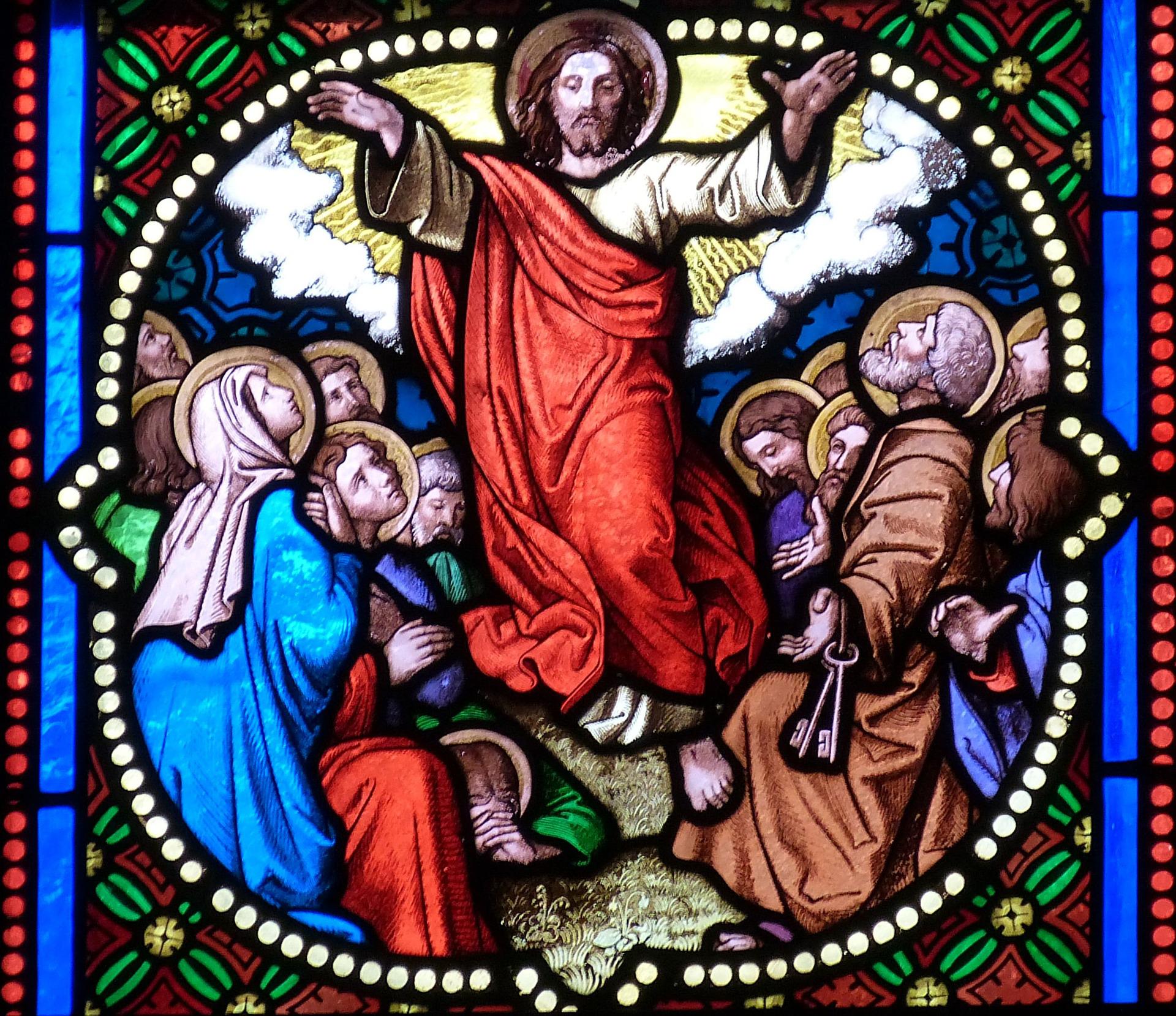
By the time Matthew’s gospel reaches chapter 11, Jesus has given the Sermon on the Mount, has healed many people, has calmed a literal storm, has gathered the twelve disciples, and has begun training them to carry on his ministry of healing and wholeness. During this time, John the Baptist’s ministry has diminished and he now finds himself in prison, having angered King Herod. Searching for hope, John sends his own disciples to ask Jesus, “Are you the one who is to come, or should we look for another?” From his prison cell, it must not feel like the kingdom of God is what he’d hoped it would be.

Presenting evidence of what the kingdom of God looks like here on earth, Jesus mostly quotes from Isaiah 35 and 61, adding a few of his own words too. Jesus is reminding John of how the Old Testament prophets described the Messiah and his kingdom. Healing and wholeness, fullness of life, deep relationships and community, humble service – this is God’s plan for this created world. It is to be as Jesus taught, “on earth as it is in heaven.”

The evidence that Jesus gives are both our inheritance and our marching orders. Jesus offers to open our eyes so we can see as he sees, just as he invites us to do the same for others. He walks with us when we cannot walk alone and he asks us to do the same with one another. Jesus cleanses us of our “diseases” and he speaks truth into our hard hearts. He brings life to what was once “dead” and he restores relationships. All of these, in turn, Jesus invites us to do for the world. As we find healing and wholeness through Jesus Christ, may we work to bring these to our world in need. May it be so.

Prayer: Lord God, open our hearts and minds to receive all that you offer. Being filled with your love, guidance, presence, healing, and hope, turn us out into the world, pouring ourselves out for the healing and wholeness of all creation. Use us to manifest your kingdom here on earth. Amen.


Leave a comment

Three Questions

Reading: 2nd Timothy 4:6-8

2nd Timothy 4:7 – “I have fought the good fight, finished the race, and kept the faith.”

In verses 6-8 Paul is reflecting on his life of service to Jesus Christ, his Lord and Savior. He begins by noting that his life has been “poured out like a sacrifice to God.” What a beautiful image this is. It is a great way to illustrate what it is to love God with all of our mind, heart, soul, and strength. These words make me pause and ask: Am I allowing myself to be poured out in this way?

In the next verse Paul offers one of his best one-verse gems: “I have fought the good fight, finished the race, and kept the faith.” Paul has stayed at it, both during the good days and the really hard days, always remaining faithful to his Lord. He has walked the long, slow, steady walk of faith, drawing near to the end of a life well lived. Paul looks forward to receiving the “champion’s wreath” given to the righteous. A second question: Can I truly say these things of my life and the way that I live it?

Paul concludes this farewell reflection with words of encouragement to Timothy and to all who will read and meditate on these words. He reminds us that all people can receive this “award.” Paul states that it will be given to “all who have set their heart on waiting for his [Jesus’] appearance.” Whether in this life or in the life to come, have I set my heart upon seeing Jesus? A good third question to ponder.

Prayer: Lord God, Paul is a great example of faith. He did so much for you, bringing so many to the faith. Maybe this is what you have in store for us. Or maybe it is just living daily with a heart set on loving you and loving those you send our way. Whatever your plans, great or small, Lord help us to walk daily with you, slow and steady, faithful and true. Thank you, God. Amen.


Leave a comment

May Your Kingdom Come

Reading: Joel 2:28-32

Joel 2:32 – “But everyone who calls on the Lord’s name will be saved.”

Moving from yesterday’s suffering, sin, repentance, and hope, today we move into and beyond the ‘now and not yet’ of Joel 2. Once God has brought the exiles home and returned abundance to the land and to the people of God… or at some point in the future… God says, “After that I will pour out my Spirit upon everyone…” For Joel and his audience, this would be when the Messiah came, inaugurating a new era with a new heaven and earth.

Just proceeding that new era, sons and daughters, old men and young men, even slaves, will receive the Spirit. They will speak of and dream of this new coming kingdom. On that day, when it comes, there will be “blood and fire and columns of smoke” and it will be a “great and dreadful day.” And there is a ‘but.’ In verse 32 we read, “But everyone who calls on the Lord’s name will be saved.” God’s faithful will be saved.

As the story of the Bible continues, thoughts on this day evolve and develop. When Jesus arrived, he brought a dramatic shift in the understanding of the new kingdom. Jesus is clear that Joel’s (and other’s) visions of the new heaven and earth will indeed be glorious on that day, but… But, Jesus said, the kingdom is here now. Jesus taught us disciples to pray, “may your kingdom come… may your will be done… on earth as it is in heaven.” The time that Joel speaks of? Jesus is clear: the time is now. All people – men, women, young, old, slaves, free, rich, poor… – all people can receive the Spirit. All people are invited to live in and to be a part of God’s kingdom here on earth. All who call on the Lord’s name will be saved. O Lord, may your kingdom come and may your will be done! And may it begin with us.

Prayer: Lord God, open wide the doors of our hearts and of our churches! Opened wide, use us to build this kingdom where all are welcomed, where all know that they are beloved of you, and of us. Opened wide, use us to declare that each person, created in your image, one and all, are invited to your table of grace. Use us, Lord, to make this beautiful kingdom a reality here and now. Amen.


Leave a comment

May the God of…

Reading: 1st Samuel 1:9-17

1st Samuel 1:16b – “This whole time I’ve been praying out of my great worry and trouble.”

Photo credit: Rainier Ridao

Today’s scene is located in a place of worship in Shiloh. Elkanah, the husband of Hannah and Peninnah, takes his family here once a year to worship and sacrifice to the Lord. Hannah’s life is very hard emotionally. Peninnah would “make fun of her mercilessly” because Hannah was unable to conceive children. Children, especially male children, were highly valued in that culture. If Elkanah died, for example, Hannah’s survival would depend on her offspring. Bearing and raising children was Hannah’s main responsibility in life and she was unable to meet this expectation.

It is with heaviness of heart and soul that Hannah goes to the place of worship. She is “very upset” and she “couldn’t stop crying.” She pours our her heart to God, begging for a son, promising to “give him to the Lord for his entire life.” This willingness to give up a son reveals the depth of her pain and shame over being childless. While our society today doesn’t place the same premium on bearing children, what does bring shame in our culture? If you are without ____, what marginalizes people today?

Eli sees Hannah praying. The priest assumes that she is drunk. She is not. She says to Eli, “This whole time I’ve been praying out of my great worry and trouble.” She has almost assuredly prayer for a child ever since marrying Elkanah. The desperation has risen with each child Peninnah bore to him. Understanding the depth of her pain, sorrow, and shame, Eli blesses her, saying, “May the God of Israel give you what you’ve asked from him.” In our moments of great need, may it be so for us as well.

Prayer: Lord God, sometimes we feel like Hannah. Sometimes we feel marginalized and less than. For some folks, though, that is their “normal.” Lord, open our eyes and awaken our hearts to those who exist on the edges today. With your love and compassion, guide us to draw them into community, into a place where they can find meaning and worth. Through the sharing of our blessings, use us to meet their needs. Amen.


Leave a comment

Commands

Reading: Exodus 20:1-17

Exodus 20:3 – “You must have no other gods before me.”

Entering the history of Israel, they have been freed from slavery in Egypt for three months. In this time they have tested both God and Moses. They have witnessed amazing miracles as expressions of God’s love for them. The mass of humanity is now at Mount Sinai, where they prepare themselves to receive God’s covenant. On the mountain Moses receives these ten commands from God. Obedience to these commands should be Israel’s response to God’s saving grace.

The first four commands center on our relationship with God. It is from this relationship that all other relationships flow. We shall not have any other god and we shall not make or worship idols. We shall not misuse God’s name. And we shall keep the Sabbath holy. These commands shape our relationship with God and they remind us of God’s proper place in that relationship.

The next six commands come in pretty rapid succession. These commands define our relationships with one another. The first deals with our family, our primary relationship: honor father and mother. The next five expand the circle to the wider world: do not kill, commit adultery, steal, lie, or covet. These seem simple and straightforward. Yet within each command is a degree of interpretation and application. Jesus will flesh out some of these commands in the New Testament.

These commands can be simplified. Jesus summed them up as love God, love neighbor. John Wesley used three simple rules to govern his life. As we can do with the 10 Commandments or with any rule, we can try to limit what it means to love or we can try to limit who our neighbor is. The simple answer is “all.” Love God with all that we are and with all that we do, say, think, and act. Love all people as Christ loved us. May it be so.

Prayer: Lord God, center us first in our relationship with you. May we love you in all possible ways, bringing you all the glory, honor, and praise. From there, Lord, move us on to generously and genuinely love all people. Open our hearts to the width and depth and breadth of your love for us, revealed in Jesus Christ. Then move us to pour that love out into the world. Amen.


Leave a comment

Pour It Back Out

Readings: Romans 5:1-5 and 12:18-21

Romans 5:3-4 – “Trouble produces endurance, endurance produces character, and character produces hope.”

Paul begins chapter 5 by reminding the Roman church (and us) that they (we) are made righteous through Christ’s faithfulness. We are made right because of and through Christ’s work on the cross. We cannot do anything to restore ourselves to righteousness before God. But Jesus can and does. That brings us peace with God. And because we are forgiven through grace, we can and should be gracious to others. Through our own radical acts of love, others can experience and then claim the hope that we have in Christ Jesus.

Paul then rejoices because we experience hardship, trials, suffering. What?! Paul is not celebrating that we experience these things. He is celebrating how God uses them in our lives. Trouble builds endurance which builds character which builds hope. As we endure faithfully, we model Jesus and through this process take on more of Christ’s character. As we are made more Christlike our hope in God deepens. In turn we receive more of God’s love, poured into our hearts.

Shifting to chapter 12, Paul focuses in on those times when evil is the cause of hardship… He encourages an attitude of peace even then. The apostle encourages us to allow God to be the one in the punishment business. Paul then asks us to do just the opposite: give your enemy, the one doing evil to you, give them what they need. Give them food or drink or burning coals. (This last one refers to actually giving them coals so that they can rekindle the fire, bringing them warmth.) By taking the love of God that is poured into our hearts and pouring it back out into our relationships with difficult others we will “defeat evil with good.” May it be so for you and for me.

Prayer: Lord God, we thank you for the gift of Jesus Christ – he who not only became the atoning sacrifice for us but also set before us the daily example of love. In the times when it is most difficult to muster up love, grace, mercy – in moments of hardship… – remind us of your great love for all of us. In gratitude and faithfulness lead us to pour these out, blessing others. Amen.


Leave a comment

The Lord Will Reign

Reading: Zechariah 10-15

Zechariah 13:1 – “On that day, a fountain will open to cleanse the sin and impurity of David’s house.”

In the last chapters of Zechariah, Judah and Jerusalem are lifted up and are torn down. They experience defeat and victory – both through the Lord. Zechariah refers twice to a king who has been seen as Jesus since the earliest days of the church. In the end, God is present in the new Jerusalem. All nations come to worship and give glory to God.

As our reading begins, God invites the people to ask God for rain. Instead they turn to idols as their shepherd(s) lead them astray. God will punish “the goats.” Judah will then be strong because God is with them. Strengthened, they will walk in the name of the Lord. But this faith doesn’t remain long. Two staffs – Delight and Harmony – are made and then are broken. The covenant is ended and the alliance between Judah and Israel is over. A bad shepherd won’t care well for the flock and will be doomed by God.

In chapter 12 God again defends and restores Judah. They again become strong in the Lord. God promises to pour out a spirit of grace and mercy. But then the people will “look to me concerning the one whom they pierced.” There will be mourning throughout the land. In 13:1 we read, “On that day, a fountain will open to cleanse the sin and impurity of David’s house.” Later in chapter 13: Zechariah returns to what the church reads as Jesus. They will strike the shepherd and the sheep will scatter. There will be a purifying fire (persecution) that will refine the faithful. God will look upon these and say, “They are my people.”

In the last chapter we read of Jerusalem falling and half going into exile. Then God, along with the “holy ones,” fights for them, bringing them home. Running water will flow from this new Jerusalem. It will be secure. Nations will come to pay homage to God. The Lord will reign forever. This is the end of the story we know too. Thanks be to God.

Prayer: Lord God, although sin and disobedience separated you from Judah and Israel – as it does us at times – you remain unconditionally committed to loving your children. I am grateful for your faithfulness, mercy, and grace through all of our failures. You are so worthy of our praise. Use us this day to bring glory and honor to your name. Amen.


Leave a comment

What a Day!

Reading: Zephaniah 1-3

Zephaniah 3:15 – “The LORD has removed your judgment; he has turned away your enemy. The LORD… is in your midst.”

Zephaniah proclaims the coming “day of the Lord.” Those who are humble and seek the Lord will find refuge in God. Those who relied upon themselves, their idols, their wealth and power – they will have nowhere to turn. Judgment will fall on the surrounding nations and then upon Judah. Zephaniah concludes with hope. He speaks of a time after judgment, when all people will “serve God as one.”

Zephaniah begins with judgment for the “world.” God will “eliminate humanity.” The prophet is likely referring to the small world surrounding Judah. He is speaking of and to God’s people. God’s hand will stretch out against those turning away instead of seeking God. Those in power will be punished for their violence, greed, and pride. It will be a horrible day, a day of “fury… distress… desolation… destruction… darkness.”

God encourages the humble to gather and to seek righteousness. They may be “hidden” on the day of the Lord. Zephaniah then turns to Judah’s neighbors next. Gaza, Ashod, Ekron, Philistia – doom is coming. Moab and Ammon will be made like Sodom and Gomorrah because of their taunting and boasting over Judah. Cush and Assyria will perish. And then in chapter 3 the focus shifts to Jerusalem – the city that wouldn’t listen and wouldn’t accept discipline. God will “rise up as a witness” against Jerusalem, pouring out “the heat of my anger.”

In verses 9-20 we read of the restoration that will follow. All people’s speech will change. They will call on God’s name and will “serve him as one.” Their shame will be removed along with their pride. A humble and powerless people will seek and find refuge in God. The lame and the outcast will be exalted. Judgment removed, enemies no more, Israel will know, The LORD… is in your midst.” All will be restored. What a day that will be!

Prayer: Lord God, one day judgment will fall. As a God of justice and righteousness there will be an accounting. But as a God of love and mercy, a day of healing and restoration will follow. In the end, the world will be as you created it to be. Thank you, Lord. Amen.


Leave a comment

You Will Know

Reading: Joel 1-3

Joel 2:27 – “You will know that I am in the midst of Israel, and that I am the LORD your God — no other exists.”

Photo credit: Marek Piwnicki

In three chapters Joel packs a ton into his prophetic message. He follows the normal pattern: devastation, cry out, repent, deliverance. Joel is a bit unique in the fact that Israel’s sin isn’t included. That usually leads to the ‘devastation’ part of the cycle. Joel begins with an invading army. Locusts? Assyria? Babylon? We’re not 100% sure if it’s real or metaphor as Joel is really hard to date. He does not include kings or names that can be tied to a specific point in Israel’s history. The effects of whichever army are all the same: starvation, death, suffering, grief. Even the earth and creatures of the earth mourn, so great is the fire that burns before and after the army’s invasion. People shake in fear as the army rushes upon the city and into their homes.

Yet… there’s that word! Yet, even now, says Joel, God invites us to return to God with all of our hearts, to weep and fast and mourn. Yes, weep, fast, and mourn over what we’ve done. Yes, weep, fast, and mourn over the consequences of that sin. Do so because God is compassionate, merciful, very patient, full of love, and ready to forgive. So, cry out to God! Who knows? God does. God brings renewal and restoration to a repentant Israel: corn, wine, oil… green pastures and fruitful trees. An early rain will be a “sign of righteousness” that will pour out abundance on them. And then the Lord declares, “You will know that I am in the midst of Israel, and that I am the LORD your God — no other exists.” Is this because of these physical blessings or is it because of what God promised next?

In verses 28-29 God proclaims that the Spirit will be poured out on all people – sons and daughters, young and old, slaves. All people will receive the gift of the Spirit. All barriers will be broken down. Then Joel turns to the coming day of the Lord. This day will bring darkness but all who call on the name of the Lord will be saved. The darkness comes as God gathers and judges the nations. Through Joel, God condemns a variety of offenses against God’s people. Crowd after crowd will come before the Lord. But God will be a refuge for the faithful. Jerusalem will be holy and a spring will come forth from God’s house. The new Judah and Jerusalem will be forgiven. It will be inhabited forever. Thanks be to God.

Prayer: Lord God, what good and great plans you have for those who love you. Yes, the storms of life will come, drawing us closer to you. Yes, times of separation will come as we choose self over you. Even then, you work to renew our relationship, to restore our connection. You remain ever ready to forgive. You continue to declare that you are our God. Thank you, Lord, for your unconditional love. Amen.


Leave a comment

Live Amongst Us

Reading: Ezekiel 38-43

Ezekiel 38:23 – “I will display my greatness, show my holiness, and make myself known in the sight of many nations.”

Chapters 38-39 deal with Gog, a representation of the evil empires. Coming from the north, Gog could represent Nebuchadnezzar. Gog gathers many nations to his side. This mighty army comes to Israel, intent on conquering and looting God’s children. God’s anger is aroused and God unleashes nature on them, followed by turning their swords upon one another. God calls on the birds and animals of prey to feast on the horde’s bodies. So vast was the army, it took Israel seven years to bury the bodies. In the end God promises to pour out “my Spirit” upon Israel. With this Spirit within them, God will never again hide God’s face.

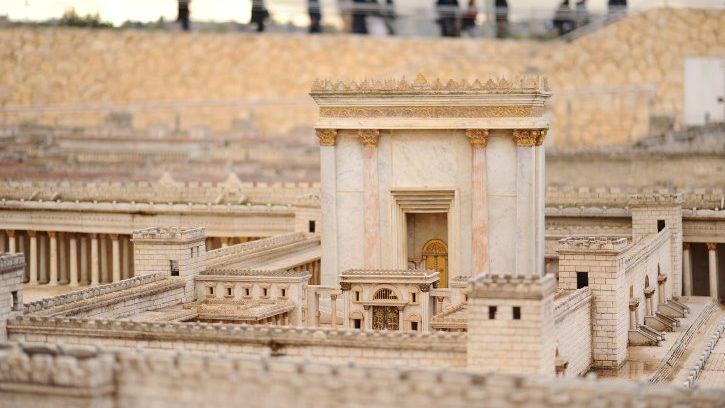
Chapters 40-42 contain the first part of Ezekiel’s temple vision. He is told to pay close attention so he can tell all to Israel. The temple described has some commonalities with Solomon’s temple, but much is different. While a temple will be rebuilt, this temple is never realized in the Bible. Ezekiel’s temple compound is 750 feet by 750 feet. It has three gates, courtyards, chambers, holy places and equipment. The Zadokite clan is set apart as the only Levites to “draw near” to God – to offer sacrifices on the altar. The temple is adorned with winged creatures and palm trees. There are holy chambers, places to store holy things.

The temple is at the center of God’s restoration of Israel, both physically and spiritually. It is a part of the sanctifying process, making Israel into the holy people of God. For Ezekiel and his audience, the temple represented God’s presence with the people. These words and vision bring hope and encouragement to the people living in exile. God longed to live amongst the people of God. God still longs to live amongst us today. May it be so.

Prayer: Lord God, your power and might extend over all things: over Gog and his allies, over today’s idols and temptations, over our selfish hearts. Ezekiel’s temple vision reflects your power and might. But it is still just a building. Just as your presence will fill this visionary temple, fill our hearts with your indwelling spirit, transforming our lives and our hearts. Amen.